


A 6V Schumacher charger makes sense for vintage cars, motorcycles, and other small-battery equipment that needs dependable maintenance between rides. The right model depends on battery capacity, how often you drive, and whether you also need testing, boosting, or engine-starting assistance. These options range from a gentle 3A maintainer to feature-heavy charging systems for automotive, marine, and powersports applications.
A Closer Look At The Lineup
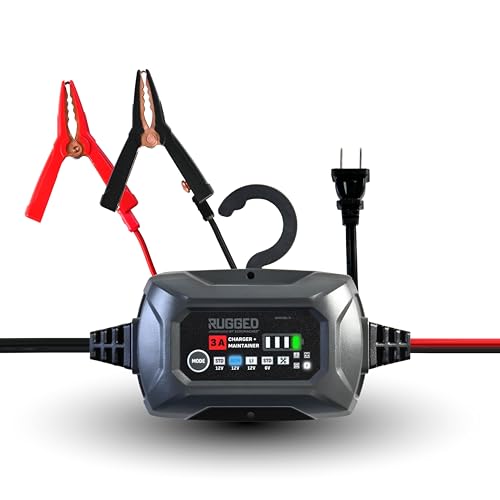
Schumacher SC1681 3A 6V/12V Charger

Schumacher SC1685 15A 6V/12V Charger

Schumacher SC1307A 6A 6V/12V 6-in-1 Charger

Schumacher SC1684 10A 6V/12V Charger

Schumacher SC1361 6A 12V Charger

Schumacher SC1305A 6A 12V 3-in-1 Charger

Schumacher SC1281 6A 6V/12V Charger
The Picks, Examined More Closely
The SC1681 takes a restrained approach to battery care, combining a 3A charger with maintenance charging across 6V and 12V systems. That lower current suits a stored classic car or motorcycle battery better than a large vehicle battery that needs substantial recovery after a long discharge.
For occasional garage use, you can keep this unit connected between longer drives without supplying more current than a small battery requires. Compared with the 10A SC1684 and 15A SC1685, the tradeoff is slower recovery, though the simpler fit may be more appropriate for light maintenance.
What Helps Most
- Supports both 6V and 12V batteries, reducing equipment changes in a mixed garage.
- The 3A output favors routine maintenance over aggressive recovery.
- A compact-simpler profile suits periodic use with classic cars and motorcycles.
Small Caveats
- Its 3A rate offers little margin for deeply depleted larger batteries.
- Confirm the correct battery-voltage setting before charging to avoid equipment mismatch.
Quick Facts
Right Fit
You benefit most from this model with vintage cars, motorcycles, and small batteries stored through off-seasons.
Reach For A Different Pick When
The Schumacher SC1685 suits you better when a larger battery needs faster recovery after sitting undercharged.
The SC1685 raises charging output to 15A while retaining 6V and 12V compatibility. That makes it the more substantial recovery option in this group for larger vehicle batteries that have sat through weeks without being driven, especially during damp or cold seasonal conditions.
You may find 3A undersized for a depleted full-size vehicle battery, based on battery size and condition. The 10A SC1684 is easier to moderate for routine storage work, while the SC1685 gives you more current when recovery matters more than a light-touch approach.
Well-Handled Touches
- The 15A output provides meaningful recovery current for larger batteries.
- Dual voltage support covers classic vehicles and modern 12V equipment.
- Charging and maintenance functions serve both recovery and storage periods.
- Useful during winter vehicle preparation and extended garage storage.
Worth Noting
- The higher current may be unnecessary for small maintenance-only batteries.
- Protect terminals and enclosed areas from battery gas and moisture during long charging sessions.
Technical Highlights
Built With In Mind
This charger fits you best when you maintain several sizable vehicle batteries and regularly need faster recovery.
A Better Fit Elsewhere
The Schumacher SC1681 is a gentler alternative for small 6V batteries and occasional top-up charging.
The SC1307A broadens the job beyond basic charging with six functions covering both voltages. Those include charging, maintenance, engine starting, battery testing, alternator testing, and desulfation, giving automotive DIYers a broader diagnostic routine than the simpler SC1681 offers.
Its 6A base charge current is moderate, so batteries with substantial capacity may need more time than with the 15A SC1685. In return, you gain 30A boost capability and an 85A engine starter, which make the unit more useful across cars, marine batteries, and powersports equipment.
Real-World Strengths
- Six functions consolidate charging, starting, testing, and battery care.
- The 30A boost handles short recovery situations beyond the 6A setting.
- An 85A starter adds useful starting assistance in a working garage.
- 6V and 12V support expands compatibility across mixed equipment.
- Testing functions help separate battery-condition questions from charging-system concerns.
Practical Considerations
- The range of functions may feel excessive for one maintained car battery.
- Desulfation is a maintenance process, not a substitute for replacing a deteriorated battery.
Feature Breakdown
Who Will Love This
You benefit most from this six-function model as a DIYer working across cars, boats, and powersports equipment.
Another Choice May Suit
The Schumacher SC1684 is simpler and more suitable when charging and maintenance are your only requirements.
Between the SC1681’s 3A and the SC1685’s 15A sits the 10A SC1684, a practical middle ground for mixed battery care. You get enough current for routine recovery of many common vehicle batteries without moving to the highest-output model in the lineup.
The 6V setting makes it useful for a garage containing both vintage vehicles and standard 12V equipment. Compared with the SC1307A, though, you lose testing, boost, and engine-starting functions, so this stays focused on regular charging and upkeep.
Strengths Worth Knowing
- The 10A rate offers a practical compromise between maintenance and recovery.
- One charger handles both 6V and 12V batteries in a mixed collection.
- The simpler feature set suits routine garage use without added controls.
Trade-Offs
- It lacks the testing, boost, and engine-start functions of the SC1307A.
- Its 10A output is less substantial than the SC1685 for very large depleted batteries.
- Owners should check terminal fit and disconnect the charger before working around stored batteries.
Made For
This model suits you with a mixed garage that needs dependable charging but not advanced diagnostics.
Swap It Out When
The Schumacher SC1307A serves you better when testing, boosting, and engine starting are routine garage priorities.
The SC1361 concentrates on the common 12V jobs rather than spreading support across two battery voltages. Its 6A charger and maintainer functions handle everyday vehicle care, while engine-starting assistance adds a useful recovery option for a depleted battery.
That makes it straightforward for a home garage without vintage 6V equipment. You give up the dual-voltage flexibility of the SC1281, but the reduced decision-making may be worthwhile in a garage dedicated to cars, trucks, motorcycles, or farm equipment.
Strong Points
- Charging and maintenance functions cover routine battery care.
- The 6A output suits many standard 12V vehicle battery applications.
- Engine-starting assistance expands its usefulness after an undercharged battery.
- Single-voltage operation keeps the setup focused on common equipment.
Points To Note
- It does not support 6V batteries, unlike four other models in the lineup.
- The 6A setting may require patience with larger batteries.
Essential Details
Who Should Grab It
You benefit most from the SC1361 with a 12V-only fleet kept in a garage or on a farm.
Look Elsewhere When
The Schumacher SC1281 is the stronger fit for a collection containing both 6V and 12V batteries.
The SC1305A narrows the multi-function approach to three practical jobs: 6A charging, maintenance, and engine starting. A 50A starting output and separate 10A boost mode add flexibility when a standard 12V battery needs extra assistance.
The listed applications include powersports, automotive, and marine batteries, making it useful for a varied workshop. Compared with the SC1307A, it has less diagnostic functionality, but you also avoid carrying tools you may never use.
What It Does Well
- Three core functions keep routine garage tasks within one device.
- The 10A boost provides more current than the base 6A setting.
- A 50A engine starter assists vehicles with low battery charge.
- 12V support covers several automotive, marine, and powersports applications.
- Three-part design offers more capability than a basic maintainer.
Where It May Fall Short
- Its 12V-only support excludes legacy 6V batteries.
- You miss the alternator and battery testing found on the SC1307A.
- Remove connections before cable handling to reduce accidental contact.
Built With In Mind
This model suits workshop users who maintain 12V vehicles and need charging, boosting, and starting functions.
Where A Sibling Pick Shines
The Schumacher SC1307A fits you better when alternating between 6V and 12V batteries matters.
The SC1281 combines a 6A charger with 6V and 12V flexibility, giving it broader garage relevance than the 12V-only SC1361. A 100A engine starter adds substantial starting assistance for a vehicle battery that has become deeply discharged.
Its three core functions remain easier to understand than the six-function SC1307A. You still give up dedicated battery and alternator testing, so the SC1281 is better suited to charging, maintenance, and occasional starting support.
Reasons It Performs
- Dual-voltage support covers classic and modern vehicle batteries.
- The 6A setting provides moderate charging and maintenance current.
- The 100A starter handles demanding engine-start assistance.
- Three core functions cover the most common garage needs.
A Few Limitations
- It offers fewer diagnostics than the SC1307A.
- Base charging is slower than the 15A SC1685 on suitable larger batteries.
- During long storage, keep terminals clean and the unit in a dry location.
The Key Facts
The Right Fit
You benefit most from this charger in a mixed garage that values dual voltage and strong engine-starting support.
Consider Something Else When
The Schumacher SC1307A suits you better when battery and alternator testing are central to your work.
What to Match Before Choosing a Charger
Voltage and battery type
Voltage comes first because a charger designed for one battery system may not suit another. Six-volt equipment often includes vintage vehicles and certain motorcycles, while most modern cars and much marine equipment use 12V batteries. Confirm the battery label before selecting a mode.
Base charging current
Amperage describes the amount of current a charger supplies. You’ll find models ranging from 3A to 15A here, and higher current can reduce recovery time on suitable larger batteries. Small maintenance-only applications may benefit more from gentler output than fast replenishment.
Starting and boost functions
Engine-starting assistance draws a short burst of current beyond the normal charging rate. That capability matters for a vehicle sitting long enough to lose substantial charge, while boost mode can provide short-duration recovery between driving sessions. The SC1307A goes further by including testing functions.
Choosing Between Charging Features and Simplicity
Higher-output or multi-function models concentrate more capability into one device. Extra current can shorten charging sessions for compatible batteries, while boost, starting, and diagnostic functions broaden a workshop’s options. Those additions matter most for people handling several battery types or recovering vehicles that remain parked through bad weather. A small-battery maintainer remains more proportionate for simpler seasonal storage.
Charges Fit Without Overcomplicating The Garage
Common Shopping Slip Ups
The most consequential mistake is selecting voltage before considering the batteries in your care. Charging output also needs to match battery capacity, because excess current is not a substitute for correct battery selection. Check connector fit, mounting space, and the functions you will genuinely use.
What Separates Premium From Basic
Higher-current models provide more recovery potential for larger batteries. Multi-function models add boosting, engine starting, or diagnostics, which can reduce the need for separate garage equipment. Those additions are most useful for frequent workshop use; for a small maintenance task, simpler charging support may be enough.
Frequently Asked Questions
Which Schumacher charger is best for a 6V battery?
The Schumacher SC1281, SC1681, SC1684, SC1685, or SC1307A supports 6V operation. Match the charger’s current and extra functions to the battery’s capacity and your garage needs.
Can a 12V charger maintain a 6V battery?
No. A charger must support the battery’s rated voltage, so a 12V-only model such as the SC1361 or SC1305A is not suitable for a 6V battery.
Is higher charging current better?
Higher current can shorten recovery time for compatible, larger batteries. Small batteries may benefit more from gentler maintenance charging, so amperage should reflect battery size rather than a simple preference for more power.
Do Schumacher battery chargers perform engine starts?
Models with stated engine-starting figures include the SC1281, SC1305A, and SC1307A. Their starting ratings differ, so compare the requirements of your vehicle or equipment before choosing.
Do I need a battery tester?
A tester adds useful diagnostic information but is unnecessary for basic charging and maintenance. The SC1307A serves you better when testing battery and alternator condition matters in your garage.
