


A 6v deep cycle battery is defined by repeated charge-and-discharge use, not merely by a six-volt label. That distinction matters for emergency fixtures, alarm panels, mobility equipment, and other equipment that draws steady power over time. The list includes three direct 6V replacements alongside larger 12V and 48V lithium systems that show how capacity, chemistry, and installation requirements change across common backup applications.
How The Shortlist Stacks Up
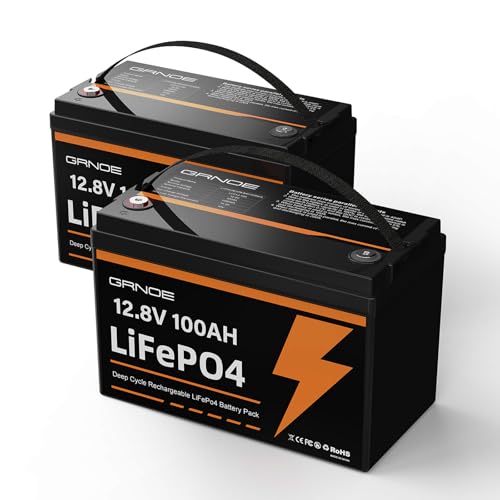
GRNOE 12V 100Ah LiFePO4 Group 31 Battery 2-Pack

AJC 6V 12Ah Battery for Portalac GS PE6V12

AJC 6V 7Ah Battery for Lightalarms 860.0018

Mighty Max ML12-6F2 6V 12Ah SLA Battery
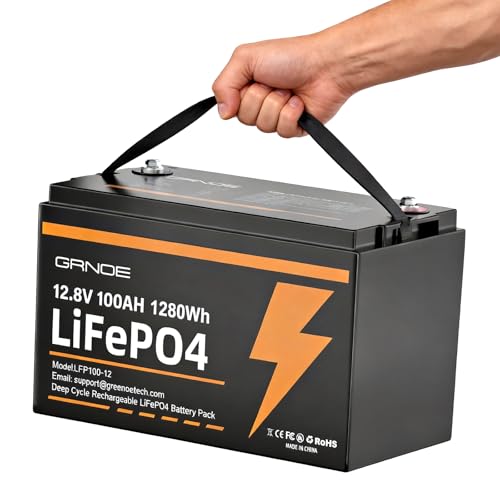
GRNOE 12V 100Ah LiFePO4 Group 31 Battery

OGRPHY 48V 105Ah Golf Cart Lithium Battery

GRNOE 12V 300Ah LiFePO4 Battery 3840Wh
The Strengths Of Each Pick
Two Group 31 lithium batteries give RV, van, or marine installers a practical starting point for expandable storage. Each unit supplies 12V and 100Ah, while the pair can be arranged for higher voltage or greater capacity depending on your electrical design.
This is not a direct six-volt replacement, but it offers a clear route into scalable lithium power. Compared with the single GRNOE battery later in the list, the two-pack configuration is more useful where redundancy or increased storage matters.
A Few Strong Suits
- The integrated 100A BMS manages battery-side protection without a separate enclosure.
- Each battery provides 1,280Wh, useful for sizable loads in an RV or boat.
- Configurations can scale to 51.2V and 20.48kWh with the full supported arrangement.
- Group 31 formats suit familiar marine and mobile-power layouts.
Handling Notes
- Heavy lithium batteries require secure mounting and careful handling during installation.
- Individual units may arrive on separate delivery routes, so arrival timing can differ.
- Series and parallel setup requires compatible batteries, careful sequencing, and appropriate charge control.
Core Details
Built With In Mind
You’ll benefit most from this pack as an RV, van, or marine installer planning a larger lithium system rather than replacing a small 6V fixture.
Another Choice May Suit
The GRNOE 12V 300Ah LiFePO4 Battery 3840Wh better serves stationary solar storage where handling one large battery is easier than installing two 100Ah units.
This 12Ah replacement targets Portalac GS PE6V12 emergency-light installations, making model compatibility the central ownership consideration. The 6V rating matches the original equipment class, while its higher reserve can suit fixtures that age between service intervals.
Unlike the lithium options, this sealed lead-acid-style unit keeps the installation conventional. It belongs in offices, hallways, and exit-light assemblies where dependable standby support matters more than reducing weight.
Useful Touches
- The 12Ah rating provides more capacity than the 7Ah Lightalarms option.
- Compatibility naming helps narrow the selection for Portalac-equipped fixtures.
- F1 terminals fit the intended connector arrangement for simpler replacement.
- A familiar 6V format avoids major changes to emergency-light wiring.
Practical Considerations
- The physical dimensions aren’t supplied, so measure the compartment and connector clearance before ordering.
- Capacity above the original requirement doesn’t make it suitable for equipment using a different terminal layout.
- Standby batteries benefit from periodic inspection and replacement once capacity declines.
Key Product Details
Right Fit For
Facility managers replacing a Portalac GS PE6V12 unit will find this the most direct match in the list.
Look Elsewhere When
The AJC 6V 7Ah Battery for Lightalarms 860.0018 is the appropriate alternative for that smaller Lightalarms fixture.
The smaller 7Ah capacity makes this option appropriate for a Lightalarms 860.0018 unit that specifies that exact model. A battery’s amp-hour rating represents stored charge, so matching the equipment’s requirement is more meaningful than simply selecting the highest capacity available.
Compared with the Portalac-focused AJC battery, this option serves a different device and a smaller energy reserve. For most emergency fixtures, exact model matching matters more than a generic six-volt label.
Where It Delivers
- It is designed as a direct replacement for the named Lightalarms model.
- The 7Ah rating fits applications where a smaller battery compartment matters.
- F1 terminals simplify connection to compatible equipment.
Small Caveats
- You should confirm the replacement label, voltage, capacity, and terminal orientation.
- The lower capacity offers less reserve than the 12Ah AJC Portalac replacement.
- No dimensions are provided, leaving compartment clearance uncertain until you inspect the fixture.
- Older emergency fixtures may need terminals cleaned and connections checked during replacement.
Who Should Grab It
You’ll find the most suitable application in a Lightalarms 860.0018 emergency unit that requires a 6V 7Ah F1 battery.
Swap It Out When
The AJC 6V 12Ah Battery for Portalac GS PE6V12 fits a higher-capacity Portalac system rather than this smaller Lightalarms model.
Sealed lead-acid construction, maintenance-free operation, and flexible mounting make the ML12-6F2 practical for alarm panels, lighting equipment, and other compatible 6V systems. Its specified dimensions support easier planning before the battery arrives.
Unlike the lithium group, this conventional chemistry trades weight and cycle-life claims for established compatibility. In a utility room or wall-mounted cabinet, that simpler format may be entirely adequate.
The Helpful Details
- The maintenance-free sealed design avoids routine electrolyte servicing.
- Flexible orientation supports installation in awkward backup-power housings.
- Resistance to shock and vibration suits equipment subject to minor movement.
- The 12Ah capacity provides useful runtime for moderate 6V loads.
Things To Weigh Up
- Only the battery is included, so wiring and mounting hardware require separate planning.
- Lead-acid chemistry is heavier than similarly rated lithium alternatives.
- Compatibility depends on the dimensions, F2 terminal, and required charging system.
Technical Highlights
The Right Fit
This battery suits technicians replacing compatible alarm, lighting, or backup systems that use a sealed 6V 12Ah F2 connection.
Reach For A Different Pick When
The AJC 6V 12Ah Battery for Portalac GS PE6V12 is a better fit when the housing requires F1 terminals and Portalac compatibility.
A 22.48-pound Group 31 lithium battery changes the handling equation for RV and trolling-motor installations. The 100Ah rating stores substantial energy, yet the listed weight remains lower than a comparable traditional lead-acid bank.
The single-battery format is easier to manage than the opening two-pack, though it offers less built-in expansion. For many mobile installations, that tradeoff produces the more manageable layout.
Everyday Advantages
- Group 31 dimensions ease comparison with existing mobile battery compartments.
- The integrated 100A BMS supports higher-current equipment.
- Lithium chemistry reduces weight compared with conventional lead-acid alternatives.
- A single unit simplifies wiring for a 12V installation.
Points To Note
- Charging requires a compatible LiFePO4 profile; a generic 12V charger may leave the battery incomplete.
- The recommended charging voltage is 14.6V within a stated tolerance.
- Batteries connected in series should be fully charged and closely matched in voltage.
- Periodic charging helps prevent problems from prolonged inactivity.
Made For
You’ll appreciate this model in an RV, electric vehicle, or marine setup that needs substantial 12V storage without a multi-battery bank.
A Better Fit Elsewhere
The GRNOE 12V 100Ah LiFePO4 Group 31 Battery 2-Pack better serves installations that require immediate redundancy or a larger preplanned array.
The 48V pack targets golf-cart electrical systems rather than a conventional 6V fixture. Its touch monitor and mobile app add visibility into battery behavior, which can be useful during long drives, solar charging, or stationary storage.
Compatibility remains the deciding factor. Major-brand controller support helps, though you should still verify voltage, connector arrangement, physical clearance, and charger requirements before installation.
Positive Takeaways
- A 105Ah pack supplies substantial energy through a single 48V battery system.
- The 200A BMS supports high-current cart applications.
- Touch monitoring puts operating information closer to the user.
- App connectivity adds remote visibility for compatible phones.
- The included 18A charger simplifies initial charging.
Worth Bearing In Mind
- You’ll need a cart system designed around the full 48V battery configuration.
- The 18A charger supports charging but may take longer under heavy use.
- Mobile features add value only when setup and connectivity work as intended.
Feature Breakdown
Who Will Love This
You’ll find this system most useful for a 48V golf cart needing substantial lithium storage and convenient status monitoring.
Where A Sibling Pick Shines
The GRNOE 12V 100Ah LiFePO4 Group 31 Battery is easier to integrate where your equipment operates on a conventional 12V system.
This 3,840Wh lithium battery targets substantial stationary or mobile storage, giving solar, RV, and off-grid projects more capacity in one enclosure. The 56-pound listed weight is easier to manage than a large group of lead-acid batteries, provided your space and handling plan support it.
Compared with the 100Ah GRNOE models, the trade-off is greater output and a 200A continuous discharge rating. That makes the larger unit more useful for powering sustained equipment than for simply filling an empty compartment.
What Earns Its Place
- 3,840Wh provides high energy density for a 12V installation.
- The 200A BMS supports demanding continuous loads.
- A single battery reduces the number of units needed for large capacity.
- Solar charging works with a properly selected charge controller.
- M8 terminal bolts and insulating caps support installation.
Possible Compromises
- The 56-pound unit still needs a secure base and two-person handling when required.
- A LiFePO4-compatible charger is necessary; a general-purpose or SLA charger isn’t suitable.
- Solar charging requires a charge controller to regulate energy flow.
- Installation planning must accommodate higher current and careful cable sizing.
Important Details
Built With In Mind
You’ll benefit most from this battery in a solar-assisted RV, marine cabin, workshop, or off-grid setup needing high 12V capacity.
Not Your Match When
The Mighty Max ML12-6F2 6V 12Ah SLA Battery is easier to deploy when you only need a small, conventional six-volt replacement.
What Matters Before You Choose A Battery
Start with the equipment’s required voltage, capacity, terminal style, and physical dimensions. A battery can share the correct amp-hour rating yet still fit incorrectly or connect unpredictably. Model numbers and terminal drawings deserve the closest attention for emergency equipment.
Chemistry affects daily ownership. Sealed lead-acid is a familiar option for small standby systems, while lithium iron phosphate provides greater energy density and typically carries a lower weight burden. Lithium demands a compatible charger and more deliberate handling during series or parallel connections.
Capacity should follow actual load. A 7Ah battery may suit a small emergency fixture, while an RV, cart, or solar system needs far more stored energy. Divide expected wattage by system voltage to estimate current, then add room for conversion losses and sustained loads.
Installation design completes the decision. Check compartment clearance, ventilation, cable thickness, battery restraint, and circuit protection before ordering. Large lithium systems also need compatible charge control and a safe sequence for connecting or separating batteries.
Common Battery Selection Errors
Mistakes Worth Dodging
Don’t judge a replacement solely by voltage. Capacity, terminals, dimensions, and equipment compatibility determine whether it will function as intended. Compare the replacement label with the original battery before removing anything.
A second mistake is treating a generic charger as suitable for every chemistry. LiFePO4 charging uses different voltage and charge behavior, so use equipment designed for that battery type.
Where The Extra Money Goes
Higher-cost lithium systems commonly add energy density, battery-management hardware, monitoring, or larger current handling. Those additions matter in mobile equipment and off-grid systems where weight, usable capacity, and status visibility carry real value.
For a small emergency light, those improvements may add little. A correctly sized SLA battery can remain the more practical choice for a compact replacement application.
Frequently Asked Questions
Is A 6V Deep Cycle Battery Different From A Regular 6V Battery?
Yes. A deep cycle battery is designed for repeated charge and discharge cycles, while many regular batteries prioritize short, high-current starts. Verify the equipment’s chemistry and cycle requirements before replacing it.
Can I Use A 12V Battery In A 6V Device?
Usually not. Supplying 12V to equipment designed for 6V can damage its circuitry or connected accessories. Use a voltage regulator or converter only when its current rating and wiring requirements are appropriate.
What Does The BMS Do?
A battery-management system, or BMS, monitors cell voltage, current, temperature, and charging conditions to help protect a lithium battery. It reduces risk but doesn’t eliminate the need for correct wiring and compatible chargers.
Are Lithium Batteries Always The Better Choice?
No. Lithium iron phosphate can reduce weight and provide high usable capacity, while sealed lead-acid may suit a small, inexpensive standby installation better. Choose from the application rather than chemistry alone.
How Do I Know A Replacement Battery Fits?
Check voltage, amp-hour rating, terminal type, dimensions, orientation, and the manufacturer’s model reference. Matching only the voltage leaves several critical compatibility questions unresolved.
The Takeaway
For a small emergency fixture, the AJC models and Mighty Max battery offer the most relevant 6V choices because they target specific equipment formats. The GRNOE and OGRPHY options belong in larger 12V or 48V systems, where weight, capacity, charging equipment, and physical installation drive the decision more strongly than a six-volt label. Match the battery to the device, then give the wiring and charger equal attention.
