


A remote deer feeder needs dependable power despite long distances, changing weather, and limited access to mains electricity. Your options range from a programmable feeder timer to 6V and 12V solar panels designed for hunting grounds and trail cameras. The right fit depends on your feeder’s electrical system, battery configuration, mounting point, and expected sunlight.
A Side-By-Side Look


VOLT HERO Upgraded 6V Deer Feeder Solar Panel

VOLT HERO 6V Solar Deer Feeder Panel
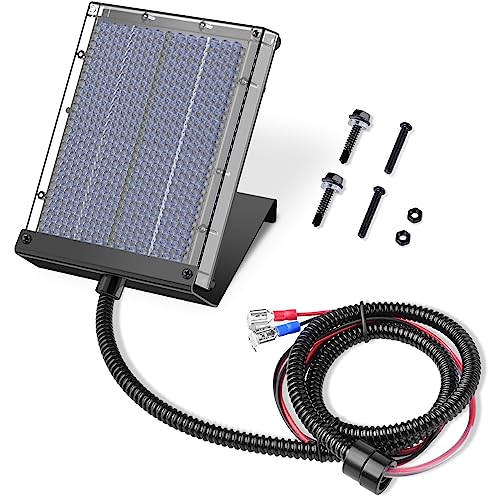
VOLT HERO 12V 1.8W Waterproof Solar Panel

VOLT HERO 6V 1.98W Trail Camera Panel

VOLT HERO Upgraded 12V Deer Feeder Solar Panel

VOLT HERO 12V 1.98W Trail Camera Panel
Taking A Closer Look At The Options
THE-Timer takes a different approach from the solar options that follow. It controls when an existing feeder motor operates, allowing you to set a dispensing schedule without adding a panel to the installation. That makes it useful for camps where the battery and feeder are already wired but predictable discharge times matter.
Compatibility is unusually flexible because the unit accepts either 6V or 12V systems. You still need a correctly rated battery, motor connection, and enclosure for outdoor conditions. Compared with the VOLT HERO panels, it manages timing rather than replenishing battery power.
What Pays Off
- Supports both common feeder battery voltages.
- Scheduled operation reduces unnecessary motor runs and battery drain.
- Works well as an add-on to an already powered feeder.
Practical Considerations
- It does not recharge a battery, so a solar panel remains necessary in off-grid locations.
- Outdoor installation requires weather-conscious wiring and enclosure protection.
Made For
You’ll benefit most from a wired 6V or 12V feeder that already has reliable battery power but needs scheduled dispensing.
A Better Fit Elsewhere
The VOLT HERO Upgraded 6V Deer Feeder Solar Panel suits remote properties where battery replenishment matters more than timer control.
An adjustable mounting bracket gives this 6V panel a practical edge on wooded properties with uneven sunlight. Changing seasonal sun angles can leave a fixed panel poorly oriented, while the bracket makes repositioning easier after installation. For most remote feeders, that flexibility is more valuable than decorative hardware.
Monocrystalline silicon is the photovoltaic material used to convert sunlight into electrical energy. Compared with the VOLT HERO 6V Solar Deer Feeder Panel, this upgraded model emphasizes angle adjustment, making it the stronger fit for installations where mounting position requires frequent refinement.
Strengths Worth Knowing
- The adjustable bracket helps maintain a useful position as sun exposure changes.
- Monocrystalline construction suits exposed outdoor charging locations.
- Its 6V configuration aligns with common low-voltage feeder batteries.
- Seasonal repositioning can improve access to available sunlight.
Worth Noting
- Charging output still depends on sunlight, angle, shading, and panel cleanliness.
- You must confirm that the feeder and wiring accept 6V solar charging.
Quick Facts
Right Fit
This panel fits you best when your 6V feeder has a secure mounting point and changing shade or sun angles.
Consider Something Else When
The VOLT HERO 6V 1.98W Trail Camera Panel may serve you better when a rated output and clip connection are clearer priorities.
A straightforward 6V charging panel can suit an established deer feeder that lacks nearby electrical service. Its role is simple: convert daylight into power for a compatible battery system. In a clearing with dependable sun exposure, that basic approach may be enough for routine seasonal maintenance.
This panel uses polycrystalline silicon, another photovoltaic material designed to turn sunlight into electricity. Compared with the preceding VOLT HERO Upgraded 6V Deer Feeder Solar Panel, you give up the highlighted adjustable bracket, though the supplied feature set still includes a 6V standard mount.
A Strong Showing
- The 6V format fits many conventional deer feeder batteries.
- Polycrystalline cells provide a practical solar charging approach.
- A standard mount suits uncomplicated feeder installations.
Points To Note
- Dense tree cover can reduce charging time substantially.
- Regular dirt and debris removal helps preserve usable solar exposure.
- No rated wattage is stated, making comparison with panel 5 less direct.
- Compatibility with your battery and feeder wiring must be confirmed.
Feature Snapshot
Who Should Grab It
You’ll find this most useful with a 6V feeder installed in an open, consistently sunny location.
Look Elsewhere When
The VOLT HERO Upgraded 6V Deer Feeder Solar Panel offers a better fit when seasonal angle adjustment is your priority.
This 12V panel gives you a rated 1.8-watt output, which makes comparison with other VOLT HERO options more concrete. That figure describes nominal electrical output under specified panel conditions, not constant charging at your feeder. Direct sunlight and a clean surface still determine how useful the rating becomes in practice.
Waterproof construction is the defining advantage for installations exposed to rain and weather. Unlike panel 3, this model targets a 12V battery system and uses polycrystalline silicon. It may be the clearer choice for a feeder installed on an exposed tree, post, or elevated structure.
Good Reasons To Consider
- The stated 1.8W output allows more direct capacity comparisons.
- Waterproof construction suits exposed feeder installations.
- Polycrystalline cells convert daylight into electrical energy.
Small Caveats
- It does not suit a feeder wired exclusively for 6V charging.
- Heavy shade makes any rated solar output less useful.
The Details
Built With In Mind
This panel fits you best when you run a compatible 12V feeder in a rainy, open-air location and value a stated output rating.
Swap It Out When
The VOLT HERO 12V 1.98W Trail Camera Panel offers a better fit for your setup when slightly higher stated output matters more than waterproof construction.
A 6V, 1.98-watt panel brings a useful middle ground for remote electronics that need routine supplemental charging. The stated output gives you more information than panel 3, while the crocodile clips provide a direct battery connection for a compatible feeder or trail camera. That versatility suits mixed power needs around one property.
Monocrystalline silicon is used to convert sunlight into electrical energy. Compared with the earlier VOLT HERO 12V 1.8W Waterproof Solar Panel, you receive more stated output but operate at a different system voltage. Matching the panel to your battery remains the decisive step.
Where It Helps
- The 1.98W rating provides a clear basis for comparing charging capacity.
- It can support compatible 6V trail cameras as well as feeders.
- Crocodile clips simplify attachment to compatible battery terminals.
- Monocrystalline cells suit daylight-oriented installations.
Less Ideal Details
- Clip contacts should be checked for corrosion and kept clear of moisture.
- The panel offers no stated waterproof rating.
- For frequent tree-cover changes, an adjustable bracket may be more convenient.
Best Suited To
You’ll benefit most when you need a compact 6V charging source for a compatible feeder or trail camera battery.
Another Choice May Suit
The VOLT HERO Upgraded 6V Deer Feeder Solar Panel better serves your setup when easy seasonal repositioning matters most.
The 12V version carries the adjustable-bracket concept into higher-voltage feeder systems. That makes sense for a camp with compatible 12V batteries and a mounting area where changing sun angles affect charging. You can refine the panel position without treating the initial mounting height as permanent.
Monocrystalline silicon forms the panel’s photovoltaic layer, converting sunlight into electrical energy. Compared with panel 2, the core design is similar but the voltage class is different; compared with panel 4, this choice emphasizes positioning rather than a stated wattage or waterproof designation.
Notable Gains
- Angle adjustment helps accommodate seasonal sun-position changes.
- The 12V configuration suits compatible higher-voltage feeder batteries.
- Monocrystalline cells provide a practical outdoor charging design.
- Repositioning may improve exposure without rebuilding the mounting point.
Trade-Offs To Consider
- It is not appropriate for a strictly 6V charging system.
- No rated wattage or waterproof rating is stated.
- Dirt, leaves, and animal contact can reduce usable exposure over time.
Technical Highlights
The Right Fit
This panel fits your 12V feeder when changing sun angles require an adjustable mounting position.
Reach For A Different Pick When
The VOLT HERO 12V 1.8W Waterproof Solar Panel better serves you when a stated wattage and waterproof construction guide your choice.
This panel combines a 12V system with a stated 1.98-watt output, making it easy to compare against panel 4’s lower rated figure. Crocodile clips provide a straightforward battery connection, so you can use it for a compatible feeder or a 12V trail camera setup without moving between two different solar designs.
Monocrystalline silicon handles the conversion of sunlight into electrical energy. Among the 12V choices, this model offers the clearest output rating while panel 6 highlights adjustment and panel 4 emphasizes waterproof construction. Your property’s wiring and mounting conditions should decide which attribute matters most.
What Helps Most
- A stated 1.98W output supports direct capacity comparisons.
- Crocodile clips suit compatible battery terminals.
- The 12V rating works with higher-voltage feeder and camera batteries.
- Monocrystalline cells suit daylight-dependent charging.
Details To Watch
- No waterproof rating is specified for outdoor exposure.
- Terminal connections need periodic inspection and cleaning.
Essential Details
Who Will Love This
You’ll love this fit when a 12V feeder and trail camera share a sunny property and clip-style battery connections suit you.
Where A Sibling Pick Shines
The VOLT HERO 12V 1.8W Waterproof Solar Panel suits you better when documented weather resistance is the priority.
Matching Power To Your Feeder Setup
Start with voltage. A 6V feeder needs a panel or timer designed for 6V, while a 12V system requires matching equipment. Voltage is the electrical potential supplied by the source, and mixing incompatible levels can damage wiring or connected components. Confirm the label on your feeder motor, battery, and control wiring before installation.
Battery chemistry and charging requirements come next. Some systems accept ordinary maintenance-free lead-acid batteries, while others use rechargeable types or include protection circuitry. A solar panel should be suitable for your feeder’s charging method rather than acting as a generic power attachment.
Placement deserves as much attention as the panel itself. Direct sunlight produces more usable charging time than a position beneath dense branches. An adjustable bracket helps with seasonal orientation, while a fixed standard mount may be simpler where the sun path remains consistent. Keep the panel clear of leaves and clean before you rely on it during an extended visit.
Battery Format And Capacity
A larger battery stores more electrical energy, although its weight can complicate transport. Deep-cycle batteries generally suit repeated discharge and recharge cycles better than batteries designed primarily for starting engines. Match capacity to the feeder motor’s demand and the time you expect to remain away from the property.
Voltage And Wiring Connections
Voltage compatibility must cover the panel, battery, timer, and feeder motor. Secure connections also limit voltage loss over the cable run, particularly across long distances between the panel and feeder. Follow the feeder manufacturer’s wiring guidance and avoid exposed splices where moisture can accumulate.
Outdoor Mounting And Weather
Tree placement can simplify access but create uneven shade. Elevated or post-mounted panels may receive stronger seasonal light, while ground-level units can be easier to inspect. Water resistance is valuable in exposed settings, though the absence of a stated rating calls for regular inspection of the enclosure, clips, and cable entries.
Matching Charger Features To Field Conditions
Hidden Buying Traps
A 6V label alone does not establish compatibility with your controller or battery. Check the charging requirements and connector arrangement before ordering, and do not assume a trail-camera panel has the weather resistance needed for an exposed feeder post. Rated output, voltage, mounting, and weather features each answer a different question.
What Separates Premium From Basic
Higher-tier options tend to emphasize adjustable positioning, cell material, stated output, or weather resistance. Those additions can help on properties with changing sun angles or harsh exposure, while a basic fixed mount may be sufficient in a stable sunny clearing. The useful upgrade is the feature your installation actually needs, not simply the longer specification list.
Frequently Asked Questions
Is a 6V deer feeder battery compatible with a 12V solar panel?
No. Match the panel, battery, wiring, and feeder motor to the same voltage system.
Can one solar panel charge two devices?
Possibly, but only with a wiring configuration and load limits designed for that arrangement.
Does a higher wattage panel charge a feeder faster?
Higher rated output can provide more charging power in suitable sunlight, but voltage compatibility and placement remain essential.
Are trail camera panels suitable for deer feeders?
Some are, provided their voltage and charging connection match your feeder battery system.
Do solar feeder panels need direct sunlight?
Yes. Shade, dirt, and incorrect orientation can reduce usable charging performance.
Wrap Up
Your best fit depends on the feeder already in your possession rather than the panel alone. THE-Timer serves wired systems needing scheduling, while the VOLT HERO choices cover 6V and 12V solar charging with different mounting, output, connection, and weather priorities. Match voltage first, then choose the features your location genuinely needs.
