


A 6S battery setup demands more than a higher voltage number. Cell configuration, connector type, discharge rating, and pack weight all determine whether a battery fits your RC car, truck, boat, or aircraft and performs well under load. The HOOVO 2S pack is included for comparison, but its lower cell count makes it unsuitable as a 6S option.
For RC hobbyists, matching the battery to the vehicle’s voltage and connector takes priority. You’ll also need to account for balance-lead requirements, mounting space, and the physical demands of racing or long-range flight.
Your Options, Compared

HOOVO 2S 7.4V 5200mAh LiPo Hard-Case Battery

OVONIC 22.2V 5300mAh 6S Lipo Battery EC5 Plug

Zeee 6S 6000mAh 22.2V Battery EC5

Zeee Premium Pro 6S 3300mAh 22.2V EC5 Batteries

OVONIC 22.2V 2800mAh 6S Lipo XT60 Battery

Zeee 6S 1500mAh 22.2V XT60 Battery, 2 Pack
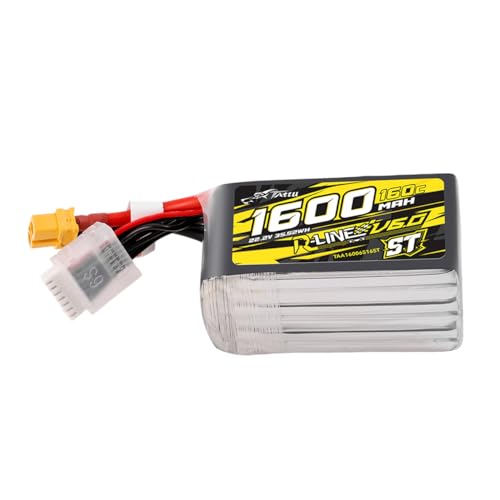
TATTU R-Line V6.0 6S 1600mAh 22.2V XT60 Battery
A Deeper Look At The Lineup
The HOOVO pack is a useful reference point because it sits well outside the 6S category. Its two-cell configuration produces a nominal 7.4V, so it belongs with lower-voltage RC cars and trucks rather than any of the 22.2V packs reviewed here.
The hard case gives it a more substantial feel than a bare soft pack, which may suit hobbyists who value a protected, block-shaped installation. The honest limitation is simple, though: a 2S battery cannot replace a 6S battery in a 22.2V system.
Bright Spots
- The 5200mAh capacity supports longer operating sessions than many similarly sized 2S packs.
- Its 80C discharge rating indicates strong current capability for demanding RC applications.
- The T-style plug offers a straightforward connection for compatible vehicles.
- The hard-case format can simplify mounting in a compartment built around a rectangular pack.
Small Caveats
- It is a 2S pack, not a 6S option, and requires a compatible 7.4V setup.
- The specified dimensions of 137 by 46 by 24mm require adequate tray space.
Who It Suits Best
You’ll find this pack most useful for owners of 7.4V RC cars or trucks that use the specified T-style connector.
Another Choice May Suit
Choose the OVONIC 22.2V 5300mAh 6S Lipo Battery EC5 Plug for a genuine six-cell RC or aircraft setup.
Compared with the lower-voltage HOOVO, this OVONIC is a true six-cell pack with a much larger energy reserve. Its 5300mAh capacity and 120C discharge rating suit substantial RC cars, trucks, boats, and aircraft, provided the vehicle is designed for 22.2V nominal power.
For a large ground vehicle that carries a substantial battery, that capacity may be more useful than squeezing in a small racing pack. You’ll still need to confirm EC5 connector compatibility and leave room around the approximately 727g pack.
Benefits That Matter
- The 5300mAh capacity supports extended sessions in models with room for a larger pack.
- A 120C rating gives it considerable discharge capability for high-current setups.
- The 6S1P layout provides six cells in series at a nominal 22.2V.
- EC5 connections suit vehicles already set up around that robust connector style.
Things To Consider
- Its roughly 727g weight can affect acceleration and aircraft loading.
- The larger connector may not match equipment designed around XT60.
Key Specs
Made For
This pack fits experienced RC hobbyists with large 22.2V models and an EC5-equipped power system.
Look Elsewhere When
The OVONIC 22.2V 2800mAh 6S Lipo XT60 Battery offers a lighter alternative for builds using XT60 connections.
The Zeee two-pack stands apart through capacity rather than extreme discharge rating. Each 6S1P pack holds 6000mAh at 22.2V, giving you two substantial reserves for RC vehicles or aircraft with generous battery compartments.
That capacity can benefit long-running models more than a compact racing pack, although each battery weighs about 833g. Compared with the OVONIC 5300mAh option, you gain capacity and receive two packs, but you also give up some portability.
Good Reasons To Consider
- Each 6000mAh pack offers the largest stated capacity in this lineup.
- The included pair helps you rotate packs during extended hobby sessions.
- The 100C discharge rating remains substantial for demanding RC equipment.
- EC5 connectors suit larger models with matching power leads.
Honest Caveats
- The approximate 833g weight per pack is substantial for smaller aircraft.
- Large dimensions can be difficult to secure in compact chassis trays.
- Soft-pack batteries can show swelling with age, so storage and inspection matter.
Technical Highlights
Right Fit For
Large RC cars, trucks, and aircraft with EC5 connections and space for a high-capacity pack suit this Zeee set well.
Consider Something Else When
Choose the TATTU R-Line V6.0 6S 1600mAh 22.2V XT60 Battery for a compact racing aircraft or vehicle that cannot carry 6000mAh packs.
The Premium Pro line targets a middle ground between the Zeee 6000mAh endurance set and the compact 1500mAh FPV pack. Each battery provides 3300mAh, a 22.2V nominal output, and a stated 130C discharge rating, making it a credible option for performance-oriented 6S builds.
For RC hobbyists who want more output headroom than a 100C pack without carrying the full 6000mAh format, this middle capacity may be easier to balance. You’ll need EC5-compatible leads and enough bay volume for the 3300mAh pack.
The Value In It
- 3300mAh offers a practical balance of runtime and pack size.
- The 130C rating supports high-current RC configurations.
- Two packs give you a rotation option for longer sessions.
- EC5 connectors are suited to robust, higher-current setups.
Points To Keep In Mind
- It is less suited to endurance-focused models than the 6000mAh Zeee option.
- EC5 connector fit should be checked before installation.
- Repeated high-current use can accelerate pack wear.
Built With In Mind
You’ll appreciate this pair most in 6S RC cars, trucks, or aircraft where 3300mAh capacity and a 130C discharge rating suit the available space.
Where A Sibling Pick Shines
The Zeee 6S 1500mAh 22.2V XT60 Battery is a better fit for compact FPV craft that prioritize low mass over long operating sessions.
The XT60 connection gives this OVONIC a different advantage from the earlier EC5 packs. It fits many modern RC trucks, buggies, racing cars, and aircraft, while the 150C discharge rating gives performance builds substantial current capability.
Its 2800mAh capacity is more modest than the 5300mAh OVONIC, so the appeal is in the balance between output, runtime, and connector compatibility. Depending on your model, the pack may be easier to mount than a larger high-capacity battery.
The Upside
- The 150C rating is well suited to performance-oriented RC equipment.
- XT60 connectivity works with many common 6S platforms.
- 2800mAh provides a more manageable capacity than 5300mAh packs.
- The 22.2V output supports standard six-cell systems.
Worth Noting
- It will not connect directly to an EC5-equipped model without the correct adapter or wiring.
- High-current use demands careful connector and wiring checks.
Feature Breakdown
Who Will Love This
Performance RC hobbyists with XT60-equipped cars or aircraft will find the OVONIC 2800mAh format practical and adaptable.
Reach For A Different Pick When
Choose the OVONIC 22.2V 5300mAh 6S Lipo Battery EC5 Plug instead for a large model needing more capacity and EC5 connectivity.
This Zeee set turns in the opposite direction from the 6000mAh version, favoring a lighter 1500mAh format for compact FPV aircraft and small racing models. Each pack is specified at 22.2V, 120C, and an approximate weight of 240g, which makes the size easier to manage in tighter builds.
The XT60 plug is useful because it appears across many hobby platforms, although the charging system and lead balance must still match a six-cell pack. The two-pack format is convenient for rotating batteries, while the lower capacity means shorter sessions may be more realistic.
Notable Upsides
- The compact 1500mAh format suits smaller FPV and racing platforms.
- A 120C rating supports strong bursts in compatible models.
- XT60 plugs simplify integration with many current RC builds.
- Two packs make rotation practical during repeated runs.
Less Ideal Details
- Lower capacity may not suit long endurance sessions.
- The XT60 lead still needs proper polarity and balance-lead verification.
- Soft-pack construction can be vulnerable to punctures during rough handling.
The Right Fit
Small FPV pilots and RC racers who need a light 6S pack with XT60 compatibility will find this format easy to place in smaller models.
A Better Fit Elsewhere
The Zeee Premium Pro 6S 3300mAh 22.2V EC5 Batteries suit larger performance builds that need more capacity and EC5 connections.
TATTU’s R-Line pack is built around racing use, with a 160C discharge rating and a 1600mAh capacity in the 22.2V six-cell class. Compared with the Zeee 1500mAh XT60 set, it has a similar compact scale but a higher stated discharge rating and a racing-focused construction.
The XT60 plug should be familiar across many hobby builds, while the compact form can help you keep weight down in a small aircraft or race chassis. You’ll still need to confirm that the model, charger, and balance lead are configured for 6S.
Real Benefits
- A 160C rating provides high current capability for racing setups.
- The 1600mAh capacity keeps the pack compact for smaller craft.
- XT60 connectivity matches many common 6S platforms.
- The racing-focused format suits quick rotations between runs.
Trade-Offs To Consider
- Its capacity is limited compared with 2800mAh and 6000mAh packs.
- Racing use can place significant stress on connectors, leads, and cells.
- Inspect the pack regularly for swelling or physical damage.
Core Details
Best Suited To
Competitive RC pilots using compact XT60-equipped race builds will find the TATTU R-Line V6.0 format purpose-driven and easy to integrate.
Swap It Out When
Choose the OVONIC 22.2V 2800mAh 6S Lipo XT60 Battery for longer sessions where extra capacity matters more than the smallest racing format.
Matching Voltage, Connector, and Capacity
A six-cell battery has a nominal voltage of 22.2V, with each cell contributing approximately 3.7V. That makes the battery’s cell count more important than the connector alone, since a 2S pack such as the HOOVO model cannot safely substitute for a 6S system.
The connector is the next fit check. EC5 and XT60 serve different wiring arrangements, and using an adapter does not automatically solve polarity, lead balance, or current-handling requirements. Match the pack to the vehicle’s existing battery lead and verify the connector’s rated current.
Capacity and weight should be read together. A 6000mAh pack can support longer sessions, but its greater mass can change acceleration, handling, and aircraft flight characteristics. A 1500mAh or 1600mAh pack is more attractive for compact racing models, though runtime is typically shorter.
Discharge ratings describe current capability, not a promise of identical performance in every vehicle. A high-C battery can still be limited by wiring, connectors, motor setup, battery age, and temperature. Inspect connections before repeated high-load runs.
Choosing a Battery With Less Guesswork
Common Shopping Slip Ups
The most common mistake is focusing on the C rating while overlooking connector compatibility or pack dimensions. Measure the battery bay and compare the nominal voltage before choosing a pack. Another error is assuming every 22.2V battery uses the same balance lead, so verify the six-cell connection arrangement.
What The Higher Tier Buys
Higher-rated packs may use cells and construction intended to support greater current delivery, which can be useful in racing or high-power models. The premium does not remove the need to match capacity, weight, and connector type. Choose a higher output rating when your vehicle and wiring support it; a compact endurance-oriented pack may serve a different purpose.
Frequently Asked Questions
What does 6S mean in an RC battery?
6S means the pack contains six lithium-polymer cells connected in series. Its nominal voltage is 22.2V, so it requires a compatible six-cell charger and vehicle power system.
Can a 2S battery replace a 6S battery?
No. A 2S battery has a nominal 7.4V, while a 6S battery has a nominal 22.2V. The HOOVO pack belongs with compatible 7.4V systems, not a 22.2V model.
Are EC5 and XT60 connectors interchangeable?
They are different connector formats and are not a direct match. You may need a purpose-built cable or a correctly rated adapter, but you should verify polarity, balance leads, and current capacity first.
Which capacity is best for RC racing?
Smaller capacities such as 1500mAh and 1600mAh can suit compact racing builds where low weight matters. Larger capacities such as 2800mAh and 6000mAh fit models with more space and a greater runtime requirement.
Does a higher C rating mean longer runtime?
Not necessarily. A higher C rating describes discharge capability, while capacity contributes more directly to runtime. You should balance both figures with connector fit, pack weight, vehicle design, and wiring.
Final Verdict
The right 6S battery depends on the machine, not merely the largest number on the label. High-capacity packs suit roomy endurance builds, while 1500mAh and 1600mAh options fit lighter racing setups. EC5, XT60, voltage, balance connections, and physical dimensions should decide the match before discharge ratings do.
