


Keeping a remote feeder running means dealing with spare batteries, uneven sunlight, and wiring that ages outdoors. These solar panels reduce routine battery handling by converting daylight into charging power for compatible deer feeders. Most of this lineup uses 6V charging, while three models serve 12V systems, so matching your feeder’s electrical requirements matters before selecting a panel.

The Lineup, Simplified
VOLT HERO Upgraded 6V Deer Feeder Panel

Risinimi 6V Waterproof Deer Feeder Panel

VOLT HERO 6V Hunting Feeder Panel
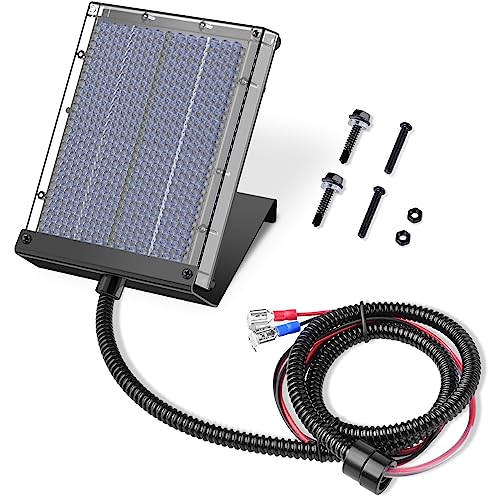
VOLT HERO 12V 1.8W Waterproof Panel

VOLT HERO 6V 1.98W Trail Camera Panel

VOLT HERO Upgraded 12V Deer Feeder Panel

VOLT HERO 12V 1.98W Trail Camera Panel
A Closer Look At Each Pick
Sunlight can become unreliable as trees grow around a feeder, so panel positioning matters nearly as much as electrical compatibility. This model combines monocrystalline silicon, which converts daylight into electrical power, with a standard 6V mounting arrangement. For most remote feeders, that combination makes it a practical fit.
The adjustable bracket is the useful ownership detail here. You gain a better opportunity to face the panel toward available light without rebuilding the mounting point, especially on a feeder placed near the edge of a tree line.
Standout Benefits
- Monocrystalline silicon supports outdoor solar charging.
- The adjustable mount helps optimize exposure to changing sunlight.
- A standard 6V format suits compatible hunting feeders.
- Angle adjustment reduces the need for frequent repositioning.
Worth Noting
- Tree cover may still reduce charging output during heavily shaded periods.
- Bracket fasteners require periodic inspection as the feeder vibrates outdoors.
Key Specs
Made For
You benefit most with a 6V feeder mounted where the panel can receive unobstructed daylight.
A Better Fit Elsewhere
VOLT HERO 12V 1.98W Trail Camera Panel fits a 12V feeder or camera that needs clip-connected charging.
Unlike the VOLT HERO opening choice, Risinimi emphasizes a straightforward outdoor installation with alligator clips and a metal bracket. Waterproof construction matters in open woods where rain, dew, and seasonal moisture regularly reach mounted equipment. You still need a compatible 6V connection at the battery or feeder.
The blocking diode is another useful component because it helps keep the panel from consuming stored battery power. That characteristic supports unattended operation, though sunlight exposure and wiring placement remain central to dependable charging.
The Value In It
- Waterproof construction suits exposed feeder locations.
- Alligator clips simplify attachment to compatible battery terminals.
- The anti-corrosion metal bracket resists weathering around the mount.
- A blocking diode reduces reverse drainage from the connected battery.
Small Caveats
- Clip connections can loosen and need occasional tightening.
- Its 6V requirement excludes 12V feeder batteries.
- Wet foliage against the panel may reduce useful sunlight.
Feature Snapshot
The Right Fit
You get the most from this option with a 6V feeder and an open mounting point that receives direct sun.
Consider Something Else When
VOLT HERO Upgraded 6V Deer Feeder Panel suits you when adjustable panel positioning matters more than clip-based wiring.
A basic solar upgrade can spare you from frequent trips to a remote feeder, particularly on a property where battery checks take more time than the installation. This VOLT HERO model uses polycrystalline silicon, meaning multiple silicon regions form the panel’s photovoltaic layer. It targets compatible 6V hunting feeders.
Compared with the upgraded panel from the same brand, this option offers less detail about its mounting adjustment. For most exposed locations, though, the core focus remains direct sunlight and correct electrical compatibility.
Everyday Wins
- The 6V format supports common hunting feeder setups.
- Polycrystalline construction provides a basic solar charging surface.
- A dedicated feeder panel reduces dependence on routine battery swaps.
Points To Note
- Wooded sites may produce less charging power than open fields.
- Limited mounting details make site planning important before installation.
- You must verify the feeder’s charging connection before wiring.
Who Should Grab It
You’ll find this model most practical for a 6V feeder on open land with consistent direct sunlight.
Where A Sibling Pick Shines
Risinimi 6V Waterproof Deer Feeder Panel offers more explicit weather-resistance and alligator-clip details for hands-on installations.
The shift to 12V matters here because solar panels must match the battery’s charging system. Rated at 1.8 watts, this compact VOLT HERO option supplies a stated power output under suitable sunlight. It also carries a waterproof specification, which suits exposed feeder installations.
Polycrystalline silicon forms the photovoltaic surface, a term meaning the material and arrangement used to convert sunlight into electricity. The 1.8W rating offers a clearer capacity reference than the earlier 6V choices, but panel size and feeder consumption still influence charging time.
Practical Pluses
- A stated 1.8W output gives you a useful power reference.
- The 12V design targets compatible feeder battery systems.
- Waterproof construction suits exposed outdoor mounting.
- Polycrystalline material supports daylight-to-electricity conversion.
Trade-Offs
- The 1.8W rating may suit modest rather than intensive power demand.
- It cannot serve a feeder wired exclusively for 6V charging.
- Accumulated dirt needs occasional cleaning to preserve exposure.
Quick Facts
Right Fit For
You’ll find this panel suitable for a low-draw 12V feeder positioned in direct, unobstructed sunlight.
Reach For A Different Pick When
VOLT HERO 12V 1.98W Trail Camera Panel offers a higher stated wattage for a similar twelve-volt application.
Trail cameras and compact feeders can share the same solar-charging approach, making the 1.98W rating a more concrete starting point than voltage alone. This panel pairs that output with a 6V format and monocrystalline silicon, the photovoltaic material named for its single-crystal structure. You gain a versatile option for compatible outdoor electronics.
Alligator clips provide the electrical attachment, which is convenient for field setup. Unlike Item 1, this title places the wattage in front, making it easier to compare against Item 4’s 1.8W 12V panel.
Useful Strengths
- The stated 1.98W output offers a clear charging comparison.
- Six-volt compatibility fits several smaller outdoor devices.
- Alligator clips simplify connection at a battery terminal.
- The trail-camera focus expands the potential use beyond feeders.
Possible Compromises
- You need a genuine 6V-compatible battery connection.
- Exposed clips require corrosion checks during ownership.
- Heavy woodland shade can slow charging.
Built With In Mind
You benefit most when maintaining a compatible 6V trail camera or feeder away from easy electrical access.
Skip It When
VOLT HERO Upgraded 12V Deer Feeder Panel is the stronger match for a feeder that requires twelve-volt charging and an adjustable bracket.
Tree growth can gradually turn a well-placed panel into a shaded one, so the angle-adjustable bracket here has real value. The 12V format broadens this roundup beyond six-volt feeder batteries, while monocrystalline silicon provides the panel’s photovoltaic surface. It fits setups where correct voltage and adjustable placement are priorities.
Compared with VOLT HERO 12V 1.8W Waterproof Panel, this model emphasizes mounting flexibility rather than a stated wattage in its title. For a feeder near developing foliage, that distinction may matter more than a small increase in charging capacity.
Well-Handled Touches
- The adjustable bracket helps accommodate changing light conditions.
- Monocrystalline silicon supports outdoor charging.
- The 12V format serves compatible feeder batteries.
- Repositioning the angle can reduce installation rework.
Details To Watch
- No stated wattage appears in the supplied product information.
- Adjustment doesn’t overcome severe permanent shade.
- You must check the mount for looseness after harsh weather.
Technical Highlights
Made For
You’ll benefit most with a 12V feeder whose location requires periodic sunlight-angle adjustments.
Another Choice May Suit
VOLT HERO 12V 1.98W Trail Camera Panel suits you when a stated wattage matters more than adjustable mounting.
A stated 1.98W output makes this one of the more transparent options in the lineup, especially next to models that provide voltage but omit wattage. Its 12V format supports compatible batteries, while monocrystalline silicon supplies the sunlight-conversion surface. That combination suits several low-power outdoor devices.
The included alligator clips make battery attachment straightforward, including at trail cameras mounted away from a building. Unlike Item 6, this model emphasizes output and clip wiring rather than an angle-adjustable mount, so your preferred installation method should guide the choice.
What It Does Well
- The 1.98W rating provides a clear measure of panel output.
- Twelve-volt compatibility supports a wider battery range.
- Alligator clips enable convenient terminal attachment.
- Trail-camera suitability extends beyond feeder use.
Less-Stong Areas
- No adjustable-angle feature is identified in the supplied details.
- Clip wiring needs regular inspection in wet environments.
- Panel performance can decline beneath dense tree cover.
Feature Facts
Whose Shelf It Belongs On
You’ll find it useful for a compatible 12V feeder or trail camera with a straightforward clip-connected setup.
Look Elsewhere When
VOLT HERO Upgraded 12V Deer Feeder Panel fits better when you need a bracket that changes the panel’s angle as sunlight shifts.
What Matters Before You Power A Feeder
Confirm the battery voltage first
A 6V panel cannot charge a 12V battery safely, and the reverse pairing is equally unsuitable. Check the feeder manual, battery markings, and existing charging connector before buying. This step prevents the most expensive and least useful outcome: a panel that cannot serve the installed system.
Compare output against power use
Wattage describes the panel’s stated electrical output under its specified conditions. A 1.98W panel and a 1.8W panel may both fit 12V equipment, but they do not necessarily recharge at the same rate. Motor-driven feeders can consume more energy than small trail cameras, so account for feeder draw and available sunlight.
Treat mounting direction as part of the system
Monocrystalline and polycrystalline panels convert light, but neither reaches charging performance in deep shade. The adjustable brackets on Items 1 and 6 give you more control over orientation. Check seasonal sun paths before drilling into a tree, post, or feeder frame.
Inspect the attachment method
Alligator clips are convenient for field connections, yet exposed terminals need occasional cleaning and tightening. Bracket-mounted wiring generally reduces loose contact points, but exposed fasteners still need inspection after wind, rain, and feeder vibration. Match the attachment method to your comfort with basic outdoor wiring.
Practical Power Setup Notes
Mistakes Worth Dodging
A common mistake is focusing on panel size without confirming voltage or connector type. You may also position the panel too close to trees that will cast shade later in the season. Check the complete electrical path before installation and leave enough room for routine cleaning.
What The Upgrade Payoff Means
Higher-cost choices may provide adjustable mounting, clearer output ratings, or clip connections that simplify setup. Those details matter when your feeder is distant, shaded, or uses a battery configuration that needs careful handling. A simpler panel can still be sensible when the location receives strong direct sunlight and the wiring is straightforward.
Frequently Asked Questions
Can a 6V solar panel charge a 12V deer feeder battery?
No, not as a compatible direct charging system. You need a panel and connection designed for the battery’s specified voltage, along with any required charging controls.
What does the 1.98W rating mean?
The 1.98W rating states the panel’s electrical power output under specified conditions. It helps you compare charging capacity, although sunlight, temperature, wiring, and battery condition also affect charging time.
Are alligator clips suitable for outdoor feeder batteries?
You can use them when the connector fits properly and the contacts receive suitable weather protection. Inspect clips for looseness, dirt, and corrosion, particularly after wet weather.
Which panel works best beneath trees?
No panel performs equally well in heavy shade. An adjustable bracket helps, but you still need the panel positioned around tree cover wherever your property allows.
Do these solar panels replace every battery?
No. They can reduce routine battery replacement when sunlight and charging requirements align, but batteries remain useful for stored power and extended low-light periods.
Final Verdict
Your best fit depends first on feeder voltage, followed by sunlight exposure and the electrical connection you can service confidently. VOLT HERO Upgraded 6V Deer Feeder Panel offers an adjustable 6V design, while the Risinimi 6V Waterproof Deer Feeder Panel emphasizes outdoor construction and clip wiring. For 12V systems, compare the stated output of Items 4, 5, 7, and the adjustable mounting of Item 6.
Install the panel with its charging direction facing unobstructed daylight, secure every connection, and inspect it seasonally. That preparation matters more than any small difference between otherwise compatible panels.
