


Battery Cameras For Car setups vary widely, from a compact backup view to front, rear, and cabin recording. The right choice depends on whether you need a complete multi-camera view, discreet wiring, or an easy way to monitor what sits behind your vehicle.
The Choices Worth Comparing

TERUNSOUl Multi-Size Hardwire Kit with Voltage Indicator
Punne 3-Channel 4K Front and Rear Car Camera

Nextbase Series 2 OBD Power Cable, 196 Inch
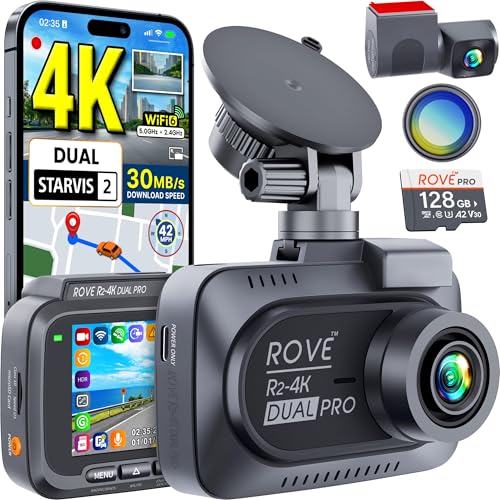
ROVE R2-4K Dual PRO Front and Rear Dash Cam

ROVE R2-4K Dual Dash Cam with 128GB Card

AUTO-VOX Solar Wireless Backup Camera with 5-Inch Monitor
AUTO-VOX 7.2-Inch DVR Wireless Backup Camera, 1080P
Meet The Standout Selections
This kit handles the less visible part of a vehicle camera setup: connecting a dash camera to vehicle power without relying on the accessory socket. The 9.8-foot cable gives you room to route the connection around trim panels, while the voltage indicator helps you confirm that the wiring is receiving power.
It is most useful for drivers adding parking mode to an existing camera. Compared with the Nextbase OBD cable, it offers a broader hardwiring format, but the installation is less plug-and-play and requires careful fuse-box work.
A Few Strong Suits
- Supports a less visible, permanent power connection.
- The 9.8-foot length helps reach the fuse-box area.
- A voltage indicator gives you a quick installation check.
- Separates ACC and constant power leads.
Things To Consider
- Fuse-box installation requires careful routing and basic vehicle-electrical knowledge.
- Incorrect connection can damage vehicle fuses or create a battery-drain risk.
Key Specs
Right Fit For
You are best suited to this kit for a driver adding parking-mode power to an existing compatible dash camera and comfortable with careful vehicle wiring.
Consider Something Else When
The Nextbase Series 2 OBD Power Cable suits you better when your priority is a simple connection through the vehicle OBD port without opening the fuse box.
Punne takes a broader view than a conventional two-camera setup by combining a 4K front camera with a 1080p cabin camera and a 1080p rear camera. That third view matters in traffic or rideshare settings because it records the passenger compartment rather than only the road ahead and behind.
The three-channel arrangement makes this a strong fit for daily commuters, though you may find the extra camera adds installation and cable-management work compared with the simpler ROVE R2-4K Dual PRO.
Advantages To Know
- Three channels provide front, cabin, and rear visibility.
- The front camera records at 4K for detailed road evidence.
- Wide-angle views help capture more of the surrounding lane area.
- The cabin view suits frequent passengers and shared vehicles.
Practical Considerations
- More cameras mean more wiring and mounting decisions.
- Cabin and rear footage may require additional storage and playback attention.
Feature Snapshot
Made For
You benefit most from this system as a daily commuter who wants cabin coverage alongside forward and rear road recording.
Another Choice May Suit
ROVE R2-4K Dual PRO suits you better when two cameras and simpler coverage matter more than a cabin-facing channel.
The Nextbase Series 2 OBD cable is built for owners who want a cleaner installation without taking over the vehicle’s 12/24V outlet. It connects to the OBD2 port and provides a direct power feed to compatible Nextbase Series 2 cameras, including support for parking mode.
The 196-inch cable gives you enough length for many dashboard-to-port routes, while the LED indicator helps with setup checks. It is less versatile than the TERUNSOUl hardwire kit, but much easier for a first-time dash cam owner to install.
Where It Excels
- Plugs into the vehicle OBD2 port for a straightforward connection.
- Frees the 12/24V outlet for another device.
- Supports compatible Nextbase Series 2 parking mode.
- The long cable can accommodate several dashboard routing paths.
Small Caveats
- Compatibility is centered on Nextbase Series 2 cameras rather than every dash camera.
- The OBD port may already be needed for vehicle diagnostics or another accessory.
The Right Fit
You are the best match for a Nextbase Series 2 owner who values simple placement and wants to keep the power socket available.
Where A Sibling Pick Shines
TERUNSOUl Multi-Size Hardwire Kit with Voltage Indicator fits you better when your camera needs a hardwired connection independent of the OBD port.
ROVE R2-4K Dual PRO focuses on native detail rather than adding a third view. Its front camera records at 3840x2160p and 30fps, while the rear records at 2560x1440p and 30fps, giving you higher rear detail than a basic 1080p setup.
For daily driving, that resolution can help when plates, signs, or surrounding vehicles need to be reviewed later. The trade-off is a two-camera system with a more involved installation than the AUTO-VOX wireless backup options.
Noteworthy Benefits
- Front recording uses native 4K detail.
- Rear footage reaches 2560x1440p for stronger playback detail.
- Wide front and rear views cover substantial road surroundings.
- HDR imaging helps balance bright and dark scene areas.
Trade-Offs To Consider
- Higher resolution files require dependable storage and regular card management.
- Front and rear mounting needs careful alignment for useful coverage.
Key Product Details
Who It Suits Best
This model fits drivers who want a dedicated front-and-rear system with unusually high native resolution.
A Better Fit Elsewhere
Punne 3-Channel 4K Front and Rear Car Camera serves you better when cabin coverage is more important than a higher-resolution rear image.
ROVE R2-4K Dual is the more approachable ROVE package for a first front-and-rear installation. It records the front at 2.5K and upscales the result for 4K playback, while the rear records at 1080p, and the included 128GB card removes one early setup task.
Compared with R2-4K Dual PRO, the output is less natively detailed, but you may prefer this version for everyday road coverage without the same resolution premium. The included storage also makes regular file transfers and card checks part of ownership.
Positive Takeaways
- Front and rear recording are handled together.
- Front 2.5K capture provides more detail than Full HD.
- Upscaled 4K playback sharpens the front image for review.
- A 128GB card provides room for a complete starting setup.
Details To Watch
- The 4K front output is upscaled rather than native 4K.
- Rear recording is limited to 1080p.
Core Features
Built With In Mind
This package suits new dash cam owners who want front-and-rear coverage and storage included in the same setup.
Look Elsewhere When
ROVE R2-4K Dual PRO fits you better when native 4K front recording and 2K rear footage justify a higher-detail configuration.
AUTO-VOX takes a different approach with a solar wireless backup camera and a 5-inch 1080p monitor. You can mount the camera using included hardware or adhesive, connect the display to the vehicle’s 12V socket, and avoid running a cable across the vehicle between the two pieces.
That design suits older cars or weekend projects where opening body trim for a wired rear camera is inconvenient. Unlike the ROVE systems, it focuses on reversing visibility rather than continuous front-and-rear road recording.
Useful Highlights
- Wireless connection avoids running a cable from camera to monitor.
- The 5-inch display gives a compact rear-view screen.
- 1080p video suits routine reversing checks.
- Solar power supports a wireless installation approach.
Less-Strong Areas
- It does not replace a front-facing dash camera.
- The monitor still needs access to the 12V socket during use.
Right Fit
You are a good match for a driver who mainly needs a simple rear view in a sedan or SUV without factory-installed camera wiring.
A Different Pick May Suit
ROVE R2-4K Dual with 128GB Card serves you better for recording the road ahead and behind, rather than only assisting with reversing.
The 7.2-inch AUTO-VOX screen gives this wireless backup setup a more substantial view than the 5-inch model. Its 1080p camera is designed for seeing obstacles behind the vehicle, and the portable format makes it useful for cars without a built-in display or camera system.
You may prefer the larger screen on a busy driveway or when judging distance matters more than having a front-and-rear recorder. The trade-off is that this remains a reversing aid rather than a complete dash cam package.
Benefits That Matter
- The 7.2-inch display makes rear-view details easier to inspect.
- 1080p recording provides a practical reversing image.
- Wireless installation avoids a camera-to-monitor cable run.
- Solar power suits vehicles needing a standalone rear camera.
Where It May Fall Short
- It does not capture the road ahead like a dash camera.
- Screen size can occupy more dashboard space than the smaller AUTO-VOX model.
Technical Highlights
Who Should Grab It
This system fits drivers who prioritize a large backup display for parking, reversing, and obstacle awareness.
Swap It Out When
Punne 3-Channel 4K Front and Rear Car Camera suits you better for continuous road recording and cabin monitoring across multiple views.
Choosing The Right Vehicle Camera System
Match The Camera To The View
A three-channel system serves drivers who need road, cabin, and rear coverage. A dual-camera design works well for everyday front-and-rear evidence, while a wireless backup camera is primarily a reversing aid.
Check The Resolution Carefully
4K labels do not always mean native 4K. ROVE R2-4K Dual explicitly uses upscaled front output, while R2-4K Dual PRO specifies native 4K front recording and 2K rear recording.
Account For Installation
OBD power is convenient for compatible Nextbase Series 2 cameras. Fuse-box hardwiring offers another route, but it requires careful installation and attention to ACC, constant power, and ground connections.
Consider Screen Size
A 5-inch monitor preserves dashboard space, while a 7.2-inch display gives you a larger rear-viewing area. Your choice depends on vehicle interior space and how often you use the backup camera.
Common Mistakes Worth Avoiding
Mistakes Worth Dodging
Do not assume every power cable works with every dash camera. Check connector type, vehicle power method, and camera model before purchase, especially with OBD-based systems.
A larger screen does not automatically create a more complete recording setup. Choose a backup camera for reversing visibility and a dash camera for front, rear, or cabin footage.
Where The Extra Money Goes
Higher-end systems often add native resolution, wider viewing coverage, multiple sensors, or included storage. Those additions help drivers who need detailed playback, broad scene coverage, or fewer separate purchases after installation.
For a basic reversing task, a smaller AUTO-VOX screen may be enough. For daily recording, a dual or three-channel dash camera provides a more useful recording format.
Frequently Asked Questions
Are Battery Cameras For Car The Same As Dash Cams?
No. Battery Cameras For Car can include dash cams, hardwire kits, power cables, and wireless backup cameras, so each item serves a different recording or visibility need.
Which Item Offers The Simplest Installation?
The Nextbase Series 2 OBD cable is designed for a direct OBD2 connection. AUTO-VOX backup cameras also avoid a cable run between the camera and monitor.
Do I Need A Three-Camera System?
A three-channel system suits drivers who want cabin visibility in addition to front and rear coverage. A dual-camera setup may be sufficient for standard road recording.
What Is The Difference Between Native And Upscaled 4K?
Native 4K begins at a 4K capture resolution, while upscaled 4K starts at a lower resolution and increases the output size during processing.
Which Screen Size Is Better For Reversing?
A 5-inch display helps preserve dashboard space, while a 7.2-inch screen offers a larger view of the rear scene. Choose based on your vehicle layout and visibility needs.
Final Verdict
Your best fit depends on the job: choose the TERUNSOUl kit for fixed wiring, the Nextbase cable for straightforward Series 2 power, ROVE for road recording, Punne for cabin coverage, or AUTO-VOX for wireless reversing assistance. Match the system to your vehicle layout and the views you actually use every day.
