


Battery cables carry the current between a battery, starter, inverter, or accessory, so conductor size, lug fit, and insulation matter in every installation. A daily-driven car calls for a straightforward replacement cable, while an RV, boat, or high-current audio system benefits from heavier cable and sealed connections. The options below span compact 4 AWG assemblies, flexible 2 AWG pairs, and long 0-gauge power wire for demanding vehicle-electronics projects. Choose by cable length, terminal size, conductor gauge, and the environment where the cable will live.
The Essentials At A Glance

End Game 4 AWG Pure Copper Cable 1.5ft

End Game 2 AWG Marine Cable 12ft Red

A ABIGAIL 4 AWG Battery Cable 4FT Pair
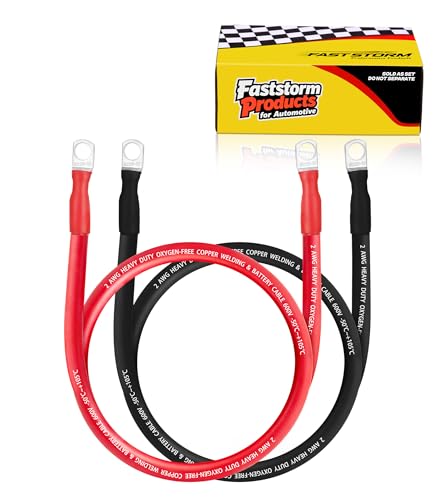
FASTSTORM 2 AWG Inverter Cable 2FT Pair
FASTSTORM 2 AWG Inverter Cable 3FT Pair

KnuKonceptz Kolossus Flex Kable 0 Gauge 25ft

FASTSTORM 2 AWG Battery Cable 10FT Pair
Inside Each Recommended Option
A short battery cable works well for a cramped engine bay where routing distance is limited. This 1.5-foot 4 AWG assembly uses pure copper, sealed tinned lugs, and a flexible EPDM jacket, making it a sensible replacement for cars, trucks, RVs, and campers. For most routine battery repairs, the compact length is easier to position than a longer cable.
You’ll need to confirm the terminal diameter and positive or negative configuration before ordering. It is better suited to a single localized connection than a long run between widely separated components.
A Strong Showing
- 4 AWG copper construction supports a practical replacement for common vehicle battery connections.
- Short length reduces excess cable in tight engine compartments.
- Sealed tinned lugs help limit moisture and corrosion exposure.
- Flexible insulation allows easier routing around existing brackets.
Things To Consider
- Confirm the 3/8-inch lug fit and the required cable color before installation.
- The 1.5-foot length may be short for a battery-to-inverter or battery-to-starter run.
Quick Facts
Built With In Mind
This cable suits daily-driven vehicles needing a short replacement for a damaged or corroded battery connection.
A Better Fit Elsewhere
FASTSTORM 2 AWG Inverter Cable 3FT Pair offers more reach and a higher-capacity conductor for larger RV, boat, or inverter layouts.
Moving from the compact End Game cable to a 12-foot run gives you room to connect components positioned farther apart. The 2 AWG conductor, tinned copper construction, and sealed heavy-duty lugs suit boats, RVs, trucks, and outdoor equipment where cable routing needs more reach. The red jacket also makes positive-side identification easy during installation.
Its 5/16-inch lug size is the key detail to check. A marine project can still be sensitive to terminal mismatch, so measure the hardware before ordering.
Everyday Perks
- 12-foot length supports longer routes between batteries, switches, or starters.
- 2 AWG wire is a heavier-duty choice than the 4 AWG pick for higher-current layouts.
- PVC insulation is designed for oil and fuel exposure around vehicle systems.
- Red insulation helps keep positive wiring visually distinct.
Honest Caveats
- The single-cable format may require a second purchase for a complete red-and-black pair.
- Long cable runs require careful routing and secure strain relief to avoid chafing.
Feature Snapshot
Made For
This cable fits marine and RV installers who need a longer positive lead for switches, batteries, or starter connections.
Where Another Pick Shines
KnuKonceptz Kolossus Flex Kable 0 Gauge 25ft is the stronger alternative for very long, high-current vehicle-audio power runs.
A matched 4-foot pair simplifies installs that need one positive and one negative lead. A ABIGAIL uses pure copper conductors, tinned copper lugs, and flexible PVC insulation, with 3/8-inch terminals at both ends. That combination fits automotive, solar, marine, RV, car, and motorcycle projects where you want more routing room than the 1.5-foot End Game cable.
The 4 AWG size remains the deciding factor for high-load applications. For a starter lead or large inverter bank, a 2 AWG or 0-gauge cable may be the more sensible starting point.
What It Does Well
- Equal-length red and black cables simplify paired positive and negative routing.
- Flexible PVC insulation helps the wires bend through vehicle compartments.
- Tinned lugs add a protective metal layer around the copper connection.
- Three-eighth-inch terminals suit many common battery and inverter connections.
Small Caveats
- Four feet may still be short for a long battery-to-starter route in a large vehicle.
- Both ends use 3/8-inch lugs, so mixed terminal sizes require adapters or another cable.
Key Attributes
Right Fit For
This pair works for DIY vehicle and solar installers who want a ready-made red-and-black run with equal lengths.
Another Choice May Suit
FASTSTORM 2 AWG Battery Cable 10FT Pair gives you more reach and includes mixed lug sizes for custom layouts.
For a battery-to-inverter connection with little excess routing space, the two-foot FASTSTORM pair keeps the installation tidy. The red and black cables use pure copper construction, while the tinned copper lugs add a corrosion-resistant surface at the connection points. It is a useful compact option for trucks, RVs, boats, cars, motorcycles, and smaller solar or inverter layouts.
Two feet is deliberately short, so measure the full route before committing. A cable that looks neat in a small compartment can be too short once you account for bends, fenders, and mounting points.
Points In Its Favor
- Two-foot red-and-black pair works well for compact battery and inverter connections.
- Pure copper conductor supports a heavier cable specification than the 4 AWG options.
- 3/8-inch lugs provide a common terminal size for matched hardware.
Things That May Matter
- The short length leaves little room for routing errors or extra movement.
- Terminal and cable size should be checked against the inverter manufacturer’s connection requirements.
Made For
This pair suits compact RV, truck, or car electrical layouts where a short, pre-terminated connection is more useful than extra cable.
Consider Something Else When
A ABIGAIL 4 AWG Battery Cable 4FT Pair is a better fit when your route needs more bend radius and a balanced four-foot length.
The three-foot FASTSTORM pair adds a little more routing room than the two-foot version without becoming unwieldy in a vehicle compartment. Pure copper wire, tinned lugs, and a red-and-black layout make it straightforward to use for an inverter, dual-battery arrangement, or auxiliary power connection. The 3/8-inch terminals suit hardware with matching dimensions.
For larger marine or RV installations, this remains a compact lead rather than a full system cable. Check the intended current draw and cable route before using it for a primary starting connection.
Useful Highlights
- Three-foot length offers a practical middle ground between short patch cables and long 10-foot runs.
- 2 AWG pure copper construction is suited to higher-current vehicle accessory and inverter connections.
- Red and black insulation helps separate the two sides of a battery circuit.
- Tinned copper lugs are designed to resist oxidation at the connection point.
Points To Note
- Three feet may not cover longer runs between separated batteries, switches, or inverters.
- The cable needs compatible 3/8-inch terminal hardware and secure strain relief during installation.
Technical Sheet
Who It Suits Best
This pair is a practical fit for installers handling compact RV, truck, boat, or car inverter connections with moderate routing requirements.
Reach For A Different Pick When
End Game 2 AWG Marine Cable 12ft Red is the better choice for a longer single-cable run in a boat, RV, or outdoor system.
Where the FASTSTORM pairs focus on short, pre-terminated runs, the KnuKonceptz Kolossus Flex Kable serves a different purpose: long, high-current power routing. Its 25-foot length gives you room to connect a vehicle’s battery to a rear-mounted amplifier, subwoofer enclosure, or other major electrical load. The red wire is intended for a positive power run, and 0-gauge construction provides a much heavier conductor than the 2 AWG and 4 AWG options.
Flexible stranded construction is useful in a crowded vehicle cabin, while tinned oxygen-free copper is designed to limit oxidation of the underlying conductor. You’ll still need appropriate battery lugs, fusing, grounding, and a route protected from sharp edges.
Well-Handled Touches
- 25-foot length supports long runs from the battery compartment to a rear-mounted audio system.
- 0-gauge conductor is suited to substantial power demands and minimizes resistance over long routes.
- Tinned oxygen-free copper helps protect the conductor from oxidation in vehicle environments.
- Stranded construction bends more readily than a rigid single-conductor cable during installation.
Less Ideal Details
- This is a bulk power cable rather than a ready-made red-and-black battery pair.
- The 25-foot length can be excessive for a short repair and requires careful cable management.
Who Should Grab It
This cable suits experienced vehicle-audio installers building a long, high-current power run and planning to terminate it with separate hardware.
A Better Fit Elsewhere
FASTSTORM 2 AWG Inverter Cable 3FT Pair is easier to use for a compact pre-terminated connection that does not need a bulk spool.
The 10-foot FASTSTORM pair covers a wider range of layouts than the shorter inverter cables while remaining lighter than 0-gauge bulk wire. It includes red and black 2 AWG cables, five 5/16-inch tinned copper lugs, and five 3/8-inch tinned copper lugs, giving you flexibility for mixed battery-post hardware. Heat-shrink tubing is also included for finishing the termination area.
That assortment makes the kit appealing for custom vehicle, solar, marine, and RV work where terminal sizes can vary. The 10-foot length still needs a planned route, and a proper connection depends on matching the cable to the hardware and load.
Everyday Advantages
- Ten-foot red and black cables provide useful reach for batteries, inverters, and auxiliary equipment.
- Two AWG copper wire handles more demanding current paths than 4 AWG cable.
- Five 5/16-inch and five 3/8-inch lugs support different terminal sizes.
- Heat-shrink tubing helps finish and protect the termination area after assembly.
Practical Considerations
- You must crimp or otherwise secure the lugs correctly for the chosen hardware.
- Long cables need protective routing, strain relief, and regular inspection for abrasion or corrosion.
Feature Facts
Built With In Mind
This kit fits DIY installers who need longer paired cables and flexibility across several terminal sizes.
Where A Sibling Pick Shines
End Game 2 AWG Marine Cable 12ft Red is more convenient for one longer, fully assembled positive-side connection.
What Matters Before You Choose Battery Cables
Start with the cable’s job. A starter or high-output inverter needs a conductor sized for both current and total run length, while a short battery-to-fuse connection may not require the same capacity. Lower AWG numbers indicate heavier wire, so 2 AWG and 0 AWG are physically more substantial than 4 AWG.
Terminal diameter matters just as much. Measure the battery post, switch, starter, or inverter connection before ordering, and note whether you need positive red, negative black, or a matched pair. A cable can have the right capacity and still fail to fit the hardware.
Insulation and environment guide the finish. Flexible PVC suits many automotive and marine installations, while EPDM offers flexibility and resistance to oil and fuel exposure. For exposed routes, secure the cable away from sharp edges, moving parts, heat, and standing moisture.
Key Details That Change the Fit
Common Shopping Slip Ups
The most common mistake is choosing length before measuring the entire route, including bends and service loops. Another error is assuming every battery post accepts the same lug diameter. Check polarity and terminal size first, then confirm that the cable’s conductor suits the load.
What The Higher Tier Buys
Heavier cable costs more because it contains more copper and supports longer or higher-current paths. A 0-gauge run may be worthwhile for a major vehicle-audio installation, while a short replacement in a small car engine compartment does not automatically need that capacity. The useful upgrade is the one your load and route require.
Frequently Asked Questions
What gauge battery cable do I need?
The right gauge depends on current draw, cable length, and installation conditions. Heavier gauges, such as 0 or 2 AWG, suit more demanding or longer runs, while 4 AWG can work for lighter connections.
How do I choose the correct lug size?
Measure the diameter of the battery post or connection hardware and compare it with the listed lug size. A cable with the correct gauge still needs a terminal that physically matches the connection.
Are red and black cables polarity-specific?
Red generally identifies the positive side, while black identifies the negative side. Confirm the battery and equipment markings before connecting either cable.
Can I use the same cable for a car and an RV?
The conductor and insulation may be suitable, but length, terminal size, and current requirements can differ. Measure the installation and check the equipment’s electrical guidance before choosing.
Are tinned copper lugs useful outdoors?
Tinned lugs add a protective layer over copper and can help resist oxidation. Proper crimping, sealing, routing, and maintenance still matter in marine and outdoor environments.
Final Verdict
The right battery cable is the one that fits the terminal, handles the load, and routes cleanly through your vehicle. Short repairs favor compact 4 AWG assemblies, higher-current projects benefit from 2 AWG, and long audio or power runs call for 0 gauge. Measure first, match the hardware, and protect the connection from moisture and abrasion.
