


Corroded cable ends and loose battery terminals turn a simple electrical repair into a frustrating interruption, especially during a cold morning or roadside emergency. Battery Cable Replacement Ends range from vehicle-specific clamps to copper ring terminals and complete crimping kits, so matching cable gauge, stud size, and terminal style matters more than the pile of loose parts suggests. This lineup covers DIY cable repairs, high-current battery connections, and direct-fit terminal replacements.
A Closer Look At The Lineup
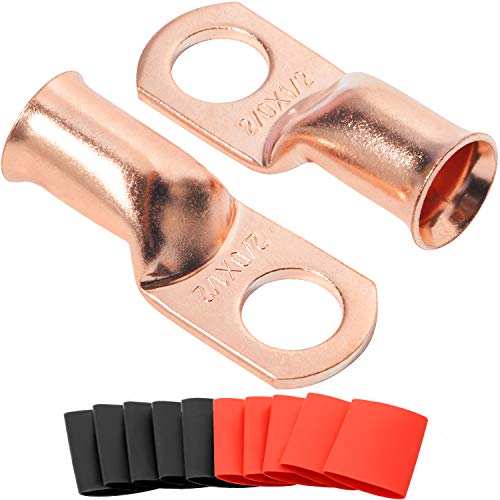
SVAAR 00 Gauge Copper Lugs, 2/0 AWG, 1/2-Inch Stud
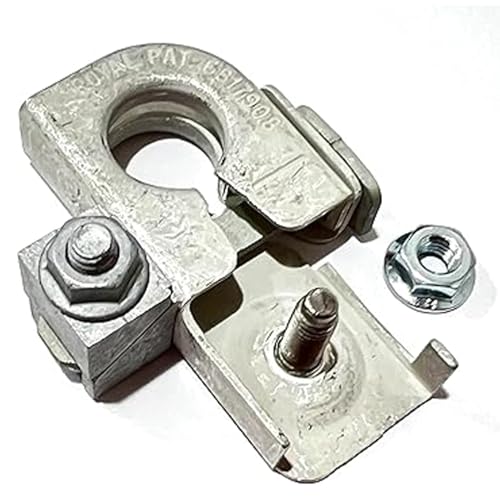
EDS 926-879 Negative Battery Terminal Connector

SVAAR 20-Piece Copper Lug Kit for 1/0 and 2/0 AWG

SVAAR 4, 6, and 8 AWG Copper Battery Cable Ends

SVAAR 72-Piece 2, 4, and 6 AWG Copper Lug Kit

Twidec 230-Piece Cable End Kit and Hydraulic Crimper

TIANMIMISM Battery Terminal T-Bolt Kit, 2 Pieces
Taking A Closer Look At The Options
This kit targets substantial 00-gauge battery cables, with each copper ring lug sized for a 1/2-inch M12 stud. A ring terminal is the metal eyelet secured beneath a nut, providing a broad metal-to-metal contact point for high-current cable work. The set suits DIYers rebuilding battery leads or adding heavy equipment in a workshop.
Unlike the mixed-gauge SVAAR kits later in the lineup, this option keeps the focus on one demanding cable size. Ten lugs plus ten dual-wall heat-shrink pieces cover repeated repairs, although the single stud size leaves less room for vehicles using another terminal diameter.
Practical Advantages
- Ten matched terminals support several repairs or cable assemblies.
- Bare copper construction suits stranded or solid copper conductors.
- Each lug accepts crimping or soldering for different workshop methods.
- The 1/2-inch stud suits larger battery posts and equipment connections.
Points To Consider
- The lugs are not intended for aluminum conductors.
- A proper crimp tool or controlled soldering setup matters for installation.
- Inspect finished heat-shrink coverage for cracks or gaps during maintenance.
Quick Facts
Built With In Mind
This set fits experienced DIYers working with 00-gauge copper cables and 1/2-inch studs on high-current projects.
Another Choice May Suit
Choose the Twidec 230-Piece Cable End Kit and Hydraulic Crimper for broader connector coverage and a tool-led installation setup.
A damaged negative terminal on a Ford or Lincoln can make an otherwise straightforward battery service frustrating, and this connector is designed around part number BT4Z-14450-BA. Its wedge-lock clamp is intended to grip the battery post for a stable ground connection. For a compatible vehicle, that focused design reduces guesswork compared with a generic cable lug.
The listed application range includes Edge, Explorer, and F-150 models, with further coverage stated for other Ford and Lincoln vehicles. Exact trim, production year, or battery-post variation can affect the outcome, so verify the existing part number before removing the old clamp.
Where It Excels
- Direct replacement logic simplifies part matching.
- Wedge-lock clamping helps maintain a firm battery-post connection.
- A dedicated negative connector avoids unnecessary cable rebuilding.
- Broad Ford and Lincoln coverage supports common vehicle maintenance.
Things To Consider
- The fit is specific rather than universal across vehicles.
- Existing cable or post damage may require additional repair parts.
At A Glance
Right Fit For
This connector best fits Ford or Lincoln owners replacing a compatible negative battery terminal and matching part BT4Z-14450-BA.
Look Elsewhere When
The SVAAR 00 Gauge Copper Lugs offer a better fit for rebuilding cable ends rather than replacing a vehicle-specific post clamp.
This 20-piece set combines 1/0 and 2/0 AWG copper ring terminals with 3/8-inch and 5/16-inch studs. That combination works well for automotive batteries, marine connections, and equipment wiring, particularly in a multi-vehicle garage where one cable gauge rarely covers everything. Closed ends help limit moisture exposure around the conductor entry.
Compared with SVAAR 00 Gauge Copper Lugs, this package offers less extreme cable capacity but greater terminal-size flexibility. You may find the 20-piece format balanced for a serious home workshop, provided your cable diameter and battery-post measurements align with one of the four combinations.
Standout Benefits
- Covers 1/0 and 2/0 AWG cables in one organized kit.
- Includes both 3/8-inch and 5/16-inch studs for flexible post matching.
- Closed ends reduce exposed cable-entry openings.
- Dual-wall heat shrink adds insulation and mechanical protection.
Trade Offs
- The kit does not cover the heavier 00-gauge arrangement.
- Mixed sizes require careful sorting before installation.
- Copper fittings can tarnish during storage and need dry conditions.
Made For
Home workshop users restoring 1/0 or 2/0 AWG battery cables benefit from its two-gauge and two-stud layout.
A Better Fit Elsewhere
The SVAAR 72-Piece 2, 4, and 6 AWG Copper Lug Kit suits technicians who need more quantities across lighter cable gauges.
Four, six, and eight AWG cables cover many common automotive accessories, secondary batteries, and moderately sized power leads. The set includes 5/16-inch and 3/8-inch ring sizes, so it handles more than one common battery-post diameter. That flexibility makes it a practical starting point for restoring connections in a family vehicle garage.
Copper construction supports efficient electrical transfer, while the closed terminal body helps shield the cable entry from moisture. Unlike the larger SVAAR 72-Piece 2, 4, and 6 AWG Copper Lug Kit, this package centers on three gauges and omits 2 AWG, which makes it the cleaner choice for lighter accessory circuits.
What Makes Sense
- Three common cable gauges support varied repair jobs.
- Two stud sizes reduce post-diameter guesswork.
- Closed ends improve protection around cable entries.
- Heat shrink supports a tidy insulated finish.
Minor Gripes
- The kit begins at 4 AWG and will not suit larger battery leads.
- Crimp and solder methods each require suitable tools and technique.
Feature Snapshot
Who It Suits Best
Automotive DIYers restoring accessory cables or smaller battery leads get the most useful gauge range here.
Swap It Out When
SVAAR 20-Piece Copper Lug Kit for 1/0 and 2/0 AWG better serves high-current installations with thicker cables.
Seventy-two pieces make this the most substantial assortment in the lineup, covering 2, 4, and 6 AWG cables with 3/8-inch or 5/16-inch studs. That quantity is useful for fleet maintenance, mobile electrical work, or a home shop that repeatedly rebuilds battery leads. The smaller 8 AWG coverage found in SVAAR 4, 6, and 8 AWG Copper Battery Cable Ends is not included here.
Closed-end construction helps protect the wire-to-lug transition, while heat-shrink pieces support a finished installation. In a busy toolbox, the bulk can be an advantage, although it also creates more loose hardware to sort and keep dry. Your cable diameter and post measurement remain the deciding details.
Key Advantages
- Large quantity supports multiple vehicles and repeated repairs.
- Three cable gauges fit common auxiliary power applications.
- Two stud sizes cover many automotive battery posts.
- Heat shrink helps protect completed cable entries.
Practical Considerations
- Bulk packaging may be excessive for a single cable repair.
- Copper fittings need dry storage to limit surface discoloration.
- The assortment does not include the 8 AWG size from the SVAAR 4/6/8 kit.
Built For
Mobile technicians and multi-vehicle households benefit most from the broad 72-piece assortment.
Not Your Match When
The EDS 926-879 Negative Battery Terminal Connector better fits a compatible Ford or Lincoln post-clamp replacement.
This package goes beyond loose terminals by pairing 230 connector pieces with a 10-ton hydraulic crimping tool. Hydraulic crimping uses controlled mechanical pressure to deform a copper lug around its wire, creating the connection that ordinary pliers may not reproduce consistently. It suits installers who build cables regularly rather than replace one isolated end.
The crimper covers 12 AWG through 2/0 AWG copper ring terminals, with a stated 0.45-inch stroke. That range makes the tool more substantial than a basic hand crimper, while the connector assortment reduces the need for separate stock. Workshop storage still matters because both the tool and copper hardware need protection from moisture and impact.
The Upside
- Includes both terminals and a matching crimping tool.
- Ten-ton hydraulic force supports larger cable connections.
- Handles copper ring terminals from 12 AWG through 2/0 AWG.
- A 0.45-inch stroke suits substantial lug-forming work.
- The large assortment supports repeated fabrication.
Possible Compromises
- 00-gauge work falls outside the crimper’s stated range.
- The hydraulic tool requires regular inspection and clean storage.
Technical Reference
Who Will Love This
Workshop technicians and serious DIYers producing repeated copper cable connections benefit from the integrated crimper.
Reach For A Different Pick When
SVAAR 00 Gauge Copper Lugs better serve a one-off 00-gauge repair that requires a 1/2-inch stud instead.
A two-piece T-bolt set offers a compact route to replacing worn terminal hardware on compatible vehicles. The listed fit spans numerous BMW, Cadillac, Chevrolet, and GMC models from the late 2000s onward, making it useful for a mixed collection of domestic and imported vehicles. The same bolt can tighten either terminal position, depending on the vehicle’s hardware.
Unlike the copper ring-terminal kits, this product is hardware rather than a cable-end fabrication set. Its advantage is straightforward terminal-bolt replacement, though the missing cable length, lug dimensions, and detailed post measurements in the source make physical fit confirmation important.
A Strong Showing
- Two bolts support replacement of a terminal-side pair.
- Compatibility covers several BMW, Cadillac, Chevrolet, and GMC models.
- The compact format suits routine terminal maintenance.
Details To Watch
- The kit does not include cable lugs or lengths of battery cable.
- Vehicle fit can depend on battery-post and terminal dimensions.
- Corroded hardware needs removal before the replacement can be fitted.
Core Details
Made For
Drivers maintaining compatible side-terminal vehicles need a simple replacement for worn or corroded terminal bolts.
Consider Something Else When
The EDS 926-879 Negative Battery Terminal Connector serves compatible Ford and Lincoln owners replacing the complete negative-side clamp.
Choosing Parts That Fit Your Electrical System
Match the Cable Gauge First
AWG, or American Wire Gauge, describes cable diameter, with lower numbers indicating heavier conductors. Measure the existing cable or check its marked specification before choosing a lug. A close visual match may still crimp incorrectly, which can weaken the mechanical and electrical connection.
Identify the Battery Post
Ring lugs need a stud opening that matches the post or equipment stud. The common choices in this lineup include 3/8-inch, 5/16-inch, and 1/2-inch sizes. Side-terminal vehicles may need T-bolt hardware instead, so terminal shape matters as much as diameter.
Decide Between a Lug and Post Clamp
A ring lug attaches a cable to a threaded stud, while a vehicle-style terminal clamp fits directly over a battery post. Copper ring-terminal kits suit rebuilt cable assemblies and custom equipment connections. A dedicated clamp is more appropriate when replacing a compatible vehicle’s existing negative terminal.
Choose a Reliable Installation Method
Crimping forms the lug around the conductor, while soldering joins the wire and terminal with solder. A suitable crimping tool matched to the lug and cable is essential for consistent installation. After fitting, inspect the stud contact, cable entry, insulation, and heat-shrink coverage for movement, cracks, or exposed metal.
Avoiding Costly Connector Mistakes
Mistakes Worth Dodging
Gauge confusion remains the most consequential category error because a lug sized for lighter cable may not compress properly. Mixing stud sizes also prevents the ring from seating flat, while installing a ring lug on a side-terminal vehicle may solve the wrong problem. Confirm the terminal style and dimensions before removing the existing connection.
Where The Extra Money Goes
The Twidec package costs more partly because it includes a hydraulic crimping tool rather than only copper hardware. That added equipment helps produce controlled compression across a broad cable range. The added value is strongest for repeated workshop work, while a single small repair may not justify carrying a larger tool.
Frequently Asked Questions
What gauge battery cable end do I need?
Measure the cable diameter or confirm its AWG marking before ordering. The intended load also matters, because heavier electrical demands generally call for lower-numbered AWG cable.
Can ring terminals replace vehicle battery clamps?
Ring terminals attach to threaded studs, while many automotive battery posts use a separate clamp or side-terminal fastener. Match the actual battery connection style rather than relying on cable diameter alone.
Are copper battery lugs difficult to install?
They generally require a correctly sized crimping tool or a controlled soldering setup. Proper connector selection and installation technique matter more than the number of parts in the kit.
Can heat-shrink tubing replace terminal insulation?
Heat-shrink tubing protects the cable entry but does not provide the primary electrical contact. It should complement a correctly sized and properly installed copper lug, not conceal an incomplete connection.
What matters most when matching a ring lug?
Cable gauge, stud diameter, and terminal construction must all align with the installation. Measuring the existing hardware and comparing it with the listed dimensions prevents mismatched parts.
Wrap Up
The right Battery Cable Replacement Ends depend on the connection rather than the repair alone. SVAAR copper kits serve different cable gauges, EDS targets a specific Ford negative clamp, Twidec pairs hardware with a crimping tool, and TIANMIMISM replaces side-terminal bolts. Measure the cable, identify the battery post, and choose the terminal that matches both before work begins.
