


Battery Banks keep your phone, heated apparel, cameras, and laptop running away from a wall. The right capacity depends on how long you travel, how many devices you charge, and whether you need USB-C Power Delivery for faster charging. Heated-jacket users need a dedicated battery, while commuters and travelers benefit from compact power banks, and laptop users need higher wattage. This roundup covers specialized options and everyday choices for different routines, with honest trade-offs around capacity, size, ports, and charging speed.
The Main Contenders

ORORO MINI 5K Heated Apparel Battery

Cuddeback Solar Power Bank PW-3600 2 Pack
Anker Prime 20,100mAh 3-Port Charger

Mophie Powerstation Fast 20,000mAh 45W

Mophie Powerstation Fast 10,000mAh 30W
Mophie Powerstation Fast 5,000mAh 20W

JUOVI Laptop Power Bank 90W 20,000mAh
What Each Pick Brings To The Table
Heated-apparel users have a different power problem from phone users: the battery needs to sit comfortably inside a jacket or vest without acting like a brick. The ORORO MINI 5K uses a 4,800mAh capacity and rounded corners, with a design that is described as 40% smaller and lighter than the standard ORORO battery. That matters during a winter commute, especially under a coat or in a pocket.
Its 5V 3A charging specification supports a roughly four-hour recharge using a compatible charger. The accessible power button and enlarged LED indicators help you check remaining power without fumbling, though the pack is specialized for heated clothing rather than general phones.
Bright Spots
- 4,800mAh capacity suits heated jackets and vests.
- Rounded, compact construction improves comfort during wear.
- 5V 3A input supports a four-hour recharge with a suitable charger.
- Large LED indicators make battery status easier to see.
Small Caveats
- Its clothing-specific design is less versatile than a general power bank.
- The two-pack format increases storage needs for owners who need only one battery.
Core Details
Who It Suits Best
You benefit most from this battery during cold-weather commutes, outdoor work, or long events where heated clothing needs dependable portable power.
Another Choice May Suit
The Anker Prime 20,100mAh 3-Port Charger is a better fit for someone charging phones, tablets, or a laptop rather than heated apparel.
Trail cameras create a power demand that ordinary phone batteries cannot conveniently address. The Cuddeback Solar Power Bank PW-3600 pairs a built-in NiMH battery with polycrystalline solar panels for compatible CuddeLink and Tracks cameras, reducing the need to return repeatedly to a distant camera site. The two-pack format is useful for managing more than one hunting or wildlife-monitoring location.
For most outdoor users, the appeal is autonomy, not phone charging. Sun exposure, panel placement, camera compatibility, and weather protection determine how consistently the system performs, so confirm the camera connection before deployment.
Why It Works Well
- Solar charging supports remote camera placement.
- Built-in NiMH storage helps manage variable sunlight.
- Two packs simplify coverage for multiple trail cameras.
- Designed specifically for CuddeLink and Tracks cameras.
Points To Note
- Charging performance depends on available sunlight and panel placement.
- It is not a general-purpose phone battery bank.
- Camera compatibility must be checked before installation.
Key Product Details
Built With In Mind
You get the most benefit as a hunter, wildlife photographer, or property owner who uses compatible trail cameras in exposed outdoor locations.
Where A Sibling Pick Shines
The Mophie Powerstation Fast 5,000mAh 20W is a better fit for a traveler who needs a small charger for a single phone.
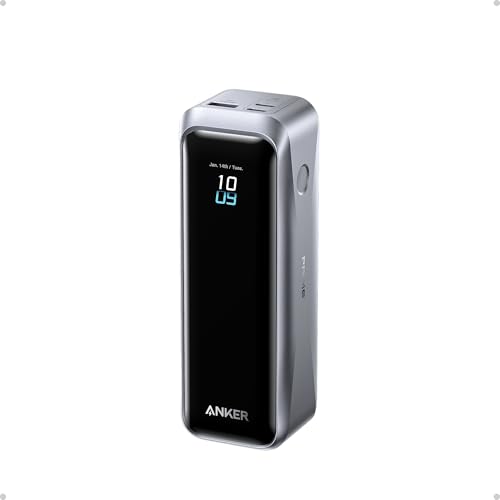
The Anker Prime is built for days when your phone is only one of several devices that need power. Its 20,100mAh, or 72.36Wh, capacity gives you substantial reserve, while two USB-C ports and one USB-A port support a mixed charging setup. That arrangement is useful for a work bag containing a phone, tablet, headphones, and laptop accessories.
Its total output reaches 220W, and one USB-C connection can deliver up to 140W with a compatible 5A cable. That makes it more capable than the smaller Mophie options, although the higher capacity and output also point to a larger pack for everyday carry.
Notable Gains
- 20,100mAh capacity supports extended travel without wall access.
- Two USB-C ports and one USB-A port handle mixed devices.
- Up to 140W from one USB-C port supports demanding laptop charging.
- 72.36Wh capacity provides a substantial energy reserve.
Trade Offs
- Its larger capacity may be more than a light daily carry needs.
- Maximum laptop output depends on a compatible device and 5A cable.
- Multiple ports can be less convenient when you only carry one phone.
Technical Highlights
Right Fit For
This works especially well for remote workers, students, and travelers who regularly carry more than one device and occasionally need laptop power.
Look Elsewhere When
The Mophie Powerstation Fast 5,000mAh 20W is the cleaner choice for a pocket-sized, single-phone carry.
This Mophie model occupies the middle ground between a phone-sized reserve and a laptop-oriented pack. Its 20,000mAh internal battery can charge a compatible phone up to four times, which gives you room for a long workday, a flight, or a day of intermittent use. Three USB-C PD ports expand the options for charging a phone, tablet, and headphones together.
USB-C PD output is rated at up to 45W, a practical level for quick replenishment without the higher power profile offered by the Anker Prime. The trade-off is simple: you gain a balanced multi-device setup, but the pack is likely more substantial than a small pocket charger.
Points In Its Favor
- 20,000mAh capacity provides useful multi-day reserve.
- Three USB-C PD ports support several compatible devices.
- Up to 45W output shortens compatible charging sessions.
- A phone can receive up to four charges with compatible usage.
Practical Considerations
- Three ports add cable-management demands during travel.
- It does not provide the same laptop headroom as the Anker Prime.
- Capacity may feel excessive for short daily commutes.
Who Will Love This
You get the best fit carrying a phone and tablet through long commutes, air travel, or workdays where several devices need recharging.
Reach For A Different Pick When
The Mophie Powerstation Fast 10,000mAh 30W offers a lighter balance for users who need two-device charging without the larger reserve.
For a regular commute, 10,000mAh can be the more disciplined capacity. The Mophie Powerstation Fast 10,000mAh is rated to charge a phone up to two times, giving you a useful cushion for delayed trains, long shifts, or a day away from a wall outlet. Two USB-C PD ports let you charge a phone and tablet at the same time, which makes it more versatile than a single-port pocket model.
Its 30W USB-C PD output is lower than the 45W Mophie version, but it still targets a fast refill for compatible devices. For people who carry two smaller devices, that balance may matter more than the extra reserve in the 20,000mAh option.
Useful Highlights
- 10,000mAh capacity covers roughly two compatible phone charges.
- Two USB-C PD ports support simultaneous phone and tablet charging.
- 30W output offers a faster alternative to basic low-power charging.
- Lower capacity can be easier to carry than a 20,000mAh pack.
Where It Is Less Suited
- Two ports leave less flexibility for a larger multi-device setup.
- Laptop charging depends on the device, cable, and power requirements.
- Capacity may be limited for multi-day travel away from outlets.
Feature Rundown
Made For
You benefit most as a commuter or traveler who carries a phone and tablet and values two-device convenience without carrying a large laptop battery.
Swap It Out When
The JUOVI Laptop Power Bank 90W 20,000mAh is a better fit for someone who regularly needs high-wattage laptop charging.
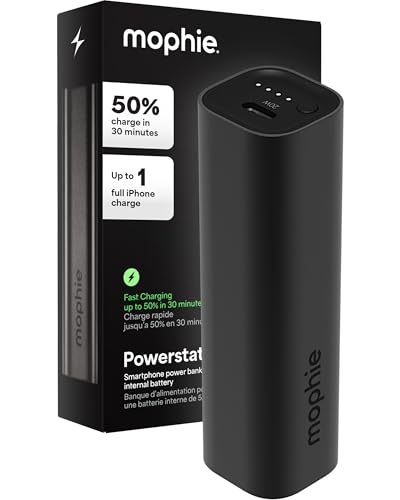
Small enough to disappear into a jacket pocket, the Mophie Powerstation Fast 5,000mAh is built for a single phone rather than a full workday of mixed-device charging. Its internal battery can provide up to one full phone charge, and the lipstick-sized format suits short trips, errands, and emergency top-ups. The 20W USB-C PD output can add roughly 50% charge to a compatible phone in 30 minutes, according to the stated charging profile.
One port keeps the setup uncomplicated, which can be a benefit in a small bag or during quick connections at an airport. You give up the ability to charge several devices at once, so this is a focused carry item rather than a travel power station.
What Stands Out
- 5,000mAh capacity covers one compatible phone charge.
- Pocket-sized construction suits everyday carry.
- 20W USB-C PD supports a quick partial recharge.
- Single-port design keeps cable handling simple.
Less-Strong Areas
- One charge is limited for long flights or remote workdays.
- Single-device charging prevents simultaneous tablet use.
- USB-C cable compatibility remains important.
Best Suited To
You get the most value as a light-packing traveler or commuter who wants a compact backup for one phone.
Consider Something Else When
The Mophie Powerstation Fast 10,000mAh 30W fits a user who needs more reserve and two USB-C PD ports.
The JUOVI Laptop Power Bank is aimed at people who need a portable outlet for more than a phone. Its dual USB-C ports can each deliver up to 90W when used alone, and the stated charging profile reaches 50% on a 13-inch MacBook Air in 30 minutes. That kind of output matters for students moving between classes, remote workers handling a full day of documents, and travelers who cannot rely on a nearby outlet.
Its 20,000mAh capacity adds useful reserve, but the laptop-focused design is not automatically the right choice for every bag. You should compare device requirements, cable support, and the added weight before choosing it over the more compact Mophie models.
Strong Points
- Up to 90W from either USB-C port supports demanding devices.
- 20,000mAh capacity provides meaningful laptop-day reserve.
- Dual USB-C ports support flexible single-device charging.
- Specified output suits 13-inch MacBook Air use.
Factors To Consider
- Laptop charging depends on the device and compatible cable.
- High-output charging is unnecessary for a single low-power phone.
- Larger capacity may add weight to a minimalist carry setup.
Key Attributes
Who Should Grab It
You benefit most as a student, remote worker, or traveler who regularly depends on a laptop away from a wall outlet.
Another Choice May Suit
The Mophie Powerstation Fast 5,000mAh 20W is the better fit for someone carrying only a phone and prioritizing pocket size.
Choosing The Right Capacity And Connections
Capacity should follow your longest day without an outlet, not simply the largest number available. A 5,000mAh pack is reasonable for a phone top-up, while 10,000mAh gives commuters more flexibility for repeated use. The 20,000mAh choices suit heavier routines involving tablets, multiple phones, or laptop charging, though they are less convenient in a small bag.
Match Output To Your Devices
USB-C Power Delivery, or USB-C PD, negotiates a higher charging rate with compatible devices. That matters for fast replenishment, but a higher wattage figure does not guarantee the same result on every phone, tablet, or laptop. Check the device requirements and use a cable rated for the intended output, especially for the Anker Prime and JUOVI models.
Count Ports Before You Carry
Multiple ports help when you travel with a phone, tablet, and headphones, because each device can remain connected without swapping cables. Single-port designs are easier to manage and often suit minimal carry. The Cuddeback Solar Power Bank belongs in a separate category because it supports compatible trail cameras rather than general USB devices.
Key Things To Check Before You Carry One
Common Shopping Slip Ups
A large capacity can still be inconvenient when it adds weight to every bag. Check the dimensions, port layout, and device compatibility before settling on a model. A compact model may be more useful for daily carry, while a high-output pack earns its bulk only when you regularly charge demanding equipment.
What The Higher Tier Buys
Higher-output models add faster charging, laptop support, or several ports rather than simply more stored energy. That upgrade is worthwhile for long travel days, work tables, and multi-device routines. For a single phone used mainly as an emergency backup, the lower-capacity option may offer the more practical ownership experience.
Frequently Asked Questions
How much capacity is needed for a phone?
A 5,000mAh battery is generally positioned around one full compatible phone charge, while 10,000mAh provides more room for repeated use. Your actual result depends on the phone, battery condition, and charging losses.
Can I charge a laptop with a power bank?
You need a power bank with enough USB-C PD output for the laptop and a compatible cable. The Anker Prime and JUOVI Laptop Power Bank target higher-powered laptop charging, while smaller models are generally more suitable for phones and tablets.
Is a solar power bank useful for trail cameras?
Solar power can reduce manual charging visits for compatible trail cameras exposed to regular sunlight. Placement, shade, weather, and camera compatibility determine how consistently the system operates.
How many ports do I need?
Two or three ports suit travelers carrying several devices, while one port keeps the setup simple. Choose based on the devices you regularly carry, not on the number of ports alone.
Does higher wattage charge every device faster?
Higher wattage helps only when the device, cable, and charging protocol support it. A high-output battery can still charge a phone at a lower negotiated rate.
Final Verdict
The best fit depends on your actual load: ORORO serves heated apparel, Cuddeback supports compatible trail cameras, and the Mophie models cover small, medium, and large everyday charging needs. Anker and JUOVI make more sense when laptop output or multi-device flexibility leads your routine. Choose the smallest model that covers your longest day, then confirm ports, cables, and device compatibility.
