


A dead phone can disrupt a commute, delay an evening out, or leave you without directions far from home. Battery backup options range from compact magnetic packs to cable-integrated models and higher-capacity power stations, so the right fit depends on your phone, routine, and available space. The selections below cover everyday carry, travel, cable reduction, magnetic charging, multi-device use, and higher-capacity power.
A Snapshot Of The Selections

SIKAI CASE Silicone Case for Anker 25,000mAh 165W Power Bank

Hermitshell EVA Case for Anker PowerCore+ 26800

Orfeika Power Bank with 4 Built-In Cables

Jackery Explorer 1000 v2 1,070Wh Portable Power Station

Anker Zolo 10,000mAh Magnetic Power Bank

VEEKTOMX 10,000mAh Power Bank with 4 Cables
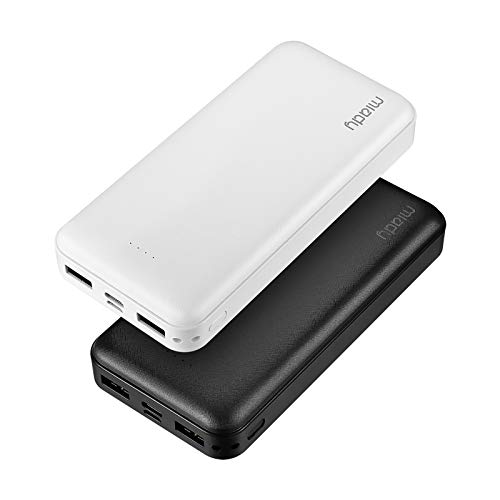
Miady 20,000mAh 22.5W Power Bank 2-Pack
A Deeper Look At The Lineup
This is a protective silicone cover rather than a battery, but it serves a specific role for anyone carrying a large Anker power bank through airports, workbags, or outdoor trips. Its fitted shape targets the 25,000mAh 165W model, so the case offers more focused protection than a loose sleeve.
Unlike the rigid EVA option later in the lineup, this thinner cover adds flexibility while shielding the power bank from bumps, dust, and display contact. The case-only package is the key detail, since you need compatible Anker hardware separately.
The Case For It
- The tailored profile is intended for the Anker Power Bank 165W A1695 configuration.
- Silicone gives the larger power bank some flexibility during everyday transport.
- A storage area for an SD or SIM card keeps small essentials together.
- Display protection helps reduce scratches on the power bank’s visible screen.
Small Caveats
- The package contains only the silicone cover, not the power bank.
- The quarter-inch accessory opening and 2.2mm thickness should be checked against your exact model before use.
Core Details
Built With In Mind
This cover suits travelers and commuters who already own the compatible high-capacity Anker power bank and want to reduce scratches and impact exposure.
A Better Fit Elsewhere
Choose Hermitshell EVA Case for Anker PowerCore+ 26800 instead when you need a rigid carrying case for a different 26,800mAh power bank.
Hard-shell protection makes more sense than a thin sleeve for a 26,800mAh battery placed at the bottom of a suitcase or inside a crowded travel bag. EVA, a lightweight foam-based material, absorbs minor impacts while forming a structured enclosure around the Anker PowerCore+ model.
This case protects compatible hardware but does not add charging capacity, making it a companion rather than a battery backup choice. Compared with SIKAI CASE’s flexible cover, it offers a more substantial barrier for rough baggage handling.
Good Reasons To Consider
- Rigid EVA construction is better suited to drops, dents, and scratches than fabric storage.
- The fitted design keeps a compatible power bank from shifting inside luggage.
- A carrying case can separate the power bank from keys, adapters, and loose accessories.
Practical Considerations
- The power bank is not included, and compatibility is limited to the targeted Anker model.
- Rigid construction takes more bag space and offers no charging capacity by itself.
- Owners should keep the case away from moisture and allow trapped debris to clear from the closure.
The Right Fit
Frequent travelers carrying a PowerCore+ 26800 benefit from structured protection for a battery that is too large for a typical phone pouch.
Another Choice May Suit
Orfeika Power Bank with 4 Built-In Cables is the more useful choice for someone who needs an actual charging pack with fewer loose accessories.
Four permanently attached cables remove much of the cable clutter that turns a quick phone boost into a bag search. PD and QC are common fast-charging standards, although their exact protocols still need to match your phone’s supported charging mode.
For frequent travelers, the combination is practical: you carry one power bank rather than several loose leads. The stated 22.5W wired charging profile suits modern phones that accept that rate, while a built-in USB-C connection handles recharging the pack itself.
Benefits That Matter
- Four integrated cables reduce the chance of leaving a required cord at home.
- Up to 22.5W output offers a useful boost during short travel stops.
- The pack can be recharged through its built-in USB-C connection in about 2.5 hours.
- Integrated leads make the unit practical for a carry-on, work bag, or weekend trip.
- The compact all-in-one layout can reduce the number of accessories entering a small travel space.
Trade Offs
- Attached cables cannot be detached or replaced independently.
- Charging speed varies with the phone, cable connection, and supported protocol.
- Owners should route the built-in leads carefully to prevent bending at their fixed connection points.
Feature Snapshot
Made For
This model suits travelers, commuters, and households that would rather carry several attached connector types than manage a separate cable pouch.
Where Another Pick Shines
Anker Zolo 10,000mAh Magnetic Power Bank fits magnetic phone users better because it adds a snap-on charging option alongside wired charging.
The Explorer 1000 v2 operates at a different scale from the phone-focused packs here. Its 1,070Wh capacity and 1,500W AC output are designed for phones, tablets, small appliances, and selected electronics rather than slipping into a pocket.
LiFePO4 battery chemistry refers to lithium iron phosphate chemistry, which uses a different cathode material from common lithium-ion cells. You gain a larger energy reserve for camping, road trips, or outages, along with the added handling burden of a 23.8-pound unit.
Positive Points
- 1,070Wh provides substantially more reserve energy than a conventional phone power bank.
- The 1,500W AC output supports higher-wattage electronics beyond USB charging.
- A 100W USB-C output can serve compatible phones, laptops, and other USB-C devices.
- The listed one-hour charging figure makes pre-trip recharging more practical.
- The foldable handle and 23.8-pound weight remain manageable for many vehicle-based trips.
Less-Strong Areas
- Its size and weight make it unsuitable for minimal carry-on packing.
- A solar panel is optional, so the package may require separate planning for solar charging.
- Owners should keep ventilation clear and inspect cables before demanding high loads.
Technical Highlights
Who Will Love This
Campers, RV travelers, and households preparing for multi-hour power interruptions benefit from the higher capacity and AC output.
Look Elsewhere When
Anker Zolo 10,000mAh Magnetic Power Bank is the easier daily choice for someone who only needs compact phone backup without appliance-level capacity.
Magnetic alignment is the feature that sets this pack apart from Orfeika’s cable-centered approach. You attach it to a compatible magnetic phone or case, start charging, and avoid holding a cable in place during a train ride or long meeting.
The 10,000mAh reserve is intended for full-day phone use, with the listed charging figures reaching 30W by cable and 7.5W wirelessly. In most situations, that balance makes this a straightforward everyday option, though magnetic alignment does not overcome the slower wireless rate.
Notable Upsides
- Magnetic attachment simplifies charging for compatible iPhone models and magnetic cases.
- The 10,000mAh capacity provides practical reserve for several daily phone boosts.
- A 30W wired connection is useful when faster charging is supported and practical.
- The soft silicone contact surface is easier on the phone than a hard, exposed edge.
- Wired and wireless options give you flexibility for different phone cases and charging situations.
Worth Noting
- Wireless charging is limited to the stated 7.5W profile, below the wired maximum.
- Magnetic attachment requires compatible hardware, which may add another case to your setup.
- Owners may need to reposition the pack on larger or nonstandard magnetic accessories.
Key Product Details
Who Should Grab It
Magnetic iPhone users and commuters who want fast alignment during short charging sessions benefit most from this design.
Swap It Out When
Miady 20,000mAh 22.5W Power Bank 2-Pack offers a better fit for households wanting more stored energy and a spare unit in different locations.
Households rarely use one connector type forever. VEEKTOMX embeds iPhone, USB-A, USB-C, and Micro-USB leads, a practical combination for phones, older accessories, and mixed-device travel bags.
The 10,000mAh capacity sits in the familiar everyday range, while the integrated leads address a persistent problem more directly than raw capacity alone. You may find it especially useful in a family bag where several people reach for the same charger.
A Few Highlights
- Four connector styles cover several common phone and accessory connections.
- Built-in leads eliminate the need to carry a separate cable bundle.
- The 10,000mAh capacity is sized for routine phone top-ups rather than heavy appliances.
- Attached connectors make the pack convenient for a shared commute or family travel bag.
Possible Compromises
- Micro-USB is useful for legacy accessories but adds a connector most current setups may never touch.
- Fixed cables cannot be swapped independently.
- For cable management, owners should coil the attached leads loosely and avoid sharp bends.
Best Suited To
Mixed-device households and travelers carrying older accessories benefit from four connector types stored in one unit.
Consider Something Else When
Orfeika Power Bank with 4 Built-In Cables may align more closely with your needs when the listed 22.5W output and shorter stated recharge time are priorities.
Two 20,000mAh packs solve a problem a single compact model cannot: distributed power. You can keep one in a work bag and another at home, or divide a camping group’s charging gear between vehicles and tents.
The USB-C output supports up to 22.5W, while four LEDs display remaining capacity in 25% increments. USB-C and Micro-USB input ports broaden recharging options, although carrying two higher-capacity units creates a greater space and weight tradeoff.
Where It Helps
- Two packs let you place backup power in separate bags, rooms, or vehicles.
- The 20,000mAh capacity provides a larger reserve than the 10,000mAh selections.
- Up to 22.5W USB-C output supports compatible fast-charging phones and tablets.
- Four capacity lights make the remaining level easier to check at a glance.
- Both USB-C and Micro-USB inputs offer more than one way to recharge the packs.
Things To Weigh
- Two 20,000mAh units take more room and add weight to luggage or vehicle storage.
- The listed self-recharge time is about six hours at a 9V 2A input.
- Actual charging output depends on the connected device, cable, and supported protocol.
Quick Facts
Whose Shelf It Belongs On
Families, shared apartments, and long-trip groups benefit from having two high-capacity units stored in separate places.
Reach For A Different Pick When
Anker Zolo 10,000mAh Magnetic Power Bank is the better daily-carry option for a compatible phone user who prioritizes attachment over spare capacity.
Choosing Backup Power Around Your Routine
Start With Required Charging Speed
Charging speed depends on several points meeting: the power bank’s output, cable rating, phone circuitry, and the charging standard each device supports. A higher wattage figure cannot accelerate a connection that the phone or cable limits. For daily top-ups, look for a clearly stated wired rate that matches your device, while wireless charging is usually more convenient than fast.
Match Capacity to Battery Size
Small capacity favors light everyday carry, while a larger cell provides more stored energy and weighs more in your bag. A 10,000mAh pack suits routine phone boosts, whereas 20,000mAh models make more sense for longer absences from an outlet. Two batteries can also be distributed across locations, but you take on the added space and weight.
Consider How the Pack Connects
Magenta alignment offers quick attachment on compatible phones, while built-in cables reduce accessory clutter. USB-C is the more versatile modern connection, and Micro-USB can remain useful for older accessories. Check your current device ecosystem before eliminating a connector type; carrying an unused cable may be less practical than carrying a compact second option.
Account for Outage-Level Needs
A phone power bank is designed for personal electronics, while a portable power station also supplies conventional AC power for compatible equipment. Capacity alone does not determine suitability; continuous output, surge capability, weight, ventilation, and device requirements matter. Keep both products within their specified limits and use properly rated connections.
Avoiding Portable Charger Pitfalls
Common Shopping Slip Ups
Compatibility needs more than a shared connector shape. Charging speed, magnetic alignment, and cable ratings can differ, so confirm the phone model and charging protocol first. Also compare dimensions against your bag and verify whether a cable, adapter, or power bank is included.
What The Higher Tier Buys
Higher-capacity models add stored energy rather than automatically improving phone compatibility. A larger cell can reduce how often you recharge the pack, while multiple outputs may support more devices. The upgrade makes sense for long trips, outages, or shared use; compact daily routines may gain little from the extra bulk.
