


A laptop that dies during a long flight, a commute without a wall outlet, or a neighborhood outage leaves you disconnected at the worst moment. Battery backup options range from compact laptop power banks to larger portable stations that can support several devices, each balancing capacity, output, portability, and charging flexibility for daily work and emergencies.
A Quick View Of The Lineup

Jackery Explorer 1000 v2 1070Wh Power Station

EF ECOFLOW DELTA 3 2048Wh 1800W Power Station
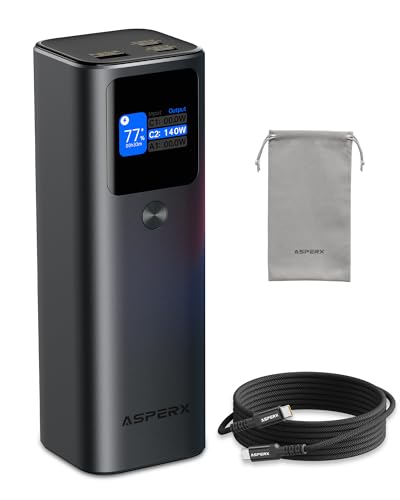
AsperX 27,600mAh 162.5W Laptop Power Bank

AsperX 165W 20,000mAh Laptop Power Bank

AsperX 140W 27,600mAh Built-in Cable Power Bank

Jackery HomePower 3000 3072Wh 3600W Power Station

AsperX 165W 20,000mAh Retractable Cable Power Bank
More On The Choices That Made The List
Jackery’s Explorer 1000 v2 is the middle ground between a laptop-sized power bank and a home backup system. Its 1,070Wh battery and 1,500W AC output give your laptop, phone, router, or small appliance more support than a typical pack, while the 23.8-pound weight keeps it manageable for camping and road trips. Unlike the larger Jackery HomePower 3000, it focuses on portable use rather than whole-house loads.
The foldable handle helps during setup, and the unit suits long flights, tailgates, or a power cut where you need several devices running. In our view, it works best for people who want backup at home and away without hauling a large station. The 3,000W surge rating adds flexibility for devices with brief startup demands, although you still need to check each device’s power requirements.
What Makes Sense
- 1,070Wh capacity supports a laptop and several smaller devices.
- 1,500W AC output handles common household electronics.
- 23.8-pound weight remains practical for outdoor trips.
- Foldable handle improves portability and setup.
Worth Noting
- Its capacity is modest beside the 3,072Wh HomePower 3000.
- Plan protections depend on the applicable terms, and coverage details vary by plan.
Key Specs
Who It Suits Best
This suits campers, commuters, and households that need flexible laptop backup for travel or short outages.
Consider Something Else When
The Jackery HomePower 3000 is a better fit for a refrigerator, router, and lights during a longer home outage.
The DELTA 3 takes a different route from the Explorer 1000 v2 by prioritizing charging speed and room to grow. Its 2,048Wh starting capacity supports a laptop, phone, tablet, and small home equipment, while the included extra battery raises the available storage. That makes it useful for a weekend away or a household that wants more than a single emergency cycle.
For frequent travelers, the 1,800W output and fast charging architecture are meaningful advantages. EcoFlow also supports expansion with its broader battery ecosystem, so you can add storage later rather than replace the entire unit. The station is heavier and less pocketable than an AsperX power bank, but that is the sensible trade for stronger runtime.
Where It Delivers
- 2,048Wh base capacity gives your laptop more working room.
- Included extra battery supports longer use away from an outlet.
- 1,800W output suits demanding laptops and household devices.
- Expansion options add flexibility as your power needs grow.
Small Caveats
- The extra battery and station arrive separately.
- It is bulkier than a dedicated laptop power bank.
Feature Snapshot
Made For
You’ll appreciate this station for frequent travel, remote work, or a home setup where multiple devices need backup.
Where Another Pick Shines
Choose the Jackery HomePower 3000 instead when a home refrigerator and larger household loads are the priority.
This AsperX model is built for a laptop that needs substantial power, not merely a phone-sized reserve. Its 27,600mAh capacity, equivalent to 99.36Wh, offers considerably more stored energy than ordinary portable chargers, and the 162.5W PD3.1 output is aimed at demanding notebooks. The aluminum unibody gives it a more substantial feel, though it remains less versatile than a portable station with AC outlets.
You can use it for a full workday away from a wall, especially with a USB-C laptop that accepts the available power profile. The key check is your laptop’s charging standard and required wattage. Compared with the AsperX 20,000mAh 165W model, this option carries more capacity but a slightly lower headline output.
Everyday Perks
- 27,600mAh capacity supports extended laptop work.
- 162.5W output suits higher-power USB-C devices.
- Aluminum unibody construction supports a compact, rigid form.
- PD3.1 charging suits modern compatible laptops.
Practical Considerations
- It cannot provide household AC output like a portable station.
- Older laptops may charge more slowly or require the correct cable.
Technical Highlights
Built With In Mind
This fits professionals and students who need a high-capacity charger for demanding notebooks and long study sessions.
A Better Fit Elsewhere
The DELTA 3 is the stronger choice for a router, small appliance, and laptop running from one portable station.
Two USB-C ports make the 20,000mAh AsperX more interesting for shared workspaces than many single-device laptop packs. Its listed 165W total output and 100W-plus-65W arrangement allow two compatible devices to draw power at once, which is useful for someone moving between a laptop and a tablet. The TFT display also gives you a quick view of operating information, although a screen is not a substitute for checking your cable and device compatibility.
This is a practical middle ground between a compact bank and a station with wall outlets. The 20,000mAh capacity is below the 27,600mAh AsperX models, but the dual-device design can be more useful than raw capacity for a desk setup. Owners should store it partly charged and avoid leaving it in extreme heat, as with any large lithium battery.
Standout Benefits
- Dual USB-C outputs support two compatible devices.
- 165W total output handles demanding laptop charging.
- TFT display provides visible power information.
- Aluminum unibody offers a compact, rigid design.
Things To Weigh
- Two-device charging reduces the power available to each device.
- The 20,000mAh capacity is lower than the larger AsperX options.
Who Should Grab It
Choose it for hybrid workers who regularly charge a laptop and second USB-C device from one desk pack.
Swap It Out When
The AsperX 27,600mAh 162.5W model fits better when maximum laptop runtime matters more than charging two devices.
The built-in C-Cable is the reason this AsperX stands apart in a crowded laptop charger category. You can carry fewer loose accessories on a flight or commute, and the 27,600mAh capacity provides the same generous laptop reserve as the 162.5W model. The 140W maximum output is still substantial, but the exact charging result depends on your notebook’s power profile and protocol support.
Multiple ports make it useful for mixed-device days, including a laptop, tablet, and phone. A TFT display adds a useful status reference without requiring an app. Compared with the 165W retractable-cable AsperX, this model has similar 27,600mAh storage but a lower maximum output, so prioritize capacity and cable convenience over maximum charging speed.
Notable Upsides
- 27,600mAh capacity supports long laptop sessions.
- Built-in cable reduces packing clutter.
- 140W output handles compatible USB-C laptops.
- TFT display shows charging information.
Details To Watch
- The built-in cable may be less convenient for devices needing a different connector.
- The 140W ceiling is lower than the 165W AsperX options.
Feature Rundown
Right Fit For
This is well suited to travelers who value capacity and a built-in cable while charging a laptop and smaller devices.
Another Choice May Suit
The AsperX 165W 20,000mAh model is better for two laptops that need more total output than this pack provides.
The HomePower 3000 is built for a different scale of outage. Its 3,072Wh battery and 3,600W AC output can support household essentials such as a refrigerator, fan, Wi-Fi router, and lighting, which is beyond the normal range of a laptop power bank. The included hand truck helps with movement, but the size and weight make this a stationary home setup rather than a carry-on companion.
For a home office, it can keep a laptop and network equipment running while also reducing the disruption of a sudden outage. The trade-off is clear: you gain household-level capacity and AC flexibility while losing the easy portability of the Jackery Explorer 1000 v2. Check appliance running wattage carefully, since startup demands can differ from the label.
A Strong Showing
- 3,072Wh capacity is suited to essential home electronics.
- 3,600W AC output supports larger appliances.
- Hand truck helps move the unit around a home.
- Two 200W panels are included for solar recharging.
Honest Caveats
- Its size and weight make outdoor carrying inconvenient.
- It is overkill for laptop-only travel.
Core Details
The Right Fit
Homeowners with a refrigerator, router, and lights need more outage support than a compact laptop bank can provide.
Where A Sibling Pick Shines
The Jackery Explorer 1000 v2 is easier to carry for camping and laptop-focused travel.
The retractable cable gives this 20,000mAh power bank a cleaner travel profile than a loose USB-C cord. Pulling out the built-in cable and returning it to the housing reduces the chance of leaving a connector behind, which is a small but meaningful benefit during a rushed commute or long-haul flight. Its 165W output is aimed at demanding laptops and other USB-C devices.
It sits between the lighter-feeling 20,000mAh dual-port model and the higher-capacity 27,600mAh AsperX packs. The aluminum unibody adds rigidity, while the retractable mechanism introduces a component that deserves occasional care. Depending on your devices, you may prefer the built-in cable model over a more flexible multi-port arrangement.
Strengths Worth Knowing
- Retractable cable reduces loose-cord clutter.
- 165W output supports high-power compatible laptops.
- 20,000mAh capacity works well for travel and commuting.
- Aluminum unibody creates a compact, rigid housing.
Less-Strong Areas
- You may need another cable for non-USB-C devices.
- The 20,000mAh capacity is below the 27,600mAh AsperX options.
Who Will Love This
This suits commuters and frequent travelers who want laptop power without carrying a separate charging cable.
Reach For A Different Pick When
The AsperX 27,600mAh 162.5W model is a better fit when longer runtime is more important than cable storage.
What Matters Most Before You Choose
Match Output To Your Laptop
USB Power Delivery, or PD, is the charging standard used by many modern laptops and power banks. Check your laptop’s required wattage and connector first, since a high-capacity battery cannot deliver more than the device or charger protocol supports.
Decide Between Mobility And Runtime
A power bank is easier to place in a laptop bag, while a portable power station offers AC outlets, larger storage, and more device support. Your commute, camping plans, and home setup each favor a different balance.
Look At Ports And Displays
Multiple USB-C ports can support a laptop and accessories at once, though output is shared. A TFT display is useful for checking charge status and power allocation without opening an app.
Common Mistakes Worth Dodging
Check The Charging Profile
A large capacity does not guarantee full-speed laptop charging. Confirm that your laptop supports the charger’s power standard and that the included cable is suitable.
Do Not Ignore The Trade-Offs
A heavier station may serve outages better, but it can be awkward to move. A retractable or built-in cable reduces clutter, yet it may not fit every connector you own.
Frequently Asked Questions
Can A Power Bank Keep A Laptop Running?
Yes, a compatible laptop power bank can provide backup power. Runtime depends on the laptop’s wattage, the battery capacity, and how much power the charger delivers.
Is More mAh Always Better?
No. More capacity can add runtime, but output, charging speed, weight, and connector support matter too. A smaller pack may suit travel better than a heavier high-capacity model.
Can These Power A Refrigerator?
The Jackery HomePower 3000 is designed for household-scale loads such as a refrigerator. Check the appliance’s power requirements and the station’s limits before use.
Do I Need A Display On A Power Bank?
A display is helpful for monitoring battery status and output. It is not essential, but it can reduce guesswork when you are managing several devices.
Which Option Is Most Portable?
The AsperX retractable-cable and built-in-cable models are the most travel-focused choices here. Jackery portable stations provide more power but are better suited to camping setups or home use.
Wrap Up
Choose the Jackery Explorer 1000 v2 for balanced portable power, the DELTA 3 for expansion and fast charging, and the HomePower 3000 for home essentials. AsperX models suit people who need a dedicated laptop bank, with capacity, dual-device charging, and built-in cables determining the best fit. Match the charger to your laptop and keep the battery away from extreme heat during storage.
