


A solar array can collect energy beautifully, yet it becomes useful only after the energy reaches the right storage system. For your home, that means sizing battery capacity around outages, essential loads, and the electrical design of your installation. For campers and RV travelers, compactness, output, and solar compatibility often matter more than a large-capacity rack.
The seven options below cover fixed home storage, portable power stations, a renewed compact unit, and a portable solar panel. You’ll find very different capacities and installation demands, so the honest fit depends on how far your system travels and how much energy you actually need to store.
The Lineup, Simplified

ECO-Worthy Cubix100 48V 600Ah 30.72kWh Battery Kit
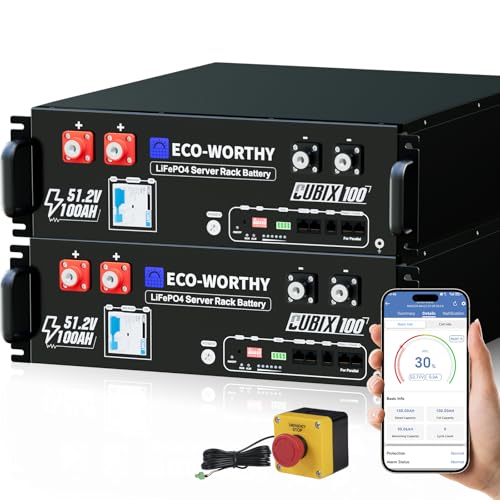
ECO-WORTHY Cubix100 48V 200Ah Bluetooth Battery 2-Pack

BLUETTI Elite 100 V2 Power Station 1024Wh 1800W
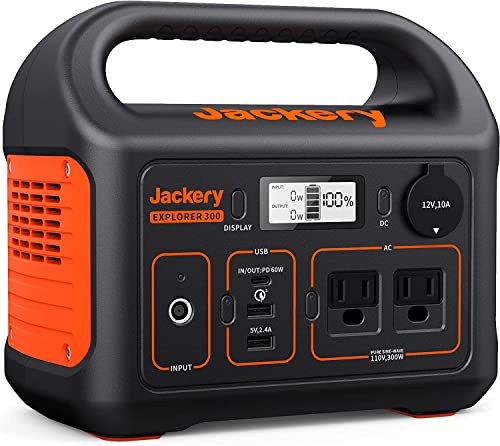
Jackery Explorer 300 Renewed 293Wh Power Station
Anker SOLIX C300 288Wh Portable Power Station
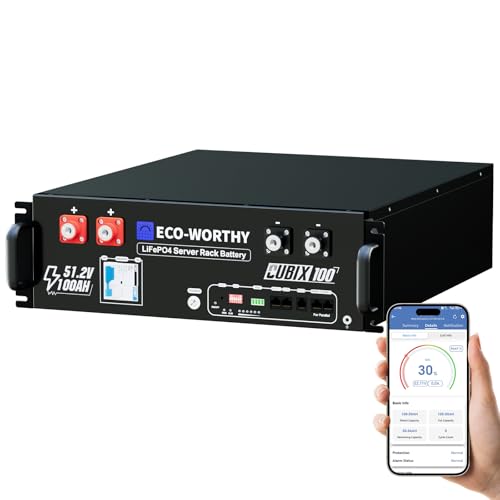
ECO-WORTHY Cubix100 48V 100Ah UL9540 Battery

TWELSEAVAN 200W 24% Efficiency ETFE Solar Panel
More On The Choices That Made The List
Unlike the portable options later in this list, the Cubix100 600Ah configuration belongs beside a fixed solar system rather than in your car. Its six 48-volt batteries provide 30.72kWh of nominal storage, giving you substantially more room for extended outages and essential household loads.
That scale makes the kit more convincing for a dedicated utility space than for an apartment or weekend cabin. You’ll still need a compatible inverter, appropriate wiring, ventilation, and a system designed around your solar production.
Standout Benefits
- The 30.72kWh battery bank can retain energy for larger household loads over multiple sunny periods.
- LiFePO4 chemistry, short for lithium iron phosphate, is well suited to stationary daily cycling.
- The server-rack format helps standardize a compact, organized installation.
- UL9540, UL1973, and CEC listing details support evaluation for North American installations.
Practical Considerations
- Hazardous-material shipping rules and non-returnable status can complicate returns.
- Installation requires careful electrical design, ventilation, and appropriate space.
The Numbers That Matter
Built With In Mind
You’ll benefit most from a dedicated home, workshop, or small commercial system with room for substantial stationary storage.
A Better Fit Elsewhere
The BLUETTI Elite 100 V2 is a more practical fit for mobile use and temporary outages without a permanent battery room.
The 200Ah version lands between the ECO-Worthy 100Ah module and the enormous six-battery kit above. Two 48V 100Ah batteries provide 10.24kWh of storage, a substantial middle ground for a well-planned home installation.
Bluetooth gives you a more convenient way to check battery information, but it doesn’t replace an inverter, charge controller, or correctly sized cables. For a daily-commuting household with frequent outages, the balance of capacity and rack format appears sensible.
Strong Points
- The 10.24kWh two-battery bank provides meaningful storage without a six-rack footprint.
- Bluetooth monitoring helps you check system status from a compatible phone.
- LiFePO4 chemistry suits repeated stationary charge and discharge cycles.
- Support and coverage options add practical help beyond the hardware itself.
Small Caveats
- You must verify Bluetooth compatibility and inverter communication requirements.
- Heavy batteries make two-person handling and rack reinforcement important.
- Support coverage details and eligibility vary, so review the plan terms carefully.
Key Attributes
Made For
You’ll get the most value with a fixed home solar system designed around 48-volt storage and remote battery monitoring.
Consider Something Else When
The ECO-Worthy Cubix100 48V 100Ah Battery is easier to scale incrementally for a smaller starting system.
Moving from rack batteries to portable power changes the decision from electrical construction to device compatibility. The BLUETTI Elite 100 V2 combines 1,024Wh of energy with 1,800W of rated AC output, giving you more usable power than the smaller camping stations here.
For a long weekend away or a household outage, that extra capacity may reduce the need to ration laptops, lights, and small appliances. It remains heavier than the 288Wh Anker SOLIX C300, but it offers a stronger mix of storage and output.
Notable Gains
- Its 1,800W rated output can handle more household essentials than the smaller portable choices.
- Eleven ports let you charge several phones, computers, lights, and appliances concurrently.
- Up to 1,000W solar input gives you a useful path to recharge from a portable array.
- Using 1,200W AC input with the USB-C input can reach 80% charge in about 70 minutes.
- The 2,700W lifting mode provides short-duration powerlifting headroom for compatible appliances.
Worth Noting
- Runtime depends heavily on appliance demand and conversion losses.
- Powerlifting supports selected loads and does not raise continuous output beyond 1,800W.
Core Details
Who It Suits Best
You’ll get the most value during blackouts, family camping, or mobile use where both battery capacity and appliance output matter.
Where A Sibling Pick Shines
The Anker SOLIX C300 is a lighter choice for travelers who only need to run smaller electronics.
The Explorer 300 keeps the mobile format simple: 293Wh, 300W of AC output, and a 7.1-pound listed weight. Pure sine-wave AC, meaning a cleaner waveform suited to sensitive electronics, also makes it more practical than a basic inverter-only setup.
Its renewed status deserves careful consideration, especially for outdoor storage and travel. The low weight appears useful for camping and RV use, but the smaller battery and 300W ceiling won’t match the BLUETTI Elite 100 V2 during a household blackout.
Why It Works Well
- The 7.1-pound weight remains manageable for camping and RV trips.
- Two pure sine-wave AC outlets support stable power for compatible electronics.
- Combined wall and 60W USB-C charging can restore 80% capacity in about two hours.
- Car charging and solar charging give you several practical recharging routes.
Points To Note
- Review the renewed condition and included accessories carefully.
- No solar panel is included, so budgeting for a separate array may be necessary.
- The 300W output limits larger appliances even though the station is called a solar generator.
Right Fit For
You’ll appreciate the Explorer 300 most for lightweight camping, travel, phones, cameras, and compact electronics.
Another Choice May Suit
The Anker SOLIX C300 offers more outlet options and USB-C power for travelers who carry several modern devices.
The C300 sits at nearly the same 288Wh capacity as the renewed Explorer 300, but it gives you a broader selection of modern charging connections. Eight ports can serve a mixed travel kit, from laptops and phones to cameras and a drone battery.
Output reaches 300W continuously and 600W during surges, with the latter intended for brief startup demands. The honest limitation is capacity: useful for essential devices, yet too small for a broad blackout response involving water heaters, tools, or kitchen appliances.
Features That Help
- Eight ports reduce adapter clutter during camping and road trips.
- Two 140W USB-C ports can charge compatible laptops at useful speed.
- Three AC outlets support several 120V devices, subject to the shared 300W limit.
- The 288Wh battery is enough for phones, cameras, lights, and smaller electronics.
Trade Offs
- Shared output limits mean you must manage the combined device load.
- Charging several high-output devices can drain the battery quickly.
- The compact form is less suitable than the BLUETTI Elite 100 V2 for extended outages.
Technical Highlights
Who Will Love This
You’ll benefit most as a camper, road-tripper, or mobile worker carrying many USB-C and USB-A devices.
Look Elsewhere When
The Jackery Explorer 300 Renewed is a more budget-conscious option for fewer devices and lighter everyday loads.
A single 100Ah module makes this the most incremental ECO-Worthy option in the list. Rather than committing to the 10.24kWh two-pack or the 30.72kWh kit, you can begin smaller and expand only as your storage needs become clearer.
For a new installation, that flexibility is valuable because load calculations and available solar generation can change over time. The 48V rack form still requires a suitable enclosure and power system, so this is not the simplest wall plug-in choice for occasional blackouts.
Real Benefits
- The single-module format lets you scale a fixed installation gradually.
- LiFePO4 chemistry supports repeated stationary cycling.
- UL9540 listing information gives you a concrete point to compare against installation standards.
- The 48V format aligns with many larger home energy systems.
Details To Watch
- You need compatible power electronics and correctly engineered wiring.
- Weight and rack loading matter during installation and maintenance.
- Coverage terms vary, so check eligibility and exclusions before relying on support.
Built For
You’ll find this useful for a dedicated solar installer designing a modular fixed battery bank for your home.
Swap It Out When
The ECO-WORTHY Cubix100 48V 200Ah Bluetooth Battery 2-Pack reduces separate modules when you already know you need 10.24kWh.
The final pick doesn’t store energy by itself. This foldable 200W panel generates power for a compatible portable station or directly charges supported USB-C devices, making it a useful companion to the BLUETTI, Jackery, and Anker options above.
Monocrystalline cells are defined by a uniform silicon crystal structure, which supports efficient conversion in a compact package. A 24% conversion rate and an ETFE laminate sound promising for camping, but actual output varies with sunlight, panel angle, temperature, and connection limits.
The Good Stuff
- The listed 24% cell conversion rate supports compact solar collection.
- A maximum output of 200W offers meaningful charging for portable stations.
- MC4 output supports compatible solar inputs while Type-C provides a 60W route for compatible devices.
- QC3.0, short for Qualcomm Quick Charge 3.0, supports compatible USB charging protocols.
- The foldable ETFE construction suits RV storage, camping, and field use.
Small Limitations
- Water resistance under IP65 does not make the panel suitable for submersion.
- You need a matching input cable or adapter for each destination device.
- Real charging output falls below the maximum outside strong, direct sunlight.
Feature Facts
Made For
You’ll appreciate this panel as a portable charging companion for camping, RV travel, or emergency kits.
Where Another Pick Shines
The BLUETTI Elite 100 V2 is the better standalone option because it stores energy and supplies household-ready output.
Matching Storage Capacity to Your Solar Reality
Capacity sets the amount of energy available, while output determines which appliances you can run. A 300W station suits a phone, small appliance, or limited set of essentials, while a 1,800W unit offers much more flexibility during a household outage.
Calculate From Essential Loads
Start by listing the devices you need during an outage and their approximate running watts. Add those figures to estimate continuous output, then apply a sensible margin for startup surges and battery-conversion losses.
Understand Fixed Storage Chemistry
LiFePO4 batteries, including the ECO-Worthy Cubix100 models, use lithium iron phosphate chemistry for stationary cycling. You’ll still need an inverter, charge controls, correctly rated wiring, ventilation, and protection suited to the installation.
Match Portable Inputs
Solar charging is limited by several linked specifications: panel rated wattage, station input limits, cable configuration, sunlight, and temperature. The BLUETTI Elite 100 V2 accepts up to 1,000W solar input, while smaller stations may require a more modest array.
Plan For Portability
For camping and RV use, weight matters as much as capacity. You’ll also need to account for dimensions, handle clearance, permitted transport position, and the output required by your devices.
Avoiding Costly Storage Mismatches
Common Shopping Slip Ups
Many shoppers compare battery capacity without checking appliance output. A large battery can still fail to start a demanding load, while a high-output unit may run devices longer than the battery can support. You also need to confirm connector types, charging protocols, and station compatibility before assembling a system.
Where The Extra Money Goes
Higher-capacity models add usable storage, faster charging, more ports, or stronger household output. Those improvements matter for extended outages and larger solar arrays, while a smaller portable station can be enough for weekend trips with phones, lights, and a laptop.
Frequently Asked Questions
Can a portable power station work with solar panels?
Yes, but the panel’s rated output and connector must match the station’s input limits. Charging also depends on sunlight, temperature, and correct adapter selection.
Do I need an inverter with a fixed home battery?
Most fixed systems require an inverter to convert stored DC electricity into household AC. You’ll need a model designed for the battery’s nominal voltage, communication protocol, and current.
Is a larger battery always better?
No. A larger battery adds capacity and potentially longer runtime, yet it also increases cost, weight, and installation demands. Choose capacity around your essential loads rather than available storage alone.
Can one solar panel charge a large power station?
Sometimes, but the charging time can be long. A 200W panel charging a 1,024Wh station still needs several hours of strong sunlight, while multiple compatible panels can shorten the process.
Are portable power stations suitable for an RV?
They suit many RV uses, such as electronics, lighting, and selected small appliances. Check output, vented charging, secure placement, and vehicle manufacturer guidance before operating it.
Final Verdict
Your strongest fixed-storage choice depends mainly on available space and required capacity, while portable users should balance output, weight, and charging inputs. The BLUETTI Elite 100 V2 offers the strongest portable balance here, while the TWELSEAVAN panel adds useful solar collection. Choose the system that matches your actual load profile, not simply the largest number on the label.
