


Security cameras are only as dependable as their power path, especially during storms or neighborhood outages. You need a backup that matches your camera’s voltage, connector, and load while keeping routers or network recorders online long enough to preserve recording access. The right fit ranges from a tiny DC unit beside one camera to a larger UPS that can carry a home network and attached equipment.
A Fast Comparison Of The Options

aosu T2 Ultra 4K Wireless Outdoor Camera

CyberPower CP1500AVRLCD3 Intelligent LCD UPS

CyberPower CP1500PFCLCD PFC Sinewave UPS

CyberPower PR1500RT2UC Smart App Sinewave UPS

ADMLi 1500VA 1000W Lithium UPS
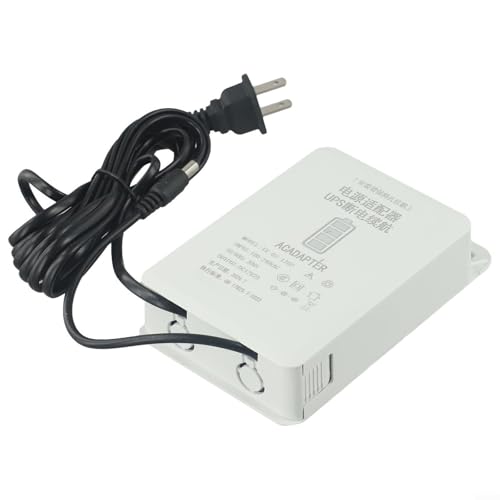
Lioaeust DC 12V-2A Mini UPS 6000mAh

Hosyond 18W Mini DC UPS Multi-Voltage Output
Taking A Closer Look At The Options
The aosu T2 Ultra starts from a different angle than the six UPS models: it is an outdoor security camera rather than a separate battery backup. Its 4K recording, 360-degree design, and triple detection system suit driveways, yards, and entry points where identifying movement matters.
You still need a verified power source and compatible backup arrangement. The camera pairs more naturally with a dedicated 12V DC unit such as the Lioaeust DC 12V-2A Mini UPS than with a full-size UPS, provided its connector and supply requirements match.
Points In Its Favor
- 4K video gives you a detailed recording target for identifying people, vehicles, and packages.
- The 360-degree design reduces the need for multiple cameras when you want broad coverage.
- Triple detection adds several ways for the camera to classify activity in an outdoor setting.
Things To Consider
- This model does not include the separate DC backup function that defines the other options.
- Outdoor placement still calls for secure cable routing and weather-conscious connector placement.
Who It Suits Best
You’ll benefit most from this camera when broad 4K outdoor coverage matters more than integrated backup power.
A Better Fit Elsewhere
The Lioaeust DC 12V-2A Mini UPS 6000mAh is a better match when your priority is keeping a compatible 12V camera running during an outage.
The CP1500AVRLCD3 takes a broader approach than a camera-specific adapter, supplying a home office, network, and related electronics through a conventional UPS. Automatic Voltage Regulation, or AVR, corrects modest input fluctuations without immediately transferring the connected equipment to battery power.
That balance works well for a recorder, modem, and router sharing one protected outlet strip. Unlike the Hosyond later in this list, it isn’t limited to an 18W maximum, although the camera load and all other equipment still need to stay within its capacity.
What Works In Its Favor
- The LCD provides a clearer view of operating conditions than a basic indicator light.
- AVR smooths smaller voltage changes, reducing unnecessary battery transfers during normal use.
- The larger platform suits a camera recorder, network storage device, and router together.
Minor Gripes
- Its larger cabinet and outlet arrangement take more space than a mini DC model.
- Simulated sine-wave output may not suit every sensitive or specialized load.
Key Specs
Made For
This model fits home offices and media areas where the camera shares power infrastructure with a recorder and router.
Consider Something Else When
The CyberPower CP1500PFCLCD PFC Sinewave UPS is worth considering for sensitive electronics that benefit from a true sine-wave supply.
True sine-wave output sets the CP1500PFCLCD apart from the earlier CP1500AVRLCD3. Active power factor correction, often called active PFC, helps systems that draw current in narrower pulses, making this model more relevant to modern desktops and other sensitive electronics.
For your security setup, that distinction matters most when a camera recorder or network device uses a more demanding power supply. The color LCD gives you a clearer operating view, while the conventional UPS format remains more involved than a purpose-built mini DC backup.
The Helpful Details
- Sine-wave output provides smoother AC power than a simulated waveform.
- Active PFC compatibility suits current-sensitive desktop hardware.
- The multifunction color panel helps you check load and operating status without navigating separate indicators.
- Surge protection adds a useful layer around a home recording network.
Soft Spots
- A full-size UPS occupies considerably more space than the Lioaeust or Hosyond mini units.
- You need to plan cable routing carefully so the display remains readable after installation.
Technical Highlights
Right Fit For
You’ll find this model most useful when sensitive electronics share a UPS with a network recorder or home-office equipment.
Swap It Out When
The Lioaeust DC 12V-2A Mini UPS 6000mAh is simpler for one compatible 12V camera with limited backup requirements.
The PR1500RT2UC suits larger installations where remote status access matters. Its sine-wave output avoids some of the transfer irregularities associated with a simulated waveform, while the Smart App gives you a way to inspect operating information away from the cabinet.
Rack or tower conversion also makes this the most flexible CyberPower model here for an equipment closet. It remains more than most single-camera setups need, so the extra room and complexity only make sense when you’re protecting a broader electronics group.
The Case For It
- App-based monitoring reduces the need to physically inspect a remote or unattended cabinet.
- Rack/tower conversion supports different equipment-room layouts.
- Sine-wave output suits sensitive network and desktop equipment.
- Battery equalization technology supports longer battery life over repeated charge cycles.
Points To Note
- App setup adds another network and configuration layer compared with a mini DC backup.
- The rack/tower enclosure may be excessive for a single low-power camera.
- Remote monitoring does not guarantee continued operation after the battery is depleted.
Core Details
Built With In Mind
This UPS targets an equipment closet supporting a recorder, NAS, router, and other networked devices.
Another Choice May Suit
The ADMLi 1500VA 1000W Lithium UPS is more relevant when lithium battery technology matters more than app access or rack conversion.
Lithium power gives the ADMLi 1500VA 1000W a different ownership profile from conventional lead-acid units. LiFePO4 chemistry is designed for repeated cycling, and the battery management system helps oversee charging and operating conditions, reducing some routine maintenance concerns.
Its 1000W output target and pure sine-wave signal make it a natural fit for a NAS and home network that must remain available during outages. That capacity is substantial for a lone camera, so you’ll get more from it by pairing it with your router, recorder, and networking equipment.
Standout Benefits
- Lithium iron phosphate chemistry supports repeated charge cycles with less battery maintenance.
- The battery management system helps regulate charging and protect the power pack.
- Pure sine-wave output suits modern NAS hardware and sensitive electronics.
- The 1000W capacity has room for a full home network.
Practical Considerations
- The larger capacity is unnecessary for a single low-draw camera.
- You still need to confirm each camera, recorder, and NAS supply has compatible input requirements.
- Battery condition monitoring remains useful throughout ownership, even with lithium chemistry.
Feature Snapshot
Made For
This model suits NAS owners who want one protected power source for network storage, a router, and security recording equipment.
Look Elsewhere When
The Hosyond 18W Mini DC UPS is a better fit for one compact camera installation with a matching low-voltage output.
For one outdoor camera, a full-size UPS can feel like using a dining table to hold a teacup. This Lioaeust unit narrows the focus to 12V DC power at up to 2A, with a 6000mAh battery and a compact housing suited to routers, modems, Wi-Fi equipment, and security cameras.
Its dedicated form makes it easier to place near a single camera or network device, though the outdoor designation still calls for a weather-conscious location. Unlike the ADMLi, it won’t carry a demanding NAS or desktop network.
The Practical Payoff
- The compact enclosure fits where a full-size UPS would be inconvenient.
- The 12V-2A output targets low-voltage security and networking devices.
- A 6000mAh capacity gives you a dedicated battery option for a single installation.
- The battery protection board includes over-current, over-voltage, and over-charge safeguards.
Things That May Matter
- You need to match both the 12V requirement and the connector used by your camera.
- The 2A ceiling may not suit high-draw infrared spotlights or multiple devices.
- Weather-resistant placement outside still requires careful cable and connection protection.
Who Should Grab It
This compact UPS best serves a homeowner protecting one compatible 12V camera and perhaps a nearby low-draw router.
Where Another Pick Shines
The ADMLi 1500VA 1000W Lithium UPS is stronger for a NAS, recorder, router, and several protected home-network devices.
The Hosyond mini UPS stands out for selectable 5V, 9V, 12V, 15V, and 24V output. That range makes it useful for low-voltage routers, modems, PoE equipment, and security IP cameras whose supply sits between those levels, while the small enclosure suits a shelf or network cabinet.
Its 18W ceiling is the decisive constraint. The listing recommends keeping the combined load below 15W for stable operation, so this is a focused backup for light equipment rather than a compact replacement for a full home-office UPS.
Useful Strengths
- Five output settings reduce the need for a fixed-voltage DC backup.
- The 18W maximum accommodates routers, modems, PoE equipment, and suitable cameras.
- A broad 85V-265V AC input range makes the unit less dependent on one mains supply level.
- Built-in batteries remove the need for a separate backup adapter.
Honest Caveats
- Keeping the total load below 15W limits multi-device use.
- The correct voltage and connector must match before installation.
- You may find the 18W ceiling restrictive for multiple cameras or lighting accessories.
Quick Facts
The Right Fit
This unit suits one or two lightweight IP cameras and network devices operating below its recommended combined load.
A Better Fit Elsewhere
The CyberPower CP1500AVRLCD3 Intelligent LCD UPS is better for a fuller home-office load with a router, recorder, and desktop equipment.
Matching Backup Power To Your Camera Network
Start with the camera rather than the battery unit. A DC backup must match the camera’s supply voltage, current, and connector, while a larger UPS must have enough capacity for the camera, recorder, router, and any connected storage. Treating those details as a single power budget prevents an oversized installation or an underpowered setup.
Voltage, Polarity, And Connectors
DC systems are rarely interchangeable in practice. Confirm voltage, current, and polarity before connecting a mini UPS, particularly for outdoor equipment where a mistaken polarity setting can be costly. For PoE devices, you also need to determine whether the camera receives power through a network cable or a separate adapter.
The Hosyond 18W Mini DC UPS offers several output levels, making it useful for mixed low-voltage equipment. Even so, the cable and connector must physically match, and the camera’s startup or night-vision load must remain under the stated limit.
Sine Wave Or Simulated Sine Wave?
A true sine wave follows a smoother AC waveform, which can suit modern electronics with sensitive power supplies. Simulated sine wave is adequate for many conventional network devices, though exact compatibility depends on the equipment and its power supply design.
Choose the CyberPower CP1500PFCLCD PFC Sinewave UPS for desktops, a NAS, or sensitive AC-powered gear. The CP1500AVRLCD3 is the more conventional network option when your attached equipment is designed for standard UPS output.
Capacity And Runtime
Capacity is only one part of runtime. A 1500VA unit may support a modest network, but the actual run time depends on each device’s wattage, battery condition, and conversion losses. For one camera, a compact DC unit can be more practical than a larger system designed for a roomful of electronics.
The ADMLi 1500VA 1000W Lithium UPS makes sense for a NAS and home network, while the Lioaeust DC 12V-2A Mini UPS targets one compatible low-voltage installation. Match the equipment you want protected instead of buying capacity you will never use.
Practical Checks Before Installation
Mistakes Worth Dodging
The most common error is matching voltage without checking connector type or polarity. Another is estimating backup time from capacity alone, since camera load, router consumption, and battery condition determine the result. For outdoor units, cable routing and weather exposure deserve attention before the battery is mounted.
What The Higher Tier Buys
Larger UPS models add capacity, smoother output, displays, network features, and broader equipment support. Those features matter when a recorder, NAS, router, and camera operate together; for one low-draw camera, a compact DC unit can provide the more useful balance. Pay for the electrical features your installation actually requires, not for unused capacity.
Frequently Asked Questions
Do security cameras need a separate UPS?
Many cameras use their own internal battery, while wired models need continuous external power. A UPS can keep a wired camera and its network path operating during an outage, provided voltage and load requirements match.
Can one mini UPS power several cameras?
Only when their combined power remains below the unit’s stated limits. The Hosyond model specifically recommends keeping the combined load below 15W for stable operation.
Do I need a router backup too?
You’ll benefit from powering the router alongside a network camera, especially when viewing footage locally. Cloud-only systems may use a less demanding network path, but continuous access still depends on the internet connection.
Is pure sine-wave output necessary?
It is most relevant to sensitive or modern electronics. A camera-only installation may not need it, while a NAS or desktop recorder can benefit from smoother AC power.
How long will a camera UPS last?
Runtime depends on battery capacity, equipment draw, conversion losses, and battery condition. Calculate the combined wattage before selecting a unit, then leave capacity beyond the immediate load for startup surges and degraded performance.
Final Verdict
For one compatible 12V camera, the Lioaeust DC 12V-2A Mini UPS is direct and compact. Mixed low-voltage equipment favors the Hosyond 18W model, while a NAS and broader security network justify the ADMLi or a CyberPower UPS. Always verify voltage, connector, polarity, and total load before installation.
