


A router and cable modem can sit idle for long stretches, yet a brief power interruption still disrupts calls, streaming, work sessions, and connected devices. Battery backups keep essential networking equipment running long enough for a controlled shutdown, while a compatible cable modem can improve access to faster service where your provider supports it. The right choice depends on runtime, outlet count, battery chemistry, and whether you need a modem-only setup.
The UPS models below are designed to bridge short outages around a router, cable modem, and small network. Hitron modem options serve a different purpose, providing a DOCSIS 3.1 connection for compatible cable service rather than stored battery power.
An Overview Of The Picks

Eaton Tripp Lite OMNI1500LCDT 1500VA UPS

Eaton Tripp Lite SMART750USB 750VA UPS

GOLDENMATE 1500VA/1000W Lithium UPS

GOLDENMATE 1000VA/800W Lithium UPS
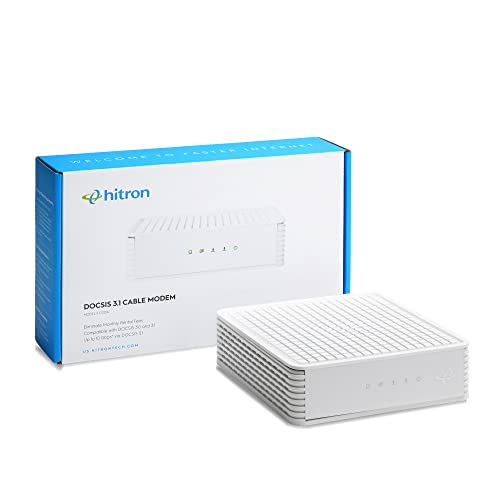
Hitron CODA DOCSIS 3.1 Cable Modem

Hitron CODA56 2.5 Gbps Cable Modem

Hitron CODA56 2.5 Gbps Cable Modem
A 1500VA UPS gives a home network room more breathing room than a small travel backup. The OMNI1500LCDT combines 810W of power handling, 10 outlets, surge protection, automatic voltage regulation, and an LCD status display, making it a practical central point for a router, cable modem, and nearby electronics.
The six-foot cord reaches a standard wall outlet without forcing the network shelf against the wall. For a home office or media area, that outlet count matters because you may also need to protect a small switch, game console, or charging block.
What Works In Its Favor
- 810W of supported load covers common home-office equipment.
- Ten outlets reduce the need for a secondary power strip.
- The LCD provides useful status visibility without extra equipment.
- Automatic voltage regulation helps steady input power during normal fluctuations.
Things To Consider
- Its larger case may take more space than the SMART750USB.
- Runtime changes with load, so high-draw networking gear reduces minutes available.
Key Specs
Made For
Home offices and network shelves that need more outlets than a compact UPS provides.
Another Choice May Suit
The Eaton Tripp Lite SMART750USB 750VA UPS suits smaller networks that prioritize a compact footprint over extra capacity.
Where the OMNI1500LCDT emphasizes breadth, the SMART750USB keeps the scope tighter. Its 750VA rating and 450W maximum output are appropriate for a router, cable modem, and a few lightweight devices, especially in an apartment or a small home office.
Line-interactive regulation smooths minor voltage changes while the internal battery supplies power during outages. Entry-level computers and small network workstations are among the devices this class is designed to support, although actual runtime depends on the connected load.
Advantages To Know
- A smaller capacity works well for basic network shelves.
- 450W output covers common routers and cable equipment.
- Automatic voltage regulation supports steadier operation.
Worth Noting
- Fewer outlets may require a separate power strip for multiple devices.
- It is less suitable than the OMNI1500LCDT for a larger office or entertainment setup.
Who It Suits Best
Small-network users who need a straightforward UPS for a router and modem without expanding into a larger office installation.
A Better Fit Elsewhere
The GOLDENMATE 1000VA/800W Lithium UPS suits long-term ownership priorities where lithium battery longevity matters more than a smaller footprint.
The 1500VA GOLDENMATE model targets networks that remain in service throughout the day. Its 1000W capacity leaves room for a router, cable modem, switch, and other essential equipment, while the lithium iron phosphate battery system distinguishes it from conventional lead-acid designs.
That chemistry is the main ownership story. The listed battery specification points to more than 3,000 charge cycles and a lifespan above 10 years, which makes the model more compelling for a permanently connected home or small business where battery replacement and maintenance deserve attention.
Key Advantages
- 1000W output supports a broader network load than the SMART750USB.
- LiFePO4 chemistry is designed for extended service life.
- More than 3,000 listed charge cycles support long-term ownership planning.
- 1500VA capacity fits home offices with several connected devices.
Trade Offs
- Lithium equipment may cost more upfront than a basic lead-acid UPS.
- Its larger capacity is unnecessary for a single router and modem.
Core Details
Built With In Mind
Always-connected households and small offices that want substantial network support with a lithium battery design.
Consider Something Else When
The GOLDENMATE 1000VA/800W Lithium UPS is a better fit for a smaller installation where 800W meets the equipment requirement.
This GOLDENMATE unit sits between the SMART750USB and the 1500VA model in a useful way. Its 1000VA rating and 800W output provide a comfortable middle ground for a home network with a router, cable modem, and a modest collection of connected devices.
The lithium iron phosphate battery pack is the differentiator. The source lists more than 5,000 charge cycles and a service life over 10 years, so this option may appeal to households that keep network equipment powered continuously and prefer fewer battery-related replacement decisions.
A Strong Showing
- 800W output handles common networking equipment comfortably.
- 1000VA capacity provides a balanced middle tier.
- The listed 5,000-plus charge cycles support long-term planning.
Minor Gripes
- It costs more than a basic UPS option in many purchasing situations.
- Some users may find 800W unnecessary for two network devices.
Feature Snapshot
Right Fit For
Home offices and connected households that need more endurance than a compact UPS without moving to the largest model here.
Where A Sibling Pick Shines
The GOLDENMATE 1500VA/1000W Lithium UPS suits heavier network loads that exceed this model’s 800W output.
The Hitron CODA is a modem-only option for homes with coaxial cable internet. DOCSIS 3.1 provides a modern cable standard, and the listed connection rate reaches 1 Gbps, making it a practical match for everyday streaming, remote work, and household browsing when your provider supports the device.
You still need a separate WiFi router. That arrangement can be tidy when you already have a capable router or want to place wireless coverage away from the modem, but it means this item does not replace a complete home networking system.
Positive Points
- 1 Gbps listed speed suits many cable households.
- DOCSIS 3.1 supports modern cable-service networks.
- Separate-router architecture gives you control over WiFi equipment.
Where It May Fall Short
- It does not support fiber or DSL service.
- No WiFi is included, so another device is required for wireless access.
Quick Facts
Who Will Love This
Cable-service households that already own a WiFi router and want a straightforward DOCSIS 3.1 modem.
Look Elsewhere When
The Hitron CODA56 2.5 Gbps Cable Modem is the better fit for compatible cable users who need a higher listed connection rate.
The CODA56 raises the modem ceiling from the CODA’s 1 Gbps listing to 2.5 Gbps, which can help connected homes with high-speed cable plans, large file transfers, or several simultaneous users. It remains a data-only modem, not a router, voice terminal, or WiFi system.
Its single Ethernet port keeps the arrangement simple: connect the modem to a separate router, then let that router handle wireless access and local network features. Confirm that your provider supports the modem and that your service is delivered over coax before ordering, especially in homes considering a service change.
Useful Highlights
- 2.5 Gbps listed speed supports high-bandwidth cable plans.
- DOCSIS 3.1 suits compatible cable providers.
- A single Ethernet port works cleanly with a dedicated router.
Practical Considerations
- It cannot replace a WiFi router or voice equipment.
- Service compatibility must be checked before installation.
Important Details
Best Suited To
High-bandwidth cable households with a separate WiFi router and provider support for the CODA56.
Swap It Out When
The Hitron CODA DOCSIS 3.1 Cable Modem is a more measured fit for cable homes that do not need the higher listed speed.
This CODA56 listing serves the same core purpose as the preceding CODA56 model: a 2.5 Gbps DOCSIS 3.1 cable modem without WiFi. It suits a setup built around a separate router, particularly for homes that want the modem’s connection capacity while keeping their own wireless hardware.
The trade-off is a narrow role. It works with compatible cable providers, not fiber, DSL, satellite, or fixed wireless service, and Ethernet connectivity means one device receives the internet connection directly until a router is added.
Strengths Worth Knowing
- 2.5 Gbps supports faster compatible cable plans.
- Separate-router design keeps WiFi selection flexible.
- DOCSIS 3.1 fits current cable-network deployments.
Details To Watch
- Provider approval and coax service are required.
- A router adds another device, cable, and setup step.
Made For
Cable-service households with a separate router and a preference for a modem-only network arrangement.
Reach For A Different Pick When
The Eaton Tripp Lite OMNI1500LCDT is the better fit for maintaining network uptime during outages, since this modem has no battery function.
Choosing The Right Network Power Protection
Start with the load, not the label on the front of the box. A UPS rated in VA estimates supported capacity, while wattage reflects real power demand. Your router, modem, switch, and any connected equipment should stay comfortably below the UPS output rating, especially during an outage.
Line-interactive regulation is useful in areas with ordinary voltage fluctuations because it conditions incoming power before the battery takes over. A larger capacity buys more runtime and room for connected equipment, but it also adds size and cost. The OMNI1500LCDT makes sense for a broader network shelf, while the SMART750USB suits a simpler setup.
Battery chemistry deserves a longer look for long-term ownership. The listed lithium iron phosphate systems offer substantially more stated charge cycles than traditional lead-acid designs, which can reduce replacement frequency. That advantage matters most for equipment that stays plugged in continuously, while a conventional UPS may still be adequate for occasional backup use.
For cable modems, compatibility matters more than raw speed. DOCSIS 3.1 modems require coaxial cable service and provider support. A separate WiFi router is needed for wireless access, so factor that into your equipment budget and placement plans.
Common Mistakes In Network Hardware Choices
A UPS cannot provide a fiber, DSL, satellite, or fixed wireless connection, so verify the modem’s service type before ordering. A modem-only device also does not create WiFi coverage, and connecting it to a router is part of the setup.
What Higher Capacity Adds
Higher capacity provides more output for connected devices and generally more runtime during an outage. Lithium-focused models may also appeal to owners planning long service intervals, while smaller units are more practical when space and simplicity matter.
Frequently Asked Questions
Do I need a UPS for a router and cable modem?
A UPS is useful when you want network access to continue briefly during a power interruption or when you want time to shut down devices cleanly. Its benefit depends on battery capacity, connected load, and the duration of the outage.
Can a UPS protect a cable modem?
Yes. A UPS can supply power to compatible networking equipment, including a cable modem, as long as the equipment stays within the unit’s output rating. Surge protection is a separate layer of protection against voltage spikes.
Are lithium UPS systems better than lead-acid models?
Lithium iron phosphate systems are designed for long service life and high cycle counts. Lead-acid models may still be sufficient for occasional outages, but their battery replacement cycle can be more relevant to long-term ownership.
Does a Hitron CODA56 provide WiFi?
No. The Hitron CODA56 is a cable modem and requires a separate WiFi router for wireless access. It also supports data service rather than voice functions.
Can I use a Hitron modem with fiber internet?
No. These Hitron modems are designed for compatible coaxial cable service. Confirm that your home uses cable internet and that your provider supports the specific model before installation.
Wrap Up
Choose the Eaton Tripp Lite OMNI1500LCDT for broader outlet and capacity coverage, the SMART750USB for a compact basic setup, or a GOLDENMATE lithium model for long-term cycle planning. The Hitron modems serve a separate need, bringing DOCSIS 3.1 connectivity to compatible cable homes, but they require a router and provide no battery runtime.
