


A network video recorder is only as dependable as its power supply. A short outage can interrupt recordings, reset a network connection, or leave an NVR without enough time to shut down cleanly. Battery backups add a bridge between the wall outlet and the recorder, while surge protection helps guard connected cameras and networking equipment. These picks cover compact home-office setups, larger installations, and systems needing more substantial battery support.
A Fast Comparison Of The Options

APC BE550G 550VA/330W UPS Battery Backup
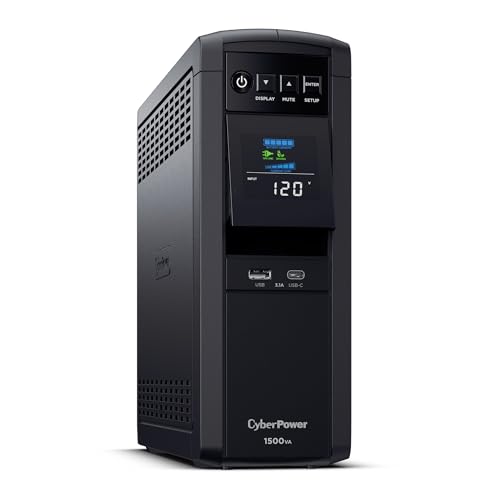
CyberPower CP1500PFCLCD PFC Sinewave UPS

CyberPower EC850LCD Ecologic UPS

GOLDENMATE 1000VA/800W Lithium UPS

GOLDENMATE 1500VA/1000W Lithium UPS

CyberPower CPS1500AVR Intelligent LCD UPS

GOLDENMATE 1000VA/800W Lithium UPS White
Meet The Standout Selections
The APC BE550G is sized for a straightforward NVR, network switch, and a few related devices rather than a heavily loaded surveillance rack. Its 550VA/330W rating gives a basic home setup a practical bridge during a brief outage, while its eight NEMA outlets leave room for essential networking gear.
Compared with the larger CyberPower CP1500PFCLCD, this model is less concerned with high output and more concerned with simple placement around a home office or media cabinet. The honest read is that it suits a single recorder and modest accessories well, provided the connected equipment stays within its capacity.
A Few Highlights
- 330W continuous output fits a compact NVR and router combination.
- Eight outlets simplify protection for a recorder, switch, and nearby equipment.
- Surge protection adds a second layer beyond outage backup.
- Its compact form suits shelves, cabinets, and small workspaces.
Things To Consider
- Runtime depends on the NVR’s power draw, so heavy storage arrays reduce the available operating time.
- Owners should keep the unit in a cool, ventilated area and follow the battery replacement guidance in its documentation.
Who It Suits Best
This model fits beginners and small-home users protecting one NVR, a router, and a modest number of cameras.
Another Choice May Suit
Choose the CyberPower CP1500PFCLCD instead for a newer NVR setup needing sinewave output and more capacity.
The CP1500PFCLCD targets NVRs and desktops that benefit from more continuous battery coverage than a small entry-level unit provides. Its pure sine wave output is the defining feature, meaning the transition to battery power more closely resembles utility power than a stepped or simulated waveform.
That distinction matters with active power factor correction, a feature used by many modern desktop computers and higher-end electronics. In a busy security room, the color LCD gives you a clearer view of load, battery, and operating status, although the larger housing takes more space than the APC BE550G.
Positive Points
- Sinewave output suits modern computer equipment with active PFC power supplies.
- The color LCD makes operating conditions easier to check at a glance.
- 1500VA capacity gives an NVR more room for storage, networking, and monitoring devices.
- Surge protection helps cover connected cameras and network equipment during unstable power.
Worth Noting
- Its larger footprint requires more shelf space than the APC BE550G.
- Battery runtime still depends on how much power your NVR and attached accessories draw.
- Keep ventilation open around the unit, particularly in a closed equipment cabinet.
Made For
This model suits NVR owners with modern desktop components who want clearer status information and a higher output ceiling.
Where A Sibling Pick Shines
The APC BE550G is a better fit for a small setup needing simple protection without the CP1500PFCLCD’s larger power capacity.
The EC850LCD brings backup and surge protection to compact installations where shelf space matters. It uses standby topology, meaning it remains on line until an outage calls for battery power, while its LCD gives you a quick read on system status.
It makes more sense for a compact desktop NVR than for a large server rack. Compared with the CP1500PFCLCD, the EC850LCD trades some output capacity and power-quality refinement for a smaller, simpler package, which can be the right balance in an apartment or small office.
Everyday Perks
- Compact construction suits limited shelf or cabinet space.
- The LCD provides useful operating information without a separate monitoring screen.
- Surge protection helps cover an NVR, switch, and connected equipment.
- Its format suits smaller desktop-based surveillance systems.
Small Caveats
- Simulated sinewave output may not be ideal for every modern power supply.
- Runtime shortens as you add drives, monitors, or multiple network devices.
- Place it on a stable surface and avoid enclosing it in a tight cabinet.
The Right Fit
This is a sensible fit for apartment residents and small offices protecting a basic NVR with limited battery demands.
Consider Something Else When
The CP1500PFCLCD is the stronger choice for a modern NVR with active PFC equipment or a larger accessory load.
GOLDENMATE’s 1000VA/800W lithium model gives a home NVR a more generous power ceiling than the APC BE550G while keeping the general footprint approachable. Eight NEMA outlets let you place the recorder, network switch, and related devices on one protected platform, with an included AC cord for straightforward placement.
Its built-in battery management system and cooling fan are aimed at maintaining stable lithium-battery operation, though the fan may matter in a quiet home office. For a multi-camera setup, the 800W rating is a better starting point than the APC’s 330W output.
The Upside
- 800W output supports an NVR plus several related networking devices.
- Eight outlets reduce the need for a separate surge-protector strip.
- Lithium battery technology is designed for a long service life and many charge cycles.
- The cooling system is useful in enclosed equipment areas where heat can accumulate.
Trade Offs
- The fan introduces a consideration for bedrooms and very quiet rooms.
- 800W describes maximum output, not guaranteed runtime for every connected device.
- Confirm the outlet arrangement and total load before installing it behind a crowded rack.
Built With In Mind
This model fits multi-camera households that want more capacity and a lithium-based alternative to a small lead-acid UPS.
Reach For A Different Pick When
The APC BE550G is a better fit for a single compact NVR where low output, small size, and simpler protection matter more.
For a security room that runs an NVR, a switch, storage accessories, and other powered equipment, the 1500VA/1000W GOLDENMATE provides a higher operating ceiling than the 1000VA model. Its white housing also fits neatly into a clean, modern equipment area.
The lithium iron phosphate battery is the main ownership advantage, with a long service-life claim and high cycle count that can reduce replacement planning over time. You still need to account for startup loads, battery aging, and the actual draw of connected devices, so capacity is not the same thing as runtime.
A Favorable Mix
- 1000W output suits larger NVRs with several attached devices.
- Lithium iron phosphate chemistry is intended for extended service and frequent cycling.
- Surge protection supports a broader connected equipment group.
- The higher capacity is more practical for offices than a single-room home setup.
Things That May Matter
- It is a larger purchase in physical size and weight than the compact CyberPower EC850LCD.
- Runtime can fall substantially when several high-draw accessories run during an outage.
- Battery systems still need periodic testing and proper placement away from heat.
Who Should Grab It
This is for small-business surveillance rooms and advanced home users who need more output and longer battery-life planning.
A Better Fit Elsewhere
The GOLDENMATE 1000VA/800W Lithium UPS is a more balanced choice for a medium home installation with fewer powered devices.
The CPS1500AVR is aimed at installations where voltage fluctuations matter as much as sudden power loss. Automatic Voltage Regulation, or AVR, adjusts small power variations before they reach connected equipment, which is useful where the NVR, network switch, and cameras share a long supply run.
Its 1500VA class makes it more substantial than the EC850LCD, while the simulated sinewave output calls for a closer look at your connected equipment’s power requirements. For a business NVR without active PFC power supplies, that trade can favor steady voltage correction and useful LCD monitoring.
The Helpful Details
- AVR helps smooth smaller voltage changes before battery transfer is needed.
- The intelligent LCD gives you a central view of operating status.
- 1500VA capacity is appropriate for workgroup equipment and telecom-related devices.
- Rack or tower placement suits a dedicated equipment area.
Less Ideal Details
- Simulated sinewave output may not suit every modern desktop power supply.
- The size is less convenient than the EC850LCD for an apartment shelf.
- Keep the LCD visible and ensure the unit has enough airflow during battery operation.
Best Suited To
This model suits small offices and technical rooms where voltage regulation and higher capacity are more useful than compact size.
Swap It Out When
Choose the CyberPower CP1500PFCLCD for an NVR system that needs sinewave output instead of simulated sinewave power.
This white GOLDENMATE model shares a 1000VA/800W capacity with the gray version, so the meaningful distinction is the finish paired with the lithium battery positioning. It suits a home office or clean equipment cabinet where a neutral-colored backup unit is easier to blend with other hardware.
The lithium iron phosphate battery is specified for more than 5,000 charge cycles and a lifespan over 10 years, which makes this more than a short-term outage accessory for a permanent NVR installation. Your actual runtime still depends on the recorder’s drive activity, camera network load, and battery condition, so periodic testing remains sensible.
What Works In Its Favor
- 800W output provides a practical middle ground for home NVRs and network equipment.
- Lithium iron phosphate chemistry supports long service planning and frequent charging.
- The white housing fits cleanly into modern office furniture and equipment cabinets.
- Surge protection adds value across the connected camera and network system.
Points To Keep In Mind
- The lithium claims describe battery design and expected service characteristics, not unlimited operating time.
- Multiple cameras and external storage can reduce runtime compared with a bare NVR.
- Allow ventilation and keep the unit away from moisture and direct heat.
Whose Shelf It Belongs On
This model fits homeowners and home-office users who want a permanent lithium-based backup without stepping up to 1500VA.
Where Another Pick Shines
The CyberPower EC850LCD is a better fit for the smallest spaces and lightest equipment loads.
Choosing Backup Power For A Surveillance Network
Start With The NVR Load
Begin with the recorder’s power requirements and the devices connected to it. VA measures apparent power, while watts estimate real power demand, so neither number alone tells the whole runtime story. Include the network switch, PoE equipment, external storage, and any monitor or modem sharing the UPS.
Match Output To Outage Needs
A compact recorder with one or two network devices may work well with a 550VA unit. Larger systems, multiple storage devices, and business-class network equipment benefit from 1000VA or 1500VA capacity. Give yourself some headroom, while recognizing that a higher rating does not create a specific runtime number.
Consider Power Quality And Monitoring
Sinewave output is a meaningful distinction for equipment using active PFC power supplies. AVR helps correct smaller voltage changes, and an LCD can simplify status checks during troubleshooting. Choose the feature that matches your connected hardware rather than paying for complexity your setup will not use.
Plan For Ownership
Battery condition, heat, ventilation, and periodic testing all affect long-term performance. A unit placed in a closed cabinet can run hotter, while a lightly loaded UPS may provide more runtime than expected. Check outlet types and leave installation space around the unit before settling on a model.
Common Sense Checks Before Ordering
Mistakes Worth Dodging
The most common error is choosing capacity by appearance instead of connected-device load. Another is overlooking the difference between surge protection and battery backup, or placing the UPS in a cramped cabinet without airflow. Check connector types and estimate startup demands before installation.
What Separates Premium From Basic
Higher-tier models often add sinewave output, voltage regulation, larger capacity, or longer-cycle lithium batteries. Those features matter for modern electronics, office equipment, or an NVR that must remain online through several brief interruptions. A basic model can still make sense for a small recorder and a few low-draw devices.
Frequently Asked Questions
Do I Need A UPS For An NVR?
A UPS gives an NVR time to continue operating during a short outage and shut down more cleanly. It also adds surge protection for connected equipment.
How Much Power Does An NVR Need?
The requirement depends on the recorder, storage drives, network switch, and other devices. Check each device’s power rating and include startup load before choosing VA or watt capacity.
Is Sinewave Output Necessary?
It is especially relevant for modern computer equipment with active PFC power supplies. Simulated sinewave models can suit simpler systems, but compatibility deserves a check.
Where Should I Place A Battery Backup?
Place it near the equipment, on a stable surface, with ventilation around the housing. Keep it away from moisture, direct sunlight, and enclosed spaces that trap heat.
How Often Should I Test It?
Test the unit periodically by checking its status and confirming that the NVR receives battery power during a controlled outage simulation. Follow the manufacturer’s setup and battery-care instructions.
Final Verdict
Choose the APC BE550G for a small, uncomplicated NVR setup, the EC850LCD for limited space, and the CyberPower CP1500PFCLCD for modern systems needing sinewave output. The GOLDENMATE models add lithium battery planning and more capacity, while the CPS1500AVR focuses on voltage regulation. Match the unit to your actual load, airflow, and monitoring needs, then maintain it as part of your security system.
