


A reliable battery pack turns a phone dead on a ridgeline into a minor inconvenience rather than a navigation problem. Backpackers need enough capacity for navigation, communication, photography, and an emergency layer, plus a shape that still fits comfortably inside a daypack. The seven options below range from featherlight phone banks to stationary UPS systems for base camps and vehicle-supported trips.
How The Shortlist Stacks Up

EF ECOFLOW Rapid 45W Power Bank 10000mAh with USB-C Cable

A ADDTOP Magnetic 10000mAh Power Bank, 15W Wireless
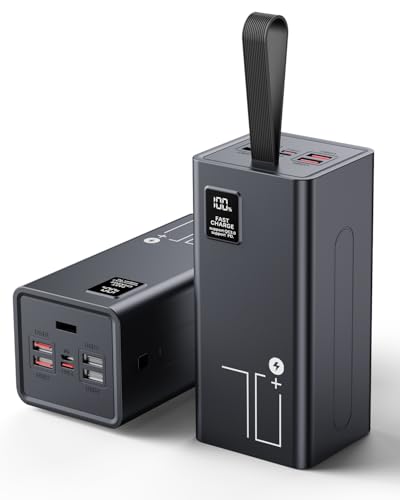
Liahomco 70000mAh 30W Power Bank with LED Display

GOLDENMATE 1500VA/1000W Lithium UPS Battery Backup, White

GOLDENMATE 1000VA/800W Lithium UPS Battery Backup, White
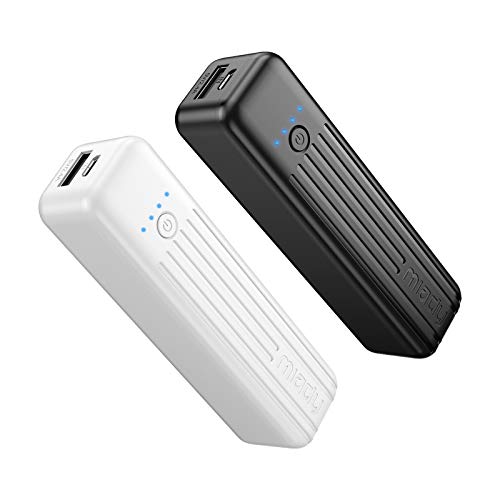
Miady 2-Pack Small 5000mAh Portable Chargers

NOBIS 90W 20,000mAh Laptop Power Bank
More On The Choices That Made The List
The EF ECOFLOW Rapid 45W balances useful laptop-class output with a body listed at 0.5 pounds and 1.57 by 1.96 by 2.95 inches. For a hiker carrying navigation, a phone, and a small tablet, that combination makes more sense than a high-capacity brick that takes over one pocket.
Its built-in 2.3-foot USB-C cable removes one more loose item from your pockets, while the digital display provides a clearer reserve check than a row of tiny LEDs. Compared with the Miady 2-Pack, it serves several devices with less packing, though it still won’t serve a week-long expedition.
The Upside
- Up to 45W output supports demanding phones, tablets, and compatible laptops.
- The attached cable stays available when a loose adapter is forgotten or damaged.
- PD3.0 and PPS protocols support fast, adaptive charging on compatible devices.
- The compact listed weight suits day hikes and overnight backpacking.
Things To Consider
- Its 10,000mAh capacity is better suited to short trips than extended trips without resupply.
- Laptop charging drains this pack quickly, so expect fewer full laptop charges than its phone-oriented capacity suggests.
Quick Facts
Made For
This pack fits hikers who need one compact source for navigation, phone, and occasional tablet or laptop charging.
A Better Fit Elsewhere
Choose the NOBIS 90W 20,000mAh Laptop Power Bank for laptop-heavy trips needing a larger reserve.
Stopping to find a cable becomes less relevant with the A ADDTOP Magnetic 10000mAh Power Bank, particularly during a cold trail stop or while your gloves remain on. Its 12-newton magnetic attachment centers compatible iPhones for wireless charging, which helps prevent the misalignment that can interrupt contact.
This is less universal than the EF ECOFLOW Rapid 45W because magnetic charging depends on compatible hardware and cases. For an iPhone-focused hiker, though, the 15W wireless output and 20W USB-C path make it a practical daily companion.
Noteworthy Benefits
- The magnetic interface supports convenient one-handed attachment during stops.
- Wireless charging reaches 15W on supported devices.
- The USB-C connection also supports 20W wired charging.
- Its 10,000mAh capacity matches the EF ECOFLOW while serving a different charging style.
Minor Gripes
- Magnetic alignment is limited to the specified compatible iPhone range.
- A case with a thick or incompatible magnetic layer may reduce charging reliability.
- Carrying both a cable and magnetic pack can be redundant for users who favor wired charging exclusively.
Key Specs
Who Will Love This
Compatible iPhone owners who regularly charge during hikes will appreciate the quick magnetic connection.
Consider Something Else When
Mi travelers carrying mixed devices benefit more from the EF ECOFLOW Rapid 45W Power Bank with USB-C Cable.
The Liahomco 70000mAh pack targets trips where carrying spare capacity matters more than keeping every gram low. Manufacturer-estimated phone and tablet charge totals make it a logical center of a vehicle-camp kit or a group’s shared power base, especially across several cloudy days.
Its 30W USB-C output and support for PD and QC 3.0 help manage compatible devices efficiently, while five outputs and two inputs reduce adapter juggling. Still, a pack this large has little business in a small daypack, and airline carry rules require separate verification.
The Good Stuff
- The stated 70,000mAh reserve suits multi-day camping and shared charging.
- PD and QC 3.0 support faster charging across compatible phones and tablets.
- Five outputs give a travel party room to connect several devices.
- The LED display offers a quick visual reserve check in camp.
Where It May Fall Short
- The physical bulk and weight will be impractical for many footpacking routes.
- Large lithium batteries should stay protected from impact, moisture, and excessive heat during storage.
- Air travel suitability is unclear from the supplied specifications, so check the carrier’s current limit.
Feature Snapshot
Right Fit For
Car campers, road trippers, and stationary base-camp users gain the most from its oversized capacity.
Look Elsewhere When
Overnight hikers wanting minimal weight fit the Miady 2-Pack Small 5000mAh Portable Chargers better.
A UPS, or uninterruptible power supply, switches connected equipment to an internal battery during an outage. That makes the GOLDENMATE 1500VA/1000W model relevant only to a vehicle-supported camp, cabin, or mobile office, not a traditional day hike.
Its 1,500VA and 1,000W ratings provide more headroom than the smaller GOLDENMATE model, making it the sensible option for a laptop, router, displays, and other electronics. The lithium iron phosphate battery chemistry supports long service, although a UPS can never replace planning around the runtime of its connected load.
What Pays Off
- The 1,000W rating better accommodates several connected electronics.
- Surge protection adds value for a fixed electronics setup.
- LiFePO4 chemistry favors long service compared with conventional lead-acid batteries.
- It keeps essential office equipment operating during short outages.
Practical Considerations
- The size and weight make this unsuitable for carrying on foot.
- Connected equipment must stay below the unit’s capacity, and motor-heavy loads can demand extra headroom.
- Install it in a dry, ventilated location and keep the battery away from excessive heat.
Built With In Mind
Vehicle-based digital nomads and base-camp workers benefit from its higher powered outlet capacity.
Where A Sibling Pick Shines
The GOLDENMATE 1000VA/800W Lithium UPS is lighter in demand and better matched to a smaller electronics setup.
The GOLDENMATE 1000VA/800W Lithium UPS occupies a useful middle ground between a travel power bank and a whole-building system. For a base-camp laptop, router, and monitor, its 800W rating offers more room than a typical phone charger while remaining less demanding than the 1,000W sibling.
Its listed LiFePO4 battery is rated for more than 5,000 charge cycles, a meaningful longevity advantage for stationary electronics that may see frequent charging cycles. You still need a dry installation area, a clear plan for recharging it, and realistic expectations about runtime.
Everyday Perks
- The 800W output supports a modest base-camp electronics system.
- Surge protection covers connected equipment during power disturbances.
- The battery supports more than 5,000 listed charge cycles.
- The lithium iron phosphate design suits extended stationary use.
Small Caveats
- Runtime depends on the connected load, so a laptop can shorten available backup time.
- It is a fixed-position system rather than a pack you can comfortably carry.
- Ventilation matters during charging and operation.
The Main Details
Whose Shelf It Belongs On
Cabin dwellers and vehicle-based workers need a moderate-capacity power system for computers and network equipment.
Another Choice May Suit
You gain more power headroom with the GOLDENMATE 1500VA/1000W Lithium UPS Battery Backup.
The Miady 2-Pack favors redistribution over maximum capacity in one device. Each 5,000mAh charger measures 4 by 1.1 by 1.1 inches and weighs 3.45 ounces, allowing you to place one in your daypack and keep the other in your main pack.
That arrangement can be smart for an overnight hike where two people need emergency phone power, or a traveler who wants a spare without carrying a large battery. The limited 18.5-watt-hour capacity per unit makes it a phone backup, not a laptop or camera-charging solution.
Good Reasons To Consider
- Two packs can be shared across separate packs or carried as a spare.
- The 3.45-ounce listed weight suits minimalist travel.
- Each unit’s 18.5-watt-hour rating falls within the supplied plane allowance guidance.
- The narrow shape fits easily into small side pockets.
Worth Noting
- Phone charging may not provide enough reserve for a tablet or laptop.
- Two separate batteries require more charging and organization than one larger pack.
- Keep contacts clear of moisture and avoid leaving either unit in a hot vehicle.
Made For
Overnight hikers traveling light benefit from two compact units they can divide between packs.
Reach For A Different Pick When
Multi-day backpackers need the greater reserve of the Liahomco 70000mAh 30W Power Bank.
Laptop users face a different problem from phone-only backpackers: one charge can drain a small power bank quickly. The NOBIS 20,000mAh pack addresses that gap with output listed at up to 90W, making it the most technically substantial travel charger in this group.
The 65W input also shortens the pack’s own replenishment time with a suitable charger. Digital nomads, remote workers, and photographers gain useful flexibility, but the larger battery and cooling requirements probably make it too substantial for someone who only needs emergency phone power.
What Earns Its Place
- Up to 90W output targets compatible power-hungry laptops.
- 20,000mAh capacity holds more reserve than the phone-focused picks.
- 65W input supports faster recharging with compatible equipment.
- One pack can serve a laptop, phone, and Bluetooth headset over a workday.
Points To Keep In Mind
- Greater capacity generally means more weight and pack volume than a 5,000mAh unit.
- Fast charging can generate heat, so avoid insulating the pack while it operates.
- Device compatibility depends on its USB-C power profile and included cable requirements.
Feature Facts
Best Suited To
Remote workers and photographers who depend on a laptop throughout long travel days fit this capacity well.
Swap It Out When
Minimalist overnight hikers carry less weight with the Miady 2-Pack Small 5000mAh Portable Chargers.
Pack Size And Device Demands Matter Most
Start With The Device Load
Navigation, messaging, and a phone form a different charging load from a laptop, camera batteries, tablets, and two travelers. List each device, its battery size, and the power standard it requires. A compact 10,000mAh bank may suit the first group, while laptop-heavy travel benefits from a higher-output pack.
Balance Capacity Against Pack Weight
A large battery reduces the need for charging stops, but every extra ounce becomes uncomfortable after several miles. For an overnight route, two small packs can be easier to distribute than one oversized unit. Car camping and remote-work trips allow much more capacity without the same backpack penalty.
Match Connections And Charging Standards
USB-C, magnetic wireless charging, and AC-powered UPS outputs serve different purposes. PD, PPS, and QC 3.0 describe charging protocols that negotiate suitable power levels, but your device must support the relevant standard. Check cable requirements, port count, and case compatibility before packing.
Protect The Battery In The Field
Store power banks in a dry, cool place away from direct sun and physical impact. Inspect charging ports for dirt, keep unused contacts covered, and allow high-output packs to cool during heavy use. Air travel also requires checking the current carrier and departure rules.
Battery Pack Details That Change The Outcome
Where Shoppers Go Wrong
Choosing by advertised capacity alone can produce an oversized, undersupplied pack. Output wattage, connector support, weight, and permitted air-travel capacity can matter as much as the headline number. Treat mAh as stored energy, not proof of useful laptop runtime.
What Separates Premium From Basic
Premium options add faster output, faster recharging, displays, multiple ports, or longer battery chemistry. Those features help demanding users, while a basic phone-only hiker can spend more wisely on a smaller, lighter pack. Upgrade only when the device load justifies the added weight.
Frequently Asked Questions
What size power bank is best for backpacking?
A 10,000mAh model works well for many phone, navigation, and light tablet trips. Laptop users or multi-day hikers need to account for heavier power demands and possibly choose 20,000mAh or greater.
Can I carry a power bank while flying?
Many power banks are permitted within airline carry-on limits, but capacity rules vary by carrier and country. Check the current policy before departure and keep the battery installed inside its protective housing.
Is a magnetic power bank better than a cable?
A magnetic model offers faster attachment on supported phones, while a wired pack is more universal. Case thickness and magnetic accessory support can affect alignment, so check compatibility before relying on wireless charging outdoors.
Do larger power banks charge laptops faster?
Capacity and charging speed are separate. A large pack can still be slow, while wattage and protocol compatibility determine output. Your laptop must also accept the charger’s power profile.
Should I carry one battery or two?
One larger pack simplifies cable management and replaces fewer devices. Two smaller packs are easier to divide between people or packs, but each needs separate charging and storage.
