


A dead phone can disrupt a commute, delay a flight, or leave you without directions in an unfamiliar place. Battery backup chargers for cell phones range from cable-packed models for daily carry to high-capacity units for road trips and outages. The right option depends on device compatibility, physical size, charging speed, and how many devices you expect to power.
The Choices Worth Comparing

Orfeika Portable Charger with Four Built-In Cables

FuelRod USB-C Portable Charger Kit, Pack of 2 with Cables, Adapters and Kiosk Swap
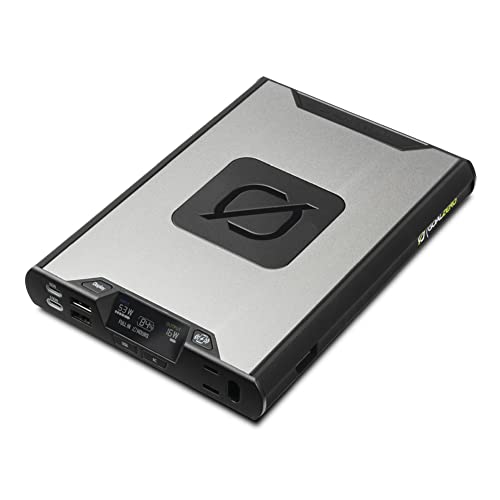
Goal Zero Sherpa 100AC Power Bank, 100W USB-C, 25,600mAh

TESSAN 10,000mAh 3-in-1 Power Bank with Built-In 30W USB-C Cable

Sucrosey 50,000mAh Power Bank with Built-In Cables and Wall Plug

TESSAN 10,000mAh Power Bank with Built-In Cables and Wall Plug

MaiVoz 56,800mAh 22.5W Power Bank with LED Display
Why These Options Stand Out
Four tethered cables make this a practical phone charger for a carry-on or daily work bag. You can connect several device types without sorting through a tangle of loose adapters, which is a meaningful advantage on a crowded commute.
The 22.5W output targets power-hungry phones more seriously than a basic low-wattage pack, while USB-C recharging takes about 2.5 hours. Compared with the dual FuelRod kit, Orfeika puts more connection options in one smaller-looking package, though the supplied material does not state its battery capacity.
Useful Strengths
- Four built-in cables reduce packing clutter across phones, tablets, and accessories.
- 22.5W output supports a faster top-up than many basic power banks.
- USB-C input recharges the unit in roughly 2.5 hours, making turnaround practical between trips.
Details To Watch
- The source does not provide battery capacity, so expected reserve remains unclear.
- Attached cables can restrict connector positioning in tight spaces and may be harder to replace.
Key Specs
Made For
You benefit most from this model when you regularly travel with several rechargeable devices and prefer one organized cable setup.
A Better Fit Elsewhere
The Goal Zero Sherpa 100AC Power Bank offers a better fit for a traveler who also needs to power a laptop from an AC outlet.
The FuelRod approach centers on continuity: you receive two units, cables, and adapters, and each rod arrives ready to use. That setup makes more sense for someone splitting the pack between a bag and a pocket than a single high-capacity brick offers.
FuelRod kiosks provide a way to exchange a spent rod for a charged one during travel. Compared with Orfeika’s four-cable design, FuelRod emphasizes shared backup and a broad adapter kit, but it does not publish a specific wattage or battery capacity in the supplied details.
Benefits That Matter
- Two precharged rods keep a second reserve close at hand.
- Included cables and adapters cover most common phones and tablets.
- Kiosk exchanges can simplify recharging while traveling.
- The pack can also be recharged with a USB adapter.
Honest Caveats
- Charging speed is not defined, making it harder to compare with 22.5W and 30W models.
- Kiosk access depends on your location and does not replace careful planning around it.
- Carrying two units can make the kit less compact than a single cable-integrated power bank.
Built With In Mind
You benefit most from FuelRod as a frequent traveler who values a precharged spare and access to exchange kiosks over maximum power output.
Where A Sibling Pick Shines
The TESSAN 10,000mAh 3-in-1 Power Bank with Built-In 30W USB-C Cable suits someone who prioritizes known charging speed in a single unit.
Phone-only cables run out of options quickly when a laptop or tablet joins the trip. The Goal Zero Sherpa 100AC broadens the field with 100W USB-C output and a built-in AC inverter, a wall-style outlet that accepts a broader range of devices.
Its 95Wh energy rating and 25,600mAh cell capacity sit well above the two 10,000mAh TESSAN options. The tradeoff is bulk, and you may notice it in a slim daypack, but the power headroom benefits mixed-device travel and remote work.
Everyday Wins
- 100W USB-C output can charge demanding USB-C devices more quickly.
- The AC inverter expands compatibility beyond cable-based phone charging.
- A 95Wh rating reduces dependence on outlets during a long travel day.
Practical Considerations
- Its larger battery and inverter setup are less convenient for minimal everyday carry.
- AC output adds weight and complexity compared with a phone-only model.
Technical Highlights
Right Fit For
You benefit most from this model as a mobile professional or traveler who alternates between a phone, tablet, and USB-C laptop.
Consider Something Else When
The Sucrosey 50,000mAh Power Bank with Built-In Cables and Wall Plug better serves trips centered on many small USB devices rather than laptop charging.
A foldable wall plug and built-in 30W USB-C cable turn recharging into a one-cord routine. That arrangement works well for someone who regularly uses a hotel room or airport outlet and dislikes carrying separate wall hardware.
Unlike the 56,800mAh MaiVoz pack, TESSAN places more emphasis on compact daily readiness than multi-day reserve. The complete unit contains two 5,000mAh cells, so the package’s 5,000mAh marking should not be mistaken for total bank capacity.
Strong Points
- The 3-in-1 format reduces cables, adapters, and a separate wall charger.
- 30W USB-C output provides useful speed for modern phones and tablets.
- 10,000mAh total capacity is a practical reserve for regular commuting.
Points To Note
- Two-cell construction is often printed with a single-cell number, which can create confusion.
- Its capacity is limited for camping or power interruptions lasting several days.
Feature Snapshot
Who It Suits Best
You benefit most from this TESSAN model as a commuter or frequent flyer who values a compact cable and wall-plug combination.
Swap It Out When
The Orfeika Portable Charger with Four Built-In Cables is the stronger fit for a traveler who needs more than one preattached connection type.
Long road trips reward reserve more than a pocketable profile, and this 50,000mAh power bank makes that trade deliberately. The built-in plug accepts 100–240V outlets, while attached cables reduce the need to organize several charging leads before departure.
A roughly six-hour recharge keeps preparation within a normal overnight window, and pass-through charging lets a connected phone draw power during replenishment. For a busy kitchen counter or campsite, the LED display is more useful than a hidden status light, although pass-through use is most convenient at an outlet.
Positive Takeaways
- 50,000mAh capacity supports extended travel away from outlets.
- 22.5W output accelerates compatible phone charging.
- The LED display gives a clearer view of remaining charge.
- Built-in cables and a foldable charging setup reduce packing pieces.
- Pass-through charging supports phone use while the bank recharges.
Less-Strong Areas
- Its 4.61-by-2.87-by-1.26-inch body is substantial for a minimalist carry-on.
- Large capacity takes about six hours to replenish, so last-minute packing calls for planning.
Important Details
Made For
You benefit most from this model on road trips, camping weekends, or other situations where extended reserve matters more than minimum weight.
Another Choice May Suit
The TESSAN 10,000mAh 3-in-1 Power Bank with Built-In 30W USB-C Cable fits daily carry more neatly.
Families rarely arrive with one device at a time, so TESSAN’s five outputs give this 10,000mAh bank a broader practical role. Built-in cables and a wall plug streamline daily charging, while two inputs provide more replenishment options than a single-port design.
Unlike the 30W TESSAN model, the supplied information here does not define a charging wattage, making this choice more about connection variety and a familiar 10,000mAh capacity. You may find the multi-port layout more useful at a shared nightstand than during minimalist travel.
Useful Touches
- Five outputs can serve several small devices from one battery.
- Built-in cables reduce loose-cord clutter at home or on the road.
- Two inputs offer flexibility for replenishing the bank.
Trade-Offs
- Charging speed is not specified, so comparisons with 22.5W and 30W packs are limited.
- 10,000mAh capacity is intended more for everyday top-ups than extended trips.
- Attached cables can be less convenient with protective cases that cover connector openings.
Who Should Grab It
You benefit most from this TESSAN model when several household devices need regular charging and a wall plug simplifies packing.
Reach For A Different Pick When
The FuelRod USB-C Portable Charger Kit with Cables, Adapters and Kiosk Swap better serves a traveler who wants two precharged reserves and kiosk exchanges.
Camping, roadside work, and long itineraries place a different demand on a power bank: it needs reserve before it needs pocketability. MaiVoz leads this list with 56,800mAh, while 22.5W output keeps compatible charging sessions moving at a practical pace.
The listed device coverage spans recent iPhone, Samsung Galaxy, Google Pixel, Android, iPad, tablet, and USB-device categories. The LED display is useful in dim outdoor settings, but the large battery makes regularly checking the charge and protecting the unit from moisture more important than with the 10,000mAh models.
The Practical Payoff
- 56,800mAh offers the largest stated reserve in this selection.
- 22.5W output supports faster charging for compatible phones.
- The LED display simplifies charge checks in dim settings.
- Broad listed compatibility reduces device-switching concerns.
Areas To Watch
- High capacity likely adds weight and bulk for everyday carry.
- The supplied information does not identify built-in cables or a wall plug.
- Weather resistance is not specified, so storage in a dry protective pouch is prudent.
Feature Facts
The Right Fit
You benefit most from MaiVoz during camping, multi-day travel, outdoor work, or other situations where extended capacity outweighs compact size.
Look Elsewhere When
The TESSAN 10,000mAh 3-in-1 Power Bank with Built-In 30W USB-C Cable fits daily carry more neatly.
Choosing a Backup Charger That Fits Your Trips
Match Capacity to the Number of Devices
Capacity is the amount of electrical energy a power bank stores. A 10,000mAh model suits routine phone top-ups, while 50,000mAh or greater becomes more relevant for tablets, several phones, camping, or an overnight trip away from an outlet. Higher capacity also means greater bulk and weight.
Check the Connection You Will Actually Use
USB-C offers a modern, widely used connection for compatible phones, tablets, and laptops. Built-in cables reduce loose-cord clutter, but a built-in AC plug can be more valuable for a traveler who recharges in hotels. FuelRod’s adapter kit serves a different need: accommodating varied device connections.
Treat Charging Speed as a Separate Feature
Wattage indicates charging power, subject to device and cable support. A 30W USB-C input can suit a modern phone or tablet more effectively than an unspecified low-output bank, while 100W opens laptop charging possibilities. A high-capacity model without a defined wattage should not automatically be considered fast.
Account for Air Travel and Storage
Energy ratings help distinguish airline-ready capacity from a bank that may exceed common travel limits. The 95Wh Goal Zero Sherpa 100AC is framed for travel, while the larger-capacity choices demand more careful packing. Store liquid power banks in dry, accessible conditions and recharge them before leaving.
Practical Checks Before You Pack
Mistakes Worth Dodging
Choosing by capacity alone can leave you with a slow charger or a wall that does not support your devices. Check connector types, listed wattage, physical dimensions, and airline energy limits before packing. A large battery also needs dry storage during camping and regular charge checks.
What Separates Premium From Basic
A premium tier may add USB-C power, an AC inverter, greater capacity, or a clearer status display. Those additions suit laptops, remote work, and extended travel, while a simple 10,000mAh model remains sensible for a daily commute. Pay for a feature that solves a real charging problem in your routine.
Frequently Asked Questions
Is a 10,000mAh power bank enough for a phone?
It usually provides useful backup for routine commuting and short outings. Larger batteries make more sense for several devices, tablets, or multi-day travel.
Are built-in cables better than carrying separate cords?
They reduce clutter and the chance of leaving a cable behind. Their fixed connectors may be less flexible for uncommon ports or tightly protected cases.
Can I carry a large power bank on a plane?
Airline limits depend on watt-hours, so check the carrier’s current rules before traveling. Energy-rated models make the comparison easier.
Does a higher wattage charge every device faster?
No. Your phone, tablet, or laptop must support the supplied power level and connection. A faster charger still fills compatible devices at their own maximum rate.
Should I buy a power bank with an AC outlet?
An AC outlet is useful for laptops and broader household devices. Phones and smaller electronics are usually better served by a lighter USB-based model.
Final Verdict
Your strongest match depends on the trip: Orfeika organizes several cables, TESSAN handles compact daily use, FuelRod supplies two precharged rods, and the 50,000mAh to 56,800mAh models favor extended travel. Goal Zero stands apart for mixed-device and laptop charging. Check capacity, connection type, output, and airline limits, then choose the model that matches your normal route rather than the one with the largest box.
