


A surge protector redirects disruptive voltage spikes, while a UPS, or uninterruptible power supply, adds battery runtime when utility power fails. That distinction matters across a home office, workshop, entertainment center, or network closet, where the equipment, outlet layout, and outage duration determine which design makes sense. This roundup covers heavy-duty strips, desktop backups, replacement batteries, and space-saving clamp models.
7 Ways to Protect Your Electronics
A Side-By-Side Look

JUNNUJ Long Metal 16-Outlet Wall-Mount Power Strip 4800J, 6FT Black

CyberPower RB1290X2 Replacement Battery Cartridge

JUNNUJ 16-Outlet Metal Surge Protector 4800J, 6FT Black
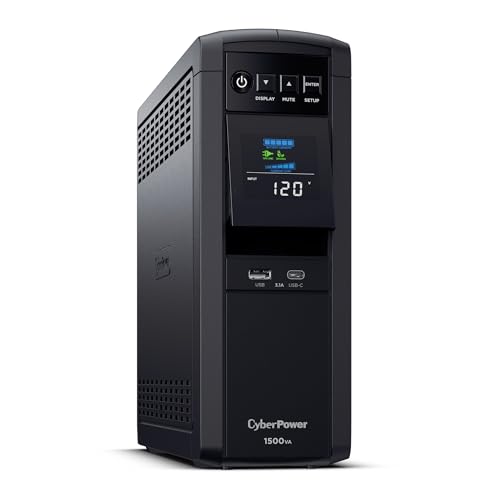
CyberPower CP1500PFCLCD PFC Sinewave UPS Battery Backup and Surge Protector

CyberPower PR750LCD3C Smart App Sinewave UPS Battery Backup

CyberPower PR1500LCD Smart App Sinewave UPS Battery Backup
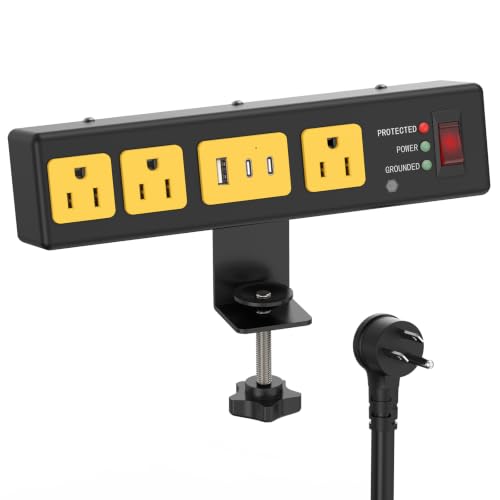
JUNNUJ Desk Clamp Surge Protector USB, 20W, 3 Outlets, 6FT
More On The Choices That Made The List
A shop bench rarely has room for a cluster of overlapping wall taps. This JUNNUJ model spreads 16 outlets across a long metal housing, giving bulky plugs more usable separation while the six-foot cord reaches a wall outlet.
The 4800-joule rating indicates a substantial surge-protection budget, while the wall-mount format keeps the distribution point above tools and equipment. Compared with the compact desk clamp later in the list, this model is better for fixed, high-count workshop layouts.
Standout Benefits
- Wide outlet spacing accommodates larger plug bodies without crowding.
- Metal construction suits garages, shops, and utility areas where plastic strips feel less substantial.
- The 16-outlet count reduces the need for secondary strips.
- A local on/off control simplifies shutting down connected equipment.
Points To Note
- The 20-amp rating assumes compatible wiring and equipment load, so circuit capacity deserves careful attention.
- A permanent wall position offers little benefit for mobile work setups.
- Owners of busy shops commonly need periodic cleaning around the metal housing and outlet faces.
Key Attributes
Built For Busy Workbenches
This strip fits workshops, garages, and equipment rooms where many accessories share one fixed outlet.
A Better Fit Elsewhere
The JUNNUJ Desk Clamp Surge Protector suits compact desks where wall space is scarce and only a few outlets are needed.
A UPS loses useful outage runtime as its internal battery ages, and replacing the entire unit may make little sense for a compatible system. The CyberPower RB1290X2 offers a preassembled cartridge for restoring backup capacity in the matching application.
Sealed lead-acid batteries use immobilized electrolyte rather than loose liquid, which removes fluid-maintenance concerns. This is a component rather than a complete protector, so unlike the CyberPower CP1500PFCLCD, it cannot manage surges or supply outlets by itself.
Where It Delivers
- The paired 12V, 9Ah batteries simplify replacement as one cartridge.
- Preassembly reduces the need to match, wire, and install separate cells.
- Sealed construction avoids replacement fluid and routine electrolyte checks.
Worth Noting
- Compatibility with a specific CyberPower UPS model must be confirmed before purchase.
- Used cartridges need safe handling and recycling through an appropriate battery facility.
- Installing the pack restores a failed battery path but does not repair other UPS problems.
Quick Facts
Made For Existing UPS Owners
This cartridge benefits owners of a compatible CyberPower system whose battery capacity has declined.
Look Elsewhere When
The CyberPower PR1500LCD is the better fit for a complete new backup system rather than a battery-only repair.
Fixed installations reward a strip that stays put, and this JUNNUJ model brings 16 outlets to a wall-mounted aluminum housing. Its rigid body suits shops where cords and plugs receive more knocks than they would beside a computer desk.
The included on/off switch and built-in circuit breaker give you local control and overload handling, though neither creates battery runtime. Compared with Item 1, the design is especially compelling where heat, impact resistance, and a permanent mounting point drive the decision.
Advantages To Know
- The metal housing resists everyday workshop knocks better than a lightweight plastic strip.
- Sixteen outlets centralize numerous tools and bench devices.
- Wide spacing helps prevent adjacent charging bricks from blocking one another.
- Wall mounting reduces work-surface clutter.
Small Caveats
- Installation requires a suitable wall location and sound mounting hardware.
- It offers surge protection only, so computers still lose power during outages.
- Dust accumulation around outlet openings is common in garages and needs occasional cleaning.
Right Fit For Workshops
This model suits workshop owners who need many fixed outlets and prioritize a rugged wall-mounted body.
Consider Something Else When
The CyberPower CP1500PFCLCD serves home offices that need connected battery runtime, not merely a high-count strip.
Desktop systems with active power factor correction benefit from compatible battery output. The CyberPower CP1500PFCLCD uses a sinewave, a smoother transition between AC and battery power, and pairs that output with surge protection in a compact mini-tower format.
The color LCD gives you a local view of operating conditions without opening software, which helps during a busy workday. Unlike the JUNNUJ wall strips, this model keeps computers, displays, and networking equipment running briefly during outages; exact runtime still depends on the connected load.
Benefits That Matter
- Sinewave output supports active-PFC desktop and workstation equipment.
- Line-interactive operation adjusts incoming voltage before battery intervention becomes necessary.
- The LCD presents system information directly on the enclosure.
- One device combines surge protection and battery backup.
A Few Limitations
- Runtime can shorten quickly once a monitor, workstation, and network equipment are connected.
- A UPS battery eventually ages and needs appropriate maintenance.
- Older equipment that is not designed for PFC-compatible output may not be the primary use case.
Technical Highlights
Who Will Love This
This UPS fits home-office owners running PFC-compatible desktops, network gear, and displays that need graceful shutdown time.
A Better Fit Elsewhere
The CyberPower PR1500LCD offers more capacity for denser equipment rooms and professional server setups.
Remote power visibility changes how a small server room or branch office is managed. The CyberPower PR750LCD3C combines sinewave battery output, surge protection, and app-based monitoring in one line-interactive unit.
Automatic Voltage Regulation corrects minor input fluctuations, which helps reduce unnecessary battery use. Compared with the CP1500PFCLCD, this model moves status information into an app as well as the local LCD, making it more natural for networked equipment and users who cannot reach the enclosure frequently.
What Pays Off
- App monitoring adds remote visibility into connected equipment and power conditions.
- Sinewave output suits active-PFC servers and network devices.
- Automatic Voltage Regulation handles small voltage variations.
- The compact mini-tower format fits more readily beside a network rack or workstation.
Practical Considerations
- App setup adds a software and network-management layer compared with a basic LCD.
- The 750-class capacity may be limited for several power-hungry servers.
- Battery lifespan and eventual replacement remain routine ownership considerations.
Built For Managed Equipment
This unit suits small offices and technical rooms where remote monitoring justifies added setup.
Reach For A Different Pick When
The JUNNUJ Desk Clamp Surge Protector better fits a single desk with USB charging and limited outlet demand.
Equipment rooms often carry more load than a desktop UPS can comfortably support, and the CyberPower PR1500LCD takes a higher-capacity approach. Its line-interactive design, sinewave output, and automatic voltage regulation target servers, storage equipment, networking hardware, and telecom systems.
The LCD keeps essential information visible at the unit, while app support extends that visibility to remote management. In a busy server area, that combination is more useful than a simple outlet strip, though you still need to size the load carefully rather than assuming a UPS will carry everything at once.
Key Advantages
- The 1500VA class offers more room for equipment than the PR750LCD3C.
- Sinewave output fits active-PFC systems and network infrastructure.
- App access assists monitoring from another part of the room or building.
- Automatic Voltage Regulation helps stabilize routine input variation.
Factors To Consider
- A larger unit requires more floor or shelf space than a compact desktop UPS.
- Battery runtime depends heavily on server load and the number of connected devices.
- Remote management is unnecessary for a single computer with no admin access.
At A Glance
Whose Shelf It Belongs On
This model fits administrators operating servers, storage, network devices, or telecom equipment in a dedicated space.
Swap It Out When
The CyberPower CP1500PFCLCD suits a smaller home-office load where remote app management adds little value.
A full-size strip can turn a small desk into a cable maze. This clamp model mounts to a suitable desk edge and keeps three AC outlets nearby while adding two USB-C ports and one USB-A port for a more organized charging zone.
The 20-watt charging figure relates to its USB output, not AC capacity. Its 3300-joule surge rating and overload protection make it useful for everyday electronics, while the metal housing suits industrial desks that need more substance than a travel adapter.
The Helpful Details
- Clamp mounting frees the desk surface and keeps sockets within reach.
- USB-C and USB-A ports reduce the need for separate charging bricks.
- The six-foot cord adds flexibility around desks and shared workspaces.
- Indicator lights and the local switch provide straightforward daily control.
Where It May Fall Short
- Three AC outlets are modest beside the 16-outlet workshop models.
- The clamp must fit a compatible surface without damaging the desk edge.
- Twenty watts may split across connected USB devices, so charging speed varies with the combination.
Feature Snapshot
Made For Compact Workspaces
This protector fits office desks, shared workstations, and small workshops with only a few powered devices.
Another Choice May Suit
The JUNNUJ Long Metal 16-Outlet Power Strip suits garages needing many AC connections and a wall-mounted layout.
Choosing Protection for the Way You Work
Start by separating surge protection from battery backup. A surge protector limits brief voltage spikes, while a UPS supplies battery power during outages; replacement batteries and outlet strips serve narrower roles.
Runtime and connected load
UPS capacity describes how much equipment it can support, but runtime depends on actual wattage and battery condition. Desktop computers, displays, network switches, and servers place very different demands on one unit, so document each device’s power requirements before choosing.
Outlet count and physical layout
Sixteen outlets help workshop environments where tools and chargers share a bench. A clamp-mounted three-outlet design makes more sense for a compact desk, where USB charging ports and minimal clutter matter more than spare AC capacity.
Output type and equipment compatibility
Sinewave output is designed for smooth transitions on modern active-PFC equipment, a feature commonly associated with efficient desktop power supplies. Check device requirements and existing UPS compatibility before selecting a model or a replacement battery cartridge.
Installation and upkeep
Wall-mounted strips need suitable hardware and accessible circuits. Desktop clamps require a compatible edge, while UPS batteries eventually need replacement, making safe handling and proper recycling part of long-term ownership.
Common Mistakes and Useful Upgrades
Where Shoppers Go Wrong
The most common error is treating every surge protector as a UPS. Another is choosing outlet count before load capacity, or assuming USB wattage applies to connected AC equipment. Confirm connector type, circuit requirements, and equipment compatibility before ordering.
What The Higher Tier Buys
Higher-tier UPS models add capacity, app monitoring, or a stronger local display. These features suit server rooms and managed offices, while a compact clamp or high-count strip remains more practical for a desk or workshop with limited equipment.
Frequently Asked Questions
What is the difference between a surge protector and a UPS?
A surge protector diverts brief voltage spikes, while a UPS supplies battery power during outages. You may still need surge protection for normal line conditions.
How long will a UPS run during an outage?
Runtime depends on connected wattage, battery age, and the unit’s capacity. A monitor and network equipment generally consume less power than a server or workstation.
Can a UPS replace a regular power strip?
A UPS can provide protected outlets, but its backup capacity still needs to match your equipment. A separate high-count strip may remain useful for low-power accessories.
Are all replacement batteries compatible?
No. Match the cartridge model and electrical specifications with the UPS model, and follow the manufacturer’s installation guidance before purchasing.
Which option suits a small desk?
The JUNNUJ Desk Clamp Surge Protector offers three AC outlets, USB charging, and a compact mounting position. A full UPS is preferable only when outage runtime is also required.
Final Verdict
Choose the JUNNUJ metal strips for fixed, outlet-heavy workspaces, and use the Desk Clamp Surge Protector where desk space is precious. CyberPower covers three distinct needs: a complete desktop UPS, app-monitored systems for managed equipment, and a replacement battery for compatible older units. Match the protection type to the equipment, then verify capacity and connection requirements before installation.
