


A dead battery can turn a normal commute, weekend errand, or cold morning into an inconvenient roadside problem. These battery auto chargers cover different needs, from low-current maintenance to portable jump starting and tire inflation. Choose by battery chemistry, vehicle size, and how often you want to keep a battery topped up rather than relying on headline power alone.
The Picks In Brief

Antigravity SC-2 2A LiFePO4 and Lead Acid Maintainer

HPBS 5000A Jump Starter with Air Compressor

Yuasa YUA1AMPCH 1.2-Amp Battery Charger
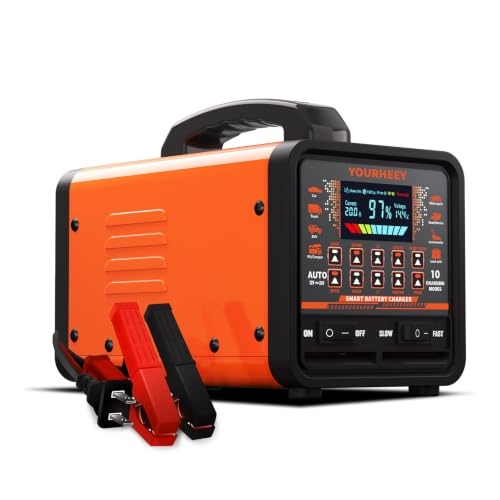
Yourheey 12V/24V 0-20A Smart Charger

HPBS H50 5000A Jump Starter
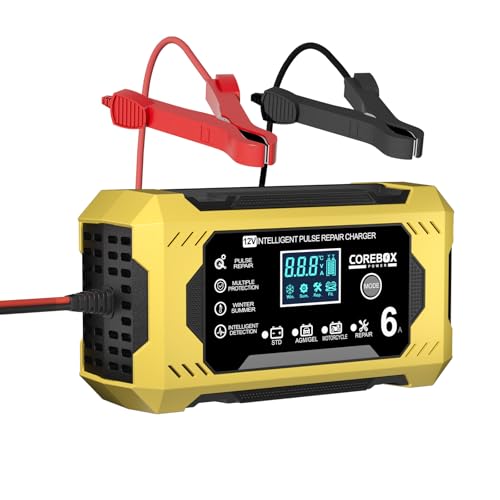
COREBOX 6-Amp 12V Automatic Maintainer

HPBS 5500A Peak Jump Starter
A Deeper Look At The Lineup
The SC-2 is built for a garage with mixed battery types rather than a single vehicle specialty. Its 2A output is modest, but that makes it more practical for slow maintenance than repeated emergency starts. It suits owners of lithium or conventional lead-acid batteries who want a compact maintainer.
The LCD gives useful voltage and charging information without requiring you to interpret several indicator lights. For a motorcycle, secondary car, or stored vehicle, that visibility matters more than raw amperage. The honest read is that this is a maintenance tool, not a substitute for a portable jump pack.
What Works In Its Favor
- Supports LiFePO4 and common lead-acid chemistries in one unit.
- Automatically handles 6V lithium and 12V battery applications.
- Display helps you check voltage and charge progress at a glance.
- Low-current approach suits stored vehicles and routine upkeep.
Points To Note
- The 2A output is slow for a deeply discharged large battery.
- Battery connections and placement require a dry, ventilated area during storage.
Quick Facts
Built With In Mind
It best serves owners maintaining several battery types without needing a high-current charger.
Where A Sibling Pick Shines
The HPBS 5000A Jump Starter with Air Compressor suits drivers needing emergency starting and tire inflation.
This is the practical pick for a trunk or glove-box emergency kit because it combines jump starting with a built-in air compressor. The 150 PSI inflator turns a dead battery situation into a broader roadside toolkit, especially useful on a long commute or family road trip. It targets 12V gasoline vehicles up to 10.0L and diesel vehicles up to 8.0L.
Its 5000A peak rating sounds dramatic, but engine displacement and battery condition still determine real-world fit. The compressor and jump-start functions make it more versatile than the plain HPBS H50, though bulkier packing is the trade-off. Keep it charged between uses and inspect the cables before relying on it in bad weather.
Everyday Advantages
- Jump starting and tire inflation share one portable unit.
- 150 PSI inflation adds useful roadside utility beyond battery recovery.
- Broad engine coverage supports common cars, SUVs, and light trucks.
- Portable format suits travel and emergency kits.
Trade Offs
- Additional functions mean more surface area to store and maintain.
- Air-hose and clip checks are sensible before winter travel.
Made For
It suits drivers who want one compact tool for battery starting and temporary tire inflation.
Another Choice May Suit
The Antigravity SC-2 is better for slow battery maintenance in a garage.
Yuasa’s 1.2A charger takes the simple route: attach the clips, plug it in, and let the automatic cycle manage the process. That makes it a sensible garage companion for a car battery that needs occasional topping up, especially during colder months. The three-color LED keeps charging status visible without demanding a phone or complicated controls.
Its three-stage charging design and maintenance mode are more useful for long-term ownership than a higher headline amperage would be. The 12-foot total cable length gives room to place the charger near a wall outlet while reaching the battery. It is not the right fit for jump starting, but it is straightforward for scheduled maintenance.
The Good Stuff
- Automatic three-stage charging reduces guesswork.
- Maintenance mode supports stored vehicles and seasonal upkeep.
- Long cable length improves reach in a typical garage.
- Simple clip-and-plug setup suits beginners.
Worth Noting
- 1.2A is intentionally gentle, so deeply depleted batteries take time.
- It is designed for charging rather than emergency starting.
- Clip condition and terminal cleanliness matter for reliable connections.
Who It Suits Best
It fits beginners and regular drivers who want uncomplicated maintenance for a standard 12V lead-acid setup.
Reach For A Different Pick When
The Yourheey 12V/24V 0-20A Smart Charger offers more current for larger or varied 12V systems.
The Yourheey charger is built for people maintaining more than one type of vehicle, with selectable 12V and 24V operation. Its adjustable 0-20A output gives you more control than the Yuasa’s fixed 1.2A approach, while the automatic maintainer function handles routine storage. That range is useful for cars, motorcycles, and larger lead-acid batteries.
The specified lead-acid coverage includes AGM, gel, flooded, EFB, calcium, maintenance-free, and deep-cycle types. That breadth matters in a mixed garage, but compatibility still depends on matching the charger to the battery’s voltage and chemistry. Owners commonly report checking terminal polarity and allowing ventilation during longer charging sessions.
Real Benefits
- Adjustable current supports different battery sizes.
- Dual voltage coverage broadens vehicle compatibility.
- Automatic maintenance suits long-term storage.
- Wide lead-acid chemistry support fits mixed garages.
- Copper coils and aluminum housing suit regular workshop use.
Honest Caveats
- The larger housing takes more space than a compact maintainer.
- More settings require careful battery matching.
Technical Reference
It suits experienced owners handling several lead-acid systems and needing more charging control.
Swap It Out When
The Antigravity SC-2 is a cleaner fit when you need lithium support rather than adjustable high current.
The H50 focuses on one job: getting a 12V vehicle started away from a charger or wall outlet. Its stated 5000A peak output targets gasoline engines up to 10.0L and diesel engines up to 8.0L, making it relevant to pickup owners and families carrying a full-size vehicle. The 3.0-inch LCD gives you a readable status view before attaching the cables.
Compared with the HPBS model that includes an air compressor, the H50 is simpler and more dedicated to jump starting. Peak amperage alone does not tell the entire story, so cable condition, battery age, and engine temperature still affect a roadside start. Owners commonly keep a jump pack topped up periodically rather than waiting for an emergency.
Practical Pluses
- Portable starting power supports larger 12V vehicles.
- LCD display provides clear operating information.
- Dedicated format avoids carrying unnecessary inflation equipment.
Small Caveats
- It cannot replace a charger for long-term battery upkeep.
- Diesel compatibility still depends on the vehicle and battery condition.
- Storage in extreme temperatures can shorten usable readiness.
For Roadside Drivers
It best serves owners who carry a dedicated emergency pack for large gasoline or diesel vehicles.
Consider Something Else When
The HPBS 5000A Jump Starter with Air Compressor is the better travel fit when tire inflation matters too.
The COREBOX 6-Amp unit sits between a gentle maintainer and a more capable recovery charger. Its automatic 12V charging, temperature compensation, and desulfator function are aimed at vehicles that sit through winter or vacation periods. That makes it useful for a car, truck, motorcycle, lawn mower, or marine application where a low battery is easy to overlook.
The safeguards are the practical story here. Reverse protection reduces the risk of incorrect hookup, while temperature compensation adjusts charging behavior to changing conditions. The trade-off is that a 6A unit still needs time for a substantially depleted battery, and maintenance mode is not the same as restoring a severely damaged battery.
Real-World Strengths
- Six-amp output handles more than a basic trickle maintainer.
- Temperature compensation suits changing seasonal conditions.
- Automatic charging reduces routine supervision.
- Supports several common 12V vehicle and equipment applications.
Factors To Consider
- Compatibility must match the battery’s chemistry and voltage.
- Lead-acid batteries in very cold storage still benefit from periodic checks.
Feature Snapshot
Seasonal Storage
It suits owners maintaining a 12V battery through long periods of inactivity.
A Better Fit Elsewhere
The Yuasa YUA1AMPCH is simpler for basic garage upkeep with a gentler 1.2A approach.
The HPBS 5500A pack is aimed at drivers who need more starting headroom than a compact maintainer can provide. Its listed coverage includes gasoline vehicles and diesel engines up to 10L, with a 3.0-inch LCD for checking status. That makes it a credible choice for pickups, SUVs, and larger equipment kept in vehicles rather than plugged into a garage outlet.
Unlike the Yuasa or COREBOX, this unit is an emergency starter, not a long-term charging system. You gain portability and higher stated output, but you give up the convenience of automatic storage maintenance. Check the clamps, display, and charge level periodically, and treat peak output as one part of matching the pack to your vehicle.
Useful Touches
- High stated peak output targets demanding 12V starting situations.
- Diesel coverage extends beyond small gasoline vehicles.
- LCD display keeps operating information visible.
- Portable format supports roadside preparedness.
Less-Strong Areas
- It needs periodic charging to remain ready.
- Large-vehicle claims still depend on battery and cable condition.
For Larger Vehicles
It fits owners of large gasoline vehicles or diesel trucks who want a dedicated roadside pack.
Not Your Match When
The Yourheey 12V/24V 0-20A Smart Charger is better for scheduled battery service in a garage.
How To Choose A Charger For Your Battery Routine
Match Voltage And Chemistry First
Start with the battery label rather than the vehicle’s marketing. A 12V charger is not automatically appropriate for every battery, and lithium iron phosphate, AGM, gel, flooded, and other lead-acid types have different charging needs. The Antigravity SC-2 is notable because it supports lithium and lead-acid chemistries, while most conventional maintainers target lead-acid systems.
Decide Between Maintenance And Emergency Starting
A charger-maintainer is designed to sit near a vehicle and manage a battery over time. A jump starter is a portable rescue device for a dead or low battery away from an outlet. Your choice depends on routine: scheduled garage care points toward Yuasa, COREBOX, or Yourheey, while roadside preparedness points toward HPBS.
Consider Cable Reach And Storage
Check cable length, clamp access, display readability, and the space available in your garage or vehicle. A 12-foot cable can make charging more comfortable, but a longer lead also needs careful routing. Store portable jump packs in a dry, moderate-temperature location and inspect the cables periodically.
Common Shopping Slip Ups
The biggest mistake is confusing peak jump-start output with charger capacity. A large amp rating does not make a jump pack suitable for long-term maintenance, while a low-current charger does not replace roadside starting power.
Another common error is ignoring battery type. Confirm voltage, chemistry, polarity, and the vehicle manufacturer’s guidance before connecting clips. For storage, a maintainer with automatic controls is usually more convenient than repeatedly remembering a manual charging schedule.
What The Higher Tier Buys
Higher-output models tend to offer faster recovery, wider voltage coverage, more chemistry options, or added emergency functions such as inflation. Those features help owners with larger batteries, mixed fleets, or frequent road emergencies, but they add size, settings, and upkeep.
Choose the simpler model for routine maintenance. Pay for more capability only when your battery size, vehicle type, or storage environment genuinely calls for it.
Frequently Asked Questions
Can a battery maintainer start a car?
A maintainer is primarily for charging and storage upkeep, not emergency starting. A portable jump starter is the more appropriate choice for a dead battery away from an outlet.
Which charger works with lithium batteries?
The Antigravity SC-2 specifically supports LiFePO4 batteries as well as common lead-acid types. Confirm the battery label and voltage before connecting any charger.
Do I need a charger for a vehicle stored outdoors?
A maintainer can help manage a 12V battery during extended storage, especially in changing temperatures. Protect the connection from moisture and verify that the charger matches the battery chemistry.
Is a higher amp charger always better?
No. Higher amperage can recover a larger battery sooner, but a smaller charger may be better for routine maintenance or a smaller battery. Match output to the battery and your storage space.
Can I use a jump starter as a battery charger?
A jump starter provides short-term starting assistance, not the controlled charging cycle of a maintenance charger. Use a proper charger for long-term upkeep.
Final Verdict
The best fit depends on the job: Antigravity for mixed battery chemistries, Yuasa for simple garage care, Yourheey for adjustable charging, COREBOX for seasonal storage, and HPBS for portable emergencies. Match the tool to your battery first, then account for cable reach, storage conditions, and how often you will use it.
