


A reliable car audio system starts with a connection that holds under vibration, heat, and repeated electrical loads. These terminals, cables, maintenance tools, chargers, and permanently connected starting systems help you repair, protect, or support the battery depending on your installation and driving needs. From routine terminal care to higher-output support for large engines, each option serves a distinct role in a cleaner, more dependable electrical setup.
The Shortlist At A Glance

Kaas Colored Top Post Battery Terminal Set for SAE/DIN/EN, 8AWG-4/0

Tecmate Optimate 1 Duo TM-409
KEDAKEJI 2 AWG Pure Copper Battery Cables, 5 FT, Red and Black with 5/16-In Lugs
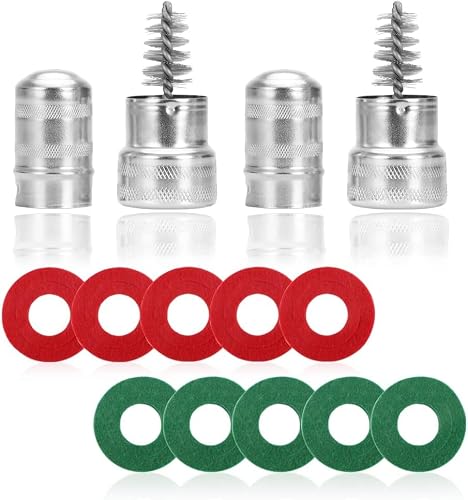
Salior Battery Terminal Cleaner Kit, 10 Washers, 2 Brushes
ANCEL BS200 Super Starter, 700A Assist, Permanently Connected System

ANCEL BS300 Super Starter, 1000A Assist, Permanently Connected

ANCEL BS400 Super Starter, 1300A Assist for 6.0L Engines
Meet The Standout Selections
Color coding gives this Kaas set a practical advantage during an amplifier, subwoofer, or accessory wiring repair. Red and blue identify the two sides, while the 12-way clamps accept wire sizes from 8AWG through 4/0 AWG, giving you useful flexibility for a modified electrical system.
The tapered-post design targets SAE, DIN, and EN-style connections, so confirm your battery uses compatible posts before installation. Compared with the maintenance-only Salior kit later in this roundup, these clamps replace a worn connection rather than merely clean it.
What Stands Out
- Color-coded terminal bodies simplify positive and negative placement during installation.
- Twelve clamp positions accommodate a broad range of wire gauges.
- The easy-tightening head supports repeated servicing with a basic hand tool.
- An anti-loosening screw design helps resist movement after tightening.
Small Caveats
- Post dimensions and cable size must match your battery before purchase.
- Corrosion on the battery posts or cable ends can still require separate cleaning.
Key Attributes
Built With In Mind
This set suits DIY installers restoring terminals on a car audio system with higher-current cables.
A Better Fit Elsewhere
The KEDAKEJI 2 AWG cable set suits you better when you need complete five-foot cables rather than replacement clamps alone.
The Tecmate Optimate 1 Duo TM-409 takes a measured approach to battery care. Its four charging stages manage a 12V or 12.8V battery at 0.6A, making the low current more appropriate for maintaining stored cars, motorcycles, and auxiliary batteries than rapidly restoring a deeply discharged starter battery.
Unlike the Kaas terminal set, this charger does not improve the physical cable connection. You benefit most after cleaning terminals with the Salior kit or replacing damaged connectors with the Kaas clamps.
What Makes Sense
- The 0.6A output favors slow, controlled maintenance over aggressive charging.
- Four stages provide a more structured charging process than a basic single-stage trickle device.
- Compatibility with lithium and lead-acid chemistry broadens the range of supported stored batteries.
- Continuous maintenance suits vehicles that sit between regular drives.
Practical Considerations
- The 0.6A rate takes time and does not suit every deeply depleted battery state.
- Lead-acid compatibility includes common AGM, gel, standard, starter, and deep-cycle types, so verify your battery before connection.
Quick Facts
Who It Suits Best
You’ll appreciate this charger most with a stored vehicle or battery that receives light, regular maintenance.
Where Another Pick Shines
The ANCEL BS300 system gives you stronger permanently connected starting assistance for daily driving.
A pair of complete cables removes the need to build separate leads for a battery-powered installation. These five-foot KEDAKEJI cables use 2 AWG pure copper wire, a heavier gauge than typical lightweight accessory wiring, and arrive with red and black ring terminals at both ends.
You can use the set for vehicles, boats, RVs, solar equipment, or inverters, subject to cable length and terminal fit. The 5/16-inch ring openings suit M10 hardware, but you’ll need short, correctly sized fasteners to prevent exposed strands from spreading.
Useful Highlights
- Two five-foot cables provide matched red and black runs for a complete connection.
- Pure copper construction suits high-current automotive and inverter wiring tasks.
- Preinstalled ring terminals remove the need for separate lug crimping.
- The broad application range also supports marine, solar, and portable power setups.
Details To Watch
- The 5/16-inch rings require matching M10 studs and correctly sized fasteners.
- Five feet may be insufficient for a battery mounted far from an inverter or equipment enclosure.
Right Fit For
This cable pair fits DIY car audio, mobile power, and inverter projects that use matching 5/16-inch hardware.
Another Choice May Suit
The Kaas terminal set gives you a better fit for replacing only the battery-end connectors on an existing custom cable.
Terminal maintenance is easier with the right tools within reach, and the Salior kit bundles the essentials in one small set. You receive two cleaning brushes and ten fiber washers for removing residue from automotive or marine battery connections and keeping conductive surfaces separated from surrounding grime.
The brushes suit visible corrosion around a terminal, while the washers provide a barrier between the connection and nearby buildup. Compared with the Kaas set, this kit supports preventive care rather than replacing worn clamps or cables.
Positive Takeaways
- Two brushes support separate cleaning tasks without constantly reusing a contaminated tool.
- Ten washers give you replacements for routine connection care.
- The compact kit works for both car and marine battery terminals.
- Fiber washers can help keep moisture and residue away from exposed contact areas.
Where It May Fall Short
- Cleaning brushes and washers cannot repair cracked terminals, loose hardware, or undersized cables.
- Owners commonly report that packed terminal compartments need disassembly for full access.
Feature Snapshot
Made For
This maintenance kit suits you with a car, boat, or daily vehicle that needs occasional terminal cleaning.
Look Elsewhere When
The KEDAKEJI 2 AWG cable set fits you better when corrosion cleanup must be followed by complete cable replacement.
The BS200 targets everyday vehicles up to 3.0 liters, using up to 700A of starting assistance while remaining connected to the battery. That fixed installation suits drivers who want starting support available without remembering a portable pack in the trunk, although engine displacement remains a crucial fit consideration.
Unlike the Tecmate TM-409, this system is designed around engine starts rather than slow battery maintenance. Its stated operating range runs from -40°F to 176°F, which is relevant to commuters in severe seasonal conditions.
Where It Excels
- Up to 700A provides meaningful starting assistance for compatible 3.0L vehicles.
- Permanent connection avoids the forgotten-trunk-pack problem.
- Health monitoring adds battery-status information to the starting system.
- The wide stated temperature range suits varied seasonal driving conditions.
Possible Compromises
- The stated vehicle focus tops out at 3.0L engines, limiting fit for larger powertrains.
- Permanent wiring requires correct installation and periodic connection checks.
Who Will Love This
This model suits commuters with a compatible 3.0L vehicle who prioritizes consistent, always-connected starting assistance.
Reach For A Different Pick When
The ANCEL BS400 is the more suitable fit for gas or diesel engines up to the larger 6.0L category.
The BS300 moves up to 1,000A of start assistance, placing it between the BS200’s 700A output and the BS400’s 1,300A. Its stated coverage for most 12V vehicles makes it the middle option for high-use cars and trucks that want installed assistance without automatically choosing the largest system.
Permanent connection suits a vehicle kept ready for daily departures, particularly where a portable pack can create clutter or be left charging unnecessarily. You still need a healthy battery and sound main cables, so the ANCEL unit complements rather than replaces basic starting-system maintenance.
Strong Points
- The 1,000A rating offers more stated assistance than the 700A BS200.
- Compatibility with most 12V vehicles creates broader fit potential than an engine-size-specific choice.
- Installed support remains available for repeated daily starts.
- Battery health monitoring provides useful diagnostic context.
Points To Note
- The 1,000A rating does not establish compatibility with every engine, battery, or electrical setup.
- Owners should inspect the permanent connections during routine under-bonnet checks.
Technical Highlights
The Right Fit
This system suits daily drivers with a compatible 12V vehicle who wants more stated assistance than the BS200.
Swap It Out When
Choose the ANCEL BS200 instead when lower assist and a narrower 3.0L focus align more closely with your vehicle.
Large gas and diesel engines place greater demand on a starter, making the BS400’s stated 1,300A assist relevant for trucks, SUVs, and heavy-load applications. Its permanent design supports repeated starts while battery health monitoring gives you another view of the vehicle’s electrical condition.
The -40°F to 176°F stated range makes the system a consideration for harsh climates, but cable condition and battery health still determine real starting performance. Compared with the BS300, the additional assist targets larger engines rather than broad 12V compatibility.
The Upside
- Up to 1,300A is the highest stated assist in this roundup.
- The 6.0L focus directly addresses larger gas and diesel engine applications.
- Permanent installation supports frequent starts without portable-device handling.
- Health monitoring helps you keep battery condition in view.
Some Limits To Know
- Its larger-engine focus makes it less relevant to many compact cars.
- Permanent cables add installation work and require occasional connection inspections.
Essential Details
Built With In Mind
This model suits you with a compatible large gas or diesel engine and substantial starting demand.
Not Your Match When
The ANCEL BS300 fits smaller daily vehicles better when 1,000A of stated assistance is sufficient.
What Matters Before You Service Your Car Battery
Match the repair to the fault
A terminal clamp handles connection wear, while a full cable set addresses undersized or damaged wiring. Inspect the battery post, cable strands, fasteners, and starter-area connections before choosing. The Kaas set is a terminal-focused repair, whereas the KEDAKEJI pair supplies complete five-foot cables.
Match charging to battery use
A maintenance charger works slowly and deliberately, making the Tecmate TM-409 more suitable for a stored 12V or 12.8V battery than an emergency starting scenario. Confirm the battery chemistry first, connect the charger according to its instructions, and keep the setup in a ventilated, dry location.
Treat starting output as vehicle-specific
Starting-assist numbers do not establish complete compatibility. Engine displacement, battery condition, cable size, and the manufacturer’s installation guidance all matter. The BS200 focuses on 3.0L vehicles, the BS300 covers most 12V vehicles, and the BS400 targets gas or diesel engines up to 6.0L.
Keep Battery Connections Clean and Correct
Mistakes Worth Dodging
Buying by gauge alone can leave you with a cable whose ring terminal does not match the battery stud. Cleaning a terminal cannot restore a cracked clamp, loose connection, or damaged cable, so separate surface maintenance from actual replacement work.
What Separates Premium From Basic
The larger ANCEL systems add stated starting assistance and permanent connection rather than only low-current maintenance. That extra capability makes sense for large engines or frequent daily starting, while a terminal repair kit or compact charger remains more proportionate to a basic repair.
Frequently Asked Questions for Battery Audio Cars
Do battery terminal clamps work with car audio cables?
They can, provided the clamp accepts your cable gauge and the battery uses a compatible tapered post. Measure both dimensions before installation.
Is 2 AWG cable suitable for car audio?
The heavier 2 AWG gauge can suit higher-current installations and complete battery-to-equipment runs. Your amplifier’s specified cable requirements remain the deciding factor.
Which charger is gentler for a stored vehicle?
A 0.6A maintenance charger, such as the Tecmate TM-409, uses a lower current than many faster recovery devices. Confirm the battery chemistry and voltage before connecting it.
Do permanently connected starting systems replace a battery?
No. They provide starting assistance while remaining dependent on a properly charged battery, sound main cables, and compatible electrical connections.
Which ANCEL model fits a large diesel engine?
The BS400 is specifically positioned around 6.0L gas and diesel applications. Confirm your engine and follow the installation guidance for the vehicle.
Final Verdict
Choose the Kaas set for terminal replacement, the Salior kit for cleaning, and the KEDAKEJI cables for complete two-gauge runs. The Tecmate TM-409 supports measured battery maintenance, while the three ANCEL systems sort naturally by vehicle demand. Matching the component to the actual fault keeps your installation simpler and your ownership experience more predictable.
