


A 48V sailboat system has to do more than start a motor. It needs to support navigation electronics, cabin lighting, charging, and dependable overnight power without taking over the boat’s limited space. These options range from compact 48V batteries to larger solar and storage combinations, giving you practical options for weekend cruising, coastal living, or a cabin with several energy-hungry devices. The honest catch is that most batteries shown here require careful sizing, weather-protected installation, and compatibility checks with your motor controller, solar equipment, and vessel wiring.
A Quick View Of The Lineup

ECO-WORTHY Cubix100 48V 600Ah Server Rack Battery Kit
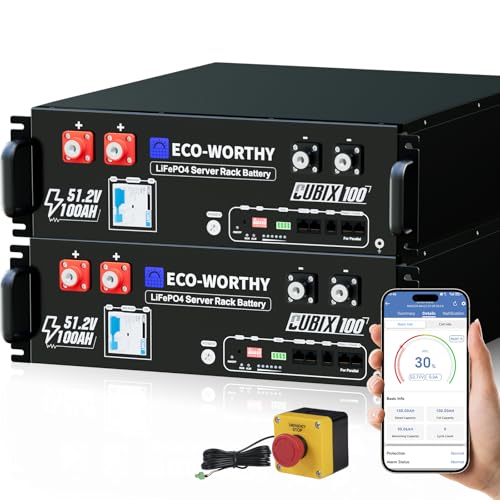
ECO-WORTHY Cubix100 48V 200Ah Battery Pack with Bluetooth

TEMGO 48V 100Ah LiFePO4 Battery with 200A BMS
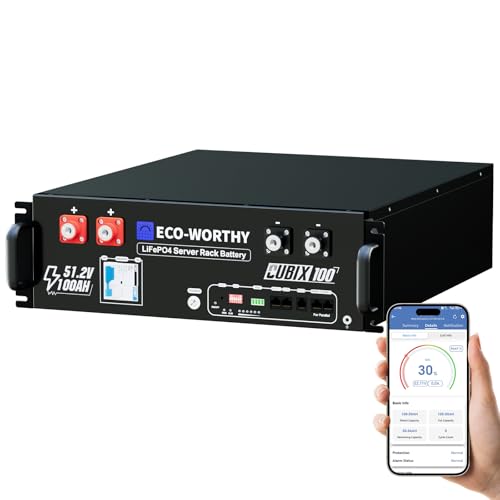
ECO-WORTHY Cubix100 48V 100Ah Server Rack Battery

ECO-WORTHY 1600W 48V Off-Grid Solar System Kit

Tektrum Universal 80W 48V Solar Charging Kit

VEVOR 48V 52Ah LiFePO4 Battery with 15A Charger
More Details On Our Top Picks
This six-module setup reaches 600Ah and 30.72 kWh, giving a sailboat serious storage headroom for refrigeration, electronics, lighting, and charging devices. That scale makes more sense for a liveaboard or extended coastal voyage than a weekend cruiser with modest loads.
Compared with the smaller Cubix100 choices later in this roundup, the focus shifts from compactness to capacity. You still need a protected battery compartment, ventilation strategy, and enough usable floor area for the full rack.
Positive Points
- The six-pack provides 30.72 kWh of nominal storage energy.
- Large capacity reduces dependence on engine charging during multi-day trips.
- The server-rack format supports organized, vertical installation.
- LiFePO4 chemistry suits stationary deep-cycle storage.
Things To Consider
- Six batteries require substantial space, secure retention, and a suitable mounting base.
- Hazardous-material shipping rules can complicate delivery and installation planning.
- The product is non-returnable, so system compatibility deserves extra attention beforehand.
Built With In Mind
This setup best serves liveaboards, long-duration cruisers, and sailors running several high-draw cabin systems between shore connections.
A Better Fit Elsewhere
Sailors on a smaller boat get a more practical starting point with the ECO-WORTHY Cubix100 48V 100Ah Server Rack Battery.
Two 48V 100Ah modules create a 200Ah pack with 10.24 kWh of nominal energy, a middle ground between a single battery and the much larger six-pack. Bluetooth communication is the useful distinction here, giving compatible equipment a way to report operating data without a display mounted at the battery.
For a cruising couple with moderate household loads, this may be enough storage for electronics, lighting, phones, and occasional appliance use. Your motor controller and inverter must still accept the pack’s output and charge profile.
The Good Stuff
- Dual modules offer 10.24 kWh of stated capacity.
- Bluetooth monitoring adds visibility into battery operation.
- Vertical server-rack construction helps conserve deck space.
- The two-module format expands more neatly than six separate batteries.
Practical Considerations
- App visibility depends on device compatibility and reliable phone placement aboard the vessel.
- Accidental-damage and breakdown coverage varies by plan, so review the terms before purchase.
- Marine installation still needs secure retention and protection from standing water.
Made For
Couples and family cruisers needing more usable energy than a single 100Ah module without taking on a six-battery installation.
Consider Something Else When
Small weekend craft with modest electrical loads may find the VEVOR 48V 52Ah LiFePO4 Battery easier to accommodate.
Monitoring is unusually visible here because the battery pairs app-based communication with a physical LCD. The 200A BMS handles internal battery management, while the stated 10.24 kW output gives you a clear figure for comparing it with your motor controller and inverter requirements.
The included 58.4V 18A charger and retention strap simplify the package, which is useful for a first storage installation. A sailboat owner may still need a purpose-built compartment and marine-rated wiring, since a golf-cart battery does not automatically mean a plug-and-play marine system.
Everyday Perks
- The LCD provides local status information at the battery.
- Bluetooth adds remote monitoring through a compatible phone.
- The 200A BMS supports high-current motor and inverter applications.
- A matched charger removes the need to source one separately.
Soft Spots
- The 100Ah module is larger and heavier than lower-capacity 48V batteries.
- Screen and app settings require a secure, moisture-resistant enclosure.
- Protection-plan coverage depends on the selected terms and exclusions.
Right Fit For
Power-conscious sailors who want substantial 48V capacity and can easily inspect both an LCD and app-based battery data.
Where A Sibling Pick Shines
The ECO-WORTHY Cubix100 48V 100Ah Server Rack Battery offers a simpler server-rack format for installations built around vertical storage.
A single 100Ah module gives you 4.8 kWh of nominal storage while keeping the installation simpler than the two-pack or six-pack Cubix100 arrangements. That makes it a sensible baseline for navigation electronics, cabin lights, phone charging, and other relatively modest loads.
The honest read is that this option favors simplicity over onboard monitoring, since no Bluetooth feature appears in its supplied details. Sailors planning larger appliances or extended periods away from an outlet should treat this as the first module in a carefully sized system rather than the entire electrical plan.
What Earns Its Place
- 4.8 kWh provides useful capacity for essential onboard loads.
- One module reduces installation complexity and initial weight.
- The vertical format suits a dedicated equipment compartment.
Minor Gripes
- The single module offers limited reserve for high-draw appliances.
- No listed app connectivity makes remote monitoring less convenient.
- Owners still need stable mounting and corrosion-conscious electrical connections.
Who Will Love This
This battery suits weekend sailors who want manageable 48V storage and can add modules as their electrical demands grow.
Another Choice May Suit
Owners who need immediate high-current headroom and close battery monitoring should examine the TEMGO 48V 100Ah LiFePO4 Battery instead.
This package brings together eight 195W bifacial panels, a 48V 100Ah LiFePO4 battery, and a 3500W inverter. That combination is far more substantial than the portable Tektrum kit, making it a closer match for a cabin, small cruiser, or stationary solar project that needs household-style loads.
Its listed 1600W panel capacity sounds impressive, but a sailboat’s usable solar gain depends heavily on orientation, shading, weather, and available mounting area. The mixed equipment also calls for planning around each component’s requirements rather than treating the package as a drop-in marine upgrade.
What Makes Sense
- Panels, storage, and inverter arrive in one coordinated package.
- Eight 195W panels provide a larger collection surface than portable options.
- Bifacial construction can collect light from the panel’s rear side under suitable conditions.
- The 3500W inverter serves a broader mix of cabin loads.
Points To Keep In Mind
- Eight panels need substantial unobstructed mounting space.
- Panel output varies with shade, orientation, and available sunlight.
- Marine installation requires careful weatherproofing, fusing, grounding, and cable routing.
The Right Fit
Cabin owners and long-term cruisers with a fixed solar area can benefit from a bundled starting point for larger household loads.
Reach For A Different Pick When
Compact sailors with little deck or cabin space may find the Tektrum Universal 80W 48V Solar Charging Kit easier to deploy.
Four separate 20W panels give this portable setup more mounting flexibility than one rigid panel. The included controller, MC4 leads, PV cables, mounting brackets, and manual create a useful charging package for a 48V golf-cart-style battery setup used on a small sailboat.
It makes far more sense as topping-up equipment than as the foundation of an overnight power system. Four small panels can improve stored energy in steady sunlight, but shaded sails, moving rigging, and changing panel angles will quickly limit real-world collection.
A Strong Showing
- Separate panels allow more flexible placement around a cockpit or cabin.
- The complete hardware package simplifies basic installation.
- MC4-style connections support clean modular panel wiring.
Areas To Watch
- Total listed panel capacity is modest for cabin appliances.
- Mounting brackets require stable, corrosion-resistant attachment points.
- Charging interruption from shade and poor panel alignment is a recurring limitation of portable solar.
Made For
Small-boat sailors seeking a portable solar top-up for lighting, electronics, and battery maintenance during sunny periods.
Swap It Out When
Sailors who need meaningful overnight storage or major appliance support should choose a dedicated 48V LiFePO4 battery system instead.
The 52Ah capacity makes this the lightest storage-oriented option in the group, with nominal energy of 2.496 kWh at 48V. That fits weekend sailors who want support for navigation electronics and lighting but do not expect to run large cabin appliances through an inverter.
A built-in 100A BMS, stated 4000-cycle rating, and 2C discharge capability give it more technical depth than its size suggests. The included 15A charger also simplifies ownership, although charging time becomes the practical constraint when space and electrical capacity limit the rest of the system.
Real Benefits
- Compact capacity helps preserve limited interior storage space.
- Bluetooth and the mobile app provide remote operating visibility.
- The built-in 100A BMS supports high-current discharge management.
- A 15A charger is included for a more complete package.
Trade-Offs To Consider
- The 52Ah capacity offers less overnight reserve than 100Ah options.
- Low-current charging can take considerably longer for larger battery banks.
- Protection-plan details and exclusions should be reviewed before relying on coverage.
Who Should Grab It
Weekend sailors and owners of compact boats benefit from the modest footprint and low added mass of this 48V LiFePO4 setup.
Look Elsewhere When
Longer voyages with refrigeration or other sustained loads call for the greater storage offered by the ECO-WORTHY Cubix100 48V 200Ah Battery Pack.
Matching Battery Capacity to Your Boat
Start with an energy budget. List the motor controller’s input range, cabin loads, navigation electronics, charging devices, refrigeration, and any inverter equipment. A nominal 48V label alone does not confirm compatibility with your sailboat motor, so verify connector polarity, charge voltage, discharge limits, and communication requirements before ordering.
Next, account for usable energy rather than headline capacity. Battery capacity is commonly stated in ampere-hours, a measure of charge, while watt-hours describe stored energy. For a weekend boat carrying only electronics and lighting, one or two 52Ah or 100Ah modules may be sufficient; liveaboards running refrigeration and household devices usually need much more storage headroom.
Solar sizing depends on real exposure. Panel output falls during cloudy weather, partial shade, and non-ideal angles. The Tektrum kit offers four portable panels, while the ECO-WORTHY 1600W system needs eight fixed 195W panels, so mounting space may determine which option is practical.
Finally, plan the complete electrical architecture. A battery management system protects the cells, but it does not replace correctly sized cabling, fusing, grounding, ventilation, or a protected battery location. Confirm charge controls and inverter compatibility before any component reaches the boat.
Account for the Electrical System
Marine battery installations experience vibration, humidity, salt air, and changing loads. Secure the rack or battery box, protect terminals from moisture, use corrosion-resistant hardware, and keep ventilation paths clear. Installers should follow the motor and inverter instructions rather than treating a general-purpose lithium battery as a complete electrical system.
Monitor Rather Than Guess
Bluetooth and app monitoring can show battery status more clearly than a voltage check alone, but the displayed information still depends on a compatible app and connection. Place the phone or display where it remains dry and reachable. Keep a manual backup plan for monitoring during rough weather or when the vessel is underway.
Keeping Your 48V System On Course
Common Shopping Slip Ups
Matching nominal voltage does not guarantee system compatibility, because charge voltage and current limits still matter. Avoid selecting a battery solely from ampere-hour figures or a solar kit without checking available mounting space. Confirm connector type, physical dimensions, controller requirements, and intended load before ordering.
What Separates Premium From Basic
Higher-capacity models provide more stored energy and longer operating time, while monitoring features can make fault diagnosis easier. The premium option is worthwhile when refrigeration, extended cruising, or high-current motor loads justify the added mass. A smaller weekend setup may provide better value by avoiding unused capacity.
Frequently Asked Questions
Can a 48V battery power a sailboat motor?
A 48V battery can suit some sailboat motors, but the motor controller must accept the battery’s voltage and current range. You also need compatible wiring, fusing, charging equipment, and an appropriately sized motor connection.
Which battery capacity works best for a small sailboat?
A 52Ah battery fits modest needs such as navigation electronics, lighting, and phone charging. A 100Ah module offers more headroom for larger loads, while 200Ah and 600Ah systems suit more demanding cruising or liveaboard use.
Do LiFePO4 batteries work well on boats?
LiFePO4 chemistry suits deep-cycle storage and provides a lightweight alternative to many lead-acid installations. Salt air, moisture, vibration, heat, and wiring quality still require careful attention.
Can the Tektrum solar kit run a cabin inverter?
It is primarily a small solar charging kit and should not be assumed to power a cabin inverter for sustained loads. Your energy budget, solar exposure, battery capacity, and inverter requirements determine whether it can contribute meaningfully.
How many solar panels does a sailboat need?
The answer depends on daily consumption, available sunlight, shading, and storage capacity. Portable panels can supplement charging on sunny days, while a fixed array becomes more useful as nightly loads and battery reserves increase.
Closing Thoughts
The best 48V setup matches your cabin loads, available space, and typical trip length. A compact 52Ah or 100Ah battery can cover lighter cruising needs, while larger packs and fixed solar systems make more sense for long passages or energy-heavy cabins. Measure first, match the electrical architecture second, and keep the installation protected from the marine environment.
