


A weak battery, a hesitant starter, or an alternator that cannot keep up can turn a normal drive into a troubleshooting session. Battery alternator starter testers give you quick voltage and system readings before a long commute, a roadside stop, or a day at the garage. The right model fits your vehicle voltage, battery type, and level of diagnostic detail.
An Overview Of The Picks

VDIAGTOOL BT500 6V 12V 24V Battery Tester
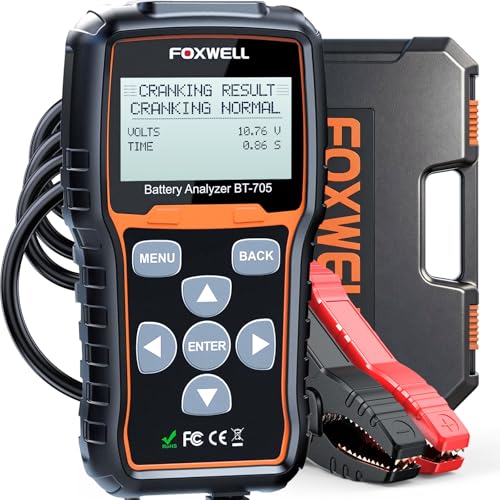
FOXWELL BT705 24V 12V Alternator Tester
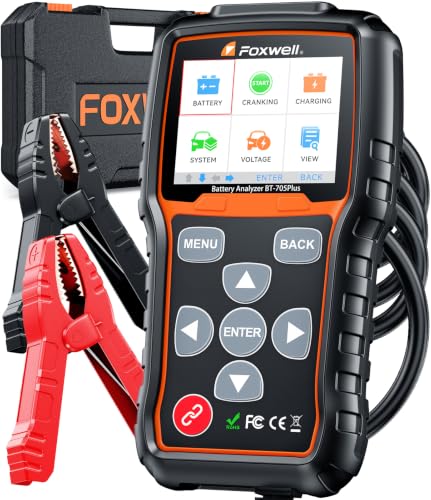
FOXWELL BT705Plus 24V 12V Load Tester

FOXWELL BT780 12V 24V Analyzer with Printer

MOTOPOWER MP0514E 12V Digital Battery Tester

FOXWELL BT301 12V Battery Load Tester

TOPDON BT600 12V 24V Battery Tester
What Each Pick Brings To The Table
The BT500 covers 6V, 12V, and 24V systems, giving you one instrument for cars, trucks, motorcycles, and other equipment that uses those voltages. That broad range is useful for a mixed garage or a weekend project spanning several vehicles. Compared with the simpler MOTOPOWER model, it gives you more battery chemistry and system coverage, though the extra menu work can feel unnecessary for a basic 12V check.
Everyday Wins
- Supports 6V, 12V, and 24V batteries across varied vehicle classes.
- Handles common flooded, AGM, gel, and EFB battery formats.
- Reports battery, cranking, and charging information in one workflow.
- Fits a technician who moves between compact cars and larger equipment.
Trade-Offs To Consider
- The broad feature set may feel less direct than a dedicated 12V model for routine checks.
- Keep the leads clean and dry in a crowded workbench, since a portable diagnostic tool takes on moisture and dirt quickly.
Made For
This model fits DIYers and small-shop technicians who regularly move between 6V, 12V, and 24V vehicles.
Consider Something Else When
Choose the FOXWELL BT705 for a more compact workflow focused on 12V and 24V cars and trucks.
The BT705 concentrates on the checks most roadside and garage diagnostics need: battery condition, cranking behavior, and charging output. Its 12V and 24V coverage makes it a practical fit for ordinary cars alongside heavier trucks. Unlike the VDIAGTOOL BT500, it presents a narrower platform, which may suit you better when you do not need 6V coverage.
Advantages To Know
- Checks CCA, voltage, internal resistance, and battery health information.
- Supports testing in cold conditions down to 32°F, useful for winter roadside work.
- Combines cranking and alternator checks for faster fault isolation.
- Suits daily drivers who want meaningful data without a large display.
Points To Note
- Its 12V and 24V range excludes 6V equipment covered by the BT500.
- Interpretation takes some familiarity with CCA, SOH, and cranking readings, so first-time users should keep battery type information nearby.
Right Fit For
This tester suits everyday car owners and independent technicians who need dependable 12V and 24V system checks.
A Better Fit Elsewhere
The TOPDON BT600 is a stronger alternative when a larger screen and built-in printer matter for documented service work.
The BT705Plus builds on the BT705 with faster processing and refined analysis for batteries that are already showing low voltage. That focus makes it attractive for commuters whose battery is marginal, rather than dead, before a long drive. You still get cranking and alternator coverage, but the main reason to move up is clearer diagnosis under poor battery conditions.
What Stands Out
- Faster analysis can reduce waiting during repeated roadside checks.
- Improved low-voltage readings help distinguish weak batteries from healthy-but-aging units.
- 12V and 24V coverage suits cars and trucks with either system voltage.
- Starter and alternator data supports a complete no-start investigation.
Small Caveats
- It costs more in complexity than the original BT705, so basic users may not need the faster processing.
- Store it away from standing moisture after roadside use, and wipe the screen and connector housing before storage.
Who It Suits Best
This upgrade is well suited to commuters and technicians who diagnose recurring weak-battery symptoms before a full failure.
Not Your Match When
The MOTOPOWER MP0514E is easier to carry and simpler for a single 12V battery or charging-system check.
The BT780 adds a thermal printer to the BT705-style diagnostic platform, turning readings into a record you can hand to a customer or keep in a service file. Its internal battery and 12V/24V range suit mobile repair work, where a paper result is more useful than a screen-only reading. You pay for documentation convenience, not merely another test mode.
A Favorable Mix
- Built-in printer creates a practical paper trail for vehicle service records.
- Internal battery supports use away from a vehicle or power outlet.
- Tests batteries from 100 to 2000 CCA across a wide vehicle range.
- Reports voltage, measured CCA, internal resistance, SOC, and SOH.
Practical Considerations
- Thermal paper and the internal battery add care and storage considerations beyond a basic handheld model.
- The printer adds weight and bulk for occasional users who only need a quick voltage reading.
Built With In Mind
It suits mobile mechanics, fleet technicians, and serious home repairers who want printable battery and charging documentation.
Another Choice May Suit
The FOXWELL BT705Plus is a lighter fit for a technician who values faster analysis but rarely needs paper output.
The MP0514E is built for a quick 12V check rather than a full battery chemistry library. Connect it, read the display, start the vehicle, and compare the charging indication to the battery reading. That direct sequence makes it a sensible first tool for a household car, especially when the older FOXWELL options look more involved.
Practical Advantages
- LCD display and LED indication give fast status feedback.
- Reverse-connection protection reduces errors when leads are attached incorrectly.
- Over-voltage protection adds a useful layer during charging-system checks.
- The focused 12V format suits routine maintenance and roadside diagnosis.
Trade-Offs To Consider
- It does not offer the 24V coverage or detailed battery chemistry handling of the larger models.
- Clamp-free lead connections require attention to polarity, and the rubber finish should be kept clean for comfortable handling.
Who Will Love This
This model suits beginners, commuters, and owners of 12V vehicles who want a simple voltage and charging check.
Look Elsewhere When
Choose the VDIAGTOOL BT500 when you regularly service motorcycles, trucks, or equipment using several voltage systems.
The BT301 targets the common 12V maintenance loop: battery condition, starter operation, and alternator output. It covers cars, marine equipment, trucks, SUVs, and ATVs, so you can keep one compact diagnostic tool across several recreational and work vehicles. Compared with the BT705, it gives up 24V support but keeps the core checks close at hand.
Notable Gains
- Covers 100 to 2000 CCA batteries for common automotive ranges.
- Combines battery, cranking, and charging diagnostics.
- Compact form makes it easier to carry in a glove box or tool bag.
- Broad vehicle compatibility helps households with mixed 12V equipment.
Where It May Fall Short
- Its 12V-only focus excludes trucks or equipment using 24V systems.
- The compact display may offer less room for detailed interpretation than the BT600, so keep your battery-type reference nearby.
Made For In Mind
It fits DIY vehicle owners who need one compact 12V tester for cars, boats, motorcycles, and outdoor equipment.
Reach For A Different Pick When
The FOXWELL BT780 is the better fit for a mobile technician who wants printable records and 24V capability.
The BT600 combines a 3.5-inch screen, 12V and 24V support, and a built-in printer for mechanics who want both readable details and a record. Its 100 to 2000 CCA range covers many common automotive batteries, while cranking and charging tests help separate a weak battery from a faulty system. It is more substantial than the BT301, which makes sense for a professional workflow but can feel like extra equipment for occasional checks.
Features That Help
- Large screen makes battery health and rated-CCA information easier to inspect.
- Built-in printer supports customer records and repeatable service documentation.
- 12V and 24V coverage serves cars, trucks, and mixed workshop inventories.
- Cranking and charging tests support a more complete diagnostic sequence.
Details To Watch
- The screen, printer, and internal electronics make it bulkier than a simple voltmeter.
- Paper rolls and the internal battery require occasional replacement and careful storage.
Whose Shelf It Belongs On
It suits professional technicians and advanced DIYers handling 12V and 24V vehicles across cars and trucks.
Where A Sibling Pick Shines
The FOXWELL BT705Plus is a leaner alternative for owners who want strong low-voltage analysis without a printer.
Choosing The Right Battery Tester For Your Vehicle
Match The Voltage First
A tester designed for 12V systems may not suit a 24V truck, and a 6V-capable model can be unnecessary for a typical family car. Check the battery label and vehicle electrical system before choosing. Starting with the correct voltage prevents a diagnostic tool from giving you readings that do not apply.
Decide How Much Detail You Need
CCA, meaning cold-cranking amperage, estimates starting capacity under cold conditions. SOC describes state of charge, while SOH estimates remaining battery health. A basic model can show voltage and status, whereas a feature-rich unit adds more context for weak batteries and repeated no-start complaints.
Think About Records And Battery Type
A thermal printer helps mechanics document service results, while a compact screen-only design is easier to carry. AGM, gel, EFB, and flooded batteries can require different test settings, so select the correct battery type rather than relying on a generic reading. Clean, dry storage matters for any portable model kept in a vehicle.
Key Details That Change The Choice
Common Shopping Slip Ups
The most common mistake is choosing by display size while overlooking voltage compatibility. Another is assuming a starter problem always comes from the battery, when cranking and charging results need to be compared together. Confirm lead compatibility, battery type settings, and the vehicle voltage before checkout.
What The Higher Tier Buys
Higher-tier models often add faster processing, broader battery coverage, larger displays, or printed records. Those features help technicians move from a reading to a documented diagnosis, but they are not needed for a quick 12V check. Choose the extra detail only when your routine vehicle work calls for it.
Frequently Asked Questions
Can one battery tester check both the battery and alternator?
Yes, models such as the FOXWELL BT705 combine battery, cranking, and charging checks. That makes them useful for separating a weak battery from a charging-system fault.
What voltage do car battery testers support?
Many support 12V systems, while some add 24V or 6V coverage. Check your vehicle first, especially for trucks, buses, marine equipment, and older vehicles.
What does CCA mean on a battery tester?
CCA stands for cold-cranking amperes, a rating of starting power in cold conditions. Higher CCA values generally indicate stronger starting capability for compatible battery types.
Do I need a built-in printer?
A printer helps when you need service records or customer documentation. For occasional personal checks, a screen-only model can be simpler and easier to store.
Can a tester diagnose a bad starter?
It can show cranking voltage and related system behavior, which helps narrow the fault. A weak reading may point toward the battery or charging system, so starter diagnosis may still require additional checks.
Final Verdict
The best fit depends less on a long feature list than on your vehicles, battery types, and documentation needs. BT500 for broad voltage coverage, BT705Plus for low-voltage analysis, BT780 or BT600 for printed service records, or MP0514E for a simple 12V check. Choose the model that matches your routine and keep the leads clean between jobs.
