


Solar lights rarely fail because their batteries were cheap. More often, the replacement has the wrong voltage, chemistry, size, or charging requirements, and a dark path at 2 a.m. is the first sign something is off.
You’ll find six replacement-battery options and one complete decorative light set here. The list covers common 1.2-volt AA cells, wired 3.6-volt emergency-light packs, and a solar-powered fixture for decorating yards without a separate battery purchase.
Check the original light’s manual before ordering anything. Some fixtures use standard AA cells, while exit and emergency signs commonly need a wired battery pack with a matching connector, polarity, and voltage.
The Essentials At A Glance
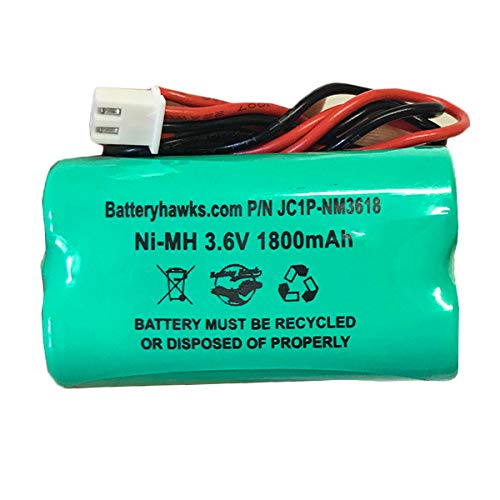
Battery Hawk AA1800mAh 3.6V Battery Pack

Battery Hawk 2-Pack AA1800mAh 3.6V Battery Pack

QBLPOWER Ni-CD AA 800mAh 1.2V 8-Pack

Battery Hawk 5-Pack AA1800mAh 3.6V Battery Pack

GSUIVEER Ni-MH AA 600mAh 1.2V 4-Pack

Kruta 20-Pack 1600mAh AA Batteries

HPUFKOT 2-Pack 200-LED Solar Garden Lights
What Each Pick Brings To The Table
This is a wired replacement pack rather than a loose AA cell, so it belongs in a compatible 73904 emergency or exit fixture. Its 3.6-volt rating and 1800mAh capacity suit the specified equipment, while the attached lead simplifies routing inside a sign housing.
For facilities managers replacing one aging pack, it avoids the mixed chemistry and connector problems associated with improvised cells. The honest read is that this is a focused maintenance option, not a garden-path battery.
Positive Takeaways
- Specified for 73904 exit and emergency lights
- 1800mAh capacity supports sustained fixture use
- Wired connector reduces reassembly work
- Correct polarity is specified for installation
Things To Consider
- Not a standard AA cell for pathway lights
- Connector and polarity must match the fixture
- Confirm the original pack’s 3.6-volt requirement
Key Specs
Right Fit For
Facility managers maintaining a compatible 73904 exit or emergency light benefit most.
Another Choice May Suit
Standard landscape-light owners should choose QBLPOWER Ni-CD AA 800mAh cells instead.
The two-pack format turns Battery Hawk’s single 73904 replacement into a practical maintenance set for homes, small offices, or shared facilities. You can service two matching fixtures or keep one pack ready for a later failure, which is more useful than storing several loose batteries.
Compared with the single Battery Hawk pack, its principal advantage is inventory coverage rather than a different electrical design. Depending on the lamp markings, you may also prefer it for matching units installed in separate hallways.
Reasons It Performs
- Two packs cover more than one fixture
- Keeps spare capacity available
- Targets 73904 emergency-light use
- Single-battery replacement simplifies stocking
Practical Considerations
- Connector details are limited in the supplied data
- Verify voltage and polarity before installation
- Unsuitable for fixtures taking loose AA cells
Made For
You benefit most when maintaining two compatible emergency or exit fixtures.
A Better Fit Elsewhere
Battery Hawk’s five-pack serves larger facilities with more than two matching units.
Standard AA dimensions make this eight-cell set easier to integrate with common solar lamps than the wired emergency-light packs. Ni-Cd is nickel-cadmium, a rechargeable chemistry often found in older solar fixtures that accept 1.2-volt cells.
The 800mAh rating gives you a sensible capacity match for compatible low-drain garden equipment. It suits homeowners replacing several inexpensive path lights, though modern fixtures designed specifically for Ni-MH chemistry may deserve a closer match.
A Strong Showing
- Eight cells support multiple fixtures
- Standard AA sizing simplifies installation
- 1.2-volt output suits many older lights
- Solar-panel charging can replenish cells
Honest Caveats
- Ni-CD requires compatible charging equipment
- Do not mix chemistries without checking guidance
- Older cells may begin losing runtime
Technical Sheet
Who It Suits Best
Homeowners maintaining several older 1.2-volt Ni-Cd landscape lights get the most useful configuration.
Where A Sibling Pick Shines
GSUIVEER Ni-MH AA 600mAh cells fit fixtures specifically designed around Ni-MH chemistry.
Five wired packs suit offices, apartment common areas, and workshops where several matching exit signs age at roughly the same time. Compared with the two-pack, this set reduces repeat maintenance visits and gives you a small reserve without bulk storage.
The listed Unitech applications give you useful compatibility guidance, but the original model number still controls. A small oversight during installation can reverse a wired pack’s polarity and damage the fixture or replacement.
What Works In Its Favor
- Five packs support planned replacement cycles
- 1800mAh suits sustained emergency lighting
- Listed for Unitech-compatible models
- Wired leads simplify internal mounting
- Specified polarity reduces ambiguity
Small Limitations
- Only suitable for specified wired fixtures
- Five packs may be excess for one sign
Built With In Mind
Property maintenance teams replacing several matching Unitech exit lights benefit most.
Consider Something Else When
One replacement light calls for Battery Hawk’s single AA1800mAh 3.6V pack.
These 1.2-volt Ni-MH cells fit many low-drain solar lamps without the wired complexity of an emergency-light pack. Ni-MH, or nickel-metal hydride, avoids the cadmium used in Ni-CD chemistry and can recharge through a compatible solar cell or standard charger.
The four-cell quantity suits a couple of garden fixtures rather than a fully lit yard. For most decorative path lights, the 600mAh rating is workable, but you gain less runtime than from a higher-capacity set.
Why It Works Well
- Four cells cover multiple small lamps
- Solar charging supports routine replenishment
- Standard AA dimensions ease replacement
- Ni-MH chemistry suits compatible devices
Where It May Fall Short
- 600mAh can limit overnight runtime
- Charging time depends on solar exposure
- Charge cells before extended cloudy periods
- Not suitable for 3.6-volt packs
Quick Facts
Best Suited To
You get a straightforward replacement set for a few compatible, low-drain solar lamps.
Look Elsewhere When
A larger garden with many brighter fixtures favors Kruta’s 20-pack of higher-capacity AA cells.
Twenty cells address the scattered replacements that come with a large property: path markers, lawn lights, and border lamps can drain over different seasons. The listed 1600mAh capacity also exceeds the smaller replacements on this list, which may support longer illumination between charges.
That larger inventory creates a storage responsibility. Keep the cells organized by fixture type, and don’t assume that capacity alone overrides chemistry or voltage requirements.
What Makes Sense
- Twenty cells cover extensive outdoor lighting
- 1600mAh supports longer charge intervals
- Useful across garden and landscape fixtures
- Reduces frequent replacement runs
Details To Watch
- Confirm chemistry before fitting older lights
- Twenty cells need organized dry storage
- Capacity does not overcome incompatible voltage
The Right Fit
Property owners maintaining numerous compatible AA solar lights benefit from the broad inventory.
Reach For A Different Pick When
Owners of older Ni-CD fixtures should consider QBLPOWER Ni-CD AA cells instead.
This entry is a complete lighting set, not a replacement battery, so it earns its place for a different decision. You get two solar garden fixtures with 200 LEDs and eight lighting modes for decorating a path, patio, or yard without matching cells to an existing lamp.
Its decorative reach is the draw, especially for seasonal displays. The trade-off is flexibility: you’re choosing a whole fixture with its own solar panel and rechargeable cells, so existing path lights will not benefit.
Advantages To Know
- Two sets provide coordinated placement
- Eight modes vary the decorative effect
- Solar panels eliminate wiring
- Waterproof construction suits outdoor placement
- Large LED count adds visual impact
Practical Considerations
- Not a replacement battery
- Solar charging depends on direct exposure
- Switch position must allow daytime charging
Made For
You’ll appreciate this set most when creating festive yard and pathway displays from scratch.
Skip It When
A homeowner restoring an existing fixture needs Kruta or GSUIVEER replacement cells instead.
Matching Voltage, Chemistry, And Form Before Ordering
The first check is form factor. Standard garden lights generally use removable 1.2-volt AA cells, while emergency and exit fixtures often contain a wired 3.6-volt battery pack. These formats are not interchangeable, even when both use rechargeable chemistry.
Next, match chemistry. Ni-MH cells contain no cadmium, while Ni-CD cells do. A light’s charging circuit, battery markings, and instructions should take priority over a generic compatibility claim, especially with older solar fixtures.
Voltage follows size closely in this category. A nominal 1.2-volt AA cell cannot replace a complete 3.6-volt pack, and a higher-capacity cell still needs compatible charging. For a complete decorative fixture, choose the HPUFKOT set only when you want the light itself.
Practical Checks Before Installation
Common Shopping Slip Ups
A matching AA size is not enough: chemistry, voltage, connector, and polarity all matter. Photograph the old battery’s label, remove one cell at a time from the original set, and compare the full markings before ordering.
Charging conditions also affect ownership. Keep solar panels unobstructed and leave enough charging time before cloudy weather, since weak sunlight can produce shorter nighttime illumination.
What The Higher Tier Buys
Higher capacity generally offers more stored energy and potentially longer runtime, but it does not change the device’s voltage requirement. The Kruta pack is most valuable where many compatible fixtures need service, not merely where one label carries a larger number.
For one small lamp, additional inventory offers little practical value. Match the specification to the fixture first, then consider pack size and charging access.
Frequently Asked Questions
Can any rechargeable AA battery power an outdoor solar light?
Not universally. Match the voltage, chemistry, size, and charging requirements specified by the light.
Are 1.2V and 3.6V solar-light batteries interchangeable?
No. A 1.2V AA cell and a wired 3.6V emergency-light pack serve different fixture designs.
Does higher mAh mean longer nighttime lighting?
Higher capacity can support longer use between charges, but panel size, sunlight exposure, battery age, and the light’s draw also affect runtime.
Can you mix old and new solar-light batteries?
Avoid mixing cells with different ages or chemistries, as uneven charging can shorten useful service life.
Does a solar garden-light set replace existing batteries?
No. The HPUFKOT option is a complete two-light set, while the other entries are replacement batteries or wired packs.
Final Verdict
Standard landscape lights call for a close match to the original 1.2-volt AA cells, with chemistry guided by the fixture. Emergency signs need the correct wired 3.6-volt pack, connector, and polarity. Match those details first, then choose the pack quantity that fits your property’s actual maintenance routine.
