


Solar power storage can feel deceptively simple: panels collect sunlight, a controller directs the energy, and dependable storage keeps power available after dark. The right setup depends heavily on your equipment, available space, and whether you need portable camping power, marine endurance, remote monitoring, or expandable home backup.
The seven options below cover those distinct roles. Some are complete power stations with batteries built in, while others are dedicated 24V batteries for boats, RVs, off-grid systems, or Victron-controlled installations. One is a carrying case rather than a battery, but it remains relevant because protecting a compatible portable power station can be as important as choosing its storage component.
The Choices Worth Comparing

Trunab Double-Layer Case for Jackery Explorer

BROWEY 1600W Portable Power Station 1024Wh

LiTime 24V 100Ah Bluetooth LiFePO4 Battery

LiTime 24V 100Ah Victron Cerbo GX Battery
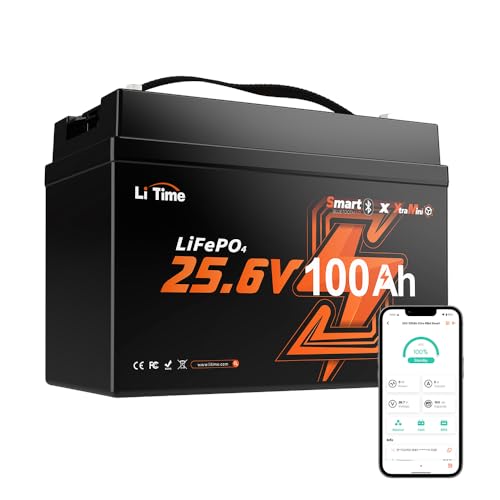
LiTime 24V 100Ah Mini Trolling Motor Battery

ECOFLOW DELTA 2 Max Extra Battery 2048Wh

Jackery Explorer 500 v2 512Wh Power Station
Taking A Closer Look At The Options
This carrying case doesn’t store solar energy, but it protects a compatible Jackery Explorer during the trips between charging sites and emergency use. Its double-layer construction and separate accessory areas make cables, adapters, and chargers easier to organize than a loose pile in a vehicle.
Measurements of 9.5 by 7.5 by 10 inches suggest a useful balance of room and manageable bulk. The case is intended for Explorer 160, 240, and 300 models, with a larger configuration listed for 1000W units, so checking your exact power station remains essential.
What Earns Its Place
- Two layers separate the power station from its cables and adapters.
- Multiple pockets keep smaller charging accessories from wandering around the main compartment.
- The case is easier to organize than loose equipment stored in a trunk or gear closet.
Things To Consider
- It provides protection and organization, not electrical storage or solar charging.
- Compatibility is model-specific, so another Jackery or power station may require a different case.
Made For In Mind
This case best suits Jackery Explorer owners who move their portable power between campsites, vehicles, and home.
Another Choice May Suit
Choose BROWEY 1600W Portable Power Station 1024Wh instead when you need actual battery capacity and built-in solar charging.
Camping power becomes more self-contained with a 1024Wh lithium iron phosphate battery and solar panel built into the same enclosure. That combination reduces the need to carry a separate panel, which matters during a long weekend where campsite placement changes.
The 1600W continuous rating, 3200W peak figure, and 100W USB-C Power Delivery port target a broad mix of camping equipment and electronics. You’ll get more utility from the unit in a RV or off-grid setup than from the lighter Jackery Explorer 500 v2, although bulk remains the trade-off.
Useful Strengths
- Built-in solar charging removes the need for a loose panel during remote stays.
- The LiFePO4 chemistry suits frequent cycling compared with a conventional lead-acid bank.
- 100W USB-C PD can charge compatible laptops and phones directly.
- 1,024Wh offers more overnight capacity than a compact camping station.
Trade Offs
- The integrated panel needs direct sun, so cloudy stretches may require another charging source.
- A larger power station takes more vehicle and campsite space than 512Wh models.
Key Specs
Right Fit For
Campers and RV travelers benefit most from the blend of substantial capacity, AC output, and integrated solar charging.
A Better Fit Elsewhere
Jackery Explorer 500 v2 512Wh Power Station is easier to carry for short camping trips and smaller outages.
A 24V 100Ah battery offers 2.4kWh of nominal energy, making it a substantial building block for an RV, boat, or small off-grid installation. Bluetooth monitoring adds practical visibility into charge status and discharge control, a useful difference during maintenance or a weekend away.
The 8.2 by 21 by 8.5-inch format and 45.85-pound weight may feel substantial in a small craft. Owners commonly appreciate the handling advantage over lead-acid, yet a two-person lift or planned lifting technique can prevent strain during installation.
Where It Excels
- 2.4kWh nominal capacity supports larger loads than the portable stations in this roundup.
- Bluetooth 5.0 displays battery status and supports discharge control from a compatible phone.
- LiFePO4 chemistry is suited to repeated charge and discharge cycles.
Practical Considerations
- The stated dimensions may exceed the available space in a compact boat compartment.
- At 45.85 pounds, installation deserves a two-person lift or a secure handling plan.
- Four batteries configured in the stated 4P2S arrangement reach 10.24kWh, requiring matching equipment and careful commissioning.
Feature Snapshot
Built With In Mind
This battery suits RV, marine, and off-grid owners with sufficient compartment space and a need for app-based monitoring.
Where A Sibling Pick Shines
LiTime 24V 100Ah Mini Trolling Motor Battery offers a smaller footprint for boats with tighter Group 31 tray space.
This battery targets installations already built around Victron’s Cerbo GX controller. CAN communication lets the battery exchange operating information with that system, which is more valuable than standalone Bluetooth monitoring when charging and load data need to appear within a broader energy-management setup.
Support for DVCC, which coordinates battery voltage and current measurements across a multi-battery system, adds another layer of control. The open communication protocol also opens a path toward custom integrations with Xantrex, AIMS, and Go Power systems, although configuration work still falls on the installer.
Well-Handled Touches
- CAN communication supports direct integration with a Victron Cerbo GX.
- DVCC coordinates charging and current data across connected batteries.
- Remote monitoring helps you inspect an installation without returning to its enclosure.
- An open protocol allows adaptation for additional supported energy systems.
Minor Gripes
- Its advantages depend on compatible communication hardware and correct system configuration.
- Custom integrations can require technical setup beyond a simple battery swap.
Core Details
Whose Shelf It Belongs On
Victron-based off-grid owners benefit most from the battery’s system-level communication rather than simple output alone.
Reach For A Different Pick When
LiTime 24V 100Ah Bluetooth LiFePO4 Battery fits people who want phone-based monitoring without a Victron Cerbo GX installation.
Trolling-motor fishing calls for steady 24V discharge in a battery tray where every inch matters. This mini LiFePO4 battery preserves a Group 31-oriented footprint while targeting motors from 70 to 100 pounds, making it a focused option for medium-size setups rather than an all-purpose portable station.
Its 13.11 by 6.93 by 9.45-inch dimensions tell a more nuanced fit story than the Group 31 label alone. It may fit BCI Group 31 trays, but the listed height exceeds many standard Group 31 battery boxes, so measure both the tray and its lid before installation.
Strong Points
- The Group 31-oriented format simplifies comparison with common marine battery layouts.
- 24V lithium iron phosphate chemistry suits frequent fishing-day discharge.
- 100Ah provides substantial capacity for 70 to 100-pound trolling motors.
Points To Note
- The listed height can prevent installation under a standard Group 31 box lid.
- Motor compatibility still depends on the boat’s charger, wiring, and starting configuration.
- Ventilation and secure restraint should be planned around the actual tray geometry.
Who Should Grab It
Anglers with a measured Group 31 tray and a 70 to 100-pound trolling motor are the strongest match.
Look Elsewhere When
LiTime 24V 100Ah Bluetooth LiFePO4 Battery makes more sense for larger marine installations that include Bluetooth monitoring.
The DELTA 2 Max Extra Battery is an expansion module rather than a stand-alone power source. Its 2,048Wh capacity can add meaningful overnight reserve to an EcoFlow home or RV setup, especially for refrigerators, routers, lighting, and other devices that benefit from extended runtime.
Adding up to two compatible extra batteries raises the stated system capacity to 6,144Wh, giving owners room to scale. The catch is compatibility: this module belongs with DELTA 2 Max equipment, so it doesn’t serve as a universal battery for marine, trolling-motor, or arbitrary solar controllers.
Everyday Wins
- 2,048Wh of added capacity extends runtime without changing the central power station.
- LiFePO4 chemistry favors repeated daily cycling for home backup use.
- Two matching modules can expand the DELTA 2 Max system to 6,144Wh.
- The modular approach preserves the portability of an existing DELTA 2 Max setup.
Possible Compromises
- It requires a compatible DELTA 2 Max installation and cannot operate independently.
- Full-scale home use adds another large, battery-powered component to the installation.
Key Product Details
Who Will Love This
DELTA 2 Max owners need extended home or RV runtime without replacing their existing central unit.
Not Your Match When
Jackery Explorer 500 v2 512Wh Power Station is the simpler choice for a portable weekend setup without expansion modules.
Weekend campers can gain useful AC output without hauling a full home-scale battery system. The Explorer 500 v2 combines 512Wh capacity, 500W rated output, and 1,000W surge capability in a 14-pound enclosure, a practical mix for laptops, cameras, phones, and small appliances.
Two pure sine wave AC outlets provide cleaner, steadier output for sensitive electronics than modified sine wave alternatives. Compared with BROWEY 1600W Portable Power Station 1024Wh, it gives up substantial capacity and built-in solar hardware, yet its lighter frame may suit people who prioritize portability over extended runtime.
Advantages To Know
- The 14-pound weight remains manageable for vehicle and campsite transport.
- Pure sine wave AC supports compatible sensitive electronics.
- 512Wh covers several small devices or a limited outage.
- The 500W rating provides more useful output than many similarly sized camping stations.
Soft Spots
- 512Wh is limited for refrigeration, heaters, and other sustained household loads.
- No solar panel is included, so direct charging requires compatible equipment.
Quick Facts
The Right Fit
Weekend campers and households needing brief support for small electronics will find the capacity-to-weight balance useful.
Skip It When
LiTime 24V 100Ah Mini Trolling Motor Battery serves a very different need as a dedicated 24V marine power source.
Matching Storage Power to Your System
Capacity needs to reflect the equipment you expect to run, not merely the largest device. A 512Wh portable station may cover phones, lights, laptops, and a small cooler for part of a day, while a 2kWh or larger system offers more room for household backup. Compare both stored energy and output power, since capacity alone doesn’t determine whether a microwave, refrigerator, or power tool can start.
Battery Chemistry and Daily Use
LiFePO4, or lithium iron phosphate, is designed around repeated charge and discharge cycles, making it relevant to daily solar charging and frequent outages. Lead-acid batteries can still fit stationary applications, but lithium options commonly reduce weight and occupy less space for equivalent nominal capacity. Check the charger, inverter, and controller for supported battery chemistry before connecting any new unit.
Marine and Trolling-Motor Fit
Boats add constraints that a portable camping system may never face. Measure the tray, account for terminal and cable clearance, inspect ventilation, and confirm the battery’s starting method. The LiTime mini trolling-motor battery may suit a Group 31 layout, but its listed height means a standard box cannot be assumed to fit.
Integration and Monitoring
Bluetooth monitoring is useful for checking charge status on a phone, while CAN communication can support deeper coordination with Victron equipment. Open protocols may broaden future integration, but they can also require configuration. Match the battery to the control system already in your RV, boat, or off-grid installation rather than choosing monitoring features separately.
Expansion and Charging
Built-in solar panels offer convenience for camping, yet panel size still determines how quickly stored energy returns after use. Expansion batteries provide another route to longer runtime, but they usually require matching equipment. Confirm supported module quantities, charge rates, cable requirements, and ventilation before scaling a system.
Practical Lessons Before Powering Up
Common Shopping Slip Ups
A battery’s advertised capacity doesn’t reveal its physical size, weight, or communication limits. Measure the enclosure and verify the controller before ordering, especially for marine and Victron-based installations. A module that looks powerful on paper can still be unusable in a cramped tray or disconnected system.
The Upgrade Payoff
Higher-capacity or communication-equipped batteries can be worthwhile for daily cycling, remote monitoring, or extended backup. They may add weight, cost, and installation complexity, so premium features only pay off when your equipment can use them. Simple camping setups often benefit more from portability than advanced control.
Frequently Asked Questions
How much battery capacity do I need for solar storage?
Choose capacity based on the energy your devices consume and how long they must operate away from solar input. Higher-powered equipment also requires an inverter or power station with a suitable continuous output rating.
Is LiFePO4 better than lead-acid for solar storage?
LiFePO4 generally fits frequent cycling better and carries less weight for comparable nominal capacity. Lead-acid may still suit a stationary installation with lower cycle demands, so system weight and space remain decisive.
Can one battery work with multiple solar panels?
A battery may accept charging from several panels through a compatible charge controller, subject to its voltage and charge-current limits. Panel output and controller sizing must be matched to prevent electrical stress.
Do portable power stations already contain batteries?
Yes. Complete portable power stations combine internal storage, inverters, outlets, and charging controls. Expansion batteries add capacity to compatible systems but generally cannot operate as stand-alone units.
What matters most in a marine battery?
Capacity is only one part of marine fit. Battery dimensions, weight, starting method, charger compatibility, ventilation, secure restraint, and trolling-motor requirements all influence the correct installation.
Wrap Up
The right storage battery depends on where the power goes. Portable campers may favor the lighter Jackery Explorer 500 v2 or the solar-ready BROWEY unit, while marine and off-grid installations require careful attention to dimensions, controls, and charging equipment. Measure first, match the system second, and choose capacity based on realistic daily use.
