


Solar RV setups fail at the weakest link, often because the battery bank is undersized, poorly monitored, or mismatched to the inverter. You need enough stored energy for overnight appliances, phone charging, lighting, and refrigeration without adding excessive weight. The right battery also depends on your system voltage, available space, motor loads, and how closely you monitor charge state in daily use.
The Leading Options At A Glance

ECO-WORTHY 12V 314Ah LiFePO4 Battery 4019Wh

ECO-WORTHY EnergyRock 12V 280Ah 2-Pack Battery
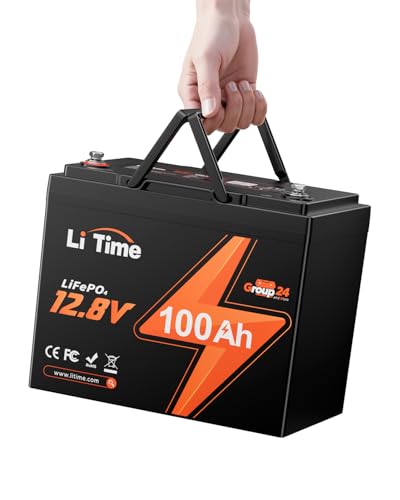
LiTime 12V 100Ah Group 24 RV LiFePO4 Battery

VATRER POWER 48V 100Ah LiFePO4 Battery

ECO-WORTHY 12V 280Ah Metal Case LiFePO4 Battery

HeyFuture 12V 20Ah Power Wheels Battery Kit

Renogy 12V 100Ah Group 24 LiFePO4 Battery
A Deeper Look At The Lineup
You gain 4,019Wh of nominal 12V storage in a single high-capacity enclosure, which reduces the number of batteries needed for a large off-grid bank. That scale suits full-time RVs running refrigeration, electronics, lighting, and outlets from solar power.
Bluetooth monitoring and status LEDs help you track charge without repeatedly checking a remote display. Compared with the 100Ah Group 24 choices later in the lineup, this model makes more sense when weight is less restrictive and usable capacity is the priority.
Good Reasons To Consider
- The 314Ah rating supports substantial overnight loads without a multi-battery installation.
- Bluetooth gives you a practical way to monitor operating status from your phone.
- Low-temperature protection helps manage charging in cold conditions.
- A 200A BMS provides a high current-management limit for demanding inverter and accessory loads.
Points To Keep In Mind
- Its size and weight can challenge a small battery compartment.
- Owners of large lithium systems commonly need to confirm cable thickness, ventilation, and charge settings before adding substantial capacity.
Quick Facts
Built With In Mind
This battery fits experienced off-grid RV owners who have ample battery space and need high storage from each installed unit.
Where Another Pick Suits Better
The LiTime 12V 100Ah Group 24 RV LiFePO4 Battery suits you better when a standardized Group 24 footprint and lower weight matter more than maximum capacity.
You receive two matching 12V batteries with a combined maximum energy rating of 3,584Wh, making this a practical foundation for a larger camper or off-grid home system. The metal enclosure also gives the pair a more substantial feel than a basic plastic case.
Bluetooth monitoring and low-temperature charging protection add useful control for RVs stored through changing seasons. The trade-off is straightforward: you must accommodate two large batteries, and the label styling can vary even though the internal design remains consistent.
The Case For It
- Two batteries simplify the process of building a balanced high-capacity bank.
- Each battery includes Bluetooth monitoring for remote status checks.
- Metal cases add structural strength and heat resistance to the installation.
- Low-temperature protection is relevant for cold-weather road trips and seasonal storage.
- A 200A BMS supports high-current charging and inverter demands.
Small Caveats
- The pair occupies considerably more space than one Group 24 battery.
- Exterior labels may differ between units, so appearance should not drive your compatibility decision.
Technical Highlights
The Right Fit
You benefit most from this pair as an RV owner with adequate battery space and a need for balanced, expandable storage.
Another Choice May Suit
The ECO-WORTHY 12V 280Ah Metal Case LiFePO4 Battery is the better fit for you when space favors one battery instead of a matched pair.
You get a standardized Group 24 footprint that can replace a common lead-acid layout without demanding a new battery box. That makes this a practical choice for an RV upgrade where existing wire locations and compartment dimensions are fixed.
The 1.28kWh energy rating provides a more useful balance of storage and weight than the much larger 280Ah and 314Ah models. It is designed for deep-cycle applications, so you should not treat it as an engine-starting battery.
Everyday Perks
- Group 24 dimensions simplify replacement planning in many RV battery boxes.
- The 1.28kWh rating supports solar storage, trolling motors, and marine electronics.
- Its lower weight burden benefits travel trailers where every pound affects loading.
Things That May Matter
- It is not intended for engine starting, golf carts, or lifting jacks.
- Multiple units may still be necessary for a refrigerator, inverter, and several household loads running through cloudy weather.
- Owners commonly confirm terminal orientation and cable clearance during Group 24 replacements, even with a familiar format.
Made For
This model serves RV owners replacing a Group 24 lead-acid battery while keeping the installation compact and familiar.
Consider Something Else When
The Renogy 12V 100Ah Group 24 LiFePO4 Battery better suits marine use where water resistance and a trolling-motor-focused discharge profile are your priorities.
You step away from conventional 12V battery strings with a nominal 48V system that stores 5.12kWh in one enclosure. That arrangement can reduce the number of series-connected units required by a compatible high-voltage solar architecture.
The built-in 100A BMS handles centralized charge control, while the higher system voltage suits owners with equipment designed around it. Compatibility is the deciding factor, since most basic RV electrical systems cannot connect directly to a 48V battery.
What Makes Sense
- You gain 5.12kWh of storage from a single 48V battery.
- Sixteen prismatic cells form the stated 51.2V nominal configuration.
- The integrated 100A BMS simplifies the battery-management side of the installation.
Potential Drawbacks
- Your inverter, charge controller, converter, and wiring must support the system voltage.
- Hazardous-material shipping rules make this a less flexible purchase than a standard 12V battery.
- You cannot return it normally, and damage or defects require documentation through the order process.
Core Details
Who Will Love This
This battery fits experienced solar installers who have designed their inverter, controller, and converter around a 48V architecture.
Skip It When
The LiTime 12V 100Ah Group 24 RV LiFePO4 Battery suits you better for a conventional 12V RV installation with minimal rewiring.
You receive 3,584Wh of storage in one 12V battery, offering a middle ground between the 100Ah Group 24 models and the larger 314Ah option. A single-unit configuration keeps the layout simpler, though not necessarily lighter.
The metal case adds structural and thermal advantages for an installation exposed to vibration or a demanding mobile environment. Bluetooth status monitoring and low-temperature protection are particularly useful for campers that sit outdoors between trips.
Strong Points
- A 3,584Wh maximum rating supports larger RV appliances and extended off-grid periods.
- The metal enclosure resists heat better than a basic plastic battery shell.
- Bluetooth lets you check battery information without opening the compartment.
- A 200A BMS accommodates high-current charging and motor loads.
- A low-current disconnect switch provides a direct way to cut battery output.
Trade Offs To Consider
- The 280Ah unit remains heavy enough to make mounting and cable support important.
- You may need a second battery for longer cloudy-weather reserve.
- Owners commonly check enclosure clearance and ventilation because the high-capacity case leaves little room for oversights.
Who Should Grab It
This model suits RV and camper owners who want a single large 12V battery with remote monitoring and a rugged enclosure.
Look Elsewhere When
The ECO-WORTHY 12V 314Ah LiFePO4 Battery 4019Wh fits you better when maximum capacity from one enclosure takes priority over its larger physical footprint.
You turn a small ride-on toy project into a compact 12V lithium setup rather than trying to fit a large RV battery into a small plastic compartment. The 20Ah capacity serves short, light-duty applications, not household-scale solar storage.
A built-in battery management system handles overcharging, excessive discharge, and short circuits. That protection matters in a toy battery compartment where vibration and tight connections are common.
A Strong Showing
- The stated cycle life exceeds 2,000 cycles for repeated project use.
- LiFePO4 chemistry provides a practical alternative to heavier lead-acid toy batteries.
- The integrated BMS reduces the need for separate protection components.
Practical Considerations
- Its 20Ah rating is far below the capacity required by an RV solar bank.
- You must confirm the toy’s connector, voltage, and battery compartment dimensions before installation.
- It is not designed for motorcycle starting, so engine applications fall outside its intended use.
Feature Snapshot
Best Suited To
This kit fits a hobbyist upgrading a compatible Power Wheels-style toy within a small project budget.
A Better Fit Elsewhere
The LiTime 12V 100Ah Group 24 RV LiFePO4 Battery suits you better for a real RV installation requiring usable solar storage.
You get a 12V Group 24 battery shaped for boats, trolling motors, RV auxiliaries, and off-grid storage. Its 100Ah capacity is more restrained than the ECO-WORTHY models, which keeps weight and space demands lower for mobile use.
Bluetooth monitoring helps you inspect battery status, while the 100A BMS manages charging and discharge. Unlike the LiTime Group 24 option, this model gives marine applications an IP67 water-resistance rating and a higher stated continuous discharge figure.
Advantages To Know
- The 150A continuous discharge rating supports demanding trolling motor loads.
- A 300A surge rating provides brief headroom for motor startup demand.
- At 21.8 pounds, the battery offers a lower weight burden than many large lead-acid alternatives.
- IP67 water resistance suits exposed marine environments.
- Bluetooth gives you remote visibility into charge and operating status.
Details To Watch
- The stated trolling motor compatibility covers selected 12V through 36V configurations rather than every motor.
- Its 100Ah capacity may support only a limited group of RV loads without additional battery capacity.
Key Attributes
Whose Shelf It Belongs On
This battery fits boat owners and RV users who need a portable 12V power source with marine-oriented protection.
Where A Sibling Pick Shines
The VATRER POWER 48V 100Ah LiFePO4 Battery fits you better for a purpose-built 48V solar system with high-voltage power equipment.
Matching Battery Capacity To Your RV Power Plan
Start With Usable Energy
Battery capacity is only the beginning. You also need to account for inverter losses, cold-weather performance, and the energy your refrigerator, controls, lighting, and electronics consume while driving or sitting still. Calculating a daily load estimate gives you a more defensible target than choosing on amp-hour count alone.
Match The System Voltage
A 12V battery fits many conventional RV installations, while a 48V battery requires compatible inverters, charge controllers, converters, and wiring. Never connect a higher-voltage battery to equipment designed for a lower system voltage, and confirm terminal layout before ordering.
Consider Weight And Footprint
Lithium iron phosphate, commonly shortened to LiFePO4, stores more energy at a lower weight than typical lead-acid alternatives. The trade-off remains substantial: a 280Ah or 314Ah battery can strain compartment limits and require secure mounting, properly sized cables, and adequate ventilation.
Look Beyond Raw Capacity
Bluetooth monitoring, low-temperature charging controls, water resistance, and the BMS current rating matter more than another increment of capacity. You gain useful control from these features, but they do not replace correct charger settings, balanced battery strings, secure terminals, or routine system checks.
Practical Details That Shape Daily Ownership
Common Shopping Slip Ups
Avoid choosing capacity before checking your inverter voltage or available battery space. A common mistake is also confusing deep-cycle suitability with engine-starting capability, or assuming a Group 24 case guarantees plug-and-play installation.
What Separates Premium From Basic
A higher-capacity or metal-case battery costs more because it adds storage, structural material, monitoring, and current management. That extra spending makes sense for larger loads or mobile installations where weight, durability, and remote status information materially affect operation.
Frequently Asked Questions
Can 12V LiFePO4 batteries power an RV solar system?
Yes, you can use them with compatible 12V solar controllers, inverters, and wiring. Capacity and output current must match your daily loads and equipment.
Are 100Ah batteries enough for an RV?
A 100Ah battery can support modest loads such as lighting, controls, and phones. Larger appliances, sustained inverter use, and limited sunlight usually require additional capacity.
What does a BMS do?
A battery management system regulates charging and discharge while protecting against electrical faults. Its current rating must also handle the loads connected to your system.
Can a 48V battery replace a 12V RV battery?
Not directly, because your inverter, charge controller, converter, and wiring must operate at a compatible voltage. A 48V installation needs a purpose-built 48V electrical system.
Do LiFePO4 batteries work in cold weather?
Their charging performance can be limited by low temperatures, so protected charging control matters. Keep the battery within its specified charging conditions during winter storage.
Wrap Up
The right solar RV battery balances usable energy, system voltage, weight, monitoring, and physical space. Large off-grid rigs benefit from the 314Ah and paired 280Ah ECO-WORTHY options, while Group 24 users gain more manageable capacity from LiTime or Renogy. Match the battery to your equipment first, then confirm the installation can support it safely and cleanly.
