


Boat solar systems depend on dependable energy storage, especially during long weekends away from shore power. Your priorities include usable capacity, low weight, secure marine installation, and a charger matched to your panel output. This guide covers both storage batteries and solar maintainers, with clear distinctions between capacity, trolling-motor support, and panel charging needs.
The Leading Options At A Glance

Litime 12V 200Ah Mini LiFePO4 Bluetooth Battery

SUNER POWER Waterproof 20W 12V MPPT Solar Maintainer PRO

SUNER POWER Waterproof 30W 12V MPPT Solar Maintainer PRO

Power Queen 12V 100Ah Group 31 LiFePO4

LiTime 12V 50Ah Trolling Motor LiFePO4 Battery
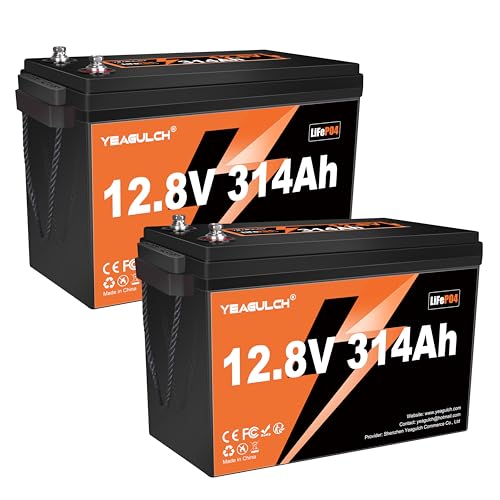
yeagulch 12V 314Ah LiFePO4 Battery Duo

SUNER POWER Waterproof 50W 12V MPPT Solar Maintainer PRO
The Strengths Of Each Pick
A 200Ah lithium battery offers substantial storage without the bulk associated with many lead-acid banks, making this model relevant to cruisers with several household loads. Its Group 31-oriented format appears useful in tighter compartments, although a dry fit should always precede final installation.
Bluetooth monitoring is the distinguishing convenience here, allowing you to check battery status from a compatible device instead of making repeated physical inspections. Compared with Power Queen’s 100Ah Group 31 option, it doubles the nominal capacity while adding remote visibility.
What Stands Out
- 200Ah capacity supports refrigerators, electronics, lighting, and other 12V loads.
- Compact lithium construction reduces weight and eases battery-room handling.
- Bluetooth monitoring improves awareness during multi-day trips.
Points To Note
- Physical dimensions and terminal clearance deserve checking in a narrow Group 31 tray.
- Secure mounting and terminal corrosion monitoring remain necessary in a humid marine compartment.
Quick Facts
Built With In Mind
This battery suits cruisers managing substantial 12V loads in a confined Group 31-style installation.
A Better Fit Elsewhere
Power Queen 12V 100Ah Group 31 LiFePO4 suits owners who prioritize a familiar footprint over maximum stored capacity.
Despite appearing in a battery roundup, this is a solar charger and maintainer rather than an energy-storage battery. It transfers energy from a compatible panel into a 12V battery, a distinction that matters before you add it to a boat system.
The 20W format favors a small panel and routine top-ups for electronics or a start battery. It makes more sense for a small runabout than for powering an air conditioner or a substantial cabin load through an extended cloudy stretch.
Noteworthy Benefits
- The waterproof enclosure suits exposed cockpit or deck panel installations.
- MPPT control tracks changing panel output more effectively than a basic connection.
- Twenty watts offers a manageable starting point for panel-limited maintenance.
Minor Gripes
- Twenty watts will replenish large loads slowly during long overcast periods.
- It maintains a battery but does not add usable onboard storage capacity.
- Owners still need secure wiring and weather-conscious cable routing.
At A Glance
Made For
Small-boat owners seeking a compact maintainer for a modest 12V panel are the strongest match.
Swap It Out When
LiTime 12V 50Ah Trolling Motor LiFePO4 Battery is a better fit when you need stored power rather than panel maintenance.
Moving from the 20W model to 30W gives a weekend cruiser more charging headroom without requiring the highest-output option in the group. That middle position can be useful on boats with a modest solar array and a battery that sees regular discharge.
The MPPT controller, which adjusts collection from variable panel output, remains important in bright reflections and changing cloud cover. You still need a suitably sized panel, and the charger itself should not be mistaken for a bank of stored energy.
What Earns Its Place
- Thirty watts provides a useful middle tier between 20W and 50W models.
- Waterproof construction supports routine exposure in marine environments.
- MPPT control supports efficient collection from a compatible 12V solar panel.
Practical Considerations
- Actual replenishment time depends on panel size, sunlight, wiring, and battery condition.
- Your installation needs dependable electrical connections protected from moisture and chafe.
Right Fit For
Weekend cruisers with a small solar array and moderate 12V battery maintenance needs fit this profile well.
Look Elsewhere When
SUNER POWER Waterproof 20W 12V MPPT Solar Maintainer PRO makes more sense for a smaller panel and lighter maintenance demand.
Group 31 familiarity makes the Power Queen battery appealing when you are replacing lead-acid without redesigning an entire battery tray. The 100Ah rating offers a balanced starting point for lights, electronics, charging devices, and moderate accessory loads during a trip.
Compared with Litime’s 200Ah Mini battery, this option carries less nominal capacity, but that trade can simplify handling and installation in confined spaces. Depending on your live loads, one battery may suit weekend use while a larger bank serves extended cruising.
A Strong Showing
- Group 31 format supports familiar replacement planning.
- 100Ah capacity fits many common cabin and electronics loads.
- LiFePO4 chemistry is well aligned with recurring solar-cycling use.
Where It May Fall Short
- A single 100Ah battery may be undersized for high-draw systems or prolonged off-grid operation.
- Confirm physical dimensions, terminal position, ventilation, and retention hardware before installation.
Feature Snapshot
Who Will Love This
Boat owners replacing a Group 31 lead-acid bank with moderate overnight loads will appreciate the familiar layout.
Another Choice May Suit
Litime 12V 200Ah Mini LiFePO4 Bluetooth Battery suits cruisers needing more stored capacity and remote monitoring.
A 50Ah trolling battery targets the practical overlap between propulsion and electronics rather than a cabin-sized energy bank. It makes sense for center-console anglers who need dependable motor current while keeping a fish finder, shallow-water lights, or navigation electronics active.
The stated 11.27-pound weight improves portability between the boat and shore storage. Its 60A continuous discharge rating is intended to support peak trolling-motor thrust for short periods, though motor draw and runtime still need to be checked against your setup.
Why It Works Well
- Low weight simplifies carrying and seasonal storage.
- The 60A discharge rating supports demanding trolling-motor use.
- A 50A BMS manages charging and discharge safeguards.
Small Caveats
- Capacity is modest for refrigerators, inverters, or other sustained high-draw loads.
- Low-temperature charging protection can limit charging during cold conditions.
- Use secure straps and corrosion-conscious terminals in a wet marine environment.
Core Details
Who Should Grab It
Anglers needing portable trolling power for a fish finder and modest marine electronics should give it serious consideration.
Reach For A Different Pick When
Power Queen 12V 100Ah Group 31 LiFePO4 better serves boats with broader cabin loads and a Group 31 tray.
Two 314Ah batteries create a high-capacity option for larger boats where refrigeration, lighting, water systems, and electronics operate together. Each battery carries 4,019Wh, so the pair offers the storage needed for substantial off-grid routines, provided your charging system can replenish both units.
The built-in 200A BMS handles core electrical safeguards and includes high-temperature charging protection. Those protections add confidence, but the size, weight, ventilation, and secure retention of the pair will shape your installation more than the headline capacity.
A Few Strong Suits
- Large capacity supports multiple household loads on larger cruisers.
- Each 4,019Wh battery provides substantial energy storage.
- The 200A BMS adds overcharge, overdischarge, overcurrent, short-circuit, and temperature safeguards.
Practical Considerations
- Two large batteries require careful handling, ventilation, and secure retention.
- Your solar controllers and alternator charging must be sized for the larger bank.
- Weight distribution matters more than with a compact Group 31 installation.
The Right Fit
Owners of larger boats with sustained cabin loads and substantial storage requirements are the natural match.
Where A Sibling Pick Shines
Litime 12V 200Ah Mini LiFePO4 Bluetooth Battery is easier to manage in a single compact Group 31-oriented location.
The 50W model offers the highest charger output in this group, making it relevant to boats with a larger 12V solar array and more frequent battery discharge. It replenishes a compatible battery faster than the 20W and 30W versions, subject to sunlight and panel conditions.
MPPT control adjusts collection as available light changes, while the waterproof enclosure suits exposed marine placement. Even so, a 50W controller cannot restore energy overnight and remains separate from the storage bank it serves.
Where It Helps
- Fifty watts provides useful charging headroom for larger solar installations.
- MPPT tracking responds to changing panel output.
- Waterproof construction supports demanding exterior environments.
Trade Offs
- It requires a suitably capable panel and correctly sized wiring.
- High-demand appliances still call for substantial battery capacity.
- Salt-laden hardware needs periodic cleaning and secure connection checks.
Feature Facts
Best Suited To
Solar-equipped cruisers with a larger panel and frequent 12V battery cycling benefit most from the added output.
Consider Something Else When
SUNER POWER Waterproof 20W 12V MPPT Solar Maintainer PRO is more proportionate to a small panel.
Matching Marine Energy Storage To Your Electrical Load
Capacity Comes From Measured Demand
Start with your actual electrical load rather than the largest battery that fits. List refrigerators, lights, pumps, electronics, inverters, and charging requirements, then estimate how long each must operate away from shore power. A weekend trip may need far less storage than a week of liveaboard cruising.
Weight Affects Handling And Balance
Lithium chemistry can reduce weight compared with equivalent lead-acid banks, but larger capacities remain heavy. Position batteries low and near the boat’s structural centerline, then confirm tray strength, terminal clearance, ventilation, and strap security. A physically compact battery can still be difficult to carry onto a vessel.
Charging Must Match The Bank
MPPT stands for maximum power point tracking, an electronic approach that adjusts collection as sunlight changes. Your controller, solar panels, and battery bank need compatible charging voltages and current levels. A maintainer replenishes stored energy, while a battery stores it, so these components solve different parts of the system.
Marine Installation Demands Care
Salt, spray, vibration, and interrupted charging can affect connections over time. Use corrosion-resistant hardware suitable for your electrical layout, secure cables away from sharp edges, and inspect terminals regularly. Confirm battery dimensions and terminal orientation before ordering because Group 31 descriptions do not guarantee identical cases across all models.
Solar Charging Details That Matter
Mistakes Worth Dodging
Choosing a charger only by wattage can leave a large panel undersized or a small battery exposed to excessive charging demand. Match controller voltage to the battery chemistry, use wiring appropriate for the current and distance, and avoid treating a trickle maintainer as a substitute for adequate storage.
What Separates Premium From Basic
MPPT control, Bluetooth monitoring, temperature protection, and greater usable capacity address distinct ownership needs. The upgrade pays off when your panel, wiring, loads, and installation can use those capabilities. Simpler equipment may remain sensible for a modest panel and occasional top-up.
Frequently Asked Questions For Batteries For Solar On A Boat
Are LiFePO4 batteries suitable for boat solar systems?
LiFePO4 chemistry fits many 12V solar installations because it supports deep cycling and has a stable operating profile. You still need a compatible solar controller, correct wiring, secure mounting, and attention to temperature conditions.
How much battery capacity does a boat need?
Required capacity depends on your live loads and hours spent away from shore power. Calculate the total daily consumption, multiply it by your expected runtime, and allow additional capacity for cloudy weather and battery aging.
What size solar charger works on a boat?
Choose a 12V charger that matches your panel’s rated output and battery chemistry. Larger chargers add replenishment speed, but panel size, wiring losses, temperature, and available sunlight determine real-world performance.
Can solar power run a refrigerator on a boat?
Yes, with enough stored energy and suitable charging capacity. Compare the refrigerator’s running draw with your battery bank, and account for compressor cycles, panel exposure, and several days of poor weather.
Should solar batteries be wired in series or parallel?
Series wiring raises system voltage, while parallel wiring increases current capacity at the same nominal voltage. Follow the battery manufacturer’s connection instructions and ensure every battery uses the same chemistry, capacity, age, and state of charge.
Final Verdict
The right choice depends on whether you need stored energy or a solar maintainer. Compact cruisers benefit from a Group 31 lithium battery, anglers may prioritize the lighter trolling option, and larger vessels need more capacity plus properly sized charging. Measure your loads, inspect the installation space, and match the entire system before heading offshore.
