


Solar-energy projects rarely fail because of one dramatic component. More often, the mismatch sits in the details: undersized wiring, storage that cannot handle sustained discharge, or a rechargeable AA that gives up during cold weather. This lineup covers both storage batteries and supporting equipment for portable panels, off-grid systems, RVs, and home backup. Pay attention to voltage, capacity, connection type, and cold-weather needs, because the most capable storage battery is still the wrong choice for a controller setup.
A Quick View Of The Lineup

Panasonic Eneloop 4th Generation 8-Pack AA NiMH Pre-Charged Rechargeable Batteries with Holder

Renogy 20FT 12AWG Solar Extension Cables and 10A PWM Controller

ECO-WORTHY 12V 314Ah LiFePO4 Bluetooth Solar Battery with 200A BMS and Low-Temperature Protection

ECO-WORTHY EnergyRock 12V 280Ah Two-Pack LiFePO4 Metal-Case Bluetooth Batteries

Ofuray Of-11000W 192-LED Solar Street Light

ECO-WORTHY 12V 280Ah Metal-Case LiFePO4 Bluetooth Battery with 200A BMS and Low-Temperature Protection
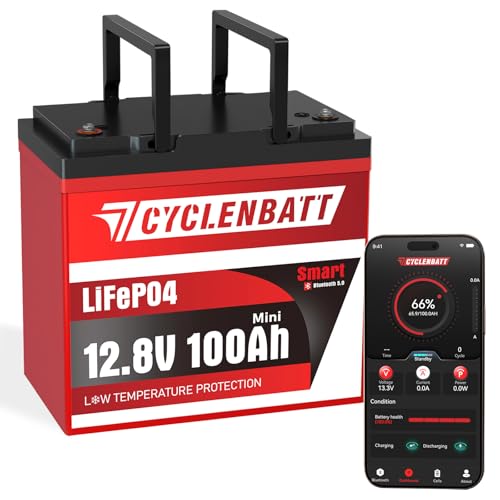
CYCLENBATT 12V 100Ah Mini LiFePO4 Battery
A Breakdown Of The Leading Choices
These cells suit the small electronics surrounding a solar setup, including compatible battery-powered controllers, sensors, and household devices. NiMH means nickel-metal hydride chemistry, which offers a practical rechargeable alternative to disposable alkaline cells. The eight-cell pack and included holder make swapping and storage easier, although it stores relatively little energy for a home.
For outdoor monitoring projects or a garage full of rechargeable tools, the cold-temperature capability is more relevant than raw solar capacity. The listed operating range reaches -20°C, so these batteries fit more seasonal conditions than many ordinary rechargeable cells, assuming the charger and device also tolerate the cold.
Standout Benefits
- Eight pre-charged AA cells reduce the inconvenience of a separate initial setup.
- The stated 2,100-recharge cycle figure supports repeated daily use over several years.
- Cold operation makes the pack useful for garage tools and outdoor electronics in winter.
- The holder keeps eight loose cells organized during travel or field maintenance.
- Low self-discharge characteristics make intermittent use more practical.
Small Caveats
- AA capacity is far below that of LiFePO4 storage, so it cannot power a house.
- Charging below freezing can damage cells unless the charger has cold-weather handling.
Key Specs
Made For
You need dependable rechargeable AA power for small electronics, tools, or monitoring equipment rather than whole-home energy storage.
Another Choice May Suit
CYCLENBATT 12V 100Ah Mini LiFePO4 Battery offers substantially more stored energy for a remote cabin or solar lighting system.
This is a wiring-and-control package rather than a storage battery, so it serves a different role from the Eneloop cells and LiFePO4 systems below it. The 20-foot 12 AWG cable pair links a compatible solar panel to a controller, while the 10-amp PWM controller regulates panel output. PWM, or pulse-width modulation, varies charging pulses to match a battery’s needs.
The combined package suits a small shed, gate, or portable panel where a longer cable run and a basic status display are useful. For a larger residence, the 10-amp limit leaves little room for expansion, so a larger controller may fit your array better.
Everyday Perks
- Male and female panel connectors simplify the panel-to-controller connection.
- Twenty feet of 12 AWG cable reduces the need for a custom extension run.
- The controller display provides a basic view of operating status.
- Sunlight-resistant wire suits exposed installations around yards and sheds.
Points To Note
- You still need a separate battery unless the controller listing includes one.
- Polarity must match exactly, and exposed conductor ends need proper termination and weather sealing.
- The 10-amp controller is modest for a large panel bank.
Feature Snapshot
Right Fit For
You are assembling a compact 12V or 24V solar project and need both extension wiring and a straightforward charge controller.
A Better Fit Elsewhere
ECO-WORTHY 12V 280Ah Metal-Case LiFePO4 Bluetooth Battery is the better fit for storing substantial energy after daytime collection.
The 314Ah rating makes this the highest single-battery capacity in the lineup, a meaningful difference for an RV or off-grid system that spends cloudy days away from the panels. LiFePO4 chemistry stores more usable energy across repeated cycles than typical lead-acid alternatives. You still need to match the battery’s charge and discharge limits to your inverter, controller, and cable size.
Bluetooth monitoring and SOC LEDs are useful because they reveal remaining charge without carrying a separate meter to the battery compartment. SOC means state of charge, a basic operating estimate. The 200A BMS, or battery management system, monitors cell conditions and helps protect the pack from unsuitable voltage, current, and temperature conditions.
What Pays Off
- The 314Ah capacity reduces the number of batteries needed for a large storage target.
- Bluetooth monitoring makes battery checks more convenient from inside a trailer or cabin.
- Status LEDs provide a quick visual indication during routine inspections.
- Low-temperature protection matters for storage in unheated RVs and sheds.
- The 200A BMS provides a high stated current-management envelope for demanding loads.
Practical Considerations
- Its weight makes installation and secure anchoring important in a moving vehicle.
- A single 12V unit may not provide enough voltage for common inverter inputs.
Core Details
Built With In Mind
You run a substantial 12V load from an RV, cabin, or off-grid property and need one high-capacity battery with remote monitoring.
Where A Sibling Pick Shines
ECO-WORTHY EnergyRock 12V 280Ah Two-Pack LiFePO4 Metal-Case Bluetooth Batteries better serves setups that favor a matched pair and more flexible power routing.
Two 280Ah batteries give you more routing options than the single 314Ah model, particularly for systems designed to divide loads across separate banks. Each battery also retains the 12V nominal architecture, Bluetooth monitoring, low-temperature protection, and a 200A BMS. That makes this package appealing for travel trailers and cabins where redundancy during maintenance may matter.
The newer metal enclosure replaces the earlier plastic housing and adds structural rigidity plus better heat resistance. For most mobile installations, the two-battery format is the meaningful trade-off: capacity is excellent, but the combined weight and larger wiring job can be substantial.
A Strong Showing
- Two batteries permit balanced series or parallel configurations, subject to proper wiring.
- The metal case offers more rugged construction for vibration-prone RV or trailer use.
- Bluetooth monitoring reduces the need to access each battery compartment.
- Low-temperature protection supports storage in cooler conditions.
Worth Bearing In Mind
- Series and parallel layouts require correct fusing, cable sizing, and matched charge settings.
- Owners commonly need to plan around battery weight before selecting a mounting location.
- Two label styles may arrive, although the internal design is stated to be the same.
Who Will Love This
You want two coordinated 12V batteries for a trailer, small cabin, or backup system and value a metal enclosure over the highest possible single-unit capacity.
Reach For A Different Pick When
ECO-WORTHY 12V 314Ah LiFePO4 Bluetooth Solar Battery fits you better when minimizing the battery count and simplifying the installation matter most.
Unlike the storage batteries elsewhere in this list, this solar street light is a self-contained lighting system. Its 30,000mAh internal battery, 192 LEDs, and three operating modes target driveways, paths, yards, docks, and similar outdoor areas. The listed double-sided beam is designed to spread illumination across a broad area rather than focus on one narrow point.
For a fence, gate, or driveway far from an electrical outlet, removing the need for buried cable is the main attraction. Runtime still depends on available sunlight, operating mode, and how often the motion or dusk sensor activates the lamp, so frequent winter use may require a panel positioned away from shade.
Where It Helps
- Solar charging removes routine wiring across a long driveway or yard.
- Three modes let you balance brightness, coverage, and operating time.
- The 240-degree beam design reduces the number of fixtures needed along a path.
- The 30,000mAh internal battery supports extended operation between dark periods.
Things That May Matter
- The headline wattage should not be treated as a conventional household-lighting output measure.
- Panel placement, dirt, snow, and seasonal shade can materially affect runtime.
- Fixed outdoor installation requires a secure pole or wall location.
Technical Highlights
Made For
You need independent nighttime lighting along a driveway, path, yard, or dock where running electrical cable would be inconvenient.
Consider Something Else When
Renogy 20FT 12AWG Solar Extension Cables and 10A PWM Controller better fit a project requiring wired lighting or a battery connected to a larger solar system.
The 280Ah capacity sits between the 100Ah CYCLENBATT and the 314Ah ECO-WORTHY model, giving you a capable middle ground for an RV, camper, or trolling motor circuit. Its metal case improves structural strength and heat resistance compared with a lightweight plastic enclosure. The Bluetooth connection adds remote monitoring, while the status controls make a trailer-mounted battery more convenient to manage.
Compared with the EnergyRock two-pack, this single-battery version keeps the installation lighter and wiring simpler. It may still be a substantial load to lift into a battery box, and the listed 3,584Wh maximum figure should be checked against the inverter, charger, and other loads before installation.
The Case For It
- 280Ah offers useful runtime without doubling the physical battery count.
- The metal enclosure suits vibration and heat exposure in mobile power systems.
- Bluetooth monitoring supports convenient remote charge checks.
- The 200A BMS handles high-current management for demanding applications.
- Low-temperature protection adds value in seasonally cold locations.
Potential Drawbacks
- Weight and mounting space can be restrictive in compact travel trailers.
- One 12V battery may not match the voltage required by a larger inverter.
The Right Fit
You need one high-capacity 12V battery for a camper, RV auxiliary system, or trolling motor setup and prefer a metal enclosure.
Swap It Out When
CYCLENBATT 12V 100Ah Mini LiFePO4 Battery is the more manageable option for a small boat, weekend cabin, or installation where 100Ah is enough.
The 100Ah rating makes this the most approachable storage capacity here, especially for a small boat, weekend cabin, garage, or modest RV circuit. It provides enough energy for lights, electronics, and selected appliances without the installation weight of the 280Ah and 314Ah options. LiFePO4 chemistry also suits repeated solar charging, where a deeper cycle would be less practical with older battery types.
Bluetooth monitoring and low-temperature protection are useful additions for a battery installed away from living space. Keep the charge profile compatible with the controller, and treat the stated discharge rating as a maximum rather than a target for continuous heavy loads.
A Favorable Mix
- 100Ah provides a practical starting capacity for small solar systems.
- Bluetooth monitoring helps you check operating status without direct access.
- Low-temperature protection suits cool basements, garages, and seasonal cabins.
- The mini format is easier to accommodate than larger high-capacity models.
Trade Offs
- Runtime will be limited compared with the 280Ah and 314Ah options.
- You may need a second battery for loads that exceed the first unit’s practical capacity.
Essential Details
Best Suited To
You are beginning a compact solar project for a boat, cabin, garage, or weekend trailer and need manageable LiFePO4 storage.
Not Your Match When
ECO-WORTHY 12V 314Ah LiFePO4 Bluetooth Solar Battery is the better fit for a larger system that needs more runtime from fewer battery units.
Building A Solar Battery System That Fits
Start With The Load
A solar battery’s job is to deliver stored energy after the panels stop producing power. Calculate the devices you plan to run, their power draw, and how long they must operate without sunlight. A 100Ah battery may be sufficient for lights and small electronics, while household loads can require several hundred amp-hours and a suitably sized inverter.
Match Voltage Before Capacity
Most portable solar projects run at 12V, although larger installations often use 24V or 48V. A 12V battery is not automatically compatible with a 48V inverter, and connecting several batteries in series changes the system’s voltage. The nominal voltage, charger range, and inverter input must all line up before you focus on capacity.
Look At Discharge And Protection
A battery management system, or BMS, monitors charging, discharge, and temperature inside a lithium battery. The stated 200A rating on the larger ECO-WORTHY models describes the management system’s current capability, not a promise that every connected device should draw that much continuously. Cable thickness, fusing, ventilation, mounting, and weight remain part of the real design.
Consider The Environment
Low-temperature protection matters in unheated RVs, garages, sheds, and remote cabins. It manages charging conditions but does not make a battery immune to cold storage. During installation, follow the cell manufacturer’s charging guidance and keep terminals clean, dry, and tightly connected.
Practical Details Before Installation
Pitfalls First Timers Fall Into
Many first-time solar projects begin with a battery large enough for a house, then discover that the inverter, cables, or mounting structure cannot support it. Match the battery to the actual load list, and do not treat a 12V product as a drop-in replacement for a higher-voltage system.
What The Extra Money Goes Into
Larger LiFePO4 batteries add capacity, metal enclosures, Bluetooth monitoring, and more substantial current management. Those additions can be worthwhile for an RV or cabin that needs extended runtime, while a small lighting or electronics circuit may be better served by a 100Ah unit or a complete street-light kit.
Frequently Asked Questions
Can I use a 12V battery in a 24V system?
You can connect two compatible 12V batteries in series, but the resulting pack becomes 24V. Confirm that the charger, inverter, and controller support that voltage.
Are AA batteries enough for a solar power system?
AA NiMH cells are useful for compatible small electronics and accessories. They are not practical for powering a home, RV, or major household circuit.
How much capacity do I need?
Your required capacity depends on the load, desired runtime, inverter efficiency, and available panel output. Start with a daily energy calculation rather than choosing a battery solely from its amp-hour rating.
Do LiFePO4 batteries work in cold weather?
The listed low-temperature protection helps manage charging conditions in cold environments. You should still follow the manufacturer’s storage and charging guidance, especially below freezing.
Final Thoughts
The right choice depends on the system, not simply the largest number on the label. Use the Renogy kit for panel wiring and basic control, the Eneloop cells for compatible electronics, and the LiFePO4 options for stored power. The 100Ah model keeps small projects manageable, while the 280Ah and 314Ah options serve more demanding off-grid, RV, and home-backup loads.
