


A compact solar system still needs storage that fits its enclosure, charge controller, and expected load. That matters most for RV upgrades, compact cabins, garden equipment, alarms, and portable DIY projects where a full-size battery can consume valuable space. This roundup compares lithium and lead-acid options by capacity, enclosure, monitoring features, and physical fit.
The Picks In Brief

Redodo 12V 320Ah Mini LiFePO4 Battery, Bluetooth
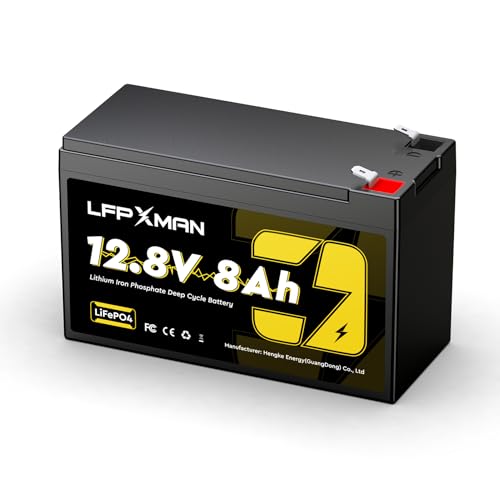
LFPXMAN 12V 7.5Ah LiFePO4 Battery

ECO-WORTHY 12V 314Ah LiFePO4 Battery, Bluetooth

ECO-WORTHY EnergyRock 12V 280Ah 2-Pack LiFePO4 Battery

ECO-WORTHY 12V 280Ah Metal-Case LiFePO4 Battery

Energizer EN9-12 12V 9Ah AGM Rechargeable Battery

Retisee 30-Piece Mini Polycrystalline Solar Panels
Inside Each Recommended Option
High storage capacity matters in an RV, yet enclosure size often decides whether a battery is practical. The Redodo combines a 12V 320Ah rating with a compact lithium iron phosphate, or LiFePO4, design for tighter installations.
Bluetooth monitoring gives you another way to check operating information without reaching into the compartment, which is useful during travel or routine campsite maintenance. Compared with LFPXMAN 12V 7.5Ah LiFePO4 Battery, capacity is the decisive difference, although weight and charging requirements still deserve attention.
Why It Works Well
- The 320Ah capacity supports substantially more stored energy than small SLA-style replacements.
- A reduced footprint preserves storage around RV battery compartments.
- Bluetooth monitoring simplifies routine status checks during travel.
- LiFePO4 chemistry suits repeatable charging and deep-cycle applications.
Practical Considerations
- Confirm terminal position, cable clearance, and ventilation before installation.
- The higher capacity may be unnecessary for a single low-draw circuit.
Feature Snapshot
Made For
RV owners and mobile-power hobbyists benefit most when compartment space is tight but usable capacity remains important.
A Better Fit Elsewhere
The LFPXMAN 12V 7.5Ah LiFePO4 Battery suits compact projects with a much smaller energy requirement.
Small solar projects often need less power than an RV battery compartment can accept. This LFPXMAN model targets the lower end of the range with a 12V 7.5Ah format intended as a rechargeable alternative to a 12V 7Ah sealed lead-acid battery.
For a garden controller, small sensor array, or compact backup project, that lower rating can be easier to manage than a 280Ah or 320Ah pack. You still need to verify physical dimensions and connector compatibility, because similar amp-hour ratings do not guarantee identical cases.
Positive Takeaways
- The 7.5Ah capacity suits small, continuously operating solar projects.
- A built-in battery management system, or BMS, monitors charging and discharge conditions.
- LiFePO4 construction avoids the electrolyte servicing required by flooded lead-acid batteries.
- The sealed format suits installations where spill resistance and low maintenance matter.
Things To Consider
- It offers far less usable capacity than the Redodo 12V 320Ah Mini LiFePO4 Battery.
- Replacement requires exact case, terminal, and charge-controller compatibility.
- A low charge rate means the battery drains relatively quickly under sustained loads.
Built With In Mind
Beginners building small solar controls and low-power DIY projects benefit from its manageable capacity and protected construction.
Another Choice May Suit
The Energizer EN9-12 12V 9Ah AGM Rechargeable Battery better serves alarm systems already designed around sealed lead-acid batteries.
A home-backup system needs more than raw capacity; you also want a clear view of remaining charge. The ECO-WORTHY 12V 314Ah model combines a 4,019Wh energy rating, Bluetooth connectivity, and LED indicators for state of charge, meaning the displayed battery level.
Low-temperature protection is useful for seasonal installations, although charging behavior in cold conditions still deserves attention. Compared with the Redodo 12V 320Ah Mini LiFePO4 Battery, this option offers similar capacity with a more explicit monitoring interface.
What Stands Out
- The 314Ah rating provides 4,019Wh of nominal stored energy at 12V.
- LED indicators give an immediate visual reading of battery level and status.
- Bluetooth adds remote monitoring for stationary off-grid systems.
- A 200A BMS protects and manages high-current battery operation.
- Low-temperature protection adds relevance for cold-climate storage use.
Small Caveats
- Its size and weight may challenge a genuinely small cabinet.
- Capacity alone does not determine suitability for surge-heavy inverters.
Quick Facts
Who It Suits Best
Homeowners with fixed off-grid storage and monitoring needs benefit most from this capacity-and-control combination.
Where Another Pick Shines
RV travelers needing a smaller enclosure may prefer the Redodo 12V 320Ah Mini LiFePO4 Battery.
Matched batteries can simplify planning because each unit uses the same chemistry and rating. The EnergyRock pair provides two 12V 280Ah batteries, giving the setup a combined nominal energy rating of 7,168Wh before considering inverter limits and wiring losses.
Metal housings add structural and thermal considerations to the package, while Bluetooth and low-temperature protection support mobile use. Unlike the single-battery Redodo pick, this set suits projects where redundancy or additional storage matters more than minimizing total weight.
What Helps Most
- Two matched 280Ah batteries support larger storage requirements.
- Metal cases suit installations that value a rigid enclosure.
- Bluetooth monitoring supports troubleshooting away from the battery cabinet.
- Low-temperature protection is relevant for RV and seasonal storage.
- The built-in 200A BMS helps manage discharge and charging protection.
Details To Watch
- Two batteries require a suitable inverter, cable sizing, and ventilation plan.
- Shipping can include either of two exterior label styles with matching internal specifications.
Feature Facts
The Right Fit
Homeowners and serious RV hobbyists benefit when a larger, matched storage bank justifies added weight and wiring.
Look Elsewhere When
Compact-system owners should consider the Redodo 12V 320Ah Mini LiFePO4 Battery for its single-unit footprint.
The single-battery route keeps installation simpler than a matched pair while retaining substantial 3,584Wh of nominal energy. Its metal case, Bluetooth connection, and 200A BMS make it a practical middle ground for campervan, trolling-motor, and fixed solar installations.
A low-current power switch provides a local way to disconnect the battery, which can help during maintenance. The enclosure still needs secure mounting and cable strain relief, particularly in a moving camper or trailer.
What Pays Off
- The 280Ah rating delivers 3,584Wh of nominal energy.
- A metal enclosure favors structural rigidity and heat resistance.
- Bluetooth provides convenient remote operating information.
- A local power switch supports controlled shutdown during maintenance.
Trade-Offs To Consider
- Some installations may need two batteries, depending on load and inverter requirements.
- Low-temperature protection does not remove the need for temperature-aware charging.
Technical Reference
Made For
Campervan owners and marine-power hobbyists benefit when one high-capacity battery balances storage and installation complexity.
Swap It Out When
Your profile calls for a smaller 7.5Ah pack, making the LFPXMAN 12V 7.5Ah LiFePO4 Battery a closer fit.
Not every small solar system benefits from a large lithium battery. Alarm panels, scooters, and compact backup circuits often use sealed lead-acid architecture, making the Energizer EN9-12 a more familiar 12V 9Ah option.
AGM means absorbent glass mat, a sealed lead-acid design that recombines internal gases and eliminates routine electrolyte servicing. The trade-off is size and weight relative to many LiFePO4 batteries, but that format may be easier for existing equipment to support.
What Works In Its Favor
- The sealed AGM design supports low-maintenance standby operation.
- A 9Ah rating fits many alarm and small backup applications.
- The lead-acid format aligns with common 12V charging systems.
Points To Keep In Mind
- It stores much less energy than the high-capacity lithium options.
- Lead-acid chemistry is heavier for a similar physical footprint.
- Age and prolonged deep discharge can shorten practical service life.
At A Glance
Who Will Love This
Owners maintaining conventional alarm or scooter charging systems benefit from its familiar sealed lead-acid format.
Reach For A Different Pick When
Solar projects needing deeper cycling and greater energy density suit the ECO-WORTHY 12V 280Ah Metal-Case LiFePO4 Battery better.
These tiny solar cells serve a different role from storage batteries. Each Retisee panel provides up to 0.30W at 5V and 60mA, making the 30-piece set more relevant to small outdoor models, decorative projects, and experiments than household energy storage.
Polycrystalline cells convert available sunlight into electrical power, but output changes with placement and exposure. In our view, the set is most useful when you need several small surfaces rather than one meaningful charging surface.
Noteworthy Benefits
- Thirty cells offer flexible placement across several small models.
- The flexible format follows curved hobby surfaces more easily.
- A 5V output suits certain miniature electronics and craft circuits.
Where It Is Less Suited
- Each panel produces no more than 0.30W under its rated conditions.
- These panels do not replace a rechargeable battery in a storage system.
- Outdoor placement requires dry connections and careful cable routing.
Best Suited To
Hobbyists building miniature solar models or low-current demonstrations benefit most from the multi-panel set.
Skip It When
Your profile calls for actual off-grid storage, making the LFPXMAN 12V 7.5Ah LiFePO4 Battery a more relevant component.
Choosing Storage That Fits Your System
Capacity and load
Amp-hour rating measures charge capacity, while watt-hours combine voltage and capacity into stored energy. Start with the loads you expect to run, then add room for converter losses and future expansion. A large battery remains useful only when your solar production, inverter, and wiring can support it.
Chemistry and cycling
LiFePO4 batteries typically provide greater usable capacity by weight than lead-acid alternatives and suit frequent deep cycling. AGM batteries remain practical for small standby loads and conventional alarm equipment. Match the chemistry to the controller, charging profile, and equipment you already own.
Physical fit and monitoring
Measure the compartment before ordering, including terminals, cable bends, ventilation, and mounting clearance. Bluetooth and LED status displays make maintenance easier, but the case size and connection layout still determine fit. Larger systems benefit from matched batteries, while a single compact unit simplifies wiring.
Practical Solar Storage Decisions
Mistakes Worth Dodging
Many compact installations fail at the planning stage, not during operation. Choosing capacity from a panel’s maximum output alone overlooks cloudy periods and inverter losses. Verify terminal layout, charge-controller voltage, and BMS current ratings before installation.
What Separates Premium From Basic
Higher-capacity models add energy, stronger management systems, remote monitoring, and rigid enclosures. Those features suit frequent-use systems, but a small sensor or standby load does not need the same storage. Pay for additional capacity only when your load calculation supports it.
Frequently Asked Questions
How much battery capacity does a small solar system need?
Capacity depends on the daily load, sunlight availability, and desired reserve time. Calculate the watt-hours used each day and size the battery bank with suitable charging margin.
Is LiFePO4 better than AGM for solar storage?
LiFePO4 usually offers better usable capacity by weight and performs well through repeated cycles. AGM can suit smaller standby systems and existing lead-acid equipment with fewer compatibility concerns.
Can a small solar panel charge a large battery?
Panel output must match the battery’s charging requirements and expected energy demand. A large battery may take many hours to recharge with a small panel.
Do all 12V batteries fit the same setup?
No. Voltage alone does not guarantee compatibility with the case, terminals, cable sizes, or charge controller. Confirm dimensions and connection requirements before purchase.
Can Retisee mini panels replace solar batteries?
No. They generate limited power rather than storing energy for later use. A rechargeable battery remains necessary for operation after sunlight is unavailable.
Final Thoughts
The right small-system battery balances usable capacity, physical fit, charging compatibility, and monitoring. Redodo serves space-conscious RV setups, LFPXMAN fits smaller DIY loads, and the ECO-WORTHY models cover higher-capacity solar and mobile applications. Choose from the power your equipment actually needs, not simply the largest available rating.
