


A semi-truck battery does more than turn an engine: it supports lighting, electronics, climate controls, and safety systems through long shifts and demanding weather. Portable boosters help during roadside emergencies, while remote terminals make crowded engine compartments easier to service. You need the right electrical match, secure fit, and enough cold-starting support, not merely the largest number on a label.
The Essentials At A Glance

HQST 12V 60Ah AGM Car Battery Group 47 H5 680CCA Start-Stop

CAT797 12V/24V Heavy-Duty Truck Jump Starter 30000A Peak
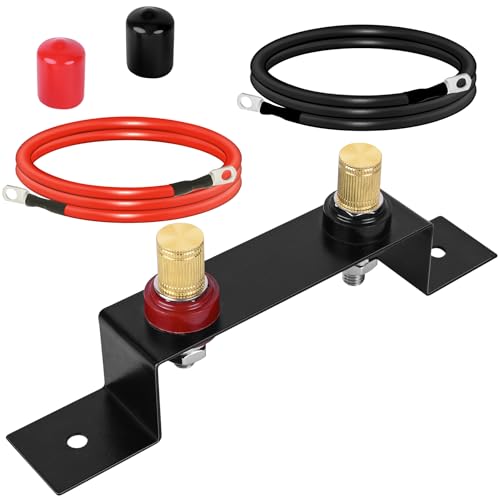
Kikerike Battery Relocation Kit Remote Terminals Bracket Cable

ODUKAKO DM1264 Semi Truck Jump Starter 12V 30000A Peak

ODUKAKO DM2464 24V Heavy-Duty Jump Starter 15000A Peak

Relistart Group 47 H5 12V 60Ah AGM Car Battery 680CCA

UPLUS BCI Group 48 AGM-L70-M 12V 70Ah Battery 760CCA
What Each Pick Brings To The Table
The HQST uses AGM construction, where electrolyte is held in glass-fiber mats rather than loose liquid. That sealed design reduces routine watering and suits vehicles that repeatedly shut the engine off during city driving, although the Group 47 case still needs confirmation against your semi-truck’s battery tray.
Cold cranking amps, abbreviated CCA, measure starting output under specified conditions. Its 680 CCA rating gives cold-weather fleets a clear benchmark, but size and terminal placement remain the decisive checks for an installation.
Bright Spots
- The 680 CCA rating supports dependable cold-weather cranking.
- AGM construction suits start-stop electrical cycling.
- Its 60Ah capacity provides useful starting and accessory support.
- The compact Group 47 format fits compatible light-vehicle applications.
Things To Consider
- Many Class 8 tractors use other battery configurations.
- Terminal position and hold-down clearance require direct comparison.
- AGM batteries still benefit from secure mounting and clean terminals.
Key Specs
Made For
You benefit most with a compatible start-stop truck or light commercial vehicle using a Group 47 battery tray.
Look Elsewhere When
Choose ODUKAKO DM2464 instead for a dedicated 24V recovery tool rather than an installed starting battery.
Portable emergency power changes the ownership equation: you can recover a truck away from a shop instead of arranging immediate roadside assistance. The CAT797 covers both 12V and 24V systems, making it more adaptable than the dedicated ODUKAKO DM1264 reviewed later.
Its stated 30,000A peak output looks dramatic, yet the lower sustained output and connection procedure matter more during repeated starts. For long-haul operators, that flexibility is the genuinely useful feature.
What Works In Its Favor
- 12V and 24V coverage suits mixed fleets.
- Portable format supports roadside recovery.
- A 30,000A peak rating targets demanding Class 8 starts.
- Listed cold-weather operation reaches down to minus 40°F.
Minor Gripes
- The broad voltage claim requires careful terminal identification.
- Recharge the unit promptly to preserve lithium battery life.
- Peak output does not guarantee sustained performance.
Feature Snapshot
Right Fit For
Long-haul operators carrying both 12V and 24V equipment get the broadest roadside recovery coverage here.
A Better Fit Elsewhere
ODUKAKO DM1264 offers a more focused setup for fleets whose recovery vehicles standardize on 12V systems.
A remote terminal posts moves connection access away from a crowded battery position, similar to bringing a service point within reach. That helps during inspections, jump starts, and routine terminal checks, but this kit is an accessory rather than a battery or independent recovery device.
You gain the most from a planned installation with sound cable routing, correct polarity, and corrosion protection. Truck electrical demands still require capacity-matched battery cables, so the listed vehicle compatibility alone does not confirm a heavy-duty installation.
A Favorable Mix
- Remote posts improve terminal accessibility.
- The bracket supports organized mounting.
- Extension cables can accommodate relocation layouts.
- It serves trucks, RVs, tractors, boats, and recreation vehicles.
Details To Watch
- Cable gauge and length are not specified.
- It does not provide starting current by itself.
- Poor routing may expose terminals to damage.
Who It Suits Best
You benefit most with a crowded engine bay and a planned battery-relocation project.
Reach For A Different Pick
CAT797 suits you better for emergency starting without relocating the truck’s battery.
The DM1264 concentrates on 12V recovery, making it easier to deploy than a dual-voltage setup once you know the truck’s system. Its 64,000mAh and 236.8Wh internal lithium capacity gives you a substantial portable reserve for jump-start duty and compatible on-board use.
That energy figure does not translate directly into sustained boost current. Consider the 30,000A peak rating alongside your battery condition, cable fit, and engine requirements, especially in cold weather.
Practical Advantages
- The 236.8Wh capacity supports substantial portable use.
- 12V specialization simplifies truck-side connections.
- Portable storage removes dependence on a shop during a dead battery.
- Diagnostic error codes provide basic operating guidance.
Points To Keep In Mind
- Recharge it within four hours after starting a vehicle.
- Avoid long storage at low charge.
- It does not substitute for a properly sized installed battery.
Quick Facts
Built With In Mind
You get the most value with a 12V fleet carrying a dedicated commercial booster.
Swap It Out When
CAT797 is the better fit for mixed 12V and 24V recovery requirements.
Many 24V tractors use batteries in series, and that architecture demands correct polarity and connection sequence. The DM2464 targets that environment directly, offering a cleaner choice than a booster whose operating voltage may not align with your vehicle.
Its lower 15,000A peak figure does not automatically mean weaker performance; system voltage, sustained output, cable condition, and engine requirements all shape the result. Fleets standardizing on 24V recovery gain the most from this focused approach.
A Few Strong Suits
- Dedicated 24V compatibility simplifies matching.
- The 236.8Wh capacity stores useful portable energy.
- Diagnostic codes support basic troubleshooting.
- It targets industrial and commercial engine applications.
Trade-Offs To Consider
- It is less versatile for mixed-voltage fleets.
- Incorrect series wiring can damage electrical equipment.
- Prompt recharging helps preserve stored capacity.
Technical Highlights
Who Will Love This
Mechanics and fleet operators working primarily with 24V commercial vehicles gain the most useful match.
Consider Something Else
CAT797 suits you better when one portable unit must cover both 12V and 24V trucks.
Relistart follows the same broad 60Ah, 680 CCA AGM format as the HQST, but its terminal layout and exact case measurements deserve careful comparison. In a busy fleet yard, pulling the old battery and checking every dimension can prevent a return trip caused by a nearly matched installation.
The Group 47 H5 format is mainly relevant to trucks whose manufacturer specifies that case, not every Class 8 tractor. Starting capacity and physical compatibility must agree before this replacement makes sense.
A Few Highlights
- AGM construction supports repeated starting cycles.
- Its 680 CCA rating targets cold starts.
- The 60Ah capacity suits compatible electrical loads.
- Maintenance-free construction simplifies routine ownership.
Practical Considerations
- Terminal orientation must match the original battery.
- The Group 47 size may not suit your tractor.
- Keep posts clean and the hold-down firmly engaged.
Whose Shelf It Belongs On
You benefit with a compatible Group 47 H5 start-stop vehicle or light truck.
Another Choice May Suit
UPLUS BCI Group 48 fits applications that require the larger case and greater nominal capacity.
The UPLUS occupies a larger Group 48 H6 class than the two Group 47 options, so fitment matters before capacity. Its 70Ah rating and 760 CCA benchmark target applications with greater starting and accessory demands than a smaller case can comfortably accommodate.
For a truck using that exact configuration, the added nominal capacity is useful during cold starts and electronic load use. The trade-off is bulk: measure the tray, cable reach, terminal locations, and clamp clearance rather than relying on group designation alone.
Positive Points
- The 70Ah capacity supports heavier electrical demands.
- Its 760 CCA rating strengthens cold-starting credentials.
- AGM construction suits demanding starting cycles.
- Maintenance-free operation reduces watering tasks.
Potential Drawbacks
- The larger case may not fit your battery tray.
- Terminal placement requires careful confirmation.
- Excess capacity does not compensate for poor fitment.
Essential Details
The Right Fit
You benefit most with a Group 48 H6 or L3 12V application and heavier starting demands.
Where A Sibling Pick Shines
Relistart Group 47 H5 suits a smaller installation with closely matching dimensions.
Matching Battery Power To Truck Systems
Confirm The Electrical Layout
Start with voltage and battery arrangement. A 24V system often uses multiple 12V batteries in series, so a 12V booster may not connect correctly. Record the group size, terminal positions, cable dimensions, and manufacturer-required starting specification before ordering.
Read Starting Ratings Correctly
CCA indicates battery output under a defined cold-cranking test, while Ah measures nominal energy storage. Peak amperage on a portable booster describes surge capability, not its sustained output. Compare each figure within the same system and connection context.
Inspect Before Every Installation
Measure the tray and cable reach, then confirm the hold-down will not contact exposed terminals. Clean corrosion from connection points and use insulated tools around energized systems. You gain more from a precise fit than a marginally larger rating.
Separate Battery From Booster Needs
An installed battery supports daily operation, while a jump starter provides temporary recovery. Relocation hardware improves access but does not create additional starting power. Choose each item for the job it actually performs.
Common Mistakes To Avoid
Wrong Turns To Avoid
Do not rely on case group alone because terminal position and cable clearance can differ. Likewise, a large peak-amp figure does not confirm system-voltage compatibility, and a booster cannot compensate for deeply discharged or damaged installed batteries.
What The Higher Tier Buys
Higher-capacity batteries can add nominal energy storage, while premium portable boosters may provide stronger sustained output, diagnostics, or dual-voltage support. The extra specification matters for heavy accessory loads, cold climates, or fleets with greater stopping-distance requirements.
Frequently Asked Questions
Can A 12V Battery Start A 24V Semi Truck?
Usually not as a standalone starting source. A 24V electrical system commonly needs batteries connected in series, so use equipment designed for that system.
What Does CCA Mean For A Truck Battery?
CCA measures starting performance under a standardized cold-cranking test. Compare the rating with your vehicle’s requirement and climate, rather than treating it as total stored energy.
Are Portable Jump Starters Reusable?
You can reuse them while they retain sufficient charge. Recharge after use, avoid extended low-charge storage, and inspect cables and clamps before relying on the unit roadside.
Do Battery Relocation Kits Add Power?
No, they provide remote connection access for an existing battery system. Cable gauge, length, routing, and secure mounting determine how well the installation performs.
Can Any Group 47 Battery Fit My Semi Truck?
No. Confirm the required group, dimensions, polarity, clamp clearance, and minimum electrical specifications against your truck’s service information.
Final Verdict
Your best choice depends on the job: the HQST and Relistart fit compatible Group 47 installations, the UPLUS serves Group 48 applications, and the ODUKAKO units cover dedicated 12V or 24V recovery. The Kikerike kit solves terminal access rather than starting power. Match voltage, dimensions, cable routing, and intended role before making the call.
