


Choosing an RV battery goes beyond simply finding enough amp-hour capacity. Cold mornings, tight battery compartments, trolling motors, solar charging, and electronic controls can make two seemingly similar 100Ah batteries behave very differently. This lineup covers common RV, marine, and off-grid needs, with particular attention to lithium iron phosphate chemistry, cold-weather controls, physical fit, and electronic monitoring. The right choice depends less on the largest number on the label and more on how your rig stores, charges, and uses power.
A Closer Look At The Lineup
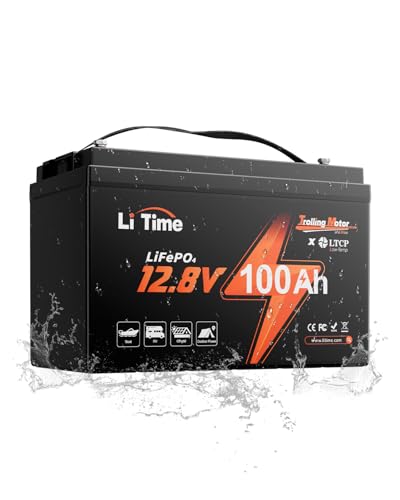
Litime 12V 100Ah Trolling Motor LiFePO4 Battery for Marine, RV, Yacht, Group 31

Litime 12V 100Ah Bluetooth Trolling Motor LiFePO4 Battery Group 31

Litime 12V 100Ah Group 27 Bluetooth LiFePO4 Battery for RV and Marine Use

Redodo 12V 100Ah LiFePO4 Deep Cycles Battery with Low-Temp Protection
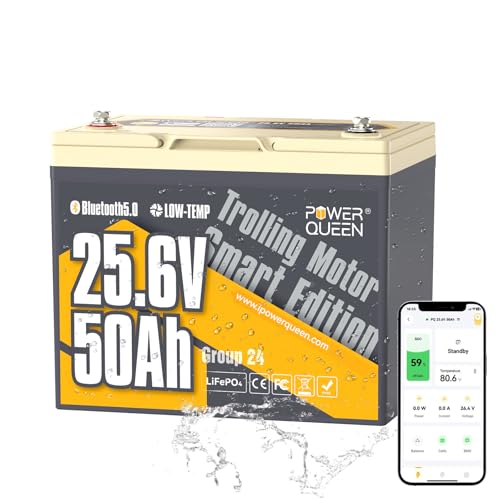
Power Queen 24V 50Ah LiFePO4 Battery with Bluetooth 5.0 Remote Control

LiTime 24V 100Ah Bluetooth LiFePO4 Lithium Battery for Marine, RV, Off-grid

LiTime 24V 100Ah Communication Lithium Battery for Victron Cerbo GX
A Closer Look At Each Pick
A Group 31 format makes this battery relevant to both an RV house bank and a boat needing dependable starting or accessory power. Its 12V 100Ah LiFePO4 construction provides 1,280Wh of nominal energy without occupying the footprint of a much larger lead-acid bank, at least when the compartment accepts the dimensions.
For anglers running a trolling motor or RV owners carrying substantial electronics, the 100A BMS, listed cycle rating, and cold controls add practical value. The honest catch is fit: measure the tray and cable clearance before ordering.
What Stands Out
- The 1,280Wh capacity gives RV owners useful energy for lighting, pumps, electronics, and other DC loads.
- Group 31 sizing is familiar in many marine and trailer installations.
- Low-temperature controls halt charging below 32°F and discharging below -4°F.
- Up to four series-parallel units expand capacity when your electrical design supports the configuration.
Things To Consider
- Cold protection pauses charging, so winter charging depends on compatible equipment and suitable conditions.
- Confirm physical dimensions, terminal position, ventilation needs, and secure mounting before installation.
Key Specs
Made For
This battery suits RV owners and boaters who need a substantial 12V bank in a recognizable Group 31 enclosure.
Where Another Pick Shines
The LiTime 12V 100Ah Group 27 Bluetooth LiFePO4 Battery for RV and Marine Use is a better fit for tighter Group 27 compartments.
Bluetooth control separates this Group 31 battery from the earlier Litime model by putting status checks and discharge controls closer at hand. That convenience matters on a fishing boat, where leaving shore power behind makes a quick check of remaining capacity and battery condition especially useful.
The same 12V 100Ah foundation supports trolling motors, RV accessories, and solar-charged systems. In practice, phone-based visibility helps, although it doesn’t replace a properly matched charger, correct fusing, or routine terminal inspection.
What Earns Its Place
- Bluetooth monitoring gives you a convenient way to review battery status from a phone.
- Remote discharge control can help manage connected loads before a deep discharge becomes an issue.
- The 1,280Wh 12V platform provides useful capacity for boats and camper electrical systems.
- IP65 enclosure protection suits exposed compartments better than an open, unprotected battery case.
Worth Noting
- Wireless monitoring adds another layer of setup and may be unnecessary for a straightforward stationary bank.
- Owners should periodically check terminal tightness, cable condition, and the secured mounting position.
Feature Snapshot
Right Fit For
Connected boaters and camper owners who want visible battery data without reaching into a crowded battery compartment benefit most.
Another Choice May Suit
The Redodo 12V 100Ah LiFePO4 Deep Cycles Battery with Low-Temp Protection may suit RV travelers who want a nonconnected 12V option with cold-weather controls.
Group 27 sizing is the reason this Litime option stands apart. Smaller than a Group 31 case, it targets RV compartments where every inch matters while retaining 12V 100Ah capacity, Bluetooth monitoring, and a 1,280Wh energy rating.
That makes it a sensible candidate for a travel trailer, compact camper, or fishing setup with a Group 27 battery tray. Fit still varies by coach, so comparing the listed compartment examples with your actual model remains essential.
Useful Highlights
- The Group 27 format can simplify installation in a bay designed around that battery class.
- Bluetooth 5.0 provides remote visibility into charge status and other battery information.
- The 100Ah rating supports a useful balance of capacity and physical size for travel trailers and marine use.
- Cold controls stop charging below 32°F and discharging below -4°F.
Practical Considerations
- Named RV compatibility examples do not establish fit for every Group 27 installation, so check your battery tray.
- The case must be secured, and exposed terminals should be inspected for corrosion and loose connections.
Who It Suits Best
Compact RV owners with a Group 27 compartment gain the most from this layout and capacity combination.
A Better Fit Elsewhere
The Litime 12V 100Ah Trolling Motor LiFePO4 Battery for Marine, RV, Yacht, Group 31 better serves owners with a larger Group 31 tray.
Winter travel gives the Redodo’s temperature controls a clear role. Charging stops below 32°F, while discharge halts below -4°F, reducing operation in conditions where lithium-ion batteries can be vulnerable. Those thresholds are protections, not a promise of cold-weather output.
The 12V 100Ah deep-cycle format also fits marine and RV use cases involving trolling motors, electronics, lighting, and other sustained DC loads. Compared with the Bluetooth-equipped Litime Group 27 model, the appeal here is a more straightforward cold-weather-oriented package.
The Upside
- Dual low-temperature cutoffs help manage charging and discharge during severe cold.
- The 100Ah deep-cycle capacity suits recurring accessory loads rather than occasional engine starts alone.
- Marine-oriented use makes it relevant for anglers combining RV travel and boat power needs.
Small Caveats
- No phone monitoring is listed, so status checks rely on compatible measuring equipment and direct inspection.
- Confirm the case dimensions, terminal arrangement, and charger compatibility before removing an existing battery.
Quick Facts
Built With In Mind
Four-season RV travelers and cold-water anglers gain the clearest benefit from the stated temperature protections.
Consider Something Else When
The Power Queen 24V 50Ah LiFePO4 Battery with Bluetooth 5.0 Remote Control better serves setups designed around a 24V system with app-based monitoring.
A 24V system changes the capacity comparison: 50Ah at 24V represents more energy than 50Ah at 12V, while still carrying less nominal capacity than a 100Ah 24V bank. That middle position can be useful for smaller boats or RV systems designed to run efficiently at 24 volts.
Bluetooth 5.0 adds remote battery visibility, which is convenient during a marina stop or after equipment has been switched off. In our view, the monitoring is useful, though the electrical design still needs to match the battery’s 24V requirements.
Useful Strengths
- The 24V 50Ah configuration offers a middle ground for appropriately designed electrical systems.
- Phone-based monitoring helps you inspect battery data without opening a covered compartment.
- LiFePO4 chemistry is suited to repeatable deep-cycle use with compatible charging equipment.
Possible Compromises
- A 12V-only charging or motor system will not accept this battery without suitable conversion equipment.
- The lower 50Ah rating offers less stored energy than the LiTime 24V 100Ah option, depending on your actual load profile.
Who Should Grab It
Boat owners with an existing 24V architecture and a space-conscious compartment benefit most from this capacity balance.
Reach For A Different Pick When
The LiTime 24V 100Ah Bluetooth LiFePO4 Lithium Battery for Marine, RV, Off-grid suits larger systems needing twice the Ah rating at the same nominal voltage.
This 24V 100Ah battery brings more stored capacity to larger RV, boat, and off-grid installations. The stated 10.24kWh configuration comes from four 24V units in the listed 4P2S arrangement, illustrating how banks can expand when the charger, wiring, and BMS settings are designed for it.
Bluetooth monitoring helps manage the system remotely, while a listed weight of 45.85 pounds reflects the handling demands of lithium power. Unlike the smaller Power Queen, the trade-off is weight and a much larger physical case.
Real-World Strengths
- The 24V 100Ah rating provides substantial energy for larger accommodation loads, marine equipment, or off-grid systems.
- Bluetooth 5.0 supports real-time status checks and discharge control from a phone.
- Configuration support for 4P2S enables a 10.24kWh system when the rest of the electrical design permits it.
- At a listed 45.85 pounds, it remains lighter than a lead-acid bank of comparable energy, though it is not a one-hand load.
Where It May Fall Short
- The 8.2 by 21 by 8.5 inch case may be too large for a small boat compartment.
- Multiple-person lifting or a secure support plan may be needed during installation.
Technical Reference
Whose Shelf It Belongs On
Large RV and boat owners with a suitable 24V compartment and heavier household loads are the strongest match.
Swap It Out When
The Power Queen 24V 50Ah LiFePO4 Battery with Bluetooth 5.0 Remote Control fits setups where 50Ah capacity and a smaller capacity requirement are more appropriate.
System integration is the defining feature here. Compatibility with the Victron Cerbo GX through CAN, a vehicle network standard used for electronic communication, makes this battery more relevant to connected energy systems than a generic standalone bank.
Support for DVCC and VRM adds options for distributed voltage control and remote charge regulation. For RV owners with a suitable Victron setup, that integration may matter more than a slightly smaller case, while conventional 12V installations should look elsewhere.
Notable Gains
- Victron Cerbo GX integration can reduce the need for a separate communication path within a compatible system.
- CAN communication supports coordinated monitoring and control of connected battery hardware.
- DVCC and VRM functions provide remote charging controls for properly configured installations.
- The 24V 100Ah format offers useful capacity for larger off-grid and marine energy systems.
Details To Watch
- Compatibility benefits apply only to systems with the required hardware, firmware, wiring, and configuration.
- Open protocol support for other named systems still requires careful configuration and electrical compatibility checks.
Core Details
Best Suited To
RV and marine owners running a Victron-centered energy system gain the most from the communication features.
Look Elsewhere When
The Redodo 12V 100Ah LiFePO4 Deep Cycles Battery with Low-Temp Protection better serves a simpler 12V installation without Victron integration.
What Matters Before Building an RV Battery Bank
Match the electrical system first
A 12V battery cannot simply replace a 24V battery, and two batteries in series must be carefully matched. The BMS, or battery management system, monitors charging and operating conditions, so its communication and current ratings need to work with your charger, inverter, motor, and wiring.
Your load calculation should account for how many hours each device runs and whether appliances start in waves. A 100Ah label alone doesn’t determine runtime; usable energy, converter losses, battery age, temperature, and state of charge all affect results.
Measure the compartment and lifting path
Group 31 and Group 27 describe common case classes, not universal dimensions. Measure length, width, height, terminal orientation, cable space, and ventilation clearance, then check whether the battery can be secured against movement.
Larger 24V options add meaningful weight to an installation. Make sure the selected location can support the battery and that the route into the compartment is practical.
Treat cold protection as an operating rule
Low-temperature shutdowns help prevent charging or discharge outside stated limits. They can also interrupt expected operation during winter travel, so your charger, cabin heat, and energy plan need to account for those pauses rather than treating the battery as an unrestricted cold-weather power source.
Choose monitoring based on complexity
Bluetooth is useful on boats and off-grid systems where quick status checks are valuable. A connected battery also introduces compatibility and configuration questions, making standard measurement equipment and a sound charging setup more important.
The Case for a Larger Lithium Bank
Lessons That Prevent Battery Mismatches
Wrong Turns To Avoid
Capacity without voltage compatibility produces an unsuitable power system. Measure the compartment, inspect the cables, and confirm charger settings before ordering, because lithium batteries also require secure mounting and periodic terminal care.
What The Upgrade Payoff Covers
Bluetooth monitoring, communication protocols, and low-temperature controls can justify a higher-tier model when your rig uses electronics heavily or operates in cold climates. A simpler 12V or 24V bank may offer better value for uncomplicated equipment lists.
Frequently Asked Questions
Are LiFePO4 batteries suitable for an RV?
LiFePO4 batteries suit many RV deep-cycle applications with compatible chargers, wiring, and mounting. Their usable charging and discharge conditions still need to match the battery’s controls.
How much RV battery capacity do I need?
Your required capacity depends on daily consumption, inverter loads, solar input, and desired reserve. Add each load’s power draw and operating time, then account for conversion losses and cold conditions.
Can a 12V battery work with a 24V RV system?
No, not as a direct replacement. A nominal 12V battery and a nominal 24V battery are different system classes, and changing voltage usually requires coordinated batteries, converters, and other electrical components.
Do I need Bluetooth battery monitoring?
Bluetooth is helpful for remote status checks and connected controls, but it isn’t essential for every rig. Direct measurement and proper charger compatibility remain the core requirements.
Can RV lithium batteries be used in cold weather?
Temperature controls can protect batteries by stopping charging or discharging at specified low temperatures. Cold protection helps manage risk, yet you may still need charging pauses or a cabin heating strategy during winter travel.
Final Verdict
The strongest match depends on your compartment, voltage, and monitoring needs. Group 31 and Group 27 Litime options cover common 12V layouts, while the 24V choices add capacity for larger rigs. Measure carefully, match the charging system, and account for cold-weather shutdowns before making the final call.
