


A pickup battery earns its keep on frosty mornings, long workdays, and trips where the engine sits while accessories run. The right fit matters just as much as starting power, especially with crowded engine bays, dual-battery systems, and trucks carrying winches or oversized trailers. This shortlist covers full batteries and a cold-weather battery wrap, with fitment details called out clearly for daily commuters, tradespeople, and off-road enthusiasts.
The Shortlist At A Glance

Kat’s 22200 80 Watt 36″ Battery Thermal Wrap

WEIZE Platinum AGM Battery Group 94R 12V 80Ah
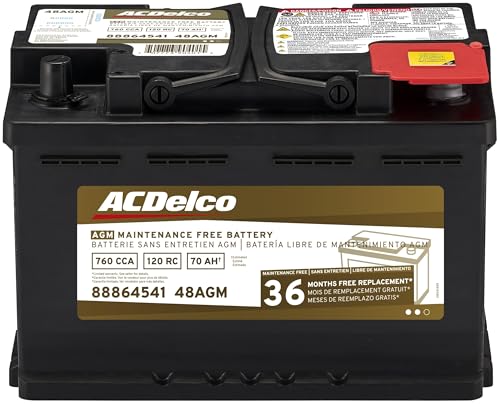
ACDelco Gold 48AGM 88864541 BCI Group 48 Battery

WEIZE Platinum AGM Battery Group 48 12V 70Ah H6

OPTIMA 34/78 REDTOP Sealed AGM Starting Battery 800 CCA

OPTIMA D34 YELLOWTOP Sealed AGM Dual-Purpose Battery 750 CCA
WEIZE Platinum AGM Battery Group 47 12V 60Ah H5
Why These Options Stand Out
This is an accessory rather than a replacement battery, but it addresses cold-weather strain without changing your battery group size. The 36-inch wrap surrounds the battery and adds insulation during freezing commutes, particularly in an exposed engine bay.
Its vinyl covering is designed to resist oil and acid exposure, both common around pickup battery holds. Compared with the full batteries later in this list, it costs less and takes less space, although you still need a correctly sized battery installed beneath it.
Positive Takeaways
- The wrap helps reduce cold-weather strain during early starts.
- A vinyl exterior suits an engine compartment where oil and residue are likely.
- Installation avoids the fitment work required by a larger AGM battery.
- You can inspect and clean the battery without removing a bulky enclosure.
Honest Caveats
- Measure the complete battery, including terminal clearance, before ordering.
- It supports an existing battery rather than restoring a worn or weak unit.
Feature Snapshot
Built With In Mind
You benefit most during freezing commutes in regions where your pickup’s battery sits exposed to prolonged cold.
Another Choice May Suit
The WEIZE Group 94R suits pickup owners replacing an aging battery outright rather than insulating a serviceable unit.
Among the full replacements, the WEIZE Group 94R carries the highest stated output in this group. Its 850 cold-cranking amps, abbreviated CCA, indicate strong starting capability, while 80 amp-hours of capacity gives accessory-heavy trucks more reserve than smaller Group 47 designs.
AGM technology holds electrolyte in a glass-fiber separator rather than leaving it free-flowing, which suits an enclosed engine bay. You still need to match physical dimensions and terminal polarity; the listed layout places negative on the left and positive on the right.
The Value In It
- The 850 CCA rating supports demanding starts in cold weather.
- 80 Ah of capacity favors winches, heated seats, tow packages, and camper loads.
- A 140-minute reserve-capacity rating supports sustained accessory use.
- The H7 case provides a substantial energy reserve for heavy-duty work.
Points To Note
- Its 12.4-inch length needs adequate clearance within the battery tray.
- The left-negative layout may not match every truck’s cable arrangement.
- Owners commonly report a tight fit in bays designed around smaller cases.
Quick Facts
Made For
Towing households, camper users, and tradespeople running multiple electrical accessories benefit most from its larger capacity.
Swap It Out When
The WEIZE Group 47 offers an easier tray fit for pickups with less space and lighter accessory demands.
ACDelco’s 48AGM shifts the focus from sheer capacity to a conventional Group 48 footprint suited to many pickup installations. AGM construction improves charge acceptance and cycling behavior, which matters in stop-start driving and for trucks that repeatedly operate electrical accessories.
Unlike the larger Group 94R, this model may fit more readily where battery-hold clearance is limited. The Group 48 designation still needs confirmation against your truck’s manual, since similar case numbers can conceal different terminal arrangements or hold-down hardware.
The Upside
- AGM construction limits electrolyte movement within the cells.
- Good cycling behavior suits frequent stop-start town driving.
- Strong charge receptivity helps the battery recover between starts.
- Its Group 48 format serves as a familiar middle-size replacement.
Practical Considerations
- Confirm the case dimensions because Group 48 batteries are not identical.
- Terminal reach or cable clearance may determine fit in compact engine bays.
- Heavy accessory use can still exceed the capacity of a middle-sized case.
The Right Fit
Daily commuters with a Group 48 battery hold and moderate accessory needs are the strongest match.
A Better Fit Elsewhere
The WEIZE Group 48 provides more explicit capacity and output figures for those who want a closer specification match.
The Group 48 H6 lands between the compact Group 47 and the much larger Group 94R. Its 760 CCA starting rating, 70 amp-hour capacity, and 120-minute reserve figure create a sensible middle ground for pickups that handle both daily driving and occasional trailer or accessory use.
That balance makes it easier to recommend than the largest battery here for a stock engine bay, though group size alone doesn’t confirm compatibility. The 10.94-inch length, terminal side, cable routing, and hold-down clearance all need attention before removal work begins.
A Strong Showing
- Its 760 CCA rating supports dependable cold-morning starts.
- The 70 Ah capacity is useful for moderate accessory loads.
- AGM construction suits a truck driven in stop-start traffic.
- Its case is smaller than the Group 94R while retaining useful reserve.
- Tapered terminals align with many existing pickup cable ends.
Details To Watch
- The stated left-negative, right-positive layout may differ from your truck.
- Measure cable clearance before disconnecting the old battery.
- Very heavy winch or camper demand calls for closer system planning.
Feature Rundown
Who Will Love This
Mixed-use pickup owners who tow occasionally but don’t need the largest Group 94R case will find the proportions practical.
Where A Sibling Pick Shines
The OPTIMA 34/78 REDTOP serves modified trucks that prioritize cranking output and flexible terminal positioning.
The REDTOP approaches the category from a cranking-first perspective, with 800 CCA for high starter loads. Its dual SAE and GM terminal layout reduces connection complications on modified pickups, hot rods, and off-road machines whose original battery configuration may differ from the factory configuration.
Versatile mounting helps during rebuilds where space and orientation change, though secure retention still depends on the tray and brackets. Compared with the YELLOWTOP, this model concentrates more strongly on starting than repeated deep discharge and recovery.
Key Advantages
- The 800 CCA rating handles demanding engine starts.
- Dual terminal formats simplify many aftermarket installations.
- Sealed AGM construction reduces electrolyte handling concerns.
- Mounting flexibility helps with custom engine bays.
- Starting-focused design suits heavily modified engines.
Worth Bearing In Mind
- Confirm physical clearance and cable reach before selection.
- Deep-cycle accessory demands may be better served by the YELLOWTOP.
- Maintenance-free construction still requires secure terminal cleanliness.
Core Details
Made For
Off-road enthusiasts and pickup restorers with high-output starters or nonstandard cable arrangements benefit most.
Reach For A Different Pick When
The OPTIMA D34 YELLOWTOP fits accessory-heavy trucks that need stronger repeated cycling support.
Dual-purpose describes a battery expected both to start the engine and recover from repeated electrical discharge. The YELLOWTOP pairs 750 CCA with that deeper cycling role, making it more relevant to camper conversions, mobile workshops, and trucks running amplifiers, refrigeration, or other equipment while parked.
The sealed AGM format reduces routine fluid servicing, while flexible mounting can simplify unusual battery locations. You should still verify the case dimensions, terminal arrangement, and hold-down system, since the D34 designation doesn’t create compatibility by itself.
Well-Handled Touches
- Dual-purpose construction handles starting and accessory cycling.
- The 750 CCA rating suits cold-weather cranking.
- Sealed AGM design avoids routine electrolyte-level checks.
- Flexible mounting supports more custom battery locations.
Less Ideal Details
- A camper or worksite load still needs proper charging-system support.
- Terminal reach and tray clearance must be measured before purchase.
- Its dual-purpose role does not replace deep-cycle battery sizing for trailer use.
Best Suited To
Work trucks and camper vans with repeated accessory demand benefit from its combination of starting and cycling capability.
Consider Something Else When
The WEIZE Group 94R is the better match for trucks prioritizing higher stated capacity for sustained accessory loads.
The Group 47 H5 answers a practical problem: fitting a substantial replacement into a shorter battery space. At 9.52 inches long, it is 1.42 inches shorter than the WEIZE Group 48 and 2.88 inches shorter than the Group 94R, making tray clearance much easier on selected pickups.
Its 680 CCA rating, 60 amp-hour capacity, and 100-minute reserve figure sit below the larger WEIZE models, yet remain meaningful for daily driving and moderate accessory use. The same left-negative, right-positive tapered-terminal layout still needs confirmation against your wiring.
Where It Delivers
- The compact case can ease installation in restricted battery holds.
- Its 680 CCA output supports cold-weather starting.
- The 60 Ah capacity suits regular daily driving.
- AGM construction improves charge reception and cycling tolerance.
- The shorter footprint helps where a Group 48 lacks room.
Small Limitations
- Heavy winch, towing, or camper demand may exceed its reserve.
- Inspect cable reach and the tray’s retaining bracket.
- Confirm polarity because the pickup’s terminal positions may differ.
Quick Technical Notes
Who Should Grab It
Pickup owners with a compact Group 47 tray and moderate electrical loads are the most natural match.
Look Elsewhere When
The WEIZE Group 94R better serves owners towing heavily or running multiple high-draw accessories.
Matching Battery Size, Output, and Electrical Load
Battery group numbers describe case formats, not every dimension or terminal detail. Measure the tray opening, cable length, and hold-down clearance before choosing a replacement, especially inside a modified engine bay.
CCA measures starting output under cold conditions, while amp-hours indicate stored electrical capacity. Daily commuting may place more importance on reliable starting, whereas campers, winches, and work accessories can justify a larger capacity.
AGM construction keeps electrolyte held within the battery’s internal separator. That sealed format reduces liquid handling and supports repeated charging cycles, but it still requires clean terminals, secure mounting, and a healthy charging system.
Fitment Details That Prevent Return Runs
Mistakes Worth Dodging
A group number alone doesn’t confirm fitment. Check physical dimensions, terminal polarity, cable reach, tray orientation, and the retaining bracket, as one mismatch can complicate installation.
What Separates Premium From Basic
Higher-output batteries typically add cold-start capability, capacity, or cycle tolerance. That upgrade is worthwhile for towing, cold climates, frequent accessory use, or modified engines, while a stock truck may perform adequately with a compact, correctly sized unit.
Frequently Asked Questions
How Do I Know Which Battery Fits My Pickup?
Compare the required group number, case dimensions, terminal layout, and cable clearance with your truck’s battery hold. Your service information provides the most reliable fitment reference.
Do Pickup Trucks Need Special Batteries?
Most use 12-volt lead-acid batteries, while cold climates and heavy accessory loads favor higher CCA and capacity ratings. Modified equipment may also require dual-battery or deep-cycle support.
Is AGM Better Than a Conventional Truck Battery?
AGM is well suited to repeated cycling, stop-start driving, and enclosed compartments. Conventional batteries may cost less, but AGM reduces electrolyte handling and accepts charging more readily.
What Does CCA Mean?
CCA measures cold-cranking amps, the current a battery can deliver during engine starting in cold conditions. You still need adequate reserve capacity for parked accessory use.
Can I Install Any Battery With the Same Group Number?
Not necessarily. Similar group numbers can differ in dimensions, terminal position, and mounting design, so confirm every clearance point before purchase.
Final Verdict
The best fit depends on your battery tray, electrical load, and local weather rather than output alone. Match every physical detail, distinguish starting needs from deep cycling, and size the system around the equipment your pickup actually runs. A carefully matched battery will serve daily work more dependably than an oversized unit forced into an unsuitable space.
