


A pellet stove needs more than a battery compartment to keep heating through an outage. You also need enough stored energy, the correct electrical connections, and a system designed around the stove’s ignition and circulation requirements. This lineup covers complete pellet-stove packages, compact UPS systems, and larger home-energy installations for cabins, workshops, and larger homes. The right fit depends less on battery size alone than on runtime, inverter compatibility, installation demands, and how much of the home you expect to operate.
The Lineup, Simplified

Freedom Stoves Independence PS21 Pellet Stove, 24V Backup, Wi-Fi

ECO-WORTHY Powermega 48V 314Ah System with Liber 10KP Inverter

ECO-WORTHY Powermega 48V 314Ah LiFePO4 Battery
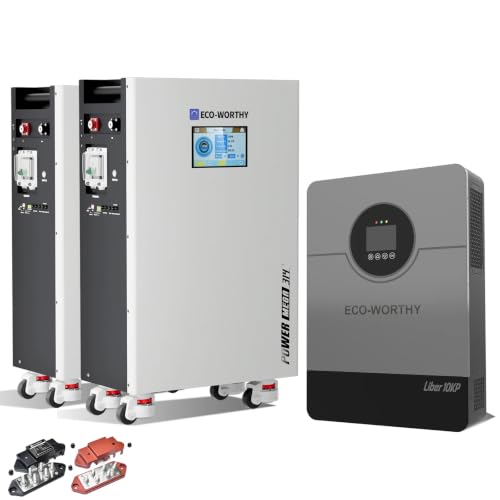
ECO-WORTHY Powermega Dual 314Ah Batteries with Liber 10KP Inverter

CyberPower CP1500PFCLCD PFC Sinewave UPS

Freedom Stoves Independence PS21 Pellet Stove, 24V Battery Backup, Wi-Fi

Freedom Stove PS24 Patriot Cast Iron Pellet Stove, 48 lb Hopper
Meet The Standout Selections
The Independence PS21 suits households seeking a freestanding pellet stove with outage support already coordinated into the package. Its steel construction and stated 800 to 1,800-square-foot range make it a practical fit for a basement, main-floor gathering area, or dedicated heating zone.
You get up to 34,700 BTUs, a 24V battery-backup system, touchscreen operation, Wi-Fi control, and a remote. The listed battery runtime exceeds 40 hours, although actual results depend on battery condition, room temperature, and operating settings.
Good Reasons To Consider
- Battery backup removes the need to assemble a separate small power system for basic outage operation.
- Wi-Fi and remote access help you manage heating from another room or arrive to a conditioned space.
- The included batteries and vent kit simplify initial setup compared with a stove sold as separate components.
- Steel construction suits a permanent freestanding installation rather than temporary seasonal heating.
Practical Considerations
- Ventilation requires compatible clearances and sound installation practices for safe operation.
- The 24V system is sized for the stove’s electrical needs, not a complete home energy system.
Quick Facts
Who It Suits Best
Homeowners seeking straightforward pellet heating with integrated outage support and remote controls benefit most.
A Better Fit Elsewhere
You gain more capacity from ECO-WORTHY Powermega 48V 314Ah LiFePO4 Battery for an existing inverter and broader household loads.
The Powermega system expands beyond pellet-stove support by pairing a 48V 314Ah lithium iron phosphate battery with a Liber 10KP 10kW hybrid inverter. That combination can serve a cabin, selective home circuits, or a renewable-storage setup where the pellet stove represents only one load.
LiFePO4 chemistry is a lithium-ion battery family known for thermal stability and long cycle life. RS485, CAN, and RS232 communication expand compatibility options, while Bluetooth and Wi-Fi monitoring offer a more informative alternative to a basic bank of lead-acid batteries.
The Upside
- The stated 16.1kWh usable capacity offers more endurance than a small UPS for extended outages.
- The 10kW hybrid inverter handles loads beyond a pellet stove’s low-voltage controls.
- Active balancing helps maintain cells at similar voltages across the battery pack.
- Communication interfaces make it suitable for controlled inverter and off-grid installations.
Points To Note
- Installation demands electrical knowledge and careful conductor sizing for a system of this class.
- Hazardous-material shipping rules can affect returns and replacement logistics.
- Load duration matters because a 10kW rating describes output capacity, not sustained energy.
Made For
Cabin owners and technically experienced households need backup capacity for a pellet stove and other essential loads.
Another Choice May Suit
Freedom Stoves Independence PS21 offers a simpler path for homes whose only concern is keeping a pellet stove operating.
The standalone Powermega battery fits an existing 48V energy-storage architecture, making it most useful to someone adding storage instead of starting from zero. Its 314Ah rating and stated 16.1kWh capacity provide a substantial foundation for a pellet stove, communications equipment, lighting, or other selected circuits.
Unlike ECO-WORTHY Powermega 48V 314Ah LiFePO4 System with Liber 10KP Inverter, no inverter is included here. You must confirm voltage, communication protocol, charge settings, and physical installation requirements before adding it to an existing setup.
Advantages To Know
- The 16.1kWh nominal capacity gives long-duration storage for appropriately sized loads.
- LiFePO4 chemistry supports repeated charge and discharge cycles.
- Compatibility with earlier 314Ah V1 units supports staged expansion.
Trade-Offs To Consider
- A battery alone cannot operate appliances without a compatible inverter.
- Non-returnable hazardous-material shipping can complicate returns.
- Parallel expansion requires compatible equipment and careful electrical planning.
- Battery temperature can affect charging performance and enclosure placement.
Right Fit For
Experienced off-grid households with an existing compatible inverter need expandable storage capacity.
Where A Sibling Pick Shines
ECO-WORTHY Powermega Dual 314Ah Batteries with Liber 10KP Inverter serves larger installations that need more stored energy from the outset.
Two 314Ah batteries raise this Powermega package well beyond the needs of a single pellet stove. Its stated usable capacity starts at 30kWh, making it more relevant to whole-home selective circuits, off-grid residences, or renewable-storage projects than ordinary electronics backup.
The Liber 10KP hybrid inverter provides a 10kW output class, while the BMS, or battery-management system, coordinates cell monitoring and balancing. In practice, your installation plan determines whether the system runs beside solar, participates in off-grid operation, or simply carries selected loads through an outage.
Reasons It Performs
- More than 30kWh of usable energy supports extended operation for properly selected home loads.
- Dual 314Ah batteries reduce dependence on a single storage module during planned outages.
- The included inverter simplifies coordination compared with assembling separate components.
- Built-in Bluetooth and Wi-Fi support remote status monitoring.
- A conduit box is listed as included beginning August 3, 2026, which may simplify cable organization.
Less-Strong Areas
- The system is excessive for only a pellet stove or a few electronics.
- Installation complexity rises with two batteries, an inverter, and high-capacity power wiring.
Built With In Mind
Larger homes, cabins, and technically capable households benefit from high-capacity, selectable-load backup.
Consider Something Else When
CyberPower CP1500PFCLCD PFC Sinewave UPS is easier to place under a desk and serves only compact electronics.
The CP1500PFCLCD is the compact electronics option in a category dominated by large energy-storage systems. A UPS, or uninterruptible power supply, transfers connected equipment to internal battery power during outages, making it useful for a desktop, network equipment, or home entertainment setup.
Its line-interactive design and pure sine-wave output suit active power-factor-corrected electronics, which require a stable waveform more often than simpler adapters do. The color LCD provides a clearer operating view than a basic indicator-light UPS, although the unit remains centered on short-duration protection rather than pellet-stove heating.
Where It Excels
- The mini-tower format fits more easily beneath a desk or beside network equipment.
- Sine-wave output offers broad compatibility with sensitive modern electronics.
- The LCD makes operating status easier to inspect at a glance.
- Surge protection adds value between utility outages.
Details To Watch
- Runtime is too limited for a pellet stove’s heating and circulation equipment.
- Connected loads must stay within the unit’s output and battery limits.
- Internal batteries require periodic charge maintenance and eventual replacement.
The Right Fit
Home-office users need compact protection for computers, networking gear, and entertainment electronics.
Not Your Match When
Freedom Stoves Independence PS21 Pellet Stove, 24V Backup, Wi-Fi is the relevant choice when keeping a pellet stove running matters.
This Independence PS21 listing emphasizes remote control and outage readiness in a freestanding pellet-stove package. It delivers the same 34,700-BTU heating class and 800-to-1,800-square-foot coverage as the first Freedom Stoves model, so your decision comes down to listing inclusions and installation preferences.
The 24V DC backup draws only 0.6 amps according to the supplied information, supporting more than 40 hours of operation under the stated conditions. Batteries are sold separately here, which makes the purchase price incomplete but may suit you who already own compatible 12V batteries.
A Few Strong Suits
- Low 0.6-amp backup draw supports extended outage operation.
- Touchscreen, Wi-Fi, and remote access give you several control options.
- A straight-out vent kit is included for the listed installation.
- The heating output fits medium-sized residential spaces.
Potential Compromises
- Compatible batteries must be sourced separately.
- Vent-kit installation still requires correct clearances and airtight connections.
- Steel construction requires a stable floor and planned pellet-storage space nearby.
Who Should Grab It
Homeowners wanting Wi-Fi control and extended backup who already have compatible 12V batteries fit this package best.
Another Choice May Suit
Freedom Stoves Independence PS21 Pellet Stove, 24V Backup, Wi-Fi is easier for you to evaluate when batteries are included.
The PS24 Patriot brings greater heating output and pellet capacity than either Independence PS21 listing. Its stated 59,964-BTU output and 1,000-to-2,600-square-foot range suit open living areas, larger homes, and installations where longer intervals between hopper refills matter.
Cast iron gives the stove substantial thermal mass, meaning it absorbs and releases heat more gradually than lighter sheet-metal construction. The 48-pound hopper reduces refilling frequency, while 24V backup readiness, an app, and a remote support convenient control, although backup components may require separate purchase.
Well-Handled Touches
- High stated output accommodates larger spaces than the PS21 models.
- The 48-pound hopper supports less frequent pellet refills.
- Cast iron contributes durable construction and steady heat retention.
- App and remote controls simplify operation away from the stove.
Things To Weigh
- Its size and weight require careful placement and adequate floor support.
- 24V readiness does not confirm that backup batteries or related parts are included.
- High output can require more pellet inventory and larger fuel-storage planning.
The Main Details
Who Will Love This
Homeowners heating larger spaces and prioritizing pellet capacity benefit most from the PS24 Patriot.
Swap It Out When
CyberPower CP1500PFCLCD PFC Sinewave UPS offers a simpler solution, though only for compact electronics rather than heating.
Matching Backup Power to Your Heating Setup
Start with the stove’s electrical requirements
A pellet stove’s battery system may only need to support controls, ignition, and circulation components, while a whole-house battery works through an inverter. Check voltage, connector type, charge requirements, and manufacturer compatibility before buying separate batteries.
Compare runtime with real load demand
Battery capacity is measured in watt-hours or kilowatt-hours, while inverter output describes how much power can be delivered at one time. Runtime depends on both figures, along with conversion losses and the number of connected loads.
Consider the inverter separately
An inverter converts stored direct-current battery power into household-compatible alternating current. The ECO-WORTHY systems include a 10kW hybrid inverter, whereas the standalone Powermega battery requires compatible equipment.
Match controls to the installation
Wi-Fi and remote controls improve convenience, but the more important decisions involve ventilation, clearances, battery placement, and protected wiring. Pellet stoves also benefit from accessible pellet storage and a stable surface capable of supporting their weight.
Practical Lessons Before You Choose
Mistakes Worth Dodging
Choosing by battery capacity alone can leave you with an inverter that is too small or a battery voltage that does not match your stove. Confirm wiring, connectors, and required charging functions before ordering.
What Separates Premium From Basic
Higher-capacity systems add inverter output, communication controls, balancing, and greater usable energy. Those additions suit cabins or larger homes, while a pellet-stove-only setup may need much less.
Frequently Asked Questions
Can a UPS run a pellet stove?
Most compact UPS units cannot safely run a pellet stove’s heating equipment. Choose a system specifically compatible with the stove’s voltage, controls, and start-up demands.
How long can a 24V pellet-stove battery last?
Runtime varies with battery condition, temperature, stove settings, and battery capacity. The listed PS21 configurations state more than 40 hours under their specified conditions.
Do pellet-stove backup systems need an inverter?
Stove-specific 24V systems may operate without a general-purpose inverter. Larger LiFePO4 systems require an inverter to convert battery power for household appliances.
Is LiFePO4 suitable for off-grid heating?
LiFePO4 offers high usable capacity and strong cycle characteristics for off-grid storage. Correct sizing, temperature management, and electrical protection remain essential.
Can one battery power an entire house?
A single battery may cover selected essential loads, but runtime depends on consumption and inverter output. Larger homes generally benefit from additional battery capacity.
The Takeaway
The simplest route is a pellet stove with coordinated 24V backup, while larger homes and off-grid projects benefit from a LiFePO4 battery paired with an appropriately sized hybrid inverter. Start with the loads you need to operate, verify voltage and connector compatibility, then account for installation requirements. The right system keeps heating sensible rather than merely oversized.
