


Choosing batteries for off-grid power starts with the load, not the label. A weekend campsite, a trolling motor, a solar home, and a backup power system each place different demands on voltage, capacity, weight, and communications. The right battery keeps equipment running without forcing you to rework your entire setup.
The Lineup, Simplified
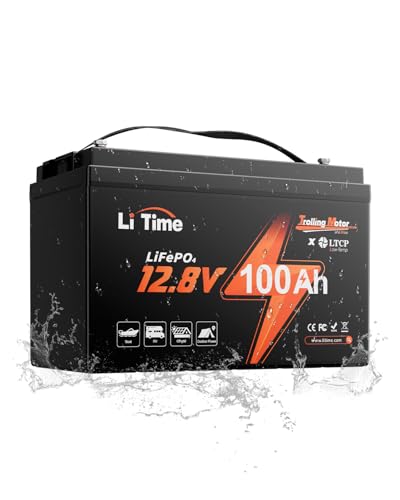
Litime 12V 100Ah Trolling Motor LiFePO4 Battery

LiTime 24V 100Ah Bluetooth LiFePO4 Lithium Battery

LiTime 24V 100Ah Communication Battery for Victron Cerbo GX
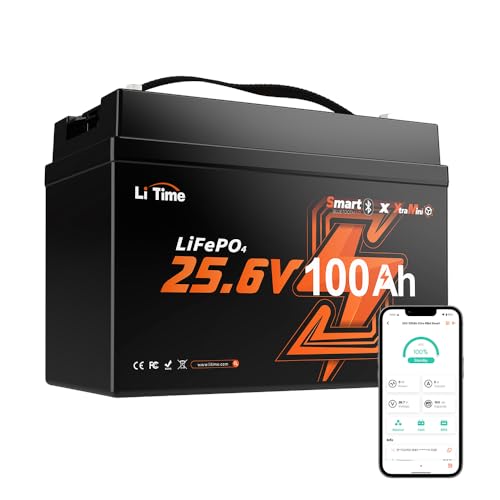
LiTime 24V 100Ah Mini LiFePO4 Marine Battery

ECO-WORTHY 12V 314Ah LiFePO4 Battery with Bluetooth

ECO-WORTHY 12V 280Ah Metal Case LiFePO4 Battery

EF ECOFLOW DELTA 3 Max Portable Power Station
The Picks, Examined More Closely
Group 31 form makes this battery a natural fit for boats, RVs, and trolling-motor setups that need substantial capacity without a bulky custom build. Its 12V LiFePO4 chemistry, 100Ah rating, and 1,280Wh output suit users planning to run marine electronics and accessories away from shore power.
The stated 22.16-pound weight is easier to manage than many lead-acid alternatives, although actual installation still depends on your battery tray and cable routing. Compared with the larger 24V models later in this list, it offers a more familiar single-bank arrangement and broad compatibility with 12V systems.
Where It Delivers
- 100Ah capacity provides useful runtime for trolling motors and onboard electronics.
- Group 31 dimensions simplify replacement in many marine and RV installations.
- A 100A BMS helps manage high-current discharge and protects the battery pack.
- IP65 water resistance adds practical protection in damp boat compartments.
- Low-temperature charging and discharge protection matters for seasonal boating.
Things To Consider
- Verify the Group 31 case, terminal positions, and cable clearance before installation.
- Fast charging still depends on a charger matched to the battery chemistry and voltage.
- For a large RV or cabin system, a single 12V bank may not provide the runtime you need.
Key Specs
Made For
This model best fits boaters and RV owners with a 12V trolling motor or moderate household load.
Where Another Pick Shines
LiTime 24V 100Ah Bluetooth LiFePO4 Lithium Battery offers more capacity for a larger RV or off-grid system.
This 24V battery moves up in voltage for systems that need more headroom than a single 12V bank can provide. Its 100Ah rating translates to roughly 2.4kWh before wiring losses and inverter draw, making it a solid starting point for RV, marine, or small off-grid installations.
Bluetooth 5.0 monitoring lets you check status and control discharge from a compatible phone, which is useful for long-distance campsite setups. The stated 8.2 x 21 x 8.5-inch size and 45.85-pound weight deserve attention in compact boat compartments, so measure before ordering.
Points In Its Favor
- 24V operation reduces current demands for compatible higher-voltage systems.
- Bluetooth monitoring helps you check battery status without physical access.
- Discharge control adds useful system management for RV and off-grid use.
- The stated weight is substantially below a typical 24V lead-acid bank.
Worth Noting
- The long, relatively tall enclosure may be difficult to secure in small compartments.
- Bluetooth access depends on a compatible device and a clear connection to the battery.
- Your inverter, charge controller, and wiring must be configured for 24V operation.
Feature Snapshot
Right Fit For
It suits RV owners and cabin users who want 24V storage plus phone-based monitoring in a permanently installed setup.
Reach For A Different Pick When
Choose LiTime 24V 100Ah Communication Battery for Victron Cerbo GX when direct Victron integration is the priority.
Victron users get a more purpose-built option here because the battery supports CAN communication with the Cerbo GX. CAN is a vehicle-style network protocol that lets compatible equipment exchange operating data, so this is a different proposition from simply monitoring a battery through a phone app.
The 24V 100Ah format is appropriate for larger off-grid installations, but integration depends on matching firmware, wiring, and system settings. Compared with LiTime 24V 100Ah Bluetooth LiFePO4 Lithium Battery, this model favors equipment-level communication over general phone convenience.
Advantages To Know
- Direct Cerbo GX compatibility supports a cleaner Victron-centered installation.
- Distributed Voltage and Current Control can coordinate charging across supported equipment.
- VRM remote monitoring supports energy-management visibility in a connected system.
- Open-protocol support may help with future integrations beyond the listed hardware.
Trade Offs
- This is a specialized choice for Victron systems, not a general-purpose battery for every RV or boat.
- CAN configuration can add setup work compared with a standalone Bluetooth battery.
- Remote features remain dependent on the rest of your Victron equipment and network.
Important Details
Built With In Mind
This battery is designed for Victron Cerbo GX owners building a connected RV, cabin, or renewable-energy system.
A Better Fit Elsewhere
LiTime 24V 100Ah Bluetooth LiFePO4 Lithium Battery is easier for a standalone setup that needs phone monitoring without Victron network integration.
This model targets a specific marine problem: fitting a 24V battery into a Group 31 tray without accepting the largest possible footprint. Its stated 13.11 x 6.93 x 9.45-inch dimensions may help with length and width, but the height is the detail that decides whether the install works.
The design is aimed at 70- to 100-pound trolling motors, where stable voltage can support smoother thrust control. Owners commonly need to measure lid clearance and cable routing carefully, because a tray-compatible case can still exceed the height of a standard battery box.
A Few Strong Suits
- Group 31 tray compatibility supports many common marine layouts.
- 24V operation suits compatible trolling motors and marine electronics.
- The compact case reduces the length and width burden in a crowded compartment.
- 100Ah capacity provides more useful reserve than a small low-capacity marine battery.
Practical Considerations
- Its height exceeds standard Group 31 battery-box capacity, so enclosure compatibility is limited.
- Confirm motor voltage and current requirements before connecting it.
- Securing terminals and leaving service space still matters in a wet, vibrating boat environment.
The Right Fit
It best fits boaters with a Group 31 tray, adequate lid clearance, and a trolling motor designed for 24V operation.
Another Choice May Suit
Litime 12V 100Ah Trolling Motor LiFePO4 Battery is the simpler alternative for a conventional 12V marine bank.
For a cabin, workshop, or home solar system that draws power beyond occasional backup needs, capacity matters more than a compact marine footprint. This 12V battery stores 4,019Wh, while Bluetooth and status LEDs make it easier to monitor state of charge and system condition from a practical distance.
The stated 314Ah rating is intended for larger off-grid, RV, and solar applications, but the battery still needs a properly matched inverter, solar controller, and ventilation-conscious installation. Compared with LiTime 12V 100Ah Trolling Motor LiFePO4 Battery, this model trades portability for a much larger energy reserve.
Bright Spots
- 4,019Wh capacity supports larger household or cabin loads.
- Bluetooth monitoring helps you check operating status without opening the enclosure.
- SOC LEDs provide a quick local indication of battery level.
- Low-temperature protection is useful for RV and seasonal installations.
- The 200A BMS suits demanding renewable-energy configurations.
Room For Improvement
- Its size and weight make installation planning more involved.
- One battery still needs a carefully matched inverter and charge controller.
- Capacity alone does not guarantee usable runtime; load size and system losses matter.
Core Details
Whose Shelf It Belongs On
This is a strong fit for homeowners and cabin owners running solar, RV, or sustained backup loads.
Consider Something Else When
ECO-WORTHY 12V 280Ah Metal Case LiFePO4 Battery is the more practical alternative when a metal enclosure matters more than the extra capacity.
The metal enclosure gives this 12V 280Ah battery a different ownership profile from the Group 31-style marine models. It appears better suited to fixed installations where a substantial solar, camper, RV, or home-use battery can be secured in a protected equipment area.
Its 3,584Wh maximum energy and 200A BMS support sizable loads, while Bluetooth and low-temperature protection add monitoring and cold-weather management. The exterior label style may vary, but the internal structure and rated performance are stated to remain the same, so compare the label and fit rather than relying on appearance.
Useful Strengths
- The metal case adds heat resistance and physical protection compared with lighter plastic housings.
- 3,584Wh provides substantial storage for solar and backup systems.
- Bluetooth monitoring helps with ongoing system checks.
- A low-current power switch allows convenient battery cutoff.
- The 200A BMS supports demanding RV, camper, and trolling-motor applications.
Details To Watch
- The metal case adds weight and may require a secure mounting base.
- Check dimensions and terminal clearance before placing it inside a camper or cabinet.
- Bluetooth monitoring still depends on a compatible device and suitable placement.
Made For
It suits RV, camper, solar, and home users who want a high-capacity battery in a protective fixed-installation case.
Where A Sibling Pick Shines
ECO-WORTHY 12V 314Ah LiFePO4 Battery with Bluetooth offers more stated capacity for installations where energy reserve matters most.
The DELTA 3 Max is the most different choice here because it combines a 2,048Wh LFP battery, inverter, outlets, and charging controls in one portable enclosure. That makes it convenient for camping, road trips, and temporary outage support, where carrying separate batteries, wiring, and control hardware would be inconvenient.
Its 2,400W continuous output is suited to many portable appliances, though startup demands from motors, compressors, and other equipment can require careful load planning. X-Boost is listed for up to 3,400W, but that higher figure is not a reason to ignore normal operating limits or appliance requirements.
Useful Highlights
- Integrated power station format reduces the need for a separate inverter and battery wiring.
- 2,048Wh capacity handles moderate camping and backup loads.
- 2,400W continuous output covers many common portable appliances.
- Fast charging is listed at 0-80% in 1.13 hours for shorter preparation stops.
- LFP chemistry suits a portable system that must be transported and reused regularly.
Where It May Fall Short
- A portable station is less flexible than a fixed battery bank for whole-home solar.
- Its listed 2,048Wh capacity is smaller than the ECO-WORTHY batteries in this lineup.
- Appliance startup surges can limit usable capacity for some appliances.
Feature Breakdown
Travel Ready
It fits campers, road-trip households, and temporary outage users who value a self-contained power package.
Skip It When
Choose ECO-WORTHY 12V 314Ah LiFePO4 Battery with Bluetooth for a larger fixed solar or home reserve.
Building a Battery Setup That Fits
Voltage and Inverter Match
Voltage is the first compatibility check. A 12V battery needs a 12V-compatible inverter or charge controller, while a 24V setup requires components designed for that voltage. Higher voltage can reduce cable current, but it does not make incompatible wiring or electronics usable.
Capacity and Load Reality
Capacity determines stored energy, while continuous output determines what the inverter can run. Add up the devices you expect to operate at once, then compare that total with the inverter’s continuous rating and startup requirements. A large battery can still fail quickly against an oversized load.
Temperature and Monitoring
Low-temperature protection helps manage charging and discharge in cold conditions, while Bluetooth and LEDs make status checks easier. Monitoring does not replace correct charger settings, ventilation planning, terminal protection, or regular visual inspections.
Physical Fit and Maintenance
Measure the compartment before ordering, especially for Group 31 trays and tall marine installations. Secure the battery, preserve cable clearance, and plan how you will remove it for maintenance. A case that fits on paper still needs room for connections, ventilation, and safe handling.
Key Considerations Across These Picks
Mistakes Worth Dodging
A common mistake is choosing capacity without checking the inverter’s output or ignoring temperature protection. Another is treating a Bluetooth connection as a substitute for proper wiring. Measure the compartment, match the voltage, and confirm the charger before placing the battery.
What The Upgrade Pays For
Higher-capacity and communication-focused models add stored energy, monitoring, or direct equipment integration. Those features matter most for fixed solar systems, connected Victron builds, and users who do not want to monitor a battery physically. A portable power station offers convenience instead, especially for temporary use.
Frequently Asked Questions
What voltage do I need for off-grid power?
The correct voltage depends on your inverter, charge controller, and existing wiring. A 12V system may suit a smaller installation, while 24V can suit larger loads and reduce current in cables. Match every major component before purchasing.
Are LiFePO4 batteries suitable for solar systems?
Yes, LiFePO4 batteries work well in many solar installations because they provide deep-cycle storage and a long service life. You still need a charge controller matched to the battery voltage and capacity. Temperature management also matters in cold climates.
How much battery capacity do I need?
Calculate your daily energy use, account for conversion losses, and add a reserve for cloudy periods or high-demand days. Appliance wattage alone does not tell you runtime; usage duration is equally important. A larger battery adds runtime but also adds weight, space requirements, and cost.
Can I use a marine battery in an RV?
Many Group 31 marine batteries can fit physically in an RV, but electrical compatibility matters more than appearance. Confirm voltage, discharge current, terminal layout, cold-weather needs, and the inverter’s specifications. Do not rely on the Group 31 label alone.
Is a portable power station better than a battery bank?
A portable power station is more convenient for camping, travel, and temporary outages because it integrates the battery and inverter. A fixed battery bank offers greater expandability for solar or whole-home applications. Choose based on mobility, capacity, and the equipment you plan to run.
Final Verdict
The right off-grid battery depends on the system around it. Marine users can favor the Group 31 LiTime models, Victron owners can examine direct CAN communication, and fixed solar installations benefit from the larger ECO-WORTHY options. Portable users get the most straightforward setup with the DELTA 3 Max. Measure first, match voltage second, and choose capacity based on realistic loads.
