


Introduction
An off-grid house depends on stored energy, not just solar panels or a generator. The right battery determines how long your refrigerator, lighting, communications, and water systems run after the sun goes down. You also need enough capacity for cold mornings, heavy appliances, tight installation spaces, and the electrical demands of a home rather than a weekend campsite.
The options below cover different situations, from compact 12V systems to larger 24V banks. You’ll find practical differences in heating, Bluetooth monitoring, water resistance, weight, physical size, and usable capacity.
The Picks In Brief

12V 300Ah LiFePO4 Battery with 200A BMS

LiTime 24V 230Ah Self-Heating Battery

Redodo 12V 100Ah Ultra-Mini Bluetooth Battery

Renogy 12V 100Ah Bluetooth Waterproof Battery

Renogy 12V 100Ah Self-Heating Battery
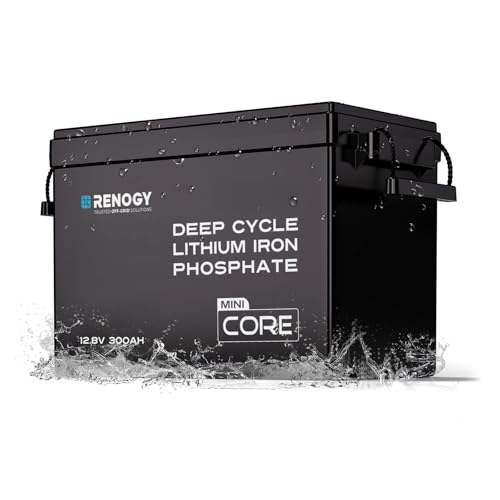
Renogy 12V 300Ah Mini LiFePO4 Battery
WEIZE 12V 12Ah AGM Battery Two-Pack
A Deeper Look At The Lineup
This is the large-capacity choice for an off-grid house that needs more stored energy than a small cabin system. Its 12V format fits many common inverter and charge-controller arrangements, while the 300Ah rating gives you a substantial starting point for evening loads.
The built-in 200A BMS, a battery-management system that regulates charging and discharge, adds useful electrical control. Owners should still match the battery to the inverter’s voltage and cable requirements, because capacity alone does not determine compatibility.
Well-Handled Touches
- 300Ah capacity supports a broader household load profile.
- 200A BMS helps manage high-current charging and discharge.
- Low-temperature cutoff adds protection in cold climates.
- Deep-cycle construction suits repeated solar charging.
- High output supports backup power and RV use.
Things To Consider
- The 300Ah format is physically substantial and needs a sturdy location.
- A 12V bank still requires correct fusing, ventilation, and cable sizing.
Key Specs
Who It Suits Best
This battery suits households with steady evening power needs and room for a large 12V installation.
Consider Something Else When
Redodo 12V 100Ah Ultra-Mini Bluetooth Battery fits smaller cabins where space matters more than maximum capacity.
Cold weather changes the practical value of a battery, and this LiTime model is built around that problem. Its automatic heating supports charging from -4°F to 41°F, making it more relevant to a remote cabin, boat, or seasonal home than a standard lithium battery without cold-weather assistance.
Unlike the 12V models elsewhere in this list, the 24V rating suits higher-voltage systems and can reduce current demands for a given power level. The tradeoff is compatibility: your inverter, charge controller, and wiring must be designed for 24V.
What Works In Its Favor
- Self-heating helps sustain charging in cold conditions.
- 24V architecture suits efficient higher-voltage systems.
- 230Ah capacity offers meaningful residential storage.
- Two heating modes provide charging flexibility.
Worth Noting
- It will not fit a 12V-only electrical design without redesign.
- Heating consumes energy while active, which matters during cloudy stretches.
- The app is most useful when you want active monitoring.
Feature Snapshot
Built With In Mind
This battery fits 24V homes, RVs, and marine installations operating in cold, remote conditions.
Another Choice May Suit
Renogy 12V 100Ah Self-Heating Battery is a simpler fit for a 12V cabin or RV system.
Redodo takes a different approach from the larger Renogy and VATRER models: it concentrates on making a 100Ah battery easier to install. At 9.02 by 5.43 by 8.19 inches and 19.84 pounds, it suits a utility cabinet, under a bench, or inside a small RV battery compartment.
Bluetooth monitoring is the practical extra. You can check charge, voltage, cycles, and temperature from nearby, which is helpful during troubleshooting or routine checks without opening the battery compartment.
Real-World Strengths
- Compact dimensions help preserve installation space.
- Low weight simplifies handling and repositioning.
- Bluetooth provides nearby battery status checks.
- 1280Wh nominal energy suits smaller loads.
Small Caveats
- 100Ah offers less reserve than the 300Ah choices.
- Bluetooth range is limited to about 10 meters.
- You still need a proper charger for lithium chemistry.
Quick Facts
Made For
This model suits small cabins, RVs, and remodeled homes with limited battery-compartment space.
Look Elsewhere When
Renogy 12V 300Ah Mini LiFePO4 Battery is a better match for households needing much longer runtime.
For a boat, dock system, or exposed off-grid enclosure, water resistance matters more than a slightly smaller footprint. Renogy’s Group 24-style 12V 100Ah battery is rated IP67, a protection designation indicating resistance to dust and temporary immersion, and includes Bluetooth monitoring.
The 21.8-pound weight is far below the weight of a typical 100Ah lead-acid bank, so moving it during installation or maintenance is more manageable. Its 150A continuous and 300A 30-second surge ratings are also relevant to trolling motors and other high-start loads, though your motor controller must match.
Useful Strengths
- IP67 rating suits wet and exposed installations.
- 150A continuous discharge supports marine equipment.
- 300A surge rating handles short high-current starts.
- Bluetooth helps monitor charge and system status.
Areas To Watch
- Water resistance does not replace a protected, ventilated location.
- 100Ah may be modest for a house with sustained evening loads.
- Trolling-motor compatibility depends on the motor’s requirements.
Feature Overview
Who Will Love This
This battery suits boaters, marine installers, and homeowners with damp or exposed battery locations.
Where Another Pick Shines
Redodo 12V 100Ah Ultra-Mini Bluetooth Battery is the more compact choice for dry indoor compartments.
This Renogy model makes cold-weather charging the central design choice. Dual heating pads provide 110W of heat, and the Group 22NF size is intended to reduce the footprint compared with similar batteries. That combination is useful in cabins, RVs, and ice-fishing setups where a standard lithium battery may need more careful charging control.
The built-in 100A BMS and listed operating range of -2°F make it more relevant to seasonal installations than an unheated standard battery. In a warm, dry interior, the heating system may add little practical value, and the compact size still needs proper clearance around the terminals.
Real Benefits
- DuoHeat supports charging in cold conditions.
- Group 22NF format reduces cabinet space demands.
- 100A BMS handles normal system management.
- Grade-A cells are rated for more than 5,000 cycles at 80% depth of discharge.
Practical Considerations
- Heating requires a charger setup that can activate it correctly.
- 100Ah is less generous than the 300Ah models for whole-home use.
- Keep ventilation and wiring clearances in mind during installation.
Technical Highlights
Right Fit For
This battery fits seasonal cabins, ice-fishing shelters, and RVs operating in cold conditions.
Swap It Out When
LiTime 24V 230Ah Self-Heating Battery is a stronger fit for a 24V home with substantial stored-energy needs.
The Renogy 300Ah model brings large storage capacity without accepting a lead-acid-sized footprint. At 15.12 by 7.64 by 9.96 inches and 55.1 pounds, it is still a heavy component, but its listed size is intended to make a 300Ah LiFePO4 installation more manageable.
Compared with the VATRER 300Ah choice, this model has a more compact stated layout, though product weight and handling still deserve planning. A 200A BMS and low-temperature cutoff make it more relevant to a permanent solar or backup system, where reliable charge management matters.
Advantages To Know
- 300Ah capacity supports longer evening runtime.
- Compact dimensions improve space efficiency.
- 55.1-pound weight is manageable for a large lithium battery.
- 200A BMS supports controlled high-current operation.
Possible Compromises
- The battery remains too heavy for casual two-person handling.
- Non-returnable hazardous-material shipping rules may complicate ownership.
- A 300Ah battery still needs careful charge-controller sizing.
Core Details
Whose Shelf It Belongs On
This battery fits homeowners building a dedicated solar room or larger cabin power system.
Reach For A Different Pick When
Redodo 12V 100Ah Ultra-Mini Bluetooth Battery is easier to handle in a small, dry installation.
WEIZE takes a simpler route with sealed lead-acid AGM, a valve-regulated battery design that avoids routine watering and uses absorbent glass mats between its plates. The two 12V 12Ah units can serve small standby, lighting, gate, or equipment loads where compact size and straightforward replacement matter more than lithium energy density.
Unlike the LiFePO4 options, this is not a large whole-house storage bank. It suits a small off-grid accessory circuit or backup application, and the two-pack makes it easier to build a 24V arrangement with correctly matched equipment.
Features That Help
- AGM construction avoids routine electrolyte servicing.
- Two batteries provide installation flexibility.
- Sealed, non-spillable design simplifies placement.
- F2 terminals fit many common replacement applications.
- Operates in multiple orientations.
Details To Watch
- 12Ah per battery is modest for continuous household loads.
- Lead-acid batteries are heavier and less efficient than LiFePO4 for many solar systems.
- Check dimensions, voltage, and terminal type before replacing an existing unit.
- It still needs a charger matched to sealed lead-acid chemistry.
Product Snapshot
Best Suited To
This set suits owners of small off-grid equipment, backup lighting, or compact standby systems.
Not Your Match When
Renogy 12V 300Ah Mini LiFePO4 Battery is the better choice for extended whole-home runtime.
Matching Battery Capacity To Your System
Capacity is the first practical filter, but voltage comes next. A 12V battery bank fits many common inverters, while 24V can reduce current for higher-power systems and may suit larger loads. Lithium iron phosphate, often shortened to LiFePO4, uses a chemistry suited to repeated deep cycling, while AGM is a sealed lead-acid option that often costs less but weighs more.
Calculate A Realistic Load
Add the power draw of your refrigerator, lighting, water pump, internet equipment, and other essentials, then estimate how long each must run after sunset. Battery capacity alone does not tell the whole story: inverter efficiency, wiring losses, temperature, and how deeply you discharge the bank all change usable energy.
Match Charging To The Battery
Use a charge controller designed for the battery’s voltage and chemistry. Lithium systems need appropriate charge profiles and temperature handling, while AGM batteries need a compatible lead-acid controller. Verify terminal arrangement, polarity, ventilation, and mounting access before connecting anything.
Check Physical Constraints
Measure the compartment before choosing a large battery, but do not choose by size alone. Secure the battery against movement, leave working clearance, protect terminals from moisture, and account for cable weight. A 300Ah unit may save space compared with lead-acid, but it still needs a strong support surface.
Common Mistakes Worth Avoiding
Mistakes Worth Avoiding
The most common mistake is matching only nominal voltage and overlooking the inverter’s required battery range. Another error is assuming every 100Ah battery can deliver the same continuous current; high-power appliances may require a higher BMS rating, proper fusing, and thicker cables.
Wrong Turns To Avoid
Do not install a large battery in an unventilated cabinet or leave exposed terminals where children, pets, or moisture can reach them. Confirm the battery’s terminal type and dimensions before ordering, especially for a replacement installation. Once installed, periodic voltage and temperature checks help you notice a charging or connection problem early.
Frequently Asked Questions
How Many Batteries Does An Off-Grid House Need?
The answer depends on your daily energy use and nighttime loads. One large 12V battery may handle a small cabin, while a larger home may need several batteries or a higher-voltage bank.
Is LiFePO4 Better Than Lead-Acid For Solar?
LiFePO4 generally offers higher usable capacity, lighter weight, and strong deep-cycle suitability. Lead-acid can work for smaller standby systems, but it usually weighs more and requires more capacity for similar storage.
Can You Use A 12V Battery With A 24V Inverter?
Only with a correctly designed battery configuration and compatible power electronics. A single 12V battery usually does not meet a 24V inverter’s voltage requirement.
Does Cold Weather Stop Lithium Charging?
Cold temperatures can reduce charging performance and may require heating or charge controls. LiTime 24V 230Ah Self-Heating Battery and Renogy 12V 100Ah Self-Heating Battery include specific cold-weather support.
What Battery Fits A Small Cabin With Little Space?
Redodo 12V 100Ah Ultra-Mini Bluetooth Battery is designed around a compact footprint. Measure the compartment, cable path, and ventilation requirements before making the final choice.
Final Verdict
Choose based on voltage, cold conditions, available space, and the hours of runtime your home actually needs. Large 12V banks suit heavier loads, the self-heating models serve cold regions, and the compact Redodo or WEIZE options fit smaller accessory systems. Match the battery to the inverter and controller, then plan the installation carefully.
