


Rechargeable batteries can cut down on repeated disposable-battery replacements around your home, but choosing between lithium-ion and NiMH cells requires attention to size, voltage, capacity, and charging setup. You’ll find the most useful options for game controllers, cameras, solar lights, remotes, clocks, and other everyday devices in this guide, with clear trade-offs for each format.
A Side-By-Side Look
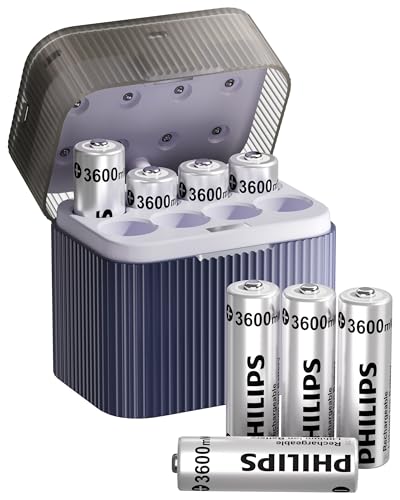
PHILIPS Rechargeable AA Lithium Batteries 8 Pack 1.5V 3600mWh
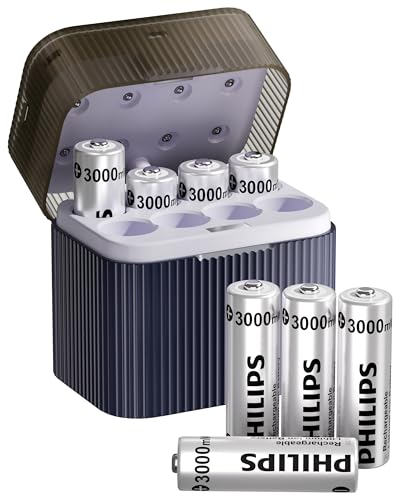
PHILIPS Rechargeable 3000mWh AA Lithium Batteries 8 Pack

Brightown 12-Pack Rechargeable AAA Batteries 1000mAh NiMH

Tenergy Premium PRO Rechargeable AAA Batteries 1100mAh 8 Pack

PHILIPS Rechargeable AAA Lithium Battery 8 Pack 1.5V 1300mWh

PHILIPS Rechargeable AA Lithium Battery 4 Pack 1.5V 3600mWh

Tenergy 1.5V AAA Alkaline Batteries 100 Pack
A Breakdown Of The Leading Choices
Higher-drain electronics benefit from a cell that maintains voltage as its charge falls. This eight-pack pairs lithium-ion chemistry with a stated 1.5V output and 3600mWh capacity, a useful combination for frequently used controllers, cameras, and household electronics.
It makes more sense than a larger NiMH set for people who value steady output over familiar disposable-battery sizing. The trade-off is that you must follow the lithium battery’s charging requirements and check device compatibility before replacing existing AA cells.
A Few Highlights
- Constant 1.5V output supports electronics that need stable power.
- The 3600mWh capacity targets demanding, high-drain equipment.
- Eight cells let you rotate sets between controllers or remotes.
- Lithium-ion chemistry avoids the gradual voltage decline typical of NiMH.
Practical Considerations
- It is rechargeable, but the required charger isn’t clearly identified in the supplied information.
- Lithium AA cells may not suit every older device or battery compartment.
Core Details
Built With In Mind
You’ll benefit most from this set in a home with several AA-powered controllers, cameras, or remotes that see regular use.
Consider Something Else When
The PHILIPS Rechargeable 3000mWh AA Lithium Batteries 8 Pack may suit you better when a USB-C charging case matters more than maximum capacity.
Charging setup matters in a busy home, and this PHILIPS set combines eight lithium-ion AA cells with a Type-C charging case. The case stores and charges the batteries together, reducing the loose batteries and separate charger arrangement that makes a crowded drawer harder to manage.
Compared with the 3600mWh PHILIPS set, its 3000mWh capacity is lower, though both maintain a stated 1.5V output. For controllers, cameras, and demanding household electronics, the tradeoff is likely a more integrated charging experience rather than maximum energy per cell.
Good Reasons To Consider
- Eight cells support several AA-powered devices.
- The charging case simplifies storage and charging.
- Stable 1.5V output suits compatible high-drain devices.
- 3000mWh provides useful runtime for everyday electronics.
Trade-Offs
- Its stated capacity trails the 3600mWh PHILIPS option.
- USB-C charging still requires a compatible cable and power source.
- Device compatibility should be checked before replacing older AA batteries.
The Right Fit
This set suits households that want a tidy, rechargeable AA system for several frequently handled devices.
Reach For A Different Pick When
Choose PHILIPS Rechargeable AA Lithium Batteries 8 Pack 1.5V 3600mWh instead when higher stated capacity is more important than a combined charging case.
A twelve-cell rotation is especially useful for garden solar lights, where several batteries may drain at similar rates. The Brightown set supplies 1000mAh NiMH cells at 1.2V, a familiar rechargeable format for compatible outdoor lights and low-drain household devices.
This differs from the PHILIPS AAA lithium option, which holds a 1.5V output and uses a dedicated charging station. Brightown favors quantity and NiMH familiarity, which may work better for devices commonly designed around rechargeable AAA cells.
Notable Gains
- Twelve cells cover multiple solar lights without frequent rotation limits.
- Low self-discharge supports longer storage between uses.
- The stated charge-cycle figure points to repeated household use.
- Precharged cells reduce delays before the first placement.
Small Caveats
- Solar-lights performance can fall in prolonged cold or limited sunlight.
- NiMH cells need compatible charging equipment and proper handling.
- Older AAA devices may have compatibility or contact-fit limitations.
Quick Facts
Made For
You’ll get the most use from these cells in outdoor solar lighting and other compatible AAA equipment used regularly.
Where Another Pick Shines
The Tenergy Premium PRO set may be a stronger fit for camera work and wider temperature conditions.
Photography equipment and outdoor electronics can expose batteries to demanding power use and changing temperatures. This eight-pack pairs 1100mAh NiMH AAA cells with a stated operating range from -4°F to 122°F, making it more broadly suited to variable locations than a set designed only for a climate-controlled room.
Its 1100mAh rating is modestly above the Brightown 1000mAh set, although pack size is smaller. You’ll find the strongest fit with compatible cameras, flashes, remotes, and other AAA devices that accept rechargeable NiMH power.
Practical Advantages
- 1100mAh capacity supports compatible power-hungry devices.
- The stated temperature range suits outdoor and indoor rotations.
- Eight cells provide a practical backup set for camera accessories.
- Familiar NiMH chemistry suits many rechargeable AAA applications.
Details To Watch
- Some older devices may reject rechargeable cells even when the size matches.
- A compatible charger is not specified in the supplied listing details.
- Eight cells offer less replacement coverage than the Brightown twelve-pack.
Who It Suits Best
Photographers and households using AAA electronics across hot, cool, or temperature-controlled settings get a versatile rechargeable rotation.
Another Choice May Suit
The Brightown 12-Pack Rechargeable AAA Batteries 1000mAh NiMH may serve you better when more cells matter for several solar lights.
Controllers can demand more consistent power than a low-drain remote or clock. This PHILIPS set uses 1300mWh lithium-ion AAA cells with a stated 1.5V output and includes an eight-slot Type-C charging station, making it a practical fit for compatible gaming accessories and household electronics.
Compared with the Brightown and Tenergy NiMH sets, it uses a higher nominal voltage and lithium-ion chemistry. That is useful for stable output, though the charging system and device compatibility deserve closer attention before you switch.
What Stands Out
- Constant 1.5V output fits compatible high-drain electronics.
- 1300mWh capacity supports demanding AAA devices.
- Individual charging slots organize a mixed set of batteries.
- Type-C charging removes the need for a barrel-style connector.
Worth Noting
- The supplied information doesn’t identify a charging-cable or adapter requirement clearly.
- Devices designed for 1.2V NiMH may not accept 1.5V lithium cells.
- Regular inspection helps keep unused lithium cells in suitable storage conditions.
Feature Snapshot
Who Should Grab It
Gamers and households running compatible AAA controllers benefit from the stable 1.5V output and dedicated charging station.
Swap It Out When
The Brightown 12-Pack fits you better for a large solar-light rotation built around standard rechargeable NiMH devices.
High energy output matters in AA-powered controllers, cameras, and other demanding devices. This four-cell PHILIPS set keeps the same stated 1.5V voltage and 3600mWh capacity as the eight-pack version, giving you strong per-cell performance with less battery inventory to store.
The smaller count is the decisive difference, not lower cell capacity. It works well for one or two compatible devices, while households replacing batteries across several remotes and controllers may find the eight-pack easier to rotate.
The Upside
- 3600mWh targets demanding AA-powered equipment.
- Stable 1.5V output suits compatible electronics.
- Four cells simplify storage and initial setup.
- Lithium-ion power supports repeated use.
Practical Considerations
- Four cells offer less overlap across multiple devices than an eight-pack.
- Charging requirements aren’t fully described in the supplied information.
- You should confirm that each device supports 1.5V lithium AA cells.
The Right Fit
This set suits a focused rotation involving one or two compatible, frequently used AA-powered devices.
Look Elsewhere When
The eight-pack PHILIPS Rechargeable AA Lithium Batteries 3600mWh offer a better fit for a household managing several devices.
Not every household device benefits from a rechargeable setup. Clocks, toys, flashlights, and some remotes use low-drain AAA cells intermittently, making a large disposable alkaline reserve practical for emergencies, storage, and devices used only occasionally.
The Tenergy pack supplies 100 cells at 1.5V, with date coding and a stated storage life of up to 10 years. Its trade-off is straightforward: these cells aren’t rechargeable, so they add regular purchases but remove the charging and compatibility decisions required by lithium-ion sets.
What Earns Its Place
- One hundred cells cover many low-drain household devices.
- Date coding supports organized inventory management.
- The stated temperature range suits varied storage locations.
- Disposable cells suit devices used only occasionally.
Where It May Fall Short
- The batteries aren’t rechargeable, so used cells require replacement.
- Long storage periods reduce the importance of a large disposable reserve.
- Frequent-use devices can make rechargeable cells more practical.
Technical Highlights
Whose Shelf It Belongs On
You’ll benefit from this pack with clocks, toys, flashlights, and remotes that consume batteries too infrequently for regular charging.
Not Your Match When
The Brightown 12-Pack Rechargeable AAA Batteries fit frequent-use devices better because their cells can be recharged.
Choosing Batteries That Suit Your Devices
Start with the correct size
AA and AAA batteries can look similar, but their dimensions and contact spacing differ. Measure or identify the compartment before ordering, especially for cameras, controllers, toys, and battery-powered tools.
Match voltage to the device
NiMH cells commonly provide 1.2V, while the lithium-ion choices in this guide provide 1.5V. That difference can affect compatibility, so a correct physical size doesn’t necessarily mean the cell is suitable.
Decide how you’ll charge
A Type-C charging station or integrated case offers convenient cable compatibility, but you still need a suitable power source. Separate NiMH charging equipment can add cost and storage requirements, depending on the setup you already own.
Match capacity to the workload
Capacity describes stored energy, while the device’s power demands determine how quickly that energy is used. Higher-capacity cells are more compelling for cameras and controllers, while low-drain remotes and clocks may not need the largest format.
Before You Settle on a Battery Format
Common Shopping Slip Ups
A frequent mistake is ignoring voltage, especially when replacing NiMH cells with 1.5V lithium-ion versions. Another mistake is ignoring the charger, since rechargeable batteries need a system designed for their chemistry and size.
What the Higher Tier Adds
Higher energy ratings can help devices that draw substantial power, and larger sets make rotation easier. The practical upgrade depends on your device count: a four-pack may suffice for one controller, while twelve NiMH cells are useful for a full row of solar lights.
Frequently Asked Questions
Are 1.5V lithium-ion batteries interchangeable with AA or AAA batteries?
You’ll need to match both size and voltage. A lithium-ion AA or AAA cell may physically fit where an alkaline cell fits, but some devices accept only 1.2V NiMH power.
Are Tenergy alkaline AAA batteries rechargeable?
No, this Tenergy 100-pack contains disposable alkaline cells. Choose a rechargeable set for devices that you use often enough to justify repeated charging.
Which batteries work best for game controllers?
Compatible 1.5V lithium-ion cells suit many high-drain controllers, while 1.2V NiMH can work in models designed for rechargeable batteries. Check the controller’s battery instructions before replacing the cells.
Is a larger rechargeable AAA pack more useful?
A twelve-cell pack is helpful when several devices drain together, such as garden solar lights. An eight-pack is usually more manageable for cameras, remotes, and mixed household electronics.
Do rechargeable batteries need special storage?
Store cells away from moisture, extreme heat, and physical damage, and follow the charging instructions for the chemistry. Keeping partial sets in a purpose-built case can make charging and organization easier.
Final Verdict
Start with size and voltage, then choose capacity and pack count around your actual devices. High-drain controllers and cameras favor the PHILIPS lithium sets, while solar lights and standard rechargeable applications suit NiMH options. The Tenergy alkaline pack remains a separate option for low-drain devices used only occasionally.
