


Programmable thermostats can make temperature control more consistent without demanding constant attention. They suit households with predictable routines, people who want fewer manual adjustments, and anyone balancing comfort against energy use, though installation requirements matter before you buy. Room sensors add useful control in homes with uneven temperatures, while conventional units offer a simpler path for basic heating and cooling schedules.
An Overview Of The Picks

Google Nest Temperature Sensor (2nd Gen) for Nest Thermostats

Aowel AW701 Nonprogrammable Thermostat with Humidity Display
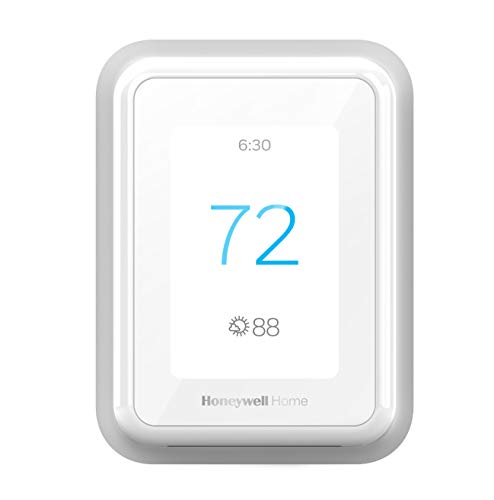
Honeywell Home T9 WiFi Smart Thermostat with Touchscreen

Honeywell RTH8500D 7-Day Programmable Thermostat, C Wire
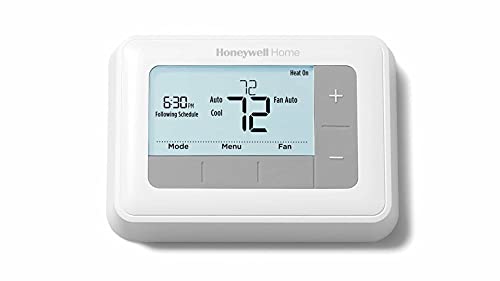
Honeywell Home 7-Day Flexible Thermostat

Google Nest Thermostat + Sensor, Obsidian

Google Nest Thermostat + Sensor, Silver
What Each Pick Brings To The Table
The Google Nest Temperature Sensor gives a compatible thermostat a more precise view of the room you spend time in. That matters in a home where the hallway feels comfortable while the bedroom stays chilly. You place the sensor in a preferred room and let the paired thermostat use that reading.
It’s a supporting device rather than a standalone thermostat, so it doesn’t meet every programmable-control need on its own. Homes using the listed Nest Learning Thermostat or Nest Thermostat E gain the most practical benefit. Compared with the self-contained Honeywell units later, this sensor focuses on one specific comfort problem.
Where It Helps
- Targets comfort in the room that matters instead of relying only on a hallway reading
- Battery power allows placement without nearby wiring
- Scheduling works with the compatible Nest thermostat’s temperature routine
- Compact placement suits bedrooms, living rooms, and other frequently used spaces
Points To Note
- It requires a compatible Nest thermostat, so it doesn’t function as a stand-alone controller
- Placement matters: a sensor near a vent, window, or direct sun may not represent the whole room
Who It Suits Best
This sensor suits Nest households dealing with uneven temperatures between rooms.
Look Elsewhere When
Choose the Honeywell Home T9 WiFi Smart Thermostat for built-in scheduling without needing a separate room sensor.
The Aowel AW701 keeps the controls narrow, which works well for a basic conventional system with one heating stage and one cooling stage. Single-stage means the thermostat controls a straightforward heating and cooling setup rather than a multi-stage arrangement. A blue-backlit LCD keeps the displayed temperature easy to read in dim hallways.
This choice offers manual temperature control, not programmable scheduling, so the list’s programming requirement gives it a limited place here. You benefit from the humidity display and clear interface in a simple home or rental. By contrast, both Honeywell 7-day models add real scheduling.
Everyday Wins
- Supports conventional systems with one heat stage and one cool stage
- Humidity readout adds useful context beside the temperature display
- Backlighting improves visibility during evening adjustments
Practical Considerations
- It has no scheduling, so comfort settings require manual changes
- Multistage heating and cooling systems fall outside its listed fit
- Installation compatibility depends on the existing low-voltage wiring and equipment
Feature Snapshot
The Right Fit
This thermostat fits people with basic single-stage HVAC who value simple manual controls over scheduling.
Another Choice May Suit
The Honeywell Home 7-Day Flexible Programmable Thermostat better serves households that need separate daily comfort periods.
The Honeywell Home T9 brings connected control to a thermostat used throughout the week. Its touchscreen gives you a central place to review settings, while Wi-Fi access separates remote control from being beside the wall unit. That convenience suits daily commuters and households with changing daytime and nighttime temperatures.
The system is also ready to work with smart room sensors, which extends control beyond the thermostat’s location. Monthly energy reports add useful context, although connecting a supported utility program introduces another setup step. Compared with the nonprogrammable Aowel, the T9 has substantially more day-to-day value for a changing routine.
What Helps Most
- Remote access makes temperature changes possible away from home
- Schedules can adapt to different parts of the day and week
- Room-sensor support targets uneven spaces without replacing the main wall unit
- Monthly energy reports provide a record for household planning
- The touchscreen presents controls in one central interface
Worth Bearing In Mind
- Wi-Fi and app setup require more configuration than a conventional thermostat
- Utility-report availability depends on account and program support
- Room sensors add separate placement and maintenance considerations
Made For
The T9 suits connected households that want flexible scheduling, remote access, and energy-use history.
Reach For A Different Pick When
The Google Nest Learning Thermostat with Sensor suits people who prefer routines that adapt automatically over time.
The Honeywell RTH8500D offers the most straightforward programmable option in this group. Separate settings for each day let you match weekdays to commuting schedules and weekends to slower mornings. Its touchscreen provides a more detailed control surface than the basic Aowel while avoiding the network setup required by the T9.
System compatibility is broad, covering conventional and heat-pump applications up to two heat and two cool stages. A C wire is required, so check your wall wiring before committing to installation. Schedule memory also preserves your routine through a power interruption.
Everyday Perks
- Independent daily programming accommodates different weekday and weekend routines
- Four periods per day provide useful control without extreme granularity
- Stored settings return after temporary power loss
- Filter and low-battery reminders support routine upkeep
Details To Watch
- The required C wire may require a wiring change during installation
- Older thermostat models commonly offer fewer daily periods than app-based alternatives
- Heat-pump setup needs correct equipment configuration to avoid unsuitable compressor operation
Core Details
Who Should Grab It
This model suits conventional or heat-pump homes with a C wire and a preference for offline programming.
Skip It When
The Honeywell Home T9 WiFi Smart Thermostat fits people who need remote access and app-based controls.
The Honeywell Home 7-Day Flexible Thermostat keeps programming approachable for people replacing their first digital wall unit. A large backlit display makes the current temperature and schedule easier to see, particularly during early morning or evening adjustments. The focused interface suits households that want weekly automation without starting a connected account.
Its flexible schedule lets you set preferred heating and cooling periods around familiar routines. You give up remote access, room sensors, and the detailed touchscreen found in the RTH8500D, but those extras aren’t essential for every home. The honest read is that simplicity is this model’s defining benefit.
Useful Highlights
- Large backlighting improves everyday temperature visibility
- Weekly schedules reduce repeated manual changes
- Smart Response adjusts heating and cooling run times around programmed periods
- The straightforward layout lowers the learning curve for new owners
Small Caveats
- No built-in Wi-Fi means no remote temperature changes
- Programming is less flexible than a touchscreen model with more daily periods
- Owners should confirm HVAC compatibility before replacing an existing thermostat
Feature Facts
Built With In Mind
This thermostat suits first-time programmable thermostat owners who prefer simple controls and readable settings.
A Better Fit Elsewhere
The Honeywell RTH8500D 7-Day Programmable Thermostat better serves people wanting distinct settings for every day and four periods per day.
The Obsidian bundle pairs a Nest Learning Thermostat with a second-generation room sensor, giving you both central and room-focused control. The thermostat learns preferred temperatures and schedules as your routine develops, which reduces the need to rebuild a fixed program after gradual changes. The sensor adds a more useful reading for a bedroom or living area.
This setup fits connected households willing to give an adaptive system time to understand their pattern. Compared with the Honeywell RTH8500D, there is less need to manage a fixed daily schedule. The trade-off is dependence on ecosystem setup and a learning period before behavior becomes fully predictable.
Noteworthy Benefits
- Adaptive routines adjust as occupancy and preferred temperatures change
- The included sensor improves control in a frequently occupied room
- Central scheduling reduces repeated manual thermostat changes
- Obsidian finish suits darker walls and understated interiors
Things To Weigh Up
- The adaptive system needs time and usage to establish a useful routine
- Connected features require compatible account and network setup
- Sensor placement affects the accuracy of room-level guidance
Who Will Love This
This bundle suits connected households whose schedules change gradually and benefit from adaptive control.
Where A Sibling Pick Shines
The Honeywell Home 7-Day Flexible Thermostat suits people who prefer a fixed weekly schedule and a simpler interface.
The silver Nest bundle carries the same adaptive thermostat-and-sensor approach as the Obsidian version, with the main difference centered on finish. Silver can blend more readily with brushed hardware, white trim, and lighter walls. You still get room-sensor guidance and routines that develop around normal occupancy.
It makes sense for apartments, condominiums, and other spaces where visual consistency matters and the heating or cooling system is supported. Unlike the earlier Honeywell models, this bundle prioritizes learning and connected control rather than manually configured periods. Color preference should drive the final distinction.
What It Does Well
- Adaptive temperature preferences reduce repetitive schedule editing
- The bundled sensor adds room-specific comfort guidance
- Silver finish coordinates easily with lighter interiors and metallic hardware
- Central control suits homes with changing daily occupancy
- The same core functions serve both connected and on-site adjustments
A Few Limitations
- Learning behavior takes time before it closely matches your routine
- Network and account configuration can feel less direct than an offline thermostat
- The sensor needs a sensible location away from direct environmental effects
Built With In Mind
This silver bundle suits apartment and condominium occupants who value adaptive control and a coordinated finish.
Consider Something Else When
The Google Nest Thermostat + Sensor, Obsidian is the more natural choice for interiors dominated by dark finishes.
Make Your HVAC Match Before You Shop
Check system type and wiring
A programmable thermostat only fits the equipment it was designed to control. Single-stage systems, multi-stage systems, conventional systems, and heat pumps can require different terminals and settings. Confirm the equipment type, stage count, and available wires before choosing a model, especially for the RTH8500D’s C-wire requirement.
Decide between fixed and adaptive schedules
Fixed schedules give you direct control over distinct daily periods. Adaptive systems learn preferred temperatures and routines over time, which helps households whose occupancy changes gradually. The Honeywell 7-day options favor predictable programming, while the Nest bundles suit people comfortable allowing behavior to develop.
Consider where the thermostat lives
The wall thermostat should represent an occupied area without sitting in direct sunlight or near a heating vent. A room sensor helps only when it is placed thoughtfully. For homes with a warm hallway and cooler bedroom, the Nest sensor bundle adds more relevance than a thermostat mounted in the central hallway.
Budget for installation details
Low-voltage wiring can be straightforward in some homes and incomplete in others. Low-battery reminders help with battery-powered controls, while a C wire supplies continuous power for models that require it. Checking your system in advance prevents the small thermostat replacement from becoming a larger electrical project.
Small Mistakes That Disrupt Temperature Control
Common Shopping Slip Ups
Choosing by appearance alone can hide an incompatible wiring or stage requirement. Count your equipment’s heat and cool stages first, and decide whether fixed schedules or adaptive control suit your routine. Room sensors also need deliberate placement, not simply an open shelf.
What The Higher Tier Adds
Connected and adaptive models add remote access, reports, or routines that refine themselves over time. Those extras make sense for changing schedules and uneven rooms, while a basic 7-day thermostat serves fixed routines with fewer setup considerations.
Frequently Asked Questions
Are all these devices programmable thermostats?
No. The Google Nest Temperature Sensor is a room sensor, and the Aowel AW701 is nonprogrammable. The Honeywell and Nest thermostat options provide temperature control, but scheduling capabilities differ.
Do programmable thermostats work with heat pumps?
Compatibility depends on the model and system configuration. The Honeywell RTH8500D supports heat-pump applications, while other units may be limited to conventional systems.
What is a C wire?
A C wire supplies continuous power to a thermostat in many low-voltage heating and cooling systems. Confirm that your wall has the required connection before choosing a model that needs it.
Are room temperature sensors necessary?
No. A central thermostat can manage a whole home, while a sensor helps represent a particular room. It becomes valuable in homes with uneven heating, cooling, drafts, or changing occupancy.
Is an adaptive thermostat easier to program?
It uses less manual schedule editing but requires compatible connected features and time to learn your routine. A fixed 7-day schedule offers more direct control over each daily period.
Final Verdict
Start with HVAC compatibility, then choose between fixed schedules and adaptive control. Conventional households gain useful programming from the Honeywell models, while the Nest bundles suit connected spaces that benefit from room-level guidance. The sensor-only and nonprogrammable choices serve narrower roles, so match the product to your equipment before focusing on finish or interface.
