


Touring builds fail around the edges more often than the frame suggests. A cluttered cockpit, weak side visibility, and an undersized rear light become frustrating quickly on dark roads, while finding one bike that suits touring and racing remains a different challenge entirely. This selection separates road-ready lighting upgrades from the one complete carbon bike, so you can match each part to your actual riding setup.
A Snapshot Of The Selections

RAVEMEN K1800 Smart Bike Light

RAVEMEN FR300/FR160 Bike Computer Mount
RAVEMEN FR1000 Adjustable Bike Headlight

RAVEMEN FR1100 SE/FR500 Wide-Angle Headlight

RAVEMEN TR150/TR250 Wide-Angle Tail Light
RAVEMEN CL01 300° Wide-Angle Tail Light

SAVADECK A7L Pro 2026 Carbon Racing Bike
The Picks, Examined More Closely
The K1800 appeals to touring riders who repeat the same commute and rarely want another brightness adjustment at the start of a ride. Its learning process takes five days, after which the night mode can respond to ambient light and remaining power rather than demanding constant manual control.
Unlike the FR1100 SE/FR500, which emphasizes road illumination and side coverage, the K1800 centers on automation. That makes it a practical cockpit companion for frequent city riders, though learning-based output may feel less transparent on routes that change constantly.
Standout Benefits
- Night output adapts to both darkness and available power
- Five-day learning reduces manual setup on repeated routes
- Daytime mode changes the pattern as surrounding light changes
- Automatic shutoff helps preserve power during parked stops
Things To Consider
- Smart behavior may not suit riders who prefer fixed output levels
- Road grime can mute sensor performance, so owners commonly keep the lens clean
Quick Facts
Built With In Mind
You benefit most from this light on a consistent evening commute or repeated local touring loop.
A Better Fit Elsewhere
RAVEMEN FR1100 SE/FR500 suits riders who prioritize stronger road output and a 270-degree spread over learned settings.
A wide-angle lens makes this mount more useful than a basic computer bracket at roundabouts, junctions, and busy junctions. The added peripheral visibility matters on touring rides where traffic approaches from several directions rather than staying directly ahead.
Compatibility is the deciding factor. Garmin-style mounts work across many computers and brackets, but Wahoo support requires the separately sold QTM01 insert and tab, so you should verify your hardware before ordering.
Everyday Wins
- Supports numerous Garmin-style bike computers and brackets
- Wide-angle lens improves visibility near junctions and roundabouts
- Combines navigation placement with peripheral road awareness
Practical Considerations
- Wahoo BOLT V1, Edge 130 Plus, and Edge TT mounting arrangements are excluded
- Extra mounting hardware may be required, and periodic checks are sensible after rough rides
Feature Snapshot
Who Will Love This
You’ll appreciate this mount most on a Garmin-equipped touring bike that visits traffic-heavy junctions.
Where A Sibling Pick Shines
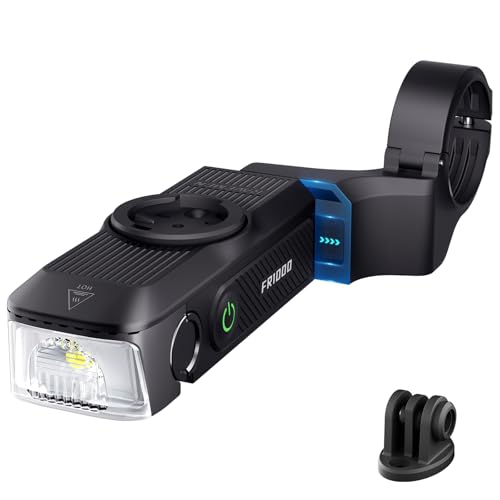
RAVEMEN FR1000 suits riders who want illumination and a Garmin-style computer bracket within one handlebar unit.
Handlebar clutter often begins with adding navigation to an already crowded touring cockpit. The FR1000 addresses that problem by combining the front light and computer bracket, giving you one assembly to position instead of two unrelated mounts.
The light head adjusts through 30 degrees, which helps move illumination between a longer road-facing view and nearby streets. You may find this especially useful on mixed routes, although the source does not provide enough output data to compare it directly with the 1,100-lumen FR1100.
Where It Delivers
- Integrated design reduces handlebar clutter
- Zero-to-30-degree adjustment supports changing road demands
- One mounting position keeps navigation and lighting aligned
- Compact form suits bikes with limited cockpit space
Small Caveats
- Brightness specifications are absent, making direct output comparison difficult
- Integrated parts mean one damaged unit can affect both functions
- You should clean the lens and inspect the mount after wet or rough rides
Core Details
The Right Fit
This light suits touring riders who value a clean handlebar more than choosing each computer and lamp separately.
Reach For A Different Pick When
RAVEMEN FR1100 SE/FR500 makes more sense for riders who need a specified 1,100-lumen maximum and wider daytime spread.
Road-focused touring riders get more explicit performance data from the FR1100 SE/FR500 than from the FR1000. Two high-intensity LEDs provide up to 1,100 lumens, while an upgraded lens spreads that output across the road and toward the sides.
Its 270-degree lens also supports a daytime warning flash, which makes the unit useful beyond full-dark rides. Compared with the K1800’s automated brightness, this model gives you a broader lighting envelope and more direct control for changing road conditions.
What Stands Out
- Up to 1,100 lumens supports demanding low-light routes
- 270-degree spread covers more of the road and side approaches
- Daytime flash adds visibility in brighter urban traffic
- Automatic on-off behavior reduces unnecessary handlebar input
- Six modes offer several steady and flash options
Points To Keep In Mind
- Maximum output alone doesn’t reveal runtime across all six modes
- Owners commonly wipe road film from the wide lens to preserve even output
Made For
Fast evening riders and commuters benefit from the specified brightness and broad visibility pattern.
Swap It Out When
RAVEMEN K1800 is the better fit for routes where learned automatic output matters more than maximum lumen output.
The TR150/TR250 brings unusually concrete output figures to the rear-light category. Four red LEDs produce up to 150 lumens in flashing mode, with a stated visibility range of 1.5 kilometers, useful for rural routes where following distances vary.
Its 280-degree field of view complements that rearward output, particularly at bends and wider junctions. Compared with the CL01’s 30-lumen horizontal strip, this option prioritizes brightness and distance, though your choice may depend on which mounting position your saddle permits.
Benefits That Matter
- Four red LEDs support a specified 150-lumen flashing output
- Claimed 1.5-kilometer visibility suits open roads
- 280-degree coverage reveals the bike from several rear angles
Less Ideal Details
- The mounting details are not specified, so frame compatibility deserves confirmation
- Frequent road grime can obscure the LEDs, and owners commonly keep the lens clean
Feature Facts
Best Suited To
Long-distance road riders benefit from the higher specified output and extended viewing angle.
Another Choice May Suit
RAVEMEN CL01 better serves riders who prioritize under-saddle or seatpost placement over maximum output.
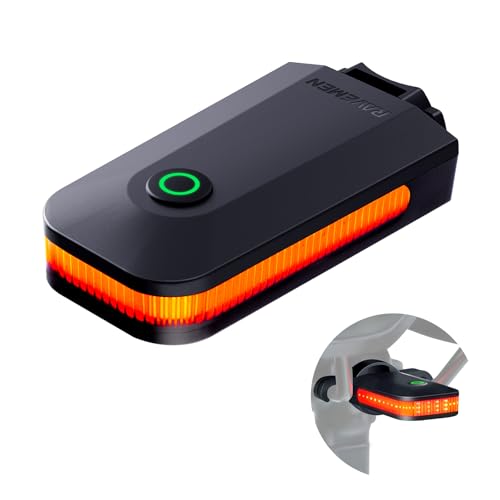
A horizontal strip spreads the CL01’s 30 lumens across a 300-degree angle, making the light’s shape as important as its raw output. That arrangement can remain visible from city streets, junctions, and trail approaches where a narrow rear-facing pattern may miss some angles.
Mounting flexibility is its stronger selling point. The saddle-rail bracket and included ties keep the unit close to the saddle, while the seatpost option lets you adjust its position according to frame shape and riding style.
Key Advantages
- Long horizontal strip creates a broad 300-degree field
- Under-saddle mount keeps the light close to the frame
- Seatpost mounting provides a second placement option
- Brake sensing supports automatic changes while riding
- Automatic operation offers five lighting modes
Possible Compromises
- Saddle-rail fit depends on the size and shape of your rails
- Thirty lumens is modest beside the TR150/TR250’s 150-lumen maximum
- Zip-tie mounting deserves periodic checks after rough rides
Who Should Grab It
Commuters, gravel riders, and saddle-equipped touring bikes benefit from the two mounting positions.
Look Elsewhere When
RAVEMEN TR150/TR250 suits riders who need a much higher specified flash output on open roads.
The A7L Pro 2026 is the lone complete bicycle here, but its racing focus makes it a narrower fit for adventure touring. The carbon frame, fork, wheelset, handlebar, and seatpost weigh 8.8 kilograms, giving paved-road riders a strong starting point for climbing and faster training.
Shimano R7120 24-speed components and hydraulic disc brakes suit a performance road setup, while the 90% preassembled package reduces some workshop work. It still lacks the rack, luggage, and tire provisions normally prioritized for multi-day carrying, so you shouldn’t mistake it for a drop-in touring solution.
Reasons It Performs
- The complete carbon componentset weighs 8.8 kilograms
- T800 carbon construction keeps weight low across major parts
- Shimano R7120 provides a 24-speed road configuration
- Hydraulic disc brakes support controlled stopping in wet conditions
- Ninety-percent assembly reduces initial setup work
Factors To Consider
- Racing geometry and components differ from unloaded adventure touring
- Some assembly and mechanical checks remain after delivery
- Owners commonly inspect carbon mounting points before tightening components
Technical Reference
The Right Fit
You’ll find this bike most convincing for paved-road fitness, club rides, and fast training rather than luggage-heavy touring.
Not Your Match When
RAVEMEN FR1100 SE/FR500 is the better fit for riders improving an existing adventure bike rather than choosing a complete road machine.
What Matters Before Touring
Start with the route and luggage. Multi-day trips reward racks, secure mounts, suitable tire clearance, and a comfortable cockpit; short evening rides may need nothing beyond dependable front and rear illumination. Match the bike to that work before considering cosmetic upgrades.
Lighting deserves separate attention because road speed changes what you can realistically notice. A wide-angle front lens helps at junctions, while a bright rear light adds useful information on open roads. Beam pattern, mounting position, runtime, and charging access matter more in daily use than headline lumens alone.
Compatibility errors create expensive returns. Confirm handlebar diameter, computer interface, saddle-rail shape, and mounting clearance before ordering. Wahoo users of the FR300/FR160 also need the separate conversion pieces, while CL01 riders should compare the bracket against their saddle dimensions.
For a complete bicycle, inspect the intended finish rather than assuming a lightweight road bike carries touring loads. Carbon components can reduce weight, but frame geometry, braking, component durability, luggage capacity, and assembly quality determine how the bicycle handles long days.
Key Distinments Across These Picks
Mistakes Worth Dodging
Don’t select brightness without checking runtime and mounting needs. A wide beam that sits poorly or a powerful lamp with inconvenient charging can undermine a clean touring setup.
What Separates Premium From Basic
Higher output and automation help only when their controls fit your route. You gain more from adaptive power, broader coverage, or integrated hardware than from added complexity that you won’t use.
Frequently Asked Questions
Are racing carbon bikes suitable for adventure touring?
Usually not without changes. A racing bike may lack luggage mounts, wider tires, and geometry suited to carrying equipment over long days.
What lighting matters most for night touring?
You need both road illumination and rear visibility. Front-beam placement and a wide rear field become especially valuable near junctions and slower traffic.
Should touring riders use automatic bike lights?
They suit repeated routes because brightness can respond to conditions and remaining power. Fixed-output controls may feel more familiar on frequently changing rides.
How do I check bike-light compatibility?
Compare the computer interface, handlebar diameter, saddle shape, and mounting position. Account for separately required adapters before installation.
Is a lighter carbon bicycle always better for touring?
Not necessarily. Low weight helps climbing, but luggage capacity, fit, component durability, and drivetrain suitability determine whether the bicycle works for your trip.
Final Verdict
For an existing adventure bike, the Ravemen lights cover distinct needs: automation, computer integration, road output, or rear visibility. The SAVADECK A7L Pro stands apart as a lightweight racing bicycle rather than a touring setup, so consider it only when paved performance is your primary goal. Choose the equipment that matches your route, cockpit, and carrying plan, not simply the longest feature list.
