


Rechargeable batteries rarely fail at the same moment. A game controller drains first, a remote waits on a shelf for weeks, and a camera needs dependable output during the moment you hope to capture. These AAA and AA lithium options suit people who want fewer disposable cells, clearer charging routines, and enough power for demanding household electronics.
The Picks In Brief
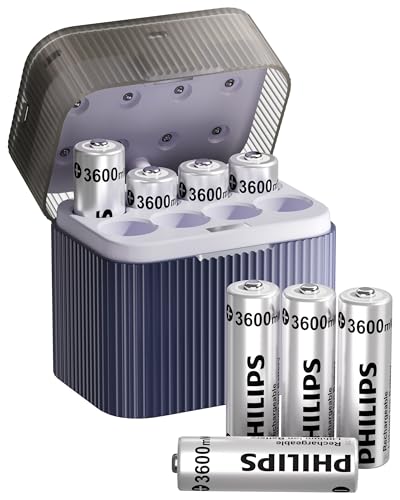
PHILIPS Rechargeable AA Lithium Batteries 8 Pack 3600mWh

Ostation 2 Pro AA AAA Rechargeable Battery Charging Station 24 Batteries
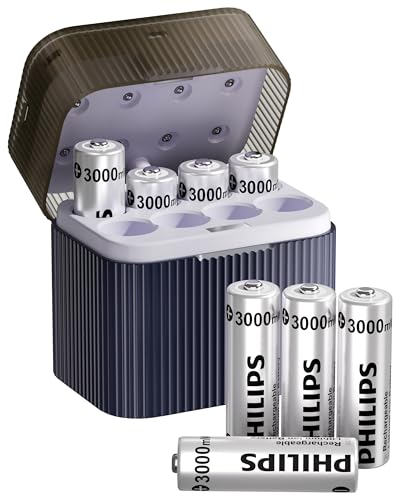
PHILIPS Rechargeable 3000mWh AA Lithium Batteries 8 Pack

AAA Rechargeable Batteries 12 Pack 1000mAh 1.2V Ni-MH

PHILIPS Rechargeable AAA Lithium Battery 8 Pack 1300mWh

PHILIPS Rechargeable AA Lithium Battery 4 Pack 3600mWh

AKTTKA Rechargeable AAA Lithium Batteries 8 Pack 1100mWh USB-C
Inside Each Recommended Option
High-drain devices make ordinary rechargeable cells feel less convincing. These PHILIPS AA lithium cells hold a stated 1.5V output and carry 3600mWh of energy, a combination aimed at controllers, cameras, and other power-hungry electronics.
Eight cells suit a household replacing several batteries at once, although the 3600mWh figure doesn’t make every AA device equally compatible. Check your equipment’s supported chemistry before committing.
The Value In It
- Constant 1.5V output suits devices that dislike voltage drops.
- The 3600mWh capacity targets demanding controllers and cameras.
- Eight cells reduce the need to alternate between two batteries.
- Lithium chemistry suits frequently used household electronics.
Practical Considerations
- Compatibility varies because not every AA device accepts lithium-ion cells.
- Keep paired cells on the same charge schedule for more consistent device behavior.
Feature Snapshot
Built With In Mind
You’ll benefit most with AA controllers, cameras, or household electronics that accept 1.5V lithium-ion batteries.
A Better Fit Elsewhere
PHILIPS Rechargeable AA Lithium Battery 4 Pack 3600mWh suits you better when four cells are enough and compact storage matters.
Battery clutter becomes manageable once charging and storage share one place. The Ostation 2 Pro accepts AA and AAA cells, provides 24 charging positions, and includes a tester for checking battery condition.
This is a system-level choice rather than a single chemistry upgrade. In a busy home, office, or workshop, its appeal comes from keeping mixed cells organized and available for routine rotation.
Positive Takeaways
- Charges and stores as many as 24 batteries.
- Handles both AA and AAA rechargeable formats.
- Built-in testing helps identify cells needing attention.
- Thermal-adaptive charging supports a managed routine.
Points To Note
- Its footprint needs more space than a four-battery case.
- Not every AA or AAA rechargeable chemistry will be appropriate for your devices.
- Charging mixed battery types can take longer than maintaining two small sets separately.
Core Details
Whose Shelf It Belongs On
Multi-device households and workshop users gain the most from its 24-position charging system.
Where A Sibling Pick Shines
AKTTKA Rechargeable AAA Lithium Batteries 8 Pack 1100mWh USB-C takes less space for travel-focused routines.
Eight AA cells and a charging case make this PHILIPS set easier to manage than loose batteries. Its 3000mWh capacity sits below the 3600mWh option, offering a different balance for compatible controllers, cameras, and household electronics.
The case also reduces charging friction. You can return cells to the same eight-slot setup instead of leaving each one beside a device.
Bright Spots
- The integrated case handles charging and storage.
- Eight AA cells cover several device rotations.
- Constant 1.5V output favors higher-drain electronics.
- USB-C charging avoids a separate wall charger.
Trade Offs
- Its 3000mWh capacity trails the 3600mWh PHILIPS AA set.
- Lithium compatibility still depends on each device.
- The case is bulkier than carrying only the loose cells.
Feature Facts
The Right Fit
You’ll find this eight-cell AA set most useful for compatible gaming, photography, and household electronics.
Consider Something Else When
PHILIPS Rechargeable AA Lithium Batteries 8 Pack 3600mWh serves you better when maximum stated capacity matters more than the case format.
Not every device wants 1.5V lithium cells. This 12-cell AAA set uses 1.2V Ni-MH chemistry, a format commonly associated with lower-drain remotes, wireless mice, thermometers, flashlights, and similar devices.
That distinction matters because charging chemistry and device voltage must work together. The larger count also makes this option practical for homes maintaining several low-drain devices.
Real Benefits
- Twelve cells suit homes with several AAA devices.
- Ni-MH chemistry targets 1.2V household electronics.
- The broad pack count supports frequent device rotation.
Small Caveats
- It won’t suit equipment designed specifically for 1.5V AAA lithium cells.
- A compatible charger is still needed.
- Regular use helps maintain cell performance more consistently than months of inactivity.
Made For
Remote-heavy homes and users of 1.2V-compatible mice, thermometers, and flashlights get the strongest fit.
Look Elsewhere When
PHILIPS Rechargeable AAA Lithium Battery 8 Pack 1300mWh suits you better for 1.5V-compatible controllers and remotes.
AAA devices can draw demanding current despite their small size. These PHILIPS lithium cells maintain a stated 1.5V output and provide 1300mWh, targeting controllers, remote controls, and other compatible household electronics.
The eight-slot Type-C station makes the set easier to rotate than scattered loose cells. Compared with the 12-pack Ni-MH option, the voltage is higher but the chemistry is less broadly compatible.
Points In Its Favor
- Constant 1.5V output supports higher-drain AAA devices.
- 1300mWh provides a stated 30% longer service life than conventional Ni-MH rechargeable batteries.
- Eight independent charging positions simplify rotation.
- The Type-C station consolidates charging and storage.
A Few Limitations
- Devices explicitly limited to Ni-MH chemistry may not accept these cells.
- Independent charging can take longer with only part of the case occupied.
Technical Highlights
Who Will Love This
You’ll appreciate this set most with 1.5V-compatible controllers, remotes, and compact high-drain devices.
Another Choice May Suit
AAA Rechargeable Batteries 12 Pack 1000mAh 1.2V Ni-MH serves homes needing more low-drain 1.2V cells instead.
Four cells keep the same 3600mWh high-output proposition as the larger PHILIPS AA option with less storage committed to it. That makes sense for one camera, one controller, or a second charging setup away from home.
For heavy multi-device rotation, the eight-cell version remains easier to manage. This smaller set instead offers a focused way to carry four compatible lithium cells without doubling your gear.
Practical Pluses
- 3600mWh targets AA cameras and game controllers.
- A four-cell count keeps travel and drawer storage compact.
- Constant 1.5V output suits compatible high-drain devices.
- The charging box keeps four related cells together.
Worth Noting
- Four cells provide less rotation across multiple devices.
- Older equipment may specify Ni-MH rather than lithium-ion compatibility.
- Keep the cells away from moisture and extreme heat during storage.
Right For
You’ll find this four-pack useful for one demanding AA device or a compact secondary set.
Reach For A Different Pick When
PHILIPS Rechargeable AA Lithium Batteries 8 Pack 3600mWh fits you better for several high-drain AA devices.
Each AKTTKA AAA cell contains its own USB-C connection, eliminating a separate battery dock. The included one-to-four cable lets you charge as many as four cells from a suitable 5V adapter, laptop, power bank, or vehicle USB port.
That design fits travel and compact workspaces more naturally than a large charging station. Its stated 1100mWh capacity is below the PHILIPS AAA set, so high-drain use deserves closer device checking.
Benefits That Matter
- Individual USB-C ports remove the need for a docking station.
- Four cells can charge simultaneously from several common USB sources.
- Charging takes about two hours, with a tolerance of 30 minutes.
- Flashing and steady LEDs communicate charge status.
Details To Watch
- Four-at-once charging requires the supplied cable and a suitable 5V source.
- The 1100mWh rating trails the 1300mWh PHILIPS AAA option.
- Remove batteries from devices before charging to prevent contact damage.
Quick Facts
Built For
Travelers and compact-workspace users gain the most from direct USB-C charging.
A Better Fit Elsewhere
PHILIPS Rechargeable AAA Lithium Battery 8 Pack 1300mWh suits you better when higher stated capacity and a docking station matter.
Choose Chemistry Before Capacity
Check Device Compatibility
Start with the manual, not the package size. A 1.5V lithium cell and a 1.2V Ni-MH cell may share the same physical AAA or AA format while behaving differently inside your equipment.
Match Energy To The Load
Energy capacity is measured in milliwatt-hours, or mWh. Higher figures can support longer or heavier use, but the device must also accept the cell’s voltage and rechargeable chemistry.
Decide How You’ll Charge
Docking cases simplify rotation, while individual USB-C ports reduce equipment. Choose the format that fits your travel routine, available outlets, and storage space.
A Smarter Charging Setup
Common Shopping Slip Ups
Don’t assume every rechargeable battery fits every charger or device. Match battery size, voltage, chemistry, and charging requirements before adding a new set to your household.
What Higher Capacity Buys
More stated mWh matters most for controllers, cameras, and other high-drain devices. Low-drain remotes may run long enough that compatibility and convenient charging matter more than additional capacity.
Frequently Asked Questions
Can AAA lithium batteries replace ordinary alkaline cells?
Only in devices that support 1.5V lithium-ion batteries. Check the manufacturer guidance because voltage, current draw, and chemistry requirements can vary.
Is Ni-MH better than lithium for household devices?
Ni-MH often fits low-drain 1.2V devices, while lithium targets 1.5V applications and higher output. Compatibility matters more than the chemistry name.
Can you charge lithium AA and AAA batteries together?
Only through a charger specifically designed for their size, voltage, and chemistry. A mixed AA and AAA dock remains suitable only for compatible cell types.
Why choose individual USB-C battery ports?
They remove the need for a battery dock and support convenient charging from suitable laptops, power banks, adapters, or vehicle USB ports. The included cable limits simultaneous charging to four cells.
How should rechargeable batteries be stored?
Keep charged cells clean, dry, and away from extreme heat. A case or charging station makes the set easier to rotate and reduces the chance of leaving loose cells uncharged.
Final Verdict
Choose PHILIPS 3600mWh AA cells for compatible high-drain equipment, or step down to the four-cell version for a compact setup. AAA users can favor the Ostation 2 Pro for centralized charging, the PHILIPS 1300mWh set for higher stated capacity, or AKTTKA cells for dock-free USB-C charging. The right choice is the one that matches your device voltage and fits your actual charging routine.
