


Camera batteries create a frustrating divide: disposable cells keep draining, while unfamiliar rechargeables can introduce voltage and compatibility questions. You need dependable 1.5V power for flash units, wireless triggers, remotes, and compatible cameras, plus a charger your setup can actually support. These options cover high-capacity lithium systems, dependable NiMH packs, and smaller sets for lighter kits.
The Main Contenders

PHILIPS 8-Pack AA Rechargeable Lithium Batteries 1.5V 3000mWh

Energizer Power+ AA NiMH Batteries 2000mAh 4-Pack

Eneloop pro AAA NiMH Batteries BK-4HCCA8BA 8-Pack
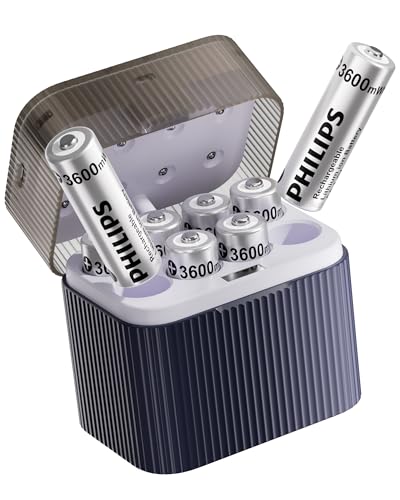
PHILIPS 8-Pack AA Lithium Batteries 1.5V 3600mWh

Energizer Power Plus Rechargeable AA Batteries 4-Pack

PHILIPS 3600mWh AA Rechargeable Lithium Batteries 1.5V 4-Pack

Blinkspower Rechargeable AA NiMH Batteries 3000mAh 8-Pack
Inside Each Recommended Option
Constant 1.5V output gives this lithium pack an edge over conventional 1.2V NiMH cells in accessories that expect standard alkaline voltage. That stability matters during a long event, when voltage decline can interrupt a remote, trigger, or other compatible high-drain device.
Eight cells suit photographers who rotate batteries across several accessories, though the 3000mWh rating remains lower than PHILIPS’s 3600mWh sets. The integrated Type-C charging case also reduces the loose-battery clutter that usually gathers in a camera bag.
Real-World Strengths
- Maintains a stated 1.5V output throughout discharge.
- Eight batteries support rotation between multiple devices.
- The case charges through USB Type-C.
- Capacity suits cameras, controllers, and household electronics that accept rechargeable lithium cells.
Worth Noting
- Compatibility matters because not every device accepts 1.5V lithium rechargeables.
- Charging cases can be overlooked during travel, so keep the case with the batteries rather than separating them.
Key Specs
Built With In Mind
This set fits event photographers and serious hobbyists who need several 1.5V cells for compatible camera accessories.
A Better Fit Elsewhere
Energizer Power+ AA NiMH Batteries 2000mAh 4-Pack suit photographers whose devices are explicitly designed for standard 1.2V NiMH cells.
Standard NiMH chemistry makes this a familiar option for digital cameras and accessories designed around 1.2V cells. NiMH, short for nickel-metal hydride, is a rechargeable chemistry widely used in AA-sized equipment and standard NiMH chargers.
The four-cell pack is more modest than the eight-cell sets, yet it covers the needs of a photographer with one backup pair. Compared with the constant-voltage PHILIPS lithium options, this Energizer set relies on normal NiMH discharge behavior, so checking your device’s battery specification matters.
The Case For It
- Specifically positioned for digital-camera use.
- 2000mAh capacity provides a practical balance for compatible devices.
- Standard AA format supports familiar charging systems.
- Four cells are enough for a camera and one rotating backup pair.
Trade Offs
- The 2000mAh rating is lower than the 3000mAh and 3600mWh alternatives here.
- Only four cells are included, limiting rotation across a large accessory kit.
- Devices designed specifically for 1.5V lithium chemistry may not be the right match for 1.2V NiMH.
Quick Facts
Made For
This set suits beginners and regular digital-camera users who already rely on standard NiMH AA equipment.
Consider Something Else When
PHILIPS 8-Pack AA Lithium Batteries 1.5V 3600mWh better serve compatible high-drain setups that prioritize constant voltage and eight-cell rotation.
Here’s the important distinction: these are AAA batteries, not AA cells. They fit AAA-powered accessories such as suitable flash units, wireless controls, remotes, or small electronics, but they cannot replace AA batteries in a compartment designed for the larger format.
Within AAA devices, the pack brings substantial capacity, arriving precharged and ready for use. Its specified charge capacity reaches 980mAh typical and 930mAh minimum, making it more compelling for high-drain accessories than a small-capacity convenience pack.
A Favorable Mix
- High nominal capacity supports demanding AAA electronics.
- Eight cells provide broad rotation and sharing options.
- Precharged packaging reduces setup before leaving home.
- Specified recharge capability reaches 500 cycles.
Small Caveats
- The AAA format makes this unsuitable for AA camera compartments.
- Capacity figures describe stored charge, which does not directly guarantee runtime in every device.
- Your equipment and charger must both support AAA NiMH cells.
Who It Suits Best
This pack fits photographers with several compatible AAA-powered accessories who need high-capacity cells and an eight-cell rotation.
Look Elsewhere When
Energizer Power Plus Rechargeable AA Batteries 4-Pack suit users whose camera equipment requires AA rather than AAA cells.
The 2-in-1 case handles both charging and storage, a useful combination for a photographer who dislikes loose cells rolling through a camera bag. Its Type-C port also reduces cable juggling at a hotel desk or in a vehicle.
Eight 3600mWh lithium batteries increase both capacity and rotation compared with Item 1. The trade-off is greater importance placed on compatibility, since constant 1.5V lithium output differs from standard 1.2V NiMH behavior.
The Value In It
- Holds 3600mWh per battery for extended compatible-device runtime.
- Maintains a stated 1.5V output across discharge.
- Eight cells make frequent rotation practical.
- The case combines organized storage with Type-C charging.
- Claimed 1200-cycle lifespan suits long-term repeat use.
Practical Considerations
- The eight-cell kit occupies more space than a four-battery set.
- Use only with devices that support rechargeable 1.5V AA lithium chemistry.
- The charging case should travel with the set to keep storage and charging together.
Technical Highlights
Right Fit For
This set suits active photographers who need eight constant-voltage cells and prefer one integrated travel case.
Another Choice May Suit
PHILIPS 3600mWh AA Rechargeable Lithium Batteries 1.5V 4-Pack better serve photographers who prefer a lighter kit with the same stated cell capacity.
A small camera kit often needs only two working cells and a pair of replacements. This four-battery Energizer set covers that basic rotation without adding eight cells, an integrated lithium case, or another charger to your bag.
Its appeal is simplicity. Standard rechargeable AA positioning makes it practical for devices that support the format, while the smaller pack amount can be easier to manage for casual shooting, studio remotes, and mixed household equipment.
Good Reasons To Consider
- Four cells cover a basic working-and-spare arrangement.
- The standard AA format suits compatible camera accessories.
- Its simple format avoids carrying a larger eight-cell kit.
- Rechargeable cells suit repeated use in compatible devices.
Details To Watch
- The source provides no specific capacity figure, making direct runtime comparison difficult.
- Confirm that your device accepts rechargeable AA cells before replacing disposables.
- A separate compatible charger may be needed, depending on your existing equipment.
Who Should Grab It
This pack suits casual photographers and beginners who need a modest number of standard rechargeable AA cells for compatible accessories.
Reach For A Different Pick When
Blinkspower Rechargeable AA NiMH Batteries 3000mAh 8-Pack suit multi-device households that need more cells and a stated higher capacity.
Four high-capacity cells make this a more travel-conscious alternative to PHILIPS’s eight-cell 3600mWh set. You retain the stated constant 1.5V output and 3600mWh capacity while carrying two fewer batteries.
The charging box doubles as organized storage and accepts connections from power banks, car chargers, or USB ports at 5V/3A. That flexibility is useful on location, although the box’s intelligent matching chip is designed specifically for compatible PHILIPS lithium cells.
Strong Points
- 3600mWh capacity supports longer compatible-device use.
- Constant 1.5V output closely matches common disposable AA voltage.
- Four cells provide a lighter balance between working and spare batteries.
- 5V/3A charging supports several common power sources.
Possible Compromises
- Only four cells are included for rotation.
- The charging box is designed around compatible PHILIPS lithium batteries.
- Devices limited to standard 1.2V NiMH operation need closer compatibility checking.
Feature Facts
The Right Fit
Travel photographers benefit most when four cells and a compact integrated charging box align with their equipment.
Where A Sibling Pick Shines
PHILIPS 8-Pack AA Lithium Batteries 1.5V 3600mWh better serve event photographers who need twice as many cells for uninterrupted rotation.
The 3000mAh rating places this NiMH set between Energizer’s 2000mAh four-pack and PHILIPS’s 3600mWh lithium capacity. That middle ground can work well for camera accessories, controllers, flashlights, and other compatible high-use electronics.
Eight cells also make shared charging practical across a household. The catch is electrical format: NiMH operates at 1.2V, so equipment designed specifically for 1.5V batteries may not be appropriate, including Blink cameras according to the stated compatibility warning.
Why It Works Well
- 3000mAh capacity supports longer use in compatible high-drain devices.
- Eight cells distribute across cameras, controllers, and household gear.
- Standard 1.2V NiMH suits many rechargeable AA applications.
- Claimed recharge capability reaches 1500 cycles.
- The broad device range makes sharing within a household practical.
Worth Bearing In Mind
- The 1.2V output is unsuitable for equipment requiring 1.5V cells.
- Blink camera systems are specifically excluded by the stated voltage requirement.
- Eight batteries require organized charging to avoid mixing full and depleted cells.
Feature Rundown
Whose Shelf It Belongs On
This set fits households that use many compatible 1.2V NiMH devices and want one large AA battery pool.
Swap It Out When
PHILIPS 3600mWh AA Rechargeable Lithium Batteries 1.5V 4-Pack suit compact kits whose compatible devices require stable 1.5V output.
What Matters in a Camera Battery System
Start with the camera or accessory manual. Some devices accept only alkaline cells, while others support specific rechargeable chemistries or voltage ranges. Treating size, voltage, and charging format as one compatibility check prevents a costly mismatch.
Voltage should settle the first question
AA is a physical size, not a complete electrical specification. Disposable alkaline cells usually provide 1.5V, while standard NiMH rechargeables commonly operate at 1.2V; rechargeable lithium AA options may maintain 1.5V.
Cameras with explicit rechargeable-lithium support can benefit from stable output, while NiMH remains practical for equipment designed around that chemistry. Don’t compare mAh and mWh as though they are interchangeable units.
Capacity reflects different measurements
Milliampere-hours, abbreviated mAh, measure charge, while milliwatt-hours, abbreviated mWh, measure stored energy. Batteries at different voltages cannot be compared accurately using only one of those figures.
For your camera kit, runtime in the actual device matters more than a large number on a package. High-drain flash equipment, low-drain remotes, and mixed-use households create different demands.
Charging format controls convenience
A charger sold separately gives you more control over mixed battery inventories, while an integrated case simplifies storage and charging. Check whether the case accepts standard USB power, and never combine lithium and NiMH cells in a charger that does not explicitly support both formats.
Pack size reflects rotation
Four batteries usually cover one working pair and one spare pair. Eight cells help during events, shared household use, or travel where losing a small battery would be inconvenient; the larger kit, however, occupies more space and requires more disciplined charging.
Battery Details That Matter
Mistakes Worth Dodging
The most consequential mistake is focusing on capacity while ignoring the required voltage. AAA also remains a different size from AA, so an AAA pack cannot serve an AA compartment despite the similar rechargeable format.
Keep cells grouped by chemistry and use the charger specified for that set. A complete battery system also depends on steady charging habits, since mixed batches can make it harder to tell which cells need more time.
What Separates Premium From Basic
Higher-capacity cells, constant-voltage lithium designs, and integrated charging cases account for many price differences. Those additions matter most for compatible high-drain equipment, frequent travel, or households sharing one battery pool.
For occasional remote-control use, a basic four-cell NiMH setup may be enough. Paying more becomes more sensible as runtime, rotation, and transport convenience become central to your photography routine.
Frequently Asked Questions
Are rechargeable AA batteries suitable for cameras?
Only when the camera or accessory explicitly supports that battery type. Check the required size, voltage, and rechargeable chemistry in its documentation.
Is 1.5V always better than 1.2V?
A higher voltage is not automatically better. A 1.5V rechargeable lithium cell suits compatible devices, while 1.2V NiMH may be the intended format for your equipment.
Can rechargeable batteries be used in a flash unit?
Many compatible flash units use standard AA cells, including suitable rechargeable models. Confirm voltage, chemistry, and charging requirements before replacing disposable batteries.
How should mixed camera batteries be stored?
Store cells by type in a dry case away from extreme heat and moisture. Keep rechargeable batteries grouped with their compatible charger instead of mixing lithium and NiMH cells.
Does battery capacity determine camera runtime?
Capacity affects potential runtime, but your device’s draw, battery age, temperature, and chemistry also matter. Check the stated mAh or mWh alongside the equipment requirements.
The Takeaway
The right camera battery depends less on the largest capacity number and more on voltage, chemistry, size, and charger support. Constant-voltage PHILIPS lithium sets fit compatible high-use equipment, Energizer options suit standard NiMH setups, and AAA packs belong only with AAA-powered accessories. Match the battery to the device first, then choose capacity and pack size according to your shooting schedule.
