


Finding dependable AA power starts with matching the battery to the job. Remotes, flashlights, toys, and game controllers place different demands on runtime, voltage, and rechargeability, so the most useful option depends on your routine. This list covers alkaline and rechargeable choices, with clear distinctions for occasional use, high-drain electronics, and setups where reusing batteries quickly matters.
How The Shortlist Stacks Up

PHILIPS 8-Pack AA Rechargeable Lithium Batteries 3000mWh

Powermax 100-Count Double AA Alkaline Batteries

Voniko AA Batteries 12 Pack 1.5V Alkaline

Allmax AA Maximum Power Alkaline Batteries 100 Count
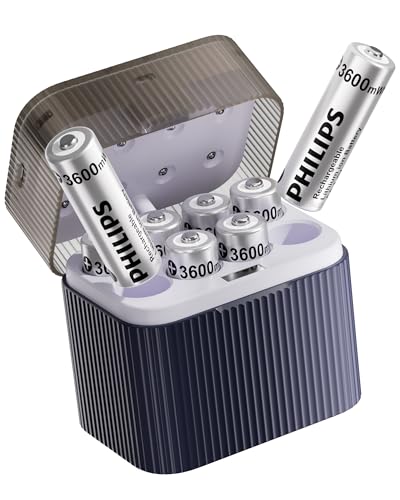
PHILIPS 8-Pack Rechargeable AA Lithium Batteries 3600mWh

BEVIGOR Rechargeable AA Batteries 24 Pack 2800mAh NiMH

PHILIPS 4-Pack AA Rechargeable Lithium Batteries 3600mWh
More On The Choices That Made The List
Constant voltage matters in game controllers, where weak output can interrupt wireless play. This PHILIPS set supplies 1.5V lithium power across eight cells, giving your setup a rechargeable alternative to disposable alkaline batteries.
The 3000mWh capacity appears especially relevant to cameras and other demanding electronics. You may find the bundled Type-C case more convenient than keeping a separate charger and loose batteries, although rechargeable lithium requires regular charging rather than shelf-style storage.
Practical Advantages
- Steady 1.5V output suits devices that behave poorly with declining voltage.
- Eight cells cover two controllers or several remotes at once.
- The integrated Type-C case reduces charging clutter.
- Rechargeability suits frequent gaming and photography sessions.
Worth Noting
- Rechargeable batteries need access to a charging routine, so they do not suit rarely used emergency devices as neatly as alkaline cells.
- You should confirm device compatibility wherever rechargeable lithium chemistry is specifically restricted.
Key Specs
Who It Suits Best
You benefit most with multiple wireless controllers, cameras, or other high-drain electronics that regularly need fresh power.
Consider Something Else When
Powermax 100-Count Double AA Alkaline Batteries suit emergency kits, low-use remotes, and households wanting a large disposable reserve.
A hundred cells solve a practical problem shared by busy homes and offices: batteries are needed in drawers, remotes, clocks, toys, and small appliances simultaneously. Powermax packages them in reusable, resealable storage, which helps keep unused cells together.
Alkaline chemistry requires no charger and suits intermittent use, making it simpler than the PHILIPS rechargeable set. The tradeoff is replacement as cells deplete, and owners commonly report that long storage still carries the usual alkaline risks of heat and moisture.
A Few Highlights
- The 100-count quantity supports broad household coverage.
- Resealable packaging helps organize partially used stock.
- Disposable chemistry works well for low-frequency replacement.
- The stated 10-year shelf life suits emergency and seasonal reserves.
- Consistent discharge is useful in demanding household electronics.
Small Caveats
- Depleted cells still create recurring replacement waste.
- For frequently used game controllers, rechargeable cells may reduce long-term replacement frequency.
Feature Snapshot
Made For
You get the most convenience in offices, busy family rooms, and emergency supplies containing several battery-powered devices.
A Better Fit Elsewhere
BEVIGOR Rechargeable AA Batteries fit a game room or toy collection where rechargeable cells are used nearly every week.
Twelve cells offer a more measured reserve than the 100-count Powermax package, making Voniko convenient for maintaining several remotes without accumulating a large disposable stockpile. The standard 1.5V format fits many common household electronics.
Its stainless-steel casing and layered internal design are intended to improve handling and leakage resistance, which matters in mixed storage drawers. You may find runtime claims less meaningful for low-drain remotes, so device demand remains the deciding factor.
Practical Pluses
- The 12-count package covers common household replacement needs.
- 1.5V output suits standard AA-powered remotes and accessories.
- Metal casing adds a practical layer of cell protection.
Possible Compromises
- Alkaline cells need replacement after discharge rather than routine recharging.
- Users running many demanding devices may exhaust 12 cells sooner than with a larger package.
- Mixed old and new cells can produce uneven performance within one device.
Who Will Love This
You benefit most with several AA-powered remotes or household accessories that need a straightforward disposable replacement.
Look Elsewhere When
Allmax AA Maximum Power Alkaline Batteries suit larger homes and offices needing a deeper reserve for demanding devices.
Large inventories change the calculation for demanding electronics. Allmax provides 100 cells in the familiar 1.5V alkaline format, making the package well suited to households that regularly cycle through batteries in toys, lighting, toys, and other equipment.
Compared with Voniko’s smaller 12-count pack, the quantity is easier to distribute across a closet, office, or workshop. The honest trade-off is storage: more cells create more opportunities for mixed age, moisture exposure, or accidental discharge.
Useful Touches
- One hundred cells support extensive household distribution.
- Standard 1.5V output works with many AA-compatible devices.
- The bulk format reduces replenishment frequency.
- Power-focused construction targets higher-drain applications.
Practical Considerations
- Large packs need cool, dry storage away from direct heat.
- Disposable chemistry can be less economical for devices used daily.
- Older and newer alkaline cells are best used in separate device groups.
Quick Facts
The Right Fit
You gain the most from a large family or office that operates numerous battery-powered devices and values ready storage over recharging.
Another Choice May Suit
Powermax 100-Count Double AA Alkaline Batteries offer a smaller-use alternative for homes primarily needing remotes, clocks, and emergency supplies.
This PHILIPS set expands on the first model with 3600mWh capacity, an eight-cell count, and a case that handles both storage and charging. Its steady 1.5V output targets game controllers, cameras, and other electronics that draw more heavily than a television remote.
The Type-C connection accepts 5V/2A power, while the status-recognition chip helps manage charging within the case. Unlike bulk alkaline options, this setup is built for repeat use, though you must recharge cells before placing them in seldom-used emergency equipment.
What Helps Most
- The 3600mWh capacity exceeds the smaller PHILIPS set’s capacity.
- Constant 1.5V output supports voltage-sensitive high-drain devices.
- Eight cells cover multiple controllers or camera accessories.
- The combined storage and charging case keeps the set together.
- Type-C charging simplifies power connections.
Trade Offs
- Recharge scheduling adds maintenance that disposable alkaline cells do not require.
- Device-specific charging requirements should be checked before adoption.
Technical Highlights
Built With In Mind
You get strong utility with multiple high-drain devices and a preference for organized, reusable battery storage.
Where A Sibling Pick Shines
PHILIPS 8-Pack AA Rechargeable Lithium Batteries 3000mWh offer a lower-capacity alternative for lighter rechargeable use.
Twenty-four pre-charged NiMH cells suit a home juggling toys, remote controls, flash units, and wireless accessories. NiMH means nickel-metal hydride, a rechargeable chemistry widely used in AA devices, while 2800mAh describes each cell’s stored charge capacity.
Unlike the 1.5V lithium options, these cells operate at 1.2V, so device compatibility deserves attention. Their stated 1500-cycle lifespan and low self-discharge design may suit frequent use, although a separate AA charger is required unless your existing charger supports NiMH cells.
Strengths Worth Knowing
- Twenty-four cells create a substantial reusable inventory.
- Pre-charged cells reduce setup friction before first use.
- Low self-discharge supports batteries sitting between uses.
- The 1500-cycle target suits regular repeat charging.
Factors To Consider
- The 1.2V operating level is lower than standard alkaline cells.
- A compatible charger adds another item to your setup.
- NiMH cells may not suit every smart-home or specialty device.
Whose Shelf It Belongs On
You benefit most with a varied household that uses rechargeable batteries across several low- and medium-drain devices each week.
Swap It Out When
PHILIPS 4-Pack AA Rechargeable Lithium Batteries 3600mWh suit a smaller setup centered on 1.5V smart-home devices.
Four cells keep this PHILIPS rechargeable set compact while retaining 3600mWh capacity and constant 1.5V output. That balance works well for smart-home accessories, remote controls, and camera equipment that benefit from consistent voltage but do not require a large rechargeable inventory.
The storage box doubles as a charger and uses 5V/3A input for faster replenishment through USB sources, power banks, or vehicle adapters. Its matching chip is designed for compatible PHILIPS lithium AA cells, which means you cannot treat it as a universal charger.
Standout Benefits
- Constant 1.5V output supports demanding electronics.
- 3600mWh capacity suits extended rechargeable use.
- The compact four-cell format avoids unnecessary bulk.
- Charging and storage share one dedicated case.
Details To Watch
- The case is intended for matching PHILIPS batteries rather than mixed models.
- Only four cells are included, limiting simultaneous device coverage.
Core Details
Best Suited To
You gain the most from a compact smart-home or photography setup needing two reusable AA pairs at a time.
Reach For A Different Pick When
PHILIPS 8-Pack Rechargeable AA Lithium Batteries 3600mWh suit households managing several controllers or camera devices.
Choosing Between Disposable and Rechargeable AA Power
Match chemistry to the device
Alkaline cells offer simple, shelf-ready power for remotes, clocks, and emergency equipment. Rechargeable batteries fit frequently used controllers, toys, cameras, and accessories where regular charging offsets the cost of disposable cells.
Check voltage and charger requirements
Disposable AA cells and 1.5V lithium rechargeable models often fit the same device, while 1.2V NiMH cells require closer attention. Read the device guidance before mixing battery types or using a charger that does not support the selected chemistry.
Consider pack size and storage
Large alkaline packs suit broad reserves, while compact rechargeable sets reduce clutter around frequently used devices. Store dry cells away from heat and moisture, and keep rechargeable lithium cells in their intended charging case.
Think about replacement rhythm
A 100-count alkaline pack is practical for homes and offices with many scattered battery compartments. Smaller 12-count options make sense for a handful of remotes, while rechargeable sets pay more attention to charging access and long-term use.
Avoiding Battery Choice Errors
Mistakes Worth Dodging
Don’t assume every AA rechargeable battery uses the same voltage or charger. Confirm the device’s battery guidance, remove exhausted cells together, and avoid mixing rechargeable lithium, NiMH, and alkaline cells in one compartment.
What Separates Premium From Basic
Premium options mainly add capacity, stable voltage, larger inventory, or an integrated charging case. The extra design matters most for demanding electronics and frequent use; simple remotes and emergency storage may need little beyond dependable alkaline power.
Frequently Asked Questions
Are rechargeable AA batteries suitable for everyday remotes?
Yes, provided the remote accepts rechargeable AA chemistry and voltage. You trade disposable convenience for repeat use, so keeping the cells charged matters more with frequently accessed devices.
How many AA batteries does a controller need?
Most wireless game controllers use two AA cells, but the device manual provides the definitive number. Higher-powered accessories may use more or require a different battery format.
Can different AA battery types be mixed?
Avoid mixing alkaline, NiMH, and rechargeable lithium cells in the same device. Differences in voltage and discharge behavior can produce uneven performance and make replacement timing harder to predict.
Where should unused alkaline batteries be stored?
Keep unused cells in a cool, dry place away from direct heat, moisture, and metal containers. Keeping them in their original packaging helps reduce accidental contact between terminals.
Is a large alkaline pack more convenient than a charger?
A large pack suits varied, infrequent use across many devices. A rechargeable set becomes more practical when the same controllers, toys, or accessories run down batteries regularly.
Final Verdict
Choose alkaline power for broad household coverage, emergency reserves, and devices used only occasionally. Choose rechargeable lithium for high-drain electronics that need steady 1.5V output, while NiMH remains useful for compatible multi-device setups. The honest winner is whichever chemistry matches your device demands and your willingness to manage charging.
