


Rechargeable AA batteries can rescue a photography routine from dead batteries at the worst moment, especially during outdoor sessions, long family events, or demanding controller use. The difficult part is choosing between nickel-metal hydride, or NiMH, cells and rechargeable lithium-ion models that hold a steadier 1.5V output. The right battery depends on your camera’s compatibility, charging setup, and appetite for runtime.
The Essentials At A Glance

Panasonic Eneloop 4th Generation 8-Pack AA NiMH Batteries

PHILIPS 8-Pack AA Rechargeable Lithium Batteries 3000mWh

Energizer Rechargeable AA NiMH Batteries

Eneloop Panasonic BK-3HCCA12FA Pro AA 12-Battery Pack
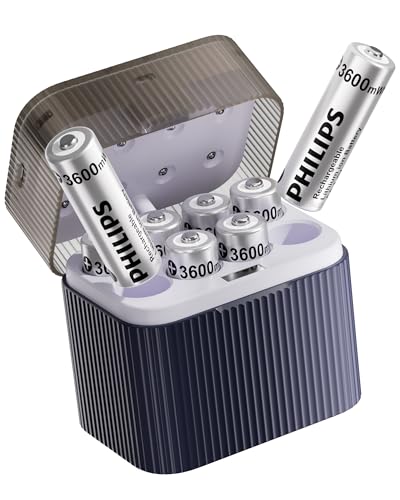
PHILIPS 8-Pack AA Rechargeable Lithium Batteries 3600mWh

PHILIPS 3600mWh 4-Pack AA Rechargeable Lithium Batteries

PHILIPS Rechargeable AAA Lithium Batteries 1300mWh 8-Pack
Why These Options Stand Out
These precharged NiMH cells suit photographers moving between AA cameras, remotes, toys, and household electronics. NiMH chemistry is broadly familiar to battery chargers, while the fourth-generation format emphasizes recharge longevity and cold-condition resilience. For most mixed-device households, that flexibility makes this the steadiest all-purpose choice here.
The eight-cell arrangement gives you useful rotation during long trips or busy shooting days, and the included holder supports organized storage. Compared with the PHILIPS lithium options, these cells may finish at a gradually declining voltage rather than maintaining a constant 1.5V, so demanding electronics can behave differently.
Practical Pluses
- Precharged cells reduce setup friction on your first photography trip.
- Recharge-cycle guidance supports long-term household ownership.
- Cold-temperature capability suits winter landscapes and outdoor work.
- The eight-pack supports camera and accessory rotation.
- The supplied holder keeps spare cells together.
Worth Noting
- NiMH output declines during use, unlike constant-voltage lithium alternatives.
- Use a charger designed for NiMH cells and keep matched battery groups together.
At A Glance
Made For
You’ll appreciate this set most in mixed households or cold-weather photography that needs dependable AA rotation.
A Better Fit Elsewhere
Choose PHILIPS 3600mWh 4-Pack AA Rechargeable Lithium Batteries instead for fewer devices that demand constant 1.5V power.
Constant 1.5V output gives this PHILIPS set a different character from conventional NiMH batteries. That steady voltage can suit electronics that dislike the gradual decline of nickel-metal hydride cells, particularly remotes, controllers, and compatible cameras. You still need to confirm that your device accepts rechargeable lithium AA cells before committing.
Eight cells provide a practical inventory for a busy household, and the 3000mWh rating places this option below PHILIPS’s 3600mWh sets in stated capacity. Compared with the Eneloop 4th Generation pack, it looks more specialized, especially for electronics that respond well to regulated voltage.
Strengths Worth Knowing
- Constant 1.5V voltage supports steady operation in compatible electronics.
- Eight cells support rotations across several devices.
- The 3000mWh capacity targets controllers, cameras, and similar equipment.
- Lithium-ion chemistry avoids the usual NiMH discharge curve.
Practical Considerations
- Compatibility varies, and some older devices reject lithium AA cells.
- Owners commonly need a compatible dedicated charger rather than a basic NiMH charger.
- The integrated charging-case details are less specific than those of the 3600mWh PHILIPS sets.
The Right Fit
Modern-device households benefit most when several AA-powered controllers or accessories need stable output.
Another Choice May Suit
Panasonic Eneloop 4th Generation 8-Pack AA NiMH Batteries suit you better when broad charger compatibility matters more than constant voltage.
Energizer’s straightforward NiMH package focuses on the gear that drains AA cells quickly: digital cameras, handheld gaming devices, and CD players. Its 2300mAh rating gives it more stated capacity than standard 2000mAh-class cells, which can be helpful during flash-heavy sessions. For photographers already using NiMH chargers, the familiar format keeps ownership uncomplicated.
The available pack choices let you match a small four-cell kit to a camera or a 12-cell group to a larger device collection. That flexibility is the trade-off against the PHILIPS lithium sets, whose constant-voltage output is more deliberate.
Key Advantages
- 2300mAh capacity supports higher-drain AA equipment.
- Four- and 12-count options suit different inventories.
- Up to 1,000 recharge cycles support regular rotation.
- Standard NiMH charging equipment is easier to source.
Smaller Caveats
- The discharge voltage falls gradually instead of staying at 1.5V.
- You may need separate groups for devices with different cell ages.
- High-drain suitability remains equipment-dependent despite the capacity rating.
Feature Snapshot
Who It Suits Best
You’ll find this pack practical for digital photography and gaming setups that already rely on AA NiMH equipment.
Consider Something Else When
Eneloop Panasonic BK-3HCCA12FA Pro AA 12-Battery Pack offers higher stated capacity for more intensive rotation.
Capacity is the defining attraction here. The eneloop pro line provides a typical 2600mAh rating, placing this pack above ordinary 2300mAh NiMH cells for users who repeatedly drain batteries. A 12-cell inventory suits multi-camera days, demanding accessories, and households that prefer to rotate matched sets rather than recharge a small group constantly.
The stated 500-cycle figure sits below the fourth-generation Eneloop’s 2,100-cycle guidance, and the pro cells target power rather than maximum cycle count. You trade some longevity for higher capacity, which can be sensible for a photo day and less convincing for occasional use.
Features That Help
- Typical 2600mAh capacity benefits flash-heavy camera use.
- Twelve cells provide a substantial matched rotation set.
- Stored charge retention supports readiness between outings.
- Precharged packaging enables immediate use.
Trade Offs
- The 500-cycle figure is lower than the standard Eneloop option’s claim.
- NiMH voltage declines during discharge.
- A 12-cell set adds storage and charging demands for occasional photographers.
- Keep the cells grouped by age to preserve predictable rotation.
Built With In Mind
Intensive photographers and event shooters benefit most from its higher capacity and generous inventory.
Where A Sibling Pick Shines
Panasonic Eneloop 4th Generation 8-Pack AA NiMH Batteries suit longer-term cycling priorities and lighter eight-cell storage.
This larger PHILIPS lithium set targets high-drain electronics that benefit from both regulated 1.5V output and 3600mWh capacity. The eight-cell format gives controllers, cameras, and household devices a broad rotation pool, while the stated 1200-cycle life presents a long ownership horizon. Compared with the 3000mWh version, the extra capacity is the central upgrade.
The Type-C case does more than recharge: it stores the cells in the correct positions. You’ll value that organization in a travel bag, studio drawer, or family electronics bin, although compatibility remains the decisive checkpoint.
Positive Takeaways
- 3600mWh capacity targets demanding AA-powered electronics.
- Constant 1.5V output avoids NiMH’s gradual voltage decline.
- Eight cells enable rotation across several devices.
- Type-C charging simplifies power connections.
- The integrated case organizes cells during storage.
Things To Consider
- Your equipment must support rechargeable lithium AA cells.
- Use the dedicated charging system to preserve the case’s status-detection function.
- The higher capacity adds little value to very low-drain remotes.
Quick Facts
Who Will Love This
You’ll get the most benefit from power-hungry controllers, compatible cameras, and households replacing several AA devices at once.
Reach For A Different Pick When
PHILIPS 8-Pack AA Rechargeable Lithium Batteries 3000mWh may suit you better when moderate capacity and a larger inventory better match lighter-demand electronics.
Four cells keep this PHILIPS set easier to carry than the eight-cell 3600mWh package, without surrendering its high capacity or regulated 1.5V output. It makes sense for travel, smart-home controls, and photography trips centered on a single AA-powered device. You may also prefer its tidier footprint in a small desk or camera cabinet.
The storage box doubles as a charger and uses 5V/3A input. That can work with a power bank, vehicle charger, or suitable USB supply, making it a more flexible travel companion than a stationary NiMH setup. As with the other lithium picks, compatibility remains essential.
Noteworthy Benefits
- The four-cell bundle limits storage bulk.
- 3600mWh capacity supports compatible high-drain devices.
- Constant voltage benefits electronics sensitive to NiMH discharge decline.
- 5V/3A charging accepts several common power sources.
Areas To Watch
- Four cells may be thin for households replacing many device batteries.
- The storage box is designed for PHILIPS-compatible lithium cells.
- Older AA devices may reject this rechargeable lithium format.
- Keep the case dry and charge cells through the supplied system.
Technical Reference
Right Fit For
Travelers and small households benefit most from a compact two-device rotation with dedicated charging storage.
Another Choice May Suit
PHILIPS 8-Pack AA Rechargeable Lithium Batteries 3600mWh fit you better when eight cells and broader device rotation are worth the extra space.
AAA cells earn a place when your devices use the smaller format. This PHILIPS set combines eight rechargeable lithium-ion cells, 1300mWh of stated energy, and constant 1.5V output for compatible remotes, controllers, and household electronics. It expands your rechargeable inventory without substituting AA cells for equipment that requires AAA dimensions.
The eight-slot Type-C charging station keeps every cell separated and makes bulk charging straightforward. Compared with the AA lithium sets, capacity is naturally lower because of the smaller format, while the charging organization remains a strong point for mixed-device homes.
What It Does Well
- Eight AAA cells cover remotes, controllers, and household devices.
- Constant 1.5V output suits compatible lithium-powered electronics.
- The eight-slot Type-C station organizes routine charging.
- The stated 1200-cycle target supports repeated ownership.
Less-Strong Areas
- AAA batteries cannot replace AA cells in oversized compartments.
- Some older electronics may reject rechargeable lithium chemistry.
- The 1300mWh rating is lower than the AA lithium alternatives here.
- Charge through the supplied system to avoid pairing mistakes.
Core Details
Best Suited To
You’ll get strong utility in a household with several AAA remotes, controllers, or smaller electronics.
Look Elsewhere When
Panasonic Eneloop 4th Generation 8-Pack AA NiMH Batteries suit you better when your devices require larger AA cells and NiMH charging.
Choosing Batteries Your Camera Will Accept
Start with the device documentation, not the battery listing. Some cameras and accessories accept AA rechargeable cells without trouble, while older equipment may work only with specific nickel-metal hydride formats. Confirm the battery size, chemistry, voltage behavior, and charging requirements before building a set.
Capacity is only one part of the decision. Milliamp-hours, abbreviated mAh, describe charge capacity, while milliwatt-hours, abbreviated mWh, combine charge and voltage. You can’t compare every 2600mAh NiMH cell directly with every 2600mWh lithium cell without considering their different discharge behavior and device requirements.
Constant Voltage or NiMH Flexibility?
Rechargeable lithium AA cells maintain a stated 1.5V output through their discharge, which can suit controllers and compatible cameras sensitive to falling voltage. NiMH batteries remain the more established AA rechargeable format, offer broad charger familiarity, and include higher-capacity choices for intensive shooting.
Match the Charger to the Chemistry
A basic NiMH charger cannot be assumed suitable for lithium cells, while a dedicated lithium charging case may rely on recognition chips for its batteries. Use the supplied or specified charging system, avoid mixing chemistries, and keep matched cells together to support predictable rotation.
Think Beyond Camera Use
Remotes, game controllers, toys, clocks, and household accessories can consume the same inventory as your photography equipment. A larger pack reduces charging interruptions, while a four-cell set keeps storage compact. Your actual device mix matters more than a universal pack size.
Practical Battery Decisions
Common Shopping Slip Ups
Ignoring battery-compartment markings can lead to wasted purchases or failed charging. Treat AA and AAA as different sizes, confirm whether your charger accepts the chemistry, and avoid assuming every rechargeable AA cell produces identical voltage behavior.
What The Upgrade Payoff Means Here
Higher-tier lithium sets typically add constant voltage, greater stated capacity, and integrated charging storage. Those features can suit demanding electronics and travel, while an ordinary NiMH pack remains the more straightforward choice for familiar equipment and long cycle-count priorities.
Frequently Asked Questions
Are all rechargeable AA batteries compatible with cameras?
No. Check the camera manual or battery compartment for the required size and chemistry, especially before choosing rechargeable lithium AA cells.
Is constant 1.5V output useful for camera equipment?
It can be, because compatible devices receive steadier voltage than NiMH cells provide during discharge. Compatibility remains the deciding factor.
Can I charge lithium AA batteries with a NiMH charger?
No. Use a charging system specified for the battery chemistry and model, since the voltage profiles and charging methods differ.
Are AAA batteries interchangeable with AA batteries?
No. AAA cells are smaller and do not fit AA compartments or produce the same power behavior.
Should rechargeable batteries remain stored in their case?
Charging cases can simplify storage and organization for compatible models. Keep them dry, follow the case’s charging guidance, and avoid exposing cells to heat or moisture.
Final Verdict
Choose NiMH cells for familiar charging systems and long cycling priorities, especially with the standard Eneloop or higher-capacity pro pack. Choose regulated lithium AA cells for compatible high-drain electronics and organized travel charging, and use the PHILIPS AAA set only for devices that require the smaller format. Compatibility comes first; capacity and convenience follow.
