


Most 9V lithium battery listings provide batteries rather than a dedicated charger, so matching the chemistry, voltage, and connector matters more than the category label. This lineup covers the practical pieces you need for household electronics, including lithium 9V cells, compatible testers, protective storage, and higher-current chargers for separate 12.8V LiFePO4 packs.
Your Options, Compared

40A 12V LiFePO4 Battery Charger

20A 12V LiFePO4 Battery Charger

Amazon Basics 8-Pack 9 Volt Lithium Batteries

Tamfile Fireproof Battery Organizer Case
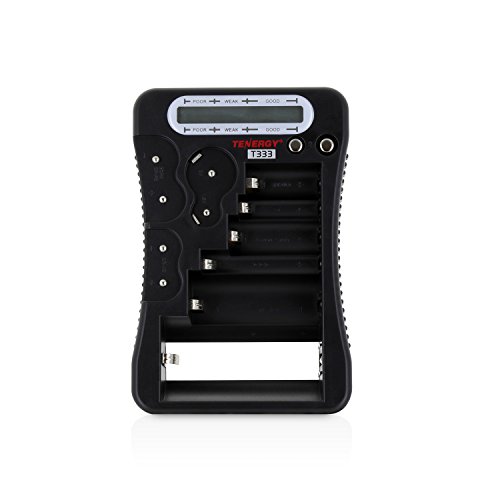
Tenergy T-333 Universal Battery Tester

5A 12V LiFePO4 Charger

10A 12V LiFePO4 Charger
A Deeper Look At The Lineup
This model targets demanding 12.8V LiFePO4 setups rather than household 9V cells. Its 40A output suits large four-cell packs used in energy storage, marine equipment, or off-grid systems, where waiting through a low-current charge can be inconvenient.
Compared with the 5A and 10A SIPIDEAUT options, the trade-off is less restraint during charging. For technicians and experienced system owners, that capacity makes sense; beginners should confirm battery chemistry, voltage, and polarity before connecting anything.
Benefits That Matter
- The 40A output reduces charging time for suitably sized high-capacity packs.
- The 14.6V setting targets a four-series 12.8V LiFePO4 configuration.
- Broad AC input support accommodates more travel and installation settings.
Practical Considerations
- This is not a 9V battery charger, despite its broad listing category.
- High current demands correct wiring, ventilation, and battery compatibility.
Core Details
Built With In Mind
This charger best suits experienced owners maintaining large 12.8V LiFePO4 power systems.
A Better Fit Elsewhere
The 5A 12V LiFePO4 Charger better fits a smaller pack where a lower charging current is easier to manage.
The middle ground among these SIPIDEAUT chargers balances pack size and charging demand. A 20A output can serve larger 12.8V systems without asking for the operating margin associated with the 40A model.
That makes the charger more relevant for weekend projects and regularly used off-grid equipment. The listed battery range begins at 20Ah, so you should treat pack size as part of the selection rather than relying on voltage alone.
Why It Works Well
- A three-stage process adjusts charging through bulk, absorption, and float stages.
- The 20A current offers a practical middle tier for 20Ah-and-larger packs.
- Wide-range AC input supports use across more locations.
- Floating current helps maintain charge after the main charging phase.
Things To Consider
- Compatibility is limited to four-cell 12.8V LiFePO4 batteries.
- The smaller charge rate takes longer than the 40A charger.
- Connector cleanliness and terminal tightness need routine inspection.
Feature Snapshot
The Right Fit
This model suits owners of 20Ah-or-larger LiFePO4 packs seeking a moderate charging rate.
Consider Something Else When
The 10A 12V LiFePO4 Charger suits a smaller battery system where charging speed matters less.
This is the only conventional 9V lithium battery set in the lineup, rather than a charger. Eight cells suit households that regularly replace batteries in cameras, handheld games, outdoor sensors, or compatible smart-home equipment.
Its shelf-life claim makes it useful for emergency supplies, but device manuals still control whether lithium chemistry is accepted. Check the battery compartment, original battery type, and any charging requirements before making a swap.
Strengths Worth Knowing
- The eight-pack reduces repeated purchases for multi-device homes.
- A stated 10-year storage life suits long-term reserve kits.
- The operating range spans cold and hot environments.
- Lithium cells retain useful shelf capacity better than common alkaline alternatives.
Worth Noting
- Not every 9V compartment or charger accepts lithium chemistry.
- Used cells still need removal from equipment during long storage.
- The package supplies no charger.
Quick Facts
Made For
You benefit most from this set when several household devices use replaceable 9V lithium cells.
Another Choice May Suit
Tamfile Fireproof Battery Organizer Case better serves you when secure mixed-battery storage matters more than fresh cells.
Loose batteries tend to scatter across drawers, and the Tamfile case gives you one defined home for cells and small accessories. Its silicone fiberglass construction is listed for heat exposure, moisture resistance, and containment of damaged batteries.
That role differs from charging. You gain organization and a protective storage layer, but damaged cells still need careful isolation from combustible materials, and the case cannot repair or recharge anything.
The Practical Payoff
- Silicone fiberglass construction provides a defined storage barrier.
- Water resistance makes the case practical in garages and utility areas.
- Contained organization reduces loose batteries in household drawers.
Small Caveats
- Damaged cells should still be handled according to local disposal guidance.
- The case stores batteries but provides no charging function.
Who It Suits Best
You benefit most from the case when a garage, workshop, or hallway cabinet holds many mixed batteries.
Where A Sibling Pick Shines
Amazon Basics 8-Pack 9 Volt Lithium Batteries serves you better when the goal is replenishing compatible devices with ready-to-use cells.
A mixed collection of batteries creates guesswork, while the Tenergy T-333 turns that uncertainty into a quick screen. You can check common AA, AAA, C, D, and 9V cells before they reach a device or waste bin.
The tester also handles several lithium coin and cylindrical formats. It is most useful in a busy household with multiple remotes, cameras, sensors, toys, and flash equipment, rather than a home dedicated to one battery type.
What Makes Sense
- The LCD provides a straightforward battery condition reading.
- Broad format support reduces the need for separate testers.
- Compact handling works well for sorting a household drawer.
- The included tester supports pre-use checks before batteries are installed.
Points To Note
- A general reading does not replace charger-specific diagnostics.
- Button-cell handling can expose contacts to your fingers.
- Owner-reported accuracy can vary with contact quality and battery chemistry.
Feature Rundown
Best Suited To
You gain the most from this tester when several household devices use different replaceable battery formats.
Reach For A Different Pick When
Amazon Basics 8-Pack 9 Volt Lithium Batteries better fits a need for fresh cells rather than condition checks.
Lower current makes this the most manageable SIPIDEAUT charger for a small four-cell LiFePO4 pack. It targets packs rated from 5Ah upward and suits applications where charging speed is secondary to keeping a compact reserve system maintained.
Solar storage and small off-grid projects are plausible uses, depending on pack design and manufacturer guidance. The lower current also means you should expect longer charging sessions than with the 10A, 20A, or 40A versions.
Points In Its Favor
- The 5A output aligns with smaller packs beginning at 5Ah.
- A lower current creates a straightforward match for compact systems.
- Wide AC input suits use across regions.
Trade Offs
- Small packs take longer to charge at 5A.
- The charger does not support household 9V lithium batteries.
- Terminals need periodic cleaning in dusty installations.
Who Should Grab It
This charger suits you when maintaining a compact 12.8V LiFePO4 pack rated at 5Ah or higher.
Swap It Out When
The 10A 12V LiFePO4 Charger better fits you when faster replenishment matters more than minimizing current.
The 10A charger occupies a useful middle position between the 5A model and the 20A or 40A options. It targets 12.8V four-cell LiFePO4 packs rated from 10Ah upward, making capacity alignment easier to understand.
For regular off-grid use, a marine installation, or a small energy-storage setup, this current level can balance pack size and replenishment time. The listing does not identify this as a 9V charger, so you need separate logic for small rectangular cells.
Useful Strengths
- The 10A output offers a moderate charging rate for medium packs.
- A 10Ah minimum capacity provides a clear matching threshold.
- Wide AC input supports travel and fixed installations.
- The simpler current sits below the demands of the 20A and 40A models.
Potential Drawbacks
- It remains incompatible with ordinary 9V lithium cells.
- Large-capacity packs can take longer than with higher-current choices.
- Correct four-series wiring is essential.
Built For
You benefit most from this charger with a 12.8V LiFePO4 pack rated between 10Ah and the manufacturer’s permitted range.
A Better Fit Elsewhere
The 40A 12V LiFePO4 Battery Charger better serves you when a large pack requires substantially higher charging current.
Choosing Power and Battery Compatibility
Start with the battery rather than the charger headline. A 9V lithium cell and a four-cell 12.8V LiFePO4 pack belong to different electrical categories, and neither SIPIDEAUT charger is designed to charge household 9V batteries.
Match Chemistry and Cell Count
LiFePO4 is the battery chemistry, while four-series describes four cells connected electrically in sequence. Confirm both the 12.8V nominal voltage and 14.6V charging profile before connecting a charger.
Match Current to Pack Capacity
Charging current influences replenishment time and electrical demands. The 5A, 10A, 20A, and 40A choices are better compared against each battery pack’s capacity and the guidance supplied with that pack.
Treat 9V Lithium as Replaceable Power
The Amazon Basics set is a battery supply, not a charging system. Check each device’s manual for 9V lithium compatibility, and use separate charging equipment only when the manufacturer specifically supports it.
Consider Testing and Storage
A tester helps identify likely depleted cells, while a protective case keeps batteries organized. Neither replaces compatible charging equipment, so your complete setup may need all three functions.
Avoiding Battery Category Mix-Ups
Mistakes Worth Dodging
Do not treat every 9V or lithium listing as a compatible charger. Voltage, chemistry, cell count, polarity, and connector design must all align with your equipment.
What The Higher Tier Buys
Higher-current LiFePO4 models shorten charging sessions for suitably rated packs. The added capacity helps larger systems, while smaller packs gain less from paying for power they cannot accept.
Frequently Asked Questions
Do these products include a dedicated 9V lithium battery charger?
No. The Amazon Basics option supplies eight 9V lithium cells, while the other products focus on testing, storage, or charging separate 12.8V LiFePO4 packs.
Can a LiFePO4 charger charge a 9V battery?
You should not connect these two battery categories. A four-cell LiFePO4 pack has a much higher voltage than one 9V cell, so you need equipment specified for the exact battery you own.
Which charger handles the smallest LiFePO4 pack?
The 5A 12V LiFePO4 Charger targets four-cell packs rated from 5Ah upward. You should still verify your pack’s specifications and charging instructions before use.
Can the Tenergy T-333 test 9V batteries?
Yes. The T-333 T-333 Universal Battery Tester supports 9V cells as part of its wider household battery format selection.
Where should loose 9V lithium batteries be stored?
The Tamfile Fireproof Battery Organizer Case offers a more structured storage option for mixed batteries. Keep cells away from moisture, heat sources, damaged equipment, and incompatible charging contacts.
The Takeaway
Your actual need determines whether this lineup helps: replacement 9V lithium cells, a broad battery tester, safer organization, or a LiFePO4 pack charger. Match voltage and chemistry before anything else, then choose the lowest current that suits your pack and operating pattern.
