


A 9V rechargeable battery can simplify everything from smoke detectors to guitar pedals, multimeters, and emergency equipment. The real distinction lies in charging design, capacity, pack size, and device compatibility rather than a promise of identical runtime. This comparison covers both rechargeable lithium models and disposable alkaline or lithium alternatives, helping you choose based on maintenance needs, storage plans, and how often you replace batteries.
The Essentials At A Glance

PHILIPS 9V Lithium Batteries 4 Pack

PHILIPS 9V Alkaline Batteries 4 Pack
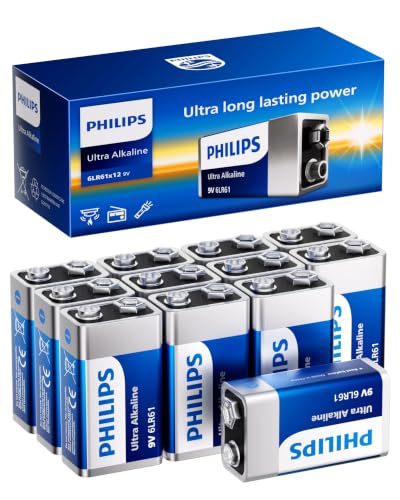
PHILIPS 9V Alkaline Batteries 12 Pack
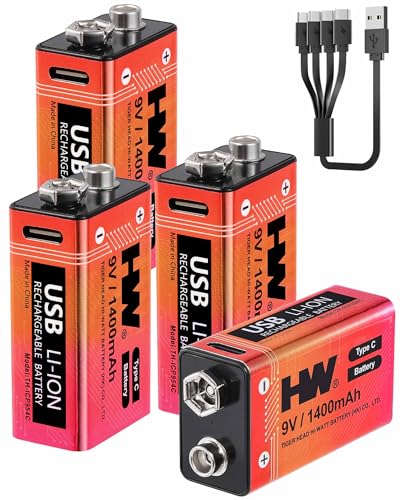
HW USB-C 9V Batteries 1400mAh 4 Pack

EBL 9V Lithium Battery 5400mWh 4 Pack

LINENGXIA 1100mAh 9V Batteries 2-Pack

GOROFO USB-C 9V Batteries 5-Pack
The Details Behind The Selections
Disposable lithium chemistry suits devices used only occasionally, including some smoke alarms, carbon monoxide detectors, and emergency equipment. The 1200mAh rating indicates relatively high capacity for a 9V cell, which can be reassuring in a security cabinet or seasonal emergency kit.
Despite that capacity, these cells cannot be recharged. That makes the PHILIPS 9V Lithium Batteries 4 Pack a practical alternative to the rechargeable choices later, particularly for homes where replacing a sealed battery is simpler than managing a charging schedule.
A Few Highlights
- 1200mAh capacity supports devices needing dependable 9V power.
- Lithium chemistry offers a disposable alternative to recurring charging.
- Four cells simplify stocking several alarm or detector locations.
- The non-rechargeable design avoids battery-management accessories.
Worth Noting
- These batteries are not rechargeable despite the lithium chemistry.
- Device manuals may specify a particular chemistry or battery type.
- Used cells still need responsible disposal through an appropriate program.
Key Specs
Who It Suits Best
This pack works best for households prioritizing simple replacement over rechargeable ownership.
Consider Something Else When
Choose the HW USB-C 9V Batteries 1400mAh 4 Pack instead when regular recharging fits your routine.
Alkaline remains a familiar format for remote controls, meters, household sensors, and equipment kept for occasional use. This four-pack emphasizes storage life rather than rechargeability, making it more relevant to an emergency drawer than a frequently serviced device.
The stated 10-year shelf life applies to properly stored batteries, not a promise of 10 years of active service. Compared with the PHILIPS disposable lithium option, it trades a higher-capacity chemistry for slower self-discharge and longer storage planning.
Strong Points
- Low self-discharge supports long periods between use.
- Four cells cover separate rooms or emergency-kit locations.
- The familiar alkaline format suits many common 9V devices.
- No charger or recharge schedule adds to ownership.
Minor Gripes
- Shelf life doesn’t equal continuous-use runtime.
- Alkaline cells become disposable after discharge.
- Storage conditions matter for long reserve periods.
Quick Facts
The Right Fit
It suits households building a low-frequency reserve for mixed 9V-powered equipment.
Another Choice May Suit
The PHILIPS 9V Alkaline Batteries 12 Pack makes more sense for larger homes needing a deeper reserve.
Twelve cells cover a home with numerous alarms, meters, remote controls, or seasonal equipment without needing frequent restocking. For occasional-use devices, that reserve can be more useful than carrying charging cables around the house.
The up-to-10-year shelf-life claim makes this a storage-oriented option, subject to proper handling. You gain quantity and low self-discharge, but you still won’t get the repeated-use economics of the rechargeable sets that follow.
What Works In Its Favor
- A twelve-cell pack serves multiple household locations.
- Low self-discharge supports stored emergency reserves.
- Disposable cells simplify ownership and transport.
- The larger quantity reduces the need for repeat orders.
Practical Considerations
- Twelve cells create more inventory to store.
- Alkaline chemistry isn’t rechargeable.
- The shelf-life claim assumes proper storage.
- Some rechargeable-only devices may reject disposable batteries.
Made For
It suits larger homes and hobbyists who prefer rotating disposable reserves.
A Better Fit Elsewhere
The GOROFO USB-C 9V Batteries 5-Pack offers a smaller rechargeable setup for mixed electronics.
Built-in USB-C charging turns these 9V cells into a practical middle ground between disposable batteries and charger-dependent models. A 1400mAh stated capacity makes the set relevant to smoke detectors and other home equipment that benefits from a reduced replacement rhythm.
The included four-in-one cable supports multiple batteries during a charging session, while an LED indicator gives a basic status signal. You should still check each detector’s manual because rechargeable-cell requirements vary.
Where It Excels
- 1400mAh provides substantial stated capacity per cell.
- Built-in USB-C sockets reduce charging clutter.
- The four-in-one cable supports a coordinated charging session.
- LED indicators make charging status easier to check.
Details To Watch
- Compatibility depends on the device maker’s battery guidance.
- Charging several batteries takes more time than charging one.
- The cable should be stored where it won’t receive damage.
Technical Highlights
Built With In Mind
It suits households with compatible detectors that benefit from recurring USB-C charging.
Where Another Pick Shines
The EBL 9V Lithium Battery 5400mWh 4 Pack fits high-use setups needing a much higher stated energy rating.
EBL’s 5400mWh energy rating gives these rechargeable lithium-ion cells a clear specification advantage over the mAh figures used by several neighboring picks. Energy measured in watt-hours combines capacity and voltage, so direct comparison with mAh requires care.
The stated 1600-plus charge cycles and two-hour USB-C charging schedule suit intensive daily use, particularly across compatible instruments and work equipment. Actual runtime still depends on the device, temperature, and discharge conditions.
Practical Advantages
- 5400mWh provides a high stated energy figure.
- 1600-plus charge cycles support repeated ownership.
- USB-C charging completes in a stated two hours.
- The four-pack supports device rotation while charging.
Trade-Offs To Consider
- The four batteries create a larger charging rotation.
- High-drain devices can still reduce usable runtime.
- Compatibility varies among electronics and safety devices.
Feature Snapshot
Who Will Love This
It suits power users running several compatible 9V devices in a regular rotation.
Look Elsewhere When
The LINENGXIA 1100mAh 9V Batteries 2-Pack is simpler for occasional use and limited storage.
A two-cell format keeps charging and storage simple for one compatible device or a small rotation. The 1100mAh rating lands near the PHILIPS disposable lithium capacity, but these cells add a built-in Type-C charging interface for repeated use.
That simplicity comes at the cost of less reserve capacity than the four- and five-cell sets. For occasional testing or compact tool storage, the smaller footprint may matter more than owning extra cells.
Features That Help
- 1100mAh offers useful rechargeable capacity.
- The two-pack suits compact storage and travel.
- Built-in Type-C avoids a separate charging cradle.
- Rechargeability simplifies recurring device changes.
Where It May Fall Short
- Only two cells are included for rotation.
- Charging intervals vary by device demand.
- The cable needs protected storage.
Right Fit For
It fits occasional users who value a small rechargeable set over broad household coverage.
Reach For A Different Pick When
Choose the GOROFO USB-C 9V Batteries 5-Pack for more devices and a broader charging rotation.
Five rechargeable cells offer the broadest device spread in this roundup, covering smoke detectors, guitar pedals, and multimeters. Each carries a stated 1100mAh capacity, while the included two-in-one cable simplifies charging multiple units.
The two-hour charging claim makes scheduled top-ups easier to plan. An integrated charging-management chip is designed to manage overcharging and heat, though proper storage and compatible charging equipment remain your responsibility.
Why It Works Well
- Five cells support a wider household rotation.
- The two-in-one cable handles multiple batteries.
- 1100mAh provides a consistent capacity across the set.
- USB-C supports convenient shared charging.
- A stated two-hour schedule limits downtime.
Honest Caveats
- Compatibility must be checked for each device.
- Charging five cells together requires more time.
- Runtime varies with equipment demand.
Core Details
Built For Everyday Rotation
It suits mixed-device households wanting one rechargeable pack across several compatible products.
Swap It Out When
The PHILIPS 9V Alkaline Batteries 4 Pack better serves a static emergency-storage arrangement.
Choosing Between Disposable and Rechargeable Power
Rechargeable and disposable 9V cells solve different ownership problems. Start by checking the device manual because some products specify a chemistry or require a particular rechargeable type.
Chemistry And Device Fit
Lithium-ion rechargeable cells suit devices used regularly enough to justify repeated charging. Disposable alkaline and lithium cells can be simpler for emergency storage, seasonal equipment, and places where charging access is limited.
Capacity Needs An Honest Comparison
Capacity is measured in mAh, while energy is measured in watt-hours. You cannot compare those figures directly without considering voltage, so device demand and manufacturer guidance matter more than the largest printed number.
Charging Convenience Should Drive The Choice
USB-C removes the need for a dedicated cradle, and multi-battery cables simplify rotation. Keep the cable dry, inspect it for damage, and avoid leaving cells at exposed temperature extremes.
Matching The Set To Your Routine
The right 9V setup reflects how you use equipment, not just its battery specification.
Common Shopping Slip Ups
Avoid assuming every 9V device accepts rechargeable lithium-ion cells. Also, don’t treat shelf life as active runtime, and don’t overlook the need to track charged cells before a device goes silent.
What Higher Capacity Can Add
A higher energy or cycle rating can reduce charging frequency in demanding equipment. That extra capacity matters most for frequent use, while a small disposable reserve remains more sensible for occasional needs.
Frequently Asked Questions
Can rechargeable 9V batteries replace alkaline cells?
Only when the device manual permits rechargeable 9V batteries. Some devices specify alkaline chemistry or require a particular rechargeable battery design.
How long does a 9V lithium battery last?
Runtime depends on capacity, device demand, temperature, and battery condition. High-drain equipment can shorten the interval considerably.
Can you charge all batteries at once?
A multi-battery cable can charge several compatible cells together. Follow the charging instructions and avoid leaving cells in an exposed charger after charging is complete.
Is 1100mAh or 1400mAh better?
Higher capacity generally supports longer runtime under comparable conditions, but device efficiency matters too. Compatibility and charging convenience can be more important than a small capacity difference.
Should you store rechargeable 9V batteries charged?
Storage guidance can vary by product, so follow the manufacturer’s instructions. Keep cells away from heat, moisture, and physical damage.
The Takeaway
Choose rechargeable lithium cells for compatible devices used regularly, and favor USB-C when shared charging adds convenience. Pick disposable alkaline or lithium batteries for emergency reserves and low-frequency equipment. Capacity matters, but device compatibility, charging access, and storage habits ultimately determine the right fit.
