


A wireless microphone can lose its voice halfway through rehearsal, lecture, or live set because the battery lacks capacity or the chemistry doesn’t suit the device. This roundup covers rechargeable and non-rechargeable 9V batteries for performers, presenters, and home-studio users, with particular attention to runtime, charging convenience, pack size, and equipment compatibility. Not every 9V battery suits every microphone, so check the device requirements before ordering.
The Essentials At A Glance
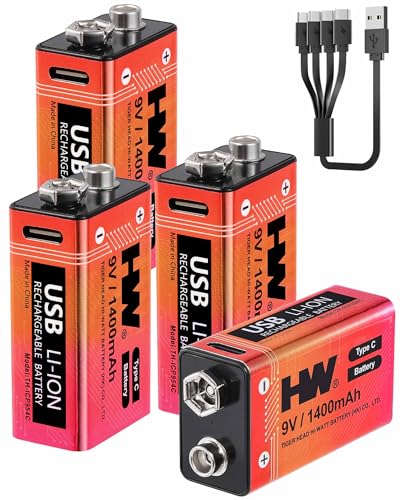
HW 9V Rechargeable Batteries 1400mAh 4 Pack

Tenergy Centura 9V NiMH Rechargeable Batteries 200mAh 2 Pack

PHILIPS 9V Lithium Batteries 1200mAh 4 Pack

Tenergy 9V Lithium Batteries 1200mAh 2 Pack

XUNIUZERO 6F22 9V Batteries 4 Pack

HW 9V Rechargeable Batteries 1400mAh 8 Pack

HW 9V Rechargeable Batteries 1400mAh 12 Pack
A Deeper Look At The Lineup
For a presenter carrying one microphone, a mixer, and a spare 9V device, this four-cell set keeps charging hardware to a minimum. Each rechargeable cell has a built-in USB-C port, while the included four-in-one cable handles the connections without a separate wall adapter.
Its 1400mAh rating gives it a clear capacity advantage over the Tenergy Centura’s 200mAh cells, although real runtime still depends on your microphone and transmitter. For home presenters and mobile creators, the compact four-battery rotation looks more manageable than a larger reserve.
The Case For It
- Built-in USB-C ports remove the need for a separate 9V charger.
- Four cells provide a practical rotation for a microphone and nearby equipment.
- The 1400mAh rating favors extended use over smaller NiMH cells.
- LED indicators show charging status at a glance.
Practical Considerations
- Confirm rechargeable-battery support in your microphone before replacing disposable cells.
- Four cells may be tight for a multi-channel stage rig with frequent rotations.
Quick Facts
Made For
Solo presenters, streamers, and home-studio users who want a small rechargeable battery rotation.
A Better Fit Elsewhere
HW 9V Rechargeable Batteries 1400mAh 12 Pack suits performers who rotate cells across several wireless microphones.
NiMH chemistry means rechargeable nickel-metal hydride, a format commonly used for lower-drain household devices. The Centura pair prioritizes a small footprint and low self-discharge, so stored cells are designed to retain more capacity during extended inactivity than conventional NiMH batteries.
That makes sense for occasional presenters who rotate between two cells, though the 200mAh rating is modest beside the HW range. Based on the stated capacity, demanding wireless systems may get less runtime, so a quick microphone test is sensible before committing to a full rehearsal schedule.
Why It Works Well
- A two-pack keeps weight and carry space modest.
- Low self-discharge helps preserve charge while cells sit unused.
- The rechargeable format reduces recurring disposable battery replacement.
Some Limits To Know
- The 200mAh capacity is much lower than the lithium and 1400mAh alternatives here.
- Owners may need a separate compatible charger because USB-C ports are not specified.
- NiMH cells can develop reduced capacity after extended heavy use or incomplete cycling.
Feature Snapshot
Right Fit For
Occasional presenters using a lower-drain wireless microphone that accepts rechargeable 9V cells.
Another Choice May Suit
Tenergy 9V Lithium Batteries 1200mAh 2 Pack better serves high-drain users who prefer maintenance-free disposable cells.
Lithium chemistry offers a disposable alternative for performers who would rather avoid managing charge cycles before a show. The 1200mAh capacity provides substantial stored energy, and the four-pack gives you enough cells for one active battery plus several spares.
Compared with the rechargeable HW choices, PHILIPS removes the charging routine but not the replacement routine. Depending on your microphone’s current draw, a rehearsal or performance weekend can still consume multiple cells, so keeping a dedicated battery case is sensible.
The Helpful Details
- The 1200mAh rating supports higher-capacity non-rechargeable use.
- Four cells suit microphones, audio gear, and compatible household devices.
- Lithium chemistry avoids battery swelling concerns associated with some rechargeable formats.
- You can swap cells quickly between performances without a charger.
Where It May Fall Short
- Disposable cells require purchasing replacements after use.
- Some wireless microphones may not function as intended with lithium chemistry.
Built With In Mind
Performers with a demanding transmitter and a reliable place to store fresh spare cells.
Consider Something Else When
HW 9V Rechargeable Batteries 1400mAh 4 Pack makes more sense for someone wanting a smaller recurring battery expense.
Long storage periods favor this two-pack because its lithium cells are specified to retain power for up to 10 years. For someone who keeps a wireless microphone in a closet between occasional events, the stated shelf life reduces the chance that stored emergency cells will lose meaningful capacity.
It shares the PHILIPS pack’s 1200mAh class but comes in a smaller quantity. That’s a deliberate fit for light use, not an omission disguised as value, and date stamping gives you a practical way to track freshness in a household battery drawer.
Advantages To Know
- Up to 10 years of stated shelf life supports long-term storage.
- Date stamping helps distinguish fresh cells from older inventory.
- Two batteries form a workable active-and-spare pair.
- The non-rechargeable format needs no charger or cycle management.
Details To Watch
- The two-cell count may be limited for multi-transmitter sessions.
- Disposable chemistry creates ongoing replacement needs.
- Check your microphone manual for lithium-battery compatibility.
Core Details
Who It Suits Best
Occasional performers and presenters who value long storage life more than a large battery inventory.
Where A Sibling Pick Shines
PHILIPS 9V Lithium Batteries 1200mAh 4 Pack offers twice the quantity for rehearsals where several spare cells are useful.
The 6F22 format broadens this list beyond wireless microphones to doorbells, alarm systems, and other compatible electronics. A carbon-zinc construction and steel-jacketed square cells make this a practical household drawer option, especially for a device that draws relatively little power.
That broad compatibility is its main appeal, but no capacity value is provided, so runtime is harder to compare with the 1200mAh lithium and rechargeable cells here. For a wireless microphone transmitter, the 1400mAh alternatives offer a more transparent basis for power planning.
Strong Points
- Four cells provide useful coverage across several household devices.
- Steel-jacketed square cells suit the standard 6F22 form factor.
- Carbon-zinc construction offers a familiar disposable battery format.
Trade Offs To Consider
- The listed capacity is lower than the lithium options in this roundup.
- A wireless microphone may drain these cells sooner than its manufacturer intended.
- Keep cells away from moisture and remove spent batteries from equipment promptly.
Best Suited To
Households needing a general-purpose 9V supply for doorbells, alarms, and lower-drain electronics.
Look Elsewhere When
HW 9V Rechargeable Batteries 1400mAh 8 Pack is a stronger fit for a pedalboard or microphone setup with predictable USB-C charging.
Eight rechargeable cells create a more comfortable margin for pedalboards, wireless transmitters, and other 9V devices operated together. The USB-C design is particularly useful in a rehearsal room because a single four-in-one cable can recharge the cells without a dedicated nine-volt charger.
Compared with the four-pack, the 1400mAh format stays the same but inventory expands, reducing pressure to recharge between short breaks. The honest catch is device compatibility: your equipment must support rechargeable 9V cells, and the added charging port changes the cell’s physical end profile.
Where It Helps
- Eight cells support multiple devices and several active spares.
- USB-C charging simplifies rehearsals in shared spaces.
- 1400mAh cells offer strong capacity for compatible music equipment.
- LED indicators make charging status easier to monitor.
- Rechargeable use reduces repeated disposal of 9V cells.
Possible Compromises
- Some equipment may not accommodate the rechargeable cells’ charging-port end.
- Eight batteries create more items to organize, inspect, and rotate.
Technical Highlights
Who Will Love This
Guitarists, studio users, and live performers running several compatible 9V-powered devices.
Reach For A Different Pick When
PHILIPS 9V Lithium Batteries 1200mAh 4 Pack suits users who prefer disposable power and simpler storage.
For a teacher using several wireless microphones or a performer moving between handheld and headset transmitters, twelve cells create the largest rotation in this group. Each has a 1400mAh rating and built-in USB-C connection, turning charging into a centralized routine instead of scattered disposable-cell changes.
The inventory is less convenient than the four-pack, yet it can pay off across busy event days where you don’t want batteries running low between engagements. Depending on your device’s draw, label cells with simple charge groups to avoid mixing partially charged units into a critical set.
What Works In Its Favor
- Twelve cells support multiple microphones and spare rotations.
- USB-C ports keep charging equipment simple.
- 1400mAh capacity favors extended operation in compatible devices.
- The 4-in-1 cable reduces connection juggling.
Small Caveats
- Rechargeable cells require a device that supports their design.
- A large pack needs a labeled storage case to prevent mix-ups.
Key Product Details
The Right Fit
Presenters, teachers, and performers who regularly operate multiple compatible wireless microphones.
Swap It Out When
Tenergy 9V Lithium Batteries 1200mAh 2 Pack fits occasional users who prioritize shelf life over rotation size.
Choosing Batteries Around Your Equipment
Confirm the chemistry first
A 9V shape does not guarantee chemical compatibility. Rechargeable NiMH cells, USB-C rechargeable cells, and disposable lithium cells can behave differently inside a transmitter, so start with the microphone manual rather than the connector alone.
Match capacity to current draw
Capacity, measured in milliamp-hours or mAh, indicates stored energy rather than guaranteed runtime. High-drain transmitters benefit from the 1400mAh and 1200mAh options listed here, while lower-power devices may need much less.
Build a practical rotation
Solo presenters can manage with one active cell and one spare. Teachers or performers using several microphones benefit from separate sets for each transmitter, with charged replacements stored away from loose objects that could create a short circuit.
Decide between charging and disposal
Disposable lithium cells reduce charging logistics but require replacement. Rechargeable USB-C packs simplify repeat use, though you need enough cells to keep one or more devices running while another group charges.
Common 9V Battery Traps
Mistakes Worth Dodging
Ignoring the microphone manual can lead to charging or chemistry mismatches. Compare several cells during rehearsal and record their runtime, since a large capacity number alone does not reveal how a specific transmitter performs.
What The Higher Tier Buys
Higher-capacity rechargeable packs offer larger inventories and USB-C convenience, useful for frequent performers. A small disposable lithium pack can be more rational for occasional use, so the larger format is not automatically the better ownership choice.
Frequently Asked Questions
Can a wireless microphone use a rechargeable 9V battery?
Only when its manufacturer supports rechargeable cells. Some transmitters work with NiMH, while others specify lithium chemistry or another battery format.
How long should a 9V wireless microphone battery last?
Runtime depends on the transmitter, microphone design, transmission power, and battery capacity. A 1400mAh rechargeable cell may outlast a 200mAh cell, but the manufacturer’s guidance remains the deciding factor.
Are lithium 9V batteries always better?
They can offer higher capacity and long storage life, but they are disposable. Rechargeable cells may suit frequent use better after compatibility and charging storage are considered.
Can a 12-pack be used for one microphone?
Yes, provided every cell fits and the microphone supports rechargeable 9V batteries. The extra inventory mainly reduces the frequency of charging interruptions.
How should rechargeable 9V batteries be stored?
Store charged cells in their case, away from moisture, metal objects, and excessive heat. Separate charging cells from ready-to-use cells to reduce mix-ups before a performance.
Final Verdict
Choose the chemistry your microphone supports, then match the pack to your schedule. Rechargeable 1400mAh cells suit frequent use, while disposable lithium options make more sense for occasional sessions and long storage. Whichever route you take, a labeled battery case and a short runtime comparison will make ownership more predictable.
