


A smoke alarm’s battery is easy to overlook until the low-power warning interrupts your night or a chirp starts during a busy morning. The right 9V cell gives essential equipment steady power without demanding frequent replacements, but rechargeable and alkaline options suit different routines. This roundup covers households, landlords, musicians, and workshop users, with compatibility taking priority over any battery marketing claim.
The Lineup, Simplified
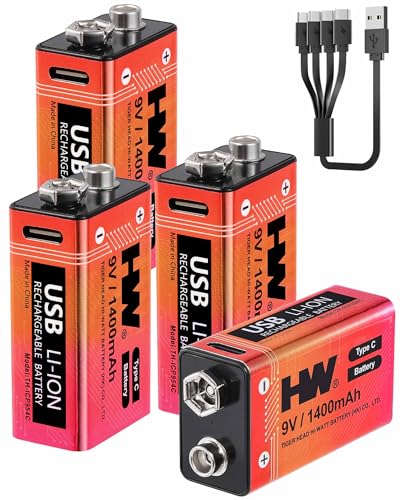
HW 9V Batteries 1400mAh USB-C 4 Pack Smoke Detectors

Energizer ENE EN22 Industrial Alkaline 9V Battery

PHILIPS 9V Alkaline Batteries 4 Pack 5-Year Storage

EBL 9V Alkaline Batteries 4 Pack

LP Rechargeable 9V Batteries 1100mAh USB-C 2 Pack

HW 9V Batteries 1400mAh USB-C 8 Pack Guitar Pedals

HW 9V Batteries 1400mAh USB-C 12 Pack Wireless Mics
More Details On Our Top Picks
Recharging takes center stage in this HW four-pack, with each cell carrying a 1400mAh capacity and a built-in USB-C connection. That design suits households seeking fewer routine replacements, but only an alarm that explicitly accepts rechargeable 9V batteries belongs in the installation.
The included four-in-1 cable simplifies charging several cells from one source, while the LED indicator gives you visible charging feedback. Compared with the single-cell Energizer ENE EN22, this package is better organized for keeping spare rechargeable power nearby.
Reasons It Performs
- The 1400mAh capacity supports extended use between charges.
- Built-in USB-C charging removes the need for a separate 9V charger.
- Four cells cover several alarms or maintain a rotating household reserve.
- LED indicators make charging status easier to monitor.
Things To Consider
- Compatibility must be confirmed in the alarm manual because not every smoke alarm accepts rechargeable cells.
- Rechargeable batteries require a regular charging routine rather than occasional disposable-cell replacement.
Quick Facts
Made For
This pack fits households with compatible rechargeable smoke alarms that value a compact four-cell charging routine.
A Better Fit Elsewhere
Shoppers wanting disposable convenience may prefer the EBL 9V Alkaline Batteries 4 Pack.
Alkaline chemistry, meaning a disposable cell that delivers stored energy without recharging, makes the ENE EN22 straightforward to deploy. It targets professional applications and heavily used devices, including smoke alarms, radios, clocks, flashlights, and remote controls.
Single-battery purchasing suits landlords maintaining alarms across several properties without managing charging cables. Compared with HW’s rechargeable four-pack, the tradeoff is simpler upkeep but no reusable capacity.
Notable Gains
- Industrial positioning suits demanding, high-drain equipment.
- Broad device compatibility makes one battery type useful around the home.
- Disposable installation avoids dedicated charging equipment.
Practical Considerations
- Single-cell packaging means more frequent shopping than a four-pack.
- Alkaline cells are not rechargeable, so normal ownership ends with disposal.
- Alarms designed for a specific rechargeable chemistry may not be appropriate for this cell.
Right Fit For
Property managers and homeowners seeking a familiar disposable battery for broadly compatible 9V equipment will appreciate this direct approach.
Consider Something Else When
Households committed to USB-C charging and rechargeable alarm cells may prefer the LP Rechargeable 9V Batteries 1100mAh USB-C 2 Pack.
This PHILIPS pack centers on alkaline storage life, with a stated shelf life of up to five years and a leak-resistant construction. Those attributes matter for emergency cabinets, seasonal homes, and households that want spare cells available without monitoring rechargeable charge levels.
The four-battery count is more practical than the Energizer ENE EN22’s single-cell format for managing several alarms. It may still serve clocks, radios, and general household electronics, keeping the pack useful beyond one safety device.
Positive Points
- The claimed five-year storage life suits reserve and emergency-kit use.
- Four cells make rotating replacements more convenient.
- Alkaline chemistry requires no charger or charging schedule.
- The leak-resistant design supports safer household storage.
- Broad household and office use keeps unused cells productive.
Minor Gripes
- The five-year figure describes storage life, not continuous in-alarm service.
- Spare alkaline cells lose usability gradually and eventually require replacement.
Feature Facts
Who It Suits Best
This set best suits households building a low-maintenance emergency reserve for compatible smoke alarms and other 9V equipment.
Where A Sibling Pick Shines
Those who regularly recharge compatible batteries may get more convenience from HW 9V Batteries 1400mAh USB-C 4 Pack Smoke Detectors.
EBL presents a conventional alkaline option with a stated storage life of up to seven years. That makes the four-pack especially relevant for emergency supplies, cabins, offices, and homes that keep backup cells for alarms along with clocks, audio equipment, and other 9V devices.
The chemistry is straightforward and broadly recognizable, though PHILIPS offers a shorter stated storage figure of up to five years. Neither shelf-life claim tells you exactly how long the battery will run inside a particular alarm.
Where It Delivers
- A four-pack supports several household devices at once.
- The claimed seven-year shelf life favors long-term reserve storage.
- Disposable alkaline cells involve no charging accessories.
- Broad device compatibility makes spare cells less likely to sit unused.
Things That May Matter
- Stored batteries still have a finite useful life.
- Disposable cells create recurring replacement and disposal needs.
- Alarm compatibility with alkaline chemistry remains essential.
Built With In Mind
Families maintaining a centralized emergency cabinet will find the four-cell format and stated storage life useful.
Reach For A Different Pick When
Users with rechargeable-compatible alarms and USB-C equipment may prefer LP Rechargeable 9V Batteries 1100mAh USB-C 2 Pack.
This lithium-ion rechargeable pair carries 1100mAh per cell and accepts USB-C charging directly. It works well for apartments, offices, and portable kits where two manageable batteries are more useful than a large alkaline reserve.
Compared with HW’s 1400mAh rechargeable packs, LP offers less stated capacity per cell, while its two-battery format demands less storage space. The included two-in-one cable and LED charging indicators help keep the routine straightforward.
What Earns Its Place
- Direct USB-C charging simplifies routine recharging.
- The 1100mAh lithium-ion cells support reusable household power.
- LED indicators provide visible charging feedback.
- The two-pack format remains convenient for compact storage.
Points To Keep In Mind
- Two cells may not cover a home with several rechargeable-compatible alarms.
- Charge monitoring becomes part of regular ownership.
- Smoke-alarm compatibility must be verified before installation.
- Its lower stated capacity sits behind HW’s 1400mAh options.
Small-Space Match
Apartment residents and travelers who want two reusable cells without a larger battery package will find this format easy to manage.
Another Choice May Suit
A household managing several compatible rechargeable alarms may prefer HW 9V Batteries 1400mAh USB-C 8 Pack Guitar Pedals.
Eight 1400mAh rechargeable cells give this HW pack a clear role in pedal-heavy home studios. Guitar effects often draw power continuously during rehearsals or recording sessions, and recharging between uses can keep spare cells rotating through a pedalboard.
The USB-C design scales more naturally than LP’s two-pack when several devices need coverage. For smoke-alarm use, the eight-count and music-specific positioning may feel excessive unless you also manage other 9V equipment.
What Helps Most
- Eight cells suit a pedalboard with several compatible devices.
- The 1400mAh capacity supports longer operating periods between charges.
- Built-in USB-C ports simplify charging with modern power sources.
- The included multi-connection cable supports a fuller charging session.
- LED indicators help identify charge status at a glance.
Less-Strong Areas
- The pack may be larger than a household needs for one alarm.
- Eight cells create more charge-tracking work than a two-pack.
The Main Details
Studio Focus
Home-studio musicians running several compatible 9V pedal devices benefit from the reusable eight-cell reserve.
Swap It Out When
A compact household seeking only a few reusable cells may find LP Rechargeable 9V Batteries 1100mAh USB-C 2 Pack easier to store.
Twelve rechargeable cells make this the most extensive HW format here, aimed at wireless microphones and other frequently used 9V equipment. Musicians can maintain a larger rotation for rehearsals, small stages, or mobile audio kits where several spare cells may be needed.
The 1400mAh rating and USB-C charging follow the same core design as HW’s four- and eight-packs. Compared with the eight-battery guitar-pedal option, the larger quantity favors audio setups that need broad coverage rather than a focused pedalboard reserve.
Benefits That Matter
- Twelve cells support demanding multi-device rotation.
- 1400mAh capacity offers useful runtime between charges.
- USB-C connections simplify charging from compatible sources.
- LED indicators assist with charge-status checks.
Soft Spots
- The size may be unnecessary for a home with one compatible alarm.
- Managing twelve rechargeable cells requires disciplined storage and charging.
On-Stage Suitability
Musicians and event crews operating several compatible wireless devices benefit from a broad reusable battery reserve.
A Better Fit Elsewhere
Households needing a modest rechargeable supply may prefer HW 9V Batteries 1400mAh USB-C 4 Pack Smoke Detectors.
What Matters Before You Replace the Battery
Confirm compatibility first
The alarm manual determines whether it accepts alkaline, rechargeable lithium-ion, or another battery format. Rechargeable cells should only enter a smoke alarm after that model’s manufacturer permits them, because charging design and power requirements vary across devices.
Choose a chemistry that matches your routine
Alkaline batteries offer direct replacement without charging equipment. PHILIPS and EBL packs also appeal to households building an emergency reserve, while rechargeable HW and LP options suit people comfortable establishing a regular charging habit.
Match pack size to your devices
A four-pack covers several alarms or provides a rotating spare set. LP’s two-pack reduces storage demands, while the eight- and twelve-cell HW options make more sense for pedalboards, wireless microphones, and multi-device collections.
Separate shelf life from service life
A stated storage life describes how long a battery may remain usable while properly stored under the manufacturer’s conditions. It does not mean a smoke alarm will run for the same number of years, since device requirements, humidity, temperature, and battery age all affect runtime.
Keeping Battery Decisions Simple
Mistakes Worth Dodging
Avoid choosing by pack size alone, since an eight-cell set offers little benefit to a household with one alarm. Also avoid installing a rechargeable battery without checking the device manual, as capacity and USB-C charging do not establish compatibility.
What Separates Premium From Basic
The meaningful upgrade is usually capacity, pack quantity, or charging convenience rather than chemistry alone. Higher-capacity cells can reduce charging frequency, while larger packs suit equipment-intensive users; basic alkaline options remain practical for occasional replacement.
Frequently Asked Questions
Can I use a rechargeable 9V battery in a smoke alarm?
Only when the alarm manufacturer lists that battery type or chemistry as compatible. The USB-C connector alone does not confirm suitability.
How often should a smoke-alarm battery be replaced?
Follow the replacement schedule in the alarm manual and replace the battery promptly when the low-power warning sounds. Disposable and rechargeable models can have different maintenance instructions.
Are 1100mAh or 1400mAh rechargeable batteries better?
Higher stated capacity can support longer use between charges, assuming the device is compatible. Device requirements, battery age, and charging habits also influence actual runtime.
Can one 9V battery type power several household devices?
Yes, provided each device accepts that chemistry and voltage. A multipurpose alkaline pack can serve alarms, clocks, radios, and similar equipment, while rechargeable options require compatible electronics.
Where should spare 9V alarm batteries be stored?
Keep them in a cool, dry place away from direct heat and follow the storage instructions on the package. Rotating rechargeable cells requires periodic charge checks rather than long-term shelf storage.
Final Verdict
HW 9V Batteries 1400mAh USB-C 4 Pack Smoke Detectors suit compatible homes that want rechargeable capacity without managing a large collection. Conventional alkaline shoppers may prefer the balanced EBL four-pack, while PHILIPS emphasizes emergency storage. Confirm compatibility first, then choose the chemistry and pack size that fit your devices and maintenance routine.
