


A guitar pedalboard can lose its character quickly when batteries begin to fade. Voltage drops may thin out distortion, scramble digital modulation, or trigger intermittent behavior, so dependable power matters during rehearsals, live sets, and studio sessions.
Battery chemistry, capacity, polarity, and rechargeability matter more than the label alone. The HW rechargeable options make the most direct match for pedal use, while the alkaline and non-rechargeable lithium choices suit households that also power alarms, microphones, toys, and other 9V equipment.
A Closer Look At The Lineup
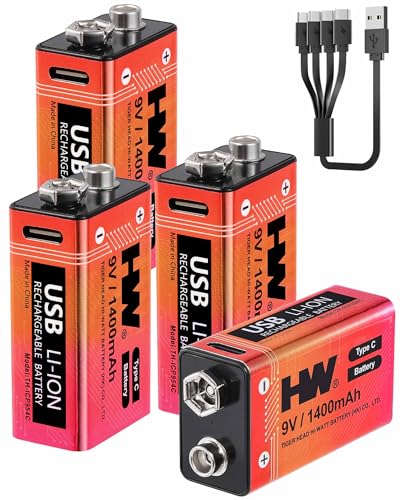
HW Rechargeable 9V Batteries USB-C 4 Pack

POWEROWL 9V Lithium Batteries 1200mAh 2 Pack

KINGCELL 9V Batteries 8 Pack

EBL 9 Volt Alkaline Batteries 4 Pack

HW 9V Rechargeable Batteries USB-C 8 Pack

HW 9V Rechargeable Batteries USB-C 12 Pack
Why These Options Stand Out
The four-battery format keeps charging manageable for a household with several 9V devices. Its built-in USB-C charging removes the need for a separate socket charger, making it convenient for alarms, audio gear, and compatible pedalboards.
Compared with Duracell PC1604BKD Procell, this set favors rechargeability rather than disposable convenience. For a pedalboard owner, that can reduce routine battery changes, provided the pedal accepts a rechargeable 9V cell and its polarity matches.
The Upside
- 1,400mAh rated capacity supports longer use between charges.
- USB-C charging simplifies power restoration at home or while traveling.
- The four-pack covers several compatible household devices without bulk.
Practical Considerations
- Not every 9V pedal supports rechargeable battery chemistry, so check the device guidance first.
- The smaller pack may feel limited for a crowded board or a demanding live setup.
Quick Facts
Made For
You benefit most with a compact setup that mixes a few rechargeable 9V devices.
Consider Something Else When
HW 9V Rechargeable Batteries USB-C 8 Pack suits larger pedalboards and busy rehearsal schedules.

A disposable alkaline battery can suit musicians who prefer predictable pickups over charging routines. This 12-pack keeps spare cells close for stage work, studio sessions, or a pedalboard drawing power from several battery-operated devices.
Procell positions the line toward demanding professional use, though runtime still varies with pedal draw. Unlike HW’s reusable cells, you replace these after discharge, which simplifies transport and avoids uncertainty over stored charge.
Real Benefits
- Twelve cells support an equipment room, rehearsal space, or rotating household needs.
- Disposable use eliminates battery charging and cycle management.
- Alkaline chemistry suits devices designed for conventional 9V cells.
Points To Note
- Owners of high-drain pedals may replace these more often than rechargeable models.
- Disposable cells add recurring material and replacement handling.
Technical Sheet
Built With In Mind
You benefit most as a working musician who values simple spares over rechargeable battery management.
A Better Fit Elsewhere
HW 9V Rechargeable Batteries USB-C 8 Pack offers a better fit for pedal owners seeking fewer routine replacements.
These non-rechargeable lithium cells prioritize shelf retention, making them more compelling for emergency equipment than for a frequently changing pedalboard. Their stated low self-discharge helps preserve usable power through long periods of storage.
The two-pack format is modest, but that limitation is less important for a backup drawer or two seldom-used devices. Confirm compatibility carefully: rechargeable HW cells and disposable lithium cells serve different ownership needs despite sharing the same 9V format.
Where It Delivers
- 1,200mAh capacity offers a useful capacity figure for disposable lithium cells.
- Low self-discharge supports alarms and equipment kept in reserve.
- A 2% annual self-discharge rate and stated 10-year storage term make date management relevant.
Small Caveats
- Only two cells are included, so larger equipment inventories need another option.
- Non-rechargeable chemistry cannot restore capacity through USB-C charging.
- Pedal compatibility should be confirmed before replacing a proven battery type.
Feature Snapshot
The Right Fit
You benefit most with alarms and other 9V devices that spend substantial time in storage.
Where Another Pick Shines
KINGCELL 9V Batteries 8 Pack fits households that want more alkaline spares for regularly used equipment.
Eight alkaline cells give you enough coverage for a multi-alarm home, audio accessories, and occasional pedal use. The recloseable package is a small but useful storage detail, helping keep unused batteries together and protected from loose clutter.
Compared with the POWEROWL lithium pair, this package favors quantity and immediate replacement over long-term storage chemistry. That makes it more practical for devices that cycle through batteries regularly, depending on your home’s inventory.
A Favorable Mix
- Eight cells provide useful coverage across several household devices.
- Reclosable packaging simplifies drawer or cabinet storage.
- A stated seven-year shelf life supports keeping spare cells on hand.
- Alkaline chemistry fits many standard 9V appliances.
Trade Offs
- Disposable cells do not provide the repeated-use convenience of rechargeable models.
- Storage life figures assume proper storage and do not predict continuous pedal runtime.
Whose Shelf It Belongs On
You benefit most in a busy household that operates several conventional 9V devices.
Another Choice May Suit
POWEROWL 9V Lithium Batteries 1200mAh 2 Pack fits storage-focused applications where shelf retention matters most.
The four-pack sits between compact household backups and larger equipment reserves. Its listed applications span alarms, toys, audio equipment, wireless microphones, and guitar equipment, giving you one battery type for several compatible 9V devices.
It is a straightforward disposable option, not a rechargeable system. Compared with Duracell’s 12-battery Procell pack, the EBL set is easier to carry in a small pedal case, though you will have fewer spares on hand.
Points In Its Favor
- Four cells balance portability with useful household coverage.
- Alkaline chemistry suits devices designed around disposable 9V power.
- Broad device compatibility supports consolidated household storage.
Minor Gripes
- Frequent pedal use can consume a small pack faster than an eight- or twelve-cell set.
- Disposable cells require periodic replacement and separate storage from rechargeables.
Core Details
Best Suited To
You benefit most with a mixed household that needs portable alkaline spares for several device types.
Reach For A Different Pick When
Duracell PC1604BKD Procell 9V Batteries 12 Pack suits professionals who prefer a deeper disposable reserve.
This is the most focused option for a pedalboard populated by several 9V stompboxes. Eight cells give you room to rotate batteries across devices, while the 1,400mAh rating targets extended runtime between charging sessions.
USB-C recharging is the practical differentiator, particularly for rehearsals, home studios, and mobile rigs. You still need compatible rechargeable devices, correct polarity, and enough lead time to charge the set before a show.
Strengths Worth Knowing
- Eight rechargeable cells cover multi-pedal setups more completely than the four-pack.
- 1,400mAh capacity supports longer operating intervals.
- USB-C charging simplifies replenishment compared with removable-cell charging systems.
- Reuse reduces the need to keep alkaline spares beside every pedalboard.
- The set can also cover compatible 9V household devices.
Practical Considerations
- Compatibility varies by pedal, so inspect device documentation before switching chemistry.
- Rechargeable batteries add an ongoing charging routine and a larger upfront pack count than a single disposable spare.
Made For
You benefit most with a multi-pedal board used for rehearsals, recording, or frequent live performance.
Swap It Out When
EBL 9 Volt Alkaline Batteries 4 Pack suits setups preferring immediate disposable replacement.
Twelve cells suit a broader ecosystem than a pedal-only setup, including compatible wireless microphones and household alarms. For a musician whose equipment travels between rehearsal, stage, and home, that flexibility can simplify spare management.
The 1,400mAh rechargeable platform matches the eight-pack, but the larger quantity reduces rotation pressure. It is bulkier for travel, so a carefully organized case matters more, particularly during a busy load-in.
Real-World Strengths
- Twelve cells support pedals, microphones, alarms, and other compatible equipment.
- USB-C charging restores power through a common cable connection.
- Rechargeable cells suit users seeking repeated use across several devices.
- The larger reserve supports rotation while some cells remain in use.
Less-Strong Areas
- The full pack takes more storage and transport space than smaller sets.
- Compatibility and charging state still require attention before critical sessions.
Feature Facts
Who Will Love This
You benefit most with a shared 9V ecosystem spanning a pedalboard, microphones, and household devices.
Look Elsewhere When
HW Rechargeable 9V Batteries USB-C 4 Pack offers a lighter option for compact travel.
Choosing Battery Chemistry for Your Pedalboard
A rechargeable cell can reduce repeated purchases, but compatibility comes first. Some pedals accept rechargeable 9V batteries, while others specify alkaline or lithium chemistry. Start with the pedal’s instructions, then verify polarity and expected battery type before purchasing.
Capacity measures stored energy in milliampere-hours, or mAh. A higher figure can support longer runtime, but it does not guarantee identical service life across every pedal; draw, voltage behavior, temperature, and battery age also shape the result.
For rechargeable models, USB-C convenience is substantial. You can recharge through a familiar cable, but a complete staging plan still matters because charged cells gradually lose stored energy while sitting unused.
Disposable alkaline packs remain straightforward for occasional use. Lithium chemistry can serve long-storage applications, while alkaline options often make sense for frequent replacement across mixed household equipment.
Practical Battery Selection Details
Mistakes Worth Dodging
Don’t assume every 9V pedal accepts every 9V battery. Rechargeable, alkaline, and non-rechargeable lithium cells have different voltage behavior, and polarity must match the compartment. Avoid buying a large pack before confirming your equipment count and compatibility.
What Separates Rechargeable From Basic
Higher-capacity rechargeable packs cost more upfront because they are designed for repeated charging and broader device use. The upgrade makes sense for a multi-pedal setup or a household that regularly operates several compatible 9V devices.
Frequently Asked Questions
Can rechargeable 9V batteries power guitar pedals?
Some pedals accept them, but you must confirm the manufacturer’s battery guidance. Rechargeable and disposable cells can have different voltage profiles.
Do all guitar pedals use 9V batteries?
No. Pedals may use other voltages, barrel connectors, or power adapters. Check the device markings and documentation before purchasing.
Is higher mAh better for pedal batteries?
Higher mAh indicates greater rated capacity, but runtime still depends on power draw and device behavior. Compatibility and chemistry remain more important than capacity alone.
Can USB-C rechargeable batteries be used for alarms?
Only when the alarm specifically supports rechargeable 9V batteries. Otherwise, follow its required battery chemistry.
Should pedal batteries be charged before a show?
Yes, a full charge is prudent for rechargeable models. Maintain spare power or a known working disposable cell for critical setups.
Final Verdict
HW 9V Rechargeable Batteries USB-C 8 Pack is the strongest fit for a multi-pedal board, while the 12-pack supports broader mixed-device use. Disposable alkaline models remain sensible for occasional operation or devices that prohibit rechargeable cells. Confirm compatibility first, then choose capacity and pack size around your actual equipment.
