


An active bass can expose weak batteries sooner than most instruments because effects pedals, preamps, and wireless systems draw steady current. The right 9V cell matters for clean response, predictable runtime, and fewer interruptions during rehearsal or performance. You’ll also need to balance rechargeability, pack size, device compatibility, and the inconvenience of charging between sessions.
Your Options, Compared
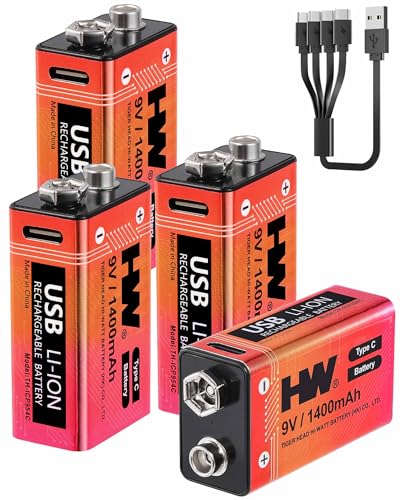
HW 9V Batteries 1400mAh USB-C 4 Pack

LithoPulse 9V Lithium Batteries 1200mAh 2 Pack

EBL 9V Alkaline Batteries 4 Pack

Blinkspower 9V Lithium Batteries 1200mAh

HW 9V Batteries 1400mAh USB-C 8 Pack

HW 9V Batteries 1400mAh USB-C 12 Pack

AIDXVBN Rechargeable 9V Li-ion Batteries 5-Pack
A Breakdown Of The Leading Choices
This rechargeable set suits a working bassist who powers several pedal-board devices without carrying a separate charger. Its 1400mAh rating and USB-C charging make rotation straightforward, particularly during rehearsals where every spare battery matters.
Compared with the larger HW packs later in the list, four cells offer a more manageable starting point. You’ll still need to confirm that each pedal accepts rechargeable 9V batteries before installation.
A Few Strong Suits
- The 1400mAh capacity supports repeat use across demanding pedal duties.
- Built-in USB-C charging reduces cable and charger clutter.
- LED charging indicators provide a quick status check.
- Four cells are practical for preamps, pedals, and household devices.
Points To Note
- Charging access may be less convenient than changing a disposable cell.
- Some devices specifically require alkaline or non-rechargeable batteries.
Feature Snapshot
Made For
You’ll benefit most with a compact pedal board and a mixed household or instrument battery rotation.
Consider Something Else When
HW 9V Batteries 1400mAh USB-C 8 Pack suits bassists who want fewer cells sharing the charging load.
LithoPulse takes the opposite approach from the HW rechargeable sets: these are disposable lithium cells meant to be carried and swapped. That simplicity can suit a bassist traveling to rehearsals, gigs, or sessions without tracking recharge state.
Two batteries offer a small, focused pack rather than a full pedal-board reserve. Depending on your board layout, the rechargeable HW 9V Batteries 1400mAh USB-C 8 Pack may provide more useful rotation.
What Earns Its Place
- Lithium chemistry offers a compact alternative to alkaline batteries.
- The stated 10-year shelf life supports long-term emergency storage.
- No charging cycle interrupts a rehearsal or performance.
Minor Gripes
- Disposable cells create ongoing replacement costs.
- The two-cell count can run thin on a large pedal board.
- Keep the pack away from high heat and physical damage.
Quick Facts
The Right Fit
This pair best suits bassists who value immediate spares and minimal charging routine over repeated cell use.
Look Elsewhere When
LithoPulse’s pack is less fitting for large boards than HW 9V Batteries 1400mAh USB-C 12 Pack.
Alkaline chemistry remains a straightforward choice for bassists who only need occasional replacements. You can install these cells, carry them as spares, and avoid managing a rechargeable rotation between practices.
The four-pack provides more practical coverage than the two-cell LithoPulse option. That said, lithium chemistry may make more sense for cold-weather storage or weight-sensitive pedal boards.
Noteworthy Benefits
- Alkaline cells offer familiar handling with no charging accessories.
- Four batteries suit a compact board and household spares.
- A stated shelf life of up to seven years helps with storage.
Practical Considerations
- Disposable chemistry limits long-term reuse.
- Alkaline batteries can weigh more than compact lithium alternatives.
- Check device instructions before mixing battery types in a pedal board.
Built With In Mind
This pack suits beginners, gigging bassists, and anyone who wants ordinary alkaline replacements without a charging routine.
Another Choice May Suit
EBL 9V Alkaline Batteries 4 Pack favors simplicity, while Blinkspower 9V Lithium Batteries 1200mAh suits cold-storage priorities.
Blinkspower focuses on disposable lithium power with a five-year stated shelf life. Those traits suit emergency storage, workshop drawers, and musicians preparing for a location where charging access may be inconsistent.
The 1200mAh rating matches the LithoPulse pair, but the storage emphasis differs. Compared with the rechargeable HW 4 Pack, this option removes charging from your setup, though it also removes the ability to reuse the cells.
Standout Benefits
- The lithium format supports compact emergency storage.
- A five-year shelf life suits maintenance kits and preparedness drawers.
- Disposable cells remain convenient for travel.
- 1200mAh provides useful capacity for compatible electronics.
- The stated runtime advantage is substantial over common alkaline chemistry.
Trade Offs
- Only two cells are included in the pack.
- Disposable lithium cells aren’t designed for repeated charging.
Technical Highlights
Who Will Love This
You’ll appreciate this pair for travel, emergency kits, and locations where dependable spares matter more than rechargeable convenience.
Where A Sibling Pick Shines
HW 9V Batteries 1400mAh USB-C 8 Pack better serves a bassist building a rotating pedal-board set.
This eight-cell HW set fits a rehearsal room or home studio where several devices draw 9V power. A larger rotation lets you keep cells cycling while maintaining working reserves for the rest of your setup.
Compared with the four-cell HW pack, the main upgrade is scale rather than chemistry. You’ll trade more charging time for a more practical stock of pedal-ready batteries.
Everyday Perks
- Eight rechargeable cells cover larger pedal configurations.
- 1400mAh capacity supports dependable instrument use.
- USB-C charging keeps the process consistent.
- LED indicators reduce guesswork during rotation.
Small Caveats
- You need compatible USB-C power and enough charging time.
- Some effects units may require non-rechargeable cells.
- The eight-cell set takes more storage space than a four-cell pack.
Best Suited To
This set suits bassists with several pedals, preamps, or wireless devices who prefer a managed recharge rotation.
Reach For A Different Pick When
EBL 9V Alkaline Batteries 4 Pack fits bassists who want disposable simplicity and minimal charging gear.
Twelve cells make this the most extensive HW rotation here, which suits active rehearsal schedules and mixed wireless equipment. You can assign dedicated batteries to frequently used pedals while keeping others in reserve.
The 1400mAh rating aligns with the smaller HW sets, so the advantage is inventory depth. For a compact four-device board, the eight-pack may offer a more manageable balance.
Key Advantages
- A 12-cell inventory supports demanding rehearsal schedules.
- USB-C charging reduces the need for separate chargers.
- LED indicators help identify charging status.
- High capacity supports repeated instrument use.
Areas To Watch
- The larger pack needs more storage and charging time.
- Device-specific rechargeable restrictions still apply.
- Mixing old and depleted cells can make runtime less predictable.
Feature Rundown
Whose Shelf It Belongs On
This set suits frequent performers, studio owners, and musicians managing many 9V-powered devices.
A Better Fit Elsewhere
HW 9V Batteries 1400mAh USB-C 8 Pack fits a smaller board without carrying as many spare cells.
AIDXVBN serves as the middle ground among the rechargeable sets here, combining five cells with a stated 1100mAh capacity. Its listed device range includes pedals, smoke alarms, carbon monoxide detectors, and digital multimeters.
You’ll want to check each device’s battery requirements before mixing this set across household and instrument equipment. Compared with the 1400mAh HW packs, it favors broader everyday use and compact pack size.
A Strong Showing
- Five cells balance stock size and device coverage.
- The listed 1100mAh capacity supports rechargeable use.
- The stated two-hour charging window suits quick preparation.
- A 2-in-1 cable reduces charging-cable requirements.
Details To Watch
- Compatibility varies across smoke alarms, meters, and pedals.
- The included cable should be handled and stored carefully.
- Rechargeable cells may not suit every device label.
Essential Details
Who Should Grab It
This pack suits bassists who want a moderate rechargeable rotation and occasionally power compatible household or test equipment.
Not Your Match When
LithoPulse 9V Lithium Batteries 1200mAh 2 Pack better fits travelers who prefer disposable spares over a charging system.
What Matters Before You Power A Bass Rig
Start with device compatibility. A square 9V outline doesn’t guarantee that every device accepts rechargeable chemistry, so you should check the manufacturer guidance for each pedal, wireless receiver, preamp, or tuner before fitting a new cell. This matters most with smoke alarms and other equipment that may specify alkaline batteries.
Runtime also depends on current draw. A 1400mAh cell has more nominal capacity than a 1100mAh cell, but the number alone doesn’t determine how long your pedal runs. High-draw effects and wireless equipment can shorten usable time, while lighter-duty devices may make capacity differences less noticeable.
Pack size should match your routine. Two disposable lithium batteries suit travel and emergency storage, four cells cover a compact setup, and eight or twelve rechargeable cells suit heavier use. Larger packs reduce rotation pressure but need more storage and charging time.
Charging access matters on stage. USB-C rechargeability simplifies home preparation, while disposable cells provide immediate spares during a long rehearsal or tour. Keep a separate set of compatible spares rather than relying on one partially charged battery.
Common Battery Mistakes To Avoid
Mistakes Worth Dodging
A square connector is not enough to establish compatibility. Confirm the chemistry, dimensions, and battery requirements listed for every device before purchasing a rechargeable rotation.
Another common mistake is judging by capacity alone. Your pedal’s power draw, operating temperature, cable condition, and battery age all affect the experience, so keep realistic expectations.
What The Extra Money Goes Into
Larger rechargeable packs cost more mainly because they provide more cells and more charging inventory. Higher capacity can also reduce replacement frequency in suitable devices, while disposable lithium offers longer storage between uses.
Frequently Asked Questions
Can I use a rechargeable 9V battery in a bass pedal?
You can use one only when the pedal manufacturer permits rechargeable 9V cells. Check the device manual or labeling because physical fit alone doesn’t confirm compatibility.
Are lithium 9V batteries better for active bass?
Lithium cells can offer compact storage and strong shelf life for disposable use. Rechargeable lithium-ion sets add repeated-use potential, but device requirements should guide your choice.
How many 9V batteries does a bass pedal board need?
The count depends on your pedal layout. Count every device that uses a 9V cell, then add enough spares to cover the devices you expect to use during a rehearsal or performance.
Should I mix alkaline and rechargeable batteries?
Avoid mixing battery types unless the device manufacturer specifically allows it. Consistent chemistry can make runtime and replacement timing easier to manage.
How should I store spare 9V batteries?
Store them in a dry place away from excessive heat, moisture, and physical damage. Keep contacts clean and avoid leaving partially used cells inside powered equipment.
Final Verdict
Choose a rechargeable HW pack for a pedal-heavy setup where USB-C charging and a broad rotation matter. Pick disposable lithium or alkaline cells when travel, storage, and immediate swaps matter more. Always follow each device’s battery guidance, and build your rotation around the equipment you actually use rather than a generic pack size.
