


Keeping a smoke alarm, two-way radio, multimeter, or garage-door remote ready requires more than a random battery from the glove box. These 9V options cover everything from long-term household storage to instrument-heavy work, with chemistry, capacity, pack size, and device fit determining which one belongs in your active pickup.
The Leading Options At A Glance

PHILIPS 9V Lithium Batteries 4 Pack

PHILIPS 9V Alkaline 4 Pack
PHILIPS 9V Alkaline 12 Pack
DURACELL Coppertop 9V, 6 Count

Danelectro 2D9V 2-Pack

YKM 24 Pack 9V Batteries for Smoke Detectors

HW Carbon Zinc 9V, 10 Pack
Meet The Standout Selections
Lithium chemistry makes this the higher-capacity option in the group, with a stated 1200mAh rating that suits demanding household electronics. In a truck, that profile matters most to portable meters, radios, and other equipment that sees intermittent use rather than sitting untouched.
Compared with the alkaline PHILIPS choices, it trades wider availability and familiar shelf economics for more energy density. That can be useful during long trips or remote work, though device manuals remain the deciding factor for compatibility.
Positive Takeaways
- The 1200mAh capacity supports sustained output in compatible high-drain devices.
- Lithium chemistry can carry more energy in a standard 9V format.
- Four cells provide a practical reserve for alarms, meters, and radios.
- Non-rechargeable operation keeps placement simple in routine equipment.
Small Caveats
- Some equipment is designed specifically for alkaline chemistry, so compatibility deserves checking.
- These cells are non-rechargeable, so spent batteries require replacement rather than another charging cycle.
Key Specs
Made For
You’ll benefit most from this set for high-drain electronics used in a truck or around a frequently accessed garage.
Consider Something Else When
PHILIPS 9V Alkaline 12 Pack suits you better when broad device familiarity and a larger replacement reserve matter more.
Alkaline chemistry and a stated 10-year storage life make these cells a natural fit for emergency drawers, cabinet kits, and infrequently opened equipment. The smaller four-pack quantity also avoids tying up excess batteries while still covering several household devices.
For an active pickup, this is the more conventional choice than PHILIPS 9V Lithium Batteries 4 Pack, particularly for equipment whose manufacturer specifies alkaline cells. Owners commonly store batteries near room temperature, so leaving them loose in a hot cab over summer may shorten their useful reserve.
A Strong Showing
- Low self-discharge supports long periods between use.
- Alkaline chemistry suits many common household devices.
- The four-pack fits compact emergency storage.
Worth Noting
- Stored cells need cool, dry conditions rather than prolonged heat exposure.
- Four cells may be modest for a workshop containing several meters and radios.
Technical Sheet
Who It Suits Best
This set fits people maintaining a modest emergency supply for smoke alarms, carbon monoxide detectors, and household tools.
A Better Fit Elsewhere
PHILIPS 9V Alkaline 12 Pack serves you better when several properties or devices need scheduled rotation.
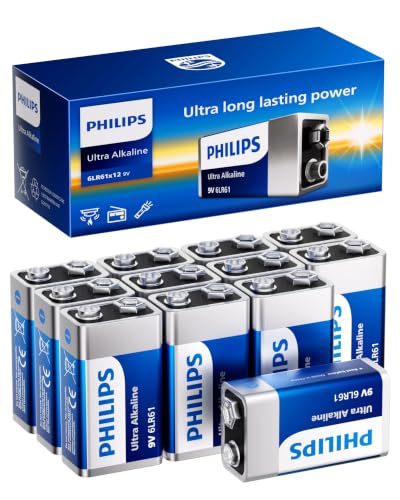
The twelve-cell quantity turns this PHILIPS alkaline set into a maintenance-stock option rather than a simple replacement pack. That fits garages with several alarms, radios, multimeters, or other equipment that may need batteries at different times.
It shares the familiar alkaline approach of the four-pack model but reduces the inconvenience of constantly checking spare availability. For most pickup owners, however, the larger quantity only makes sense after counting the compatible devices already on hand.
What Pays Off
- Twelve cells support staggered replacement across a busy garage.
- The stated storage life helps protect unused inventory.
- Alkaline chemistry remains a practical choice for many household devices.
- A single pack simplifies organizing a larger backup supply.
- Low self-discharge supports batteries kept for extended periods.
Minor Gripes
- The quantity can be excessive for a single alarm or multimeter.
Right Fit For
You’ll get the most value from this pack when maintaining multiple compatible devices across a workshop, garage, or property.
Skip It When
PHILIPS 9V Alkaline 4 Pack is the tidier choice for a compact truck kit or minimal household reserve.
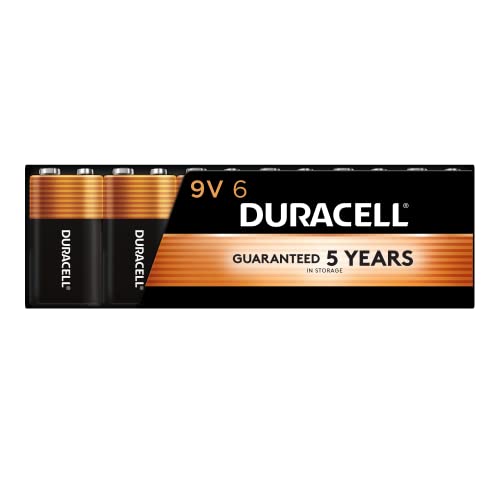
Coppertop’s six-cell pack occupies the practical middle ground between a small emergency reserve and workshop inventory. Its listed uses span smoke and carbon monoxide detectors, two-way radios, guitar pedals, multimeters, and test equipment, giving it broader relevance around a truck.
Unlike PHILIPS 9V Lithium Batteries 4 Pack, this is an alkaline option shaped more by familiar household use than maximum capacity. That makes it a sensible default, provided your equipment accepts standard 9V cells.
Reasons It Performs
- Six cells cover common household and maintenance devices.
- Alkaline chemistry suits many smoke alarms, meters, and radios.
- The moderate pack size works for home and vehicle storage.
- Pedal use is included among the listed applications.
Honest Caveats
- Owners commonly keep spare alkaline cells in a cool, dry place for better storage conditions.
- Six cells may not suit equipment that consumes power rapidly for extended periods.
Quick Facts
Built With In Mind
This set suits pickup owners who want one alkaline pack for alarms, radios, meters, and occasional pedal use.
Where A Sibling Pick Shines
YKM 24 Pack 9V Batteries for Smoke Detectors gives you a deeper reserve for several mixed-use devices.
Guitar pedalists get a more focused battery than anything else in this roundup. The Danelectro 2D9V is intended for effects devices and uses a discharge behavior that differs from ordinary alkaline cells, with tone-related suitability built into its purpose.
That specialization makes it less relevant as a truck-wide spare than DURACELL Coppertop 9V, 6 Count. For a pedalboard used during rehearsals, gigs, or recording sessions, though, matching the battery to the device’s design matters more than owning a large general-purpose stock.
What Makes Sense
- Designed around the power needs of guitar effects devices.
- Discharge behavior differs from conventional alkaline cells.
- The two-pack covers a focused pedal-board requirement.
Less Ideal Details
- The two-cell quantity offers little reserve for several pedal-heavy setups.
- Its narrow effects-device focus leaves household alarms and meters to other options.
- Pedal-board fit can vary with older or unusual battery compartments.
Who Should Grab It
This pack belongs with guitarists whose effects pedal explicitly supports 9V power and prioritizes device-specific discharge behavior.
Look Elsewhere When
YKM 24 Pack 9V Batteries for Smoke Detectors is more useful for stocking several mixed household and garage devices.
Twenty-four cells make this the deepest reserve in the group, which can be useful for alarms, radios, microphones, garage-door remotes, and pedals spread across a property. The large count reduces the hassle of tracking replacements across multiple battery compartments.
Compared with PHILIPS 9V Alkaline 12 Pack, the extra quantity favors maintenance-heavy households rather than minimal kits. Owners commonly rotate spares by date and keep them away from heat, since a crowded package offers little benefit once cells deteriorate in a hot storage area.
Points In Its Favor
- Twenty-four cells simplify stocking several device types.
- Listed applications include alarms, radios, microphones, remotes, and pedals.
- The large quantity suits shared properties or workshops.
- Standard 9V positioning supports common household equipment.
Practical Considerations
- Unused cells need cool, dry storage and periodic inventory checks.
- The quantity may be excessive for one or two 9V devices.
Feature Snapshot
Made For
You’ll benefit most from this quantity when several compatible devices are spread across a garage, home, and pickup.
Another Choice May Suit
DURACELL Coppertop 9V, 6 Count gives you a more compact reserve for a smaller group of devices.
Carbon zinc chemistry gives this ten-pack a different position from the alkaline and lithium choices. Its listed uses center on wireless microphones, multimeters, and measuring instruments, making it a practical consideration for musicians and maintenance work.
The stated 85% power retention after 12 months provides a useful storage benchmark, while the stated three-year shelf life suits date-managed spares. Compared with PHILIPS 9V Alkaline 12 Pack, it has a smaller quantity and a narrower intended-use emphasis, so instrument compatibility comes first.
Features That Help
- Ten cells cover wireless audio and several measurement devices.
- Low self-discharge supports dated storage management.
- The listed leakage-resistant design helps protect compartments.
- Carbon zinc chemistry offers an alternative to alkaline stock.
Where It May Fall Short
- Older alkaline batteries may outlast carbon zinc in some high-drain equipment.
- Owners commonly store spare cells away from humidity and direct heat.
- The ten-pack offers less coverage than the 24-cell YKM option.
Quick Technical Notes
Whose Shelf It Belongs On
This pack fits musicians and technicians who primarily need 9V carbon zinc cells for compatible microphones and measuring instruments.
Reach For A Different Pick When
DURACELL Coppertop 9V, 6 Count fits you better when alarms and two-way radios form a larger part of the device mix.
What Matters Before You Fill The Storage Compartment
Start with the device rather than the package. Some alarms, meters, radios, microphones, and pedals specify alkaline, lithium, or another 9V format, so the equipment manual gives you the clearest compatibility boundary. A cell that fits physically can still perform poorly when its discharge behavior differs from the device’s design.
Alkaline provides the most familiar all-purpose profile, while lithium emphasizes capacity and energy density. Carbon zinc deserves consideration for compatible instruments, and Danelectro 2D9V belongs in a narrower effects-pedal category. Self-discharge, which is the gradual loss of stored energy while a battery sits unused, matters most for emergency spares and dated garage inventory.
Pack count should reflect actual ownership. Four or six cells suit a compact vehicle kit, while twelve or twenty-four can cover several alarms, radios, meters, and remotes. Before expanding the supply, count compatible devices and note any that use rechargeable battery packs so you do not mix chemistries casually.
Heat and humidity shape storage more than most people expect. Keep spare cells in a dry compartment away from direct sun, and avoid leaving a partially used pack inside a hot truck all summer. Periodic date checks help you rotate older stock before it reaches equipment that needs reliable output.
Keeping Battery Choices Simple
Pitfalls Shoppers Hit
Choosing by package size can leave you with either too few replacements or a crowded compartment of unused cells. Check voltage, 9V format, and chemistry first, then count the devices you expect to power. Avoid treating carbon zinc and lithium as automatic substitutes for alkaline equipment.
What Separates Premium From Basic
The higher tier usually buys higher stated capacity, longer storage life, or chemistry tailored to demanding use. It matters most for frequent device use and long gaps between replacements. For occasional alarms or meters, a moderate alkaline reserve often provides the cleaner ownership balance.
